As of 2026-04-01 UTC, the most useful way to read the public AI-China market is to stop asking which company has produced the one decisive model and start asking which companies are assembling the cleanest workload portfolios.[1][2][3][4][5][6][7] The recurring pattern across official pages is now hard to miss: one lane for quick general work, one for heavier reasoning, one or more multimodal lanes, at least one open or self-hostable entry point, and a surrounding surface that tries to turn capability into repeated developer or user habit.
That is a field signal, not a claim that every vendor has converged technically or economically. Model quality still differs. Pricing still differs. Enterprise adoption still differs. But the public packaging logic is becoming more consistent. Vendors no longer want to be read only as authors of a flagship checkpoint. They want to be read as managers of a portfolio that can keep more tasks inside one naming system, one API habit, and one product family.[1][2][3][4][5][6][7]
My inference from these sources is that the competitive unit is shifting from the single model toward the lowest-switching-cost workload map. That is not a quoted vendor sentence. It is the most coherent way to connect what these companies keep choosing to publish.
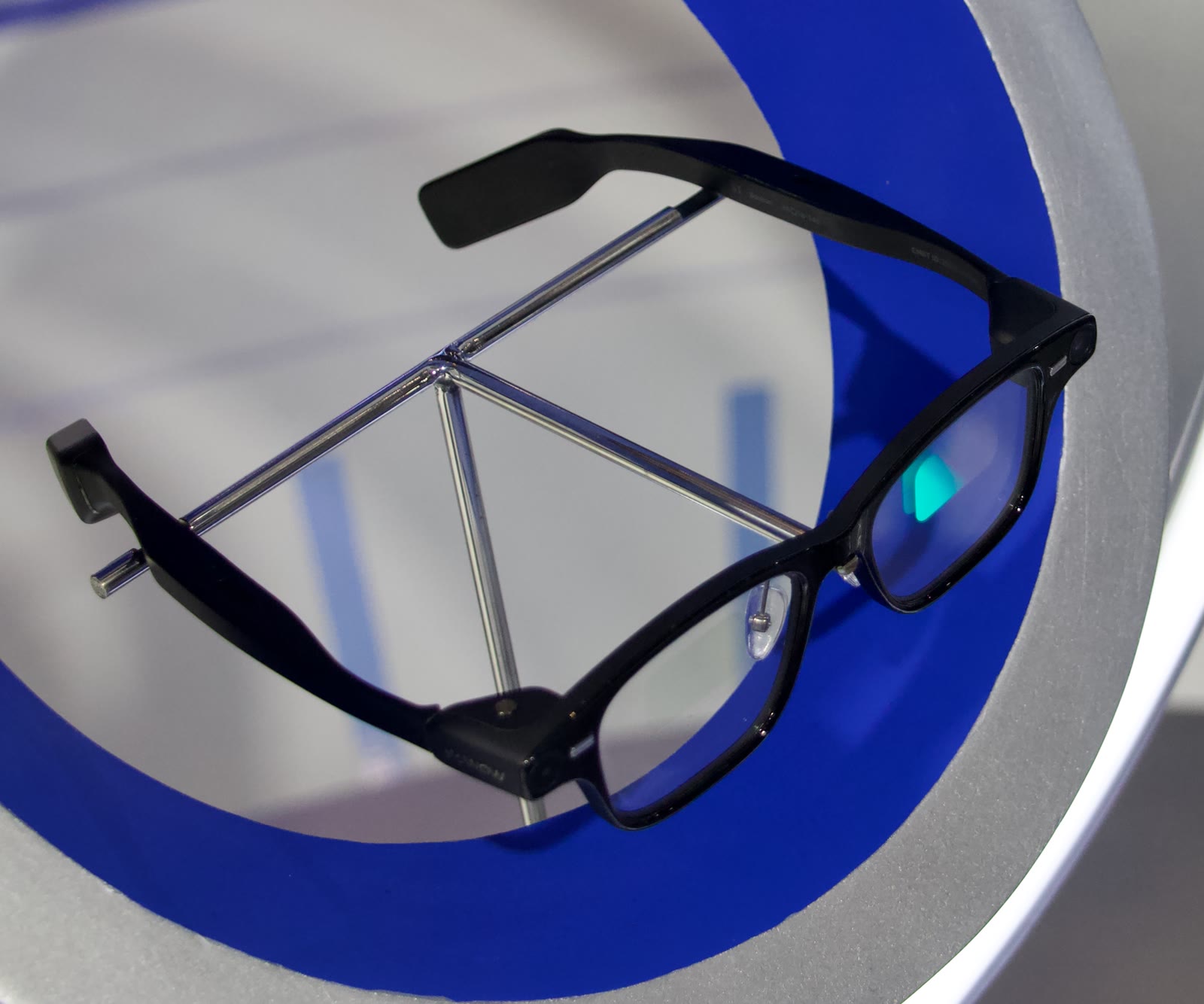
Image context: the cover uses a real photograph of Alibaba's Quark smart glasses on display at WAIC 2025 in Shanghai. It works here as a field image because the article is about public AI product staging in China: model capability is increasingly being wrapped in visible surfaces, lanes, and devices rather than sold only as a leaderboard abstraction.[8]
The repeated package is the signal
Look at the ingredients that keep reappearing.
Baidu's June 30, 2025 ERNIE 4.5 release note presents a 10-model family spanning 47B and 3B activated-parameter MoE routes, a 424B top model, and a 0.3B dense model under Apache 2.0.[1] Tencent's public Hunyuan material presents separate reasoning and non-reasoning lanes on the product side while its OpenAI-compatible docs preserve one familiar client pattern built around a shared base_url and /chat/completions path.[2][3] Qwen's April 29, 2025 Qwen3 release frames the family around both dense and MoE variants and, crucially, around thinking mode and non-thinking mode across sizes and deployment paths.[4][5] Moonshot's Kimi K2.5 page then climbs further up the stack by naming Instant, Thinking, Agent, and Agent Swarm as product modes, while Kimi Code turns that hierarchy into a terminal-and-IDE work surface with 256K context and MCP support.[6][7]
The common idea is not that all of these companies copied one another line for line. It is that they are all trying to show coverage. The sales message is less "we have one brilliant model" and more "you can stay with us as your task gets longer, slower, more tool-heavy, more multimodal, or more operational."
Baidu and Tencent make the portfolio logic explicit
Baidu and Tencent are useful starting points because their public materials make the packaging structure especially legible.
With ERNIE 4.5, Baidu is not only shipping a large model. It is shipping a table that tells developers where different sizes and modalities belong.[1] In public form, the family already stretches from dense compact lanes to heavyweight multimodal MoE lanes, which means the company is trying to keep edge, long-context, multilingual, and vision-language workloads inside one ERNIE umbrella.[1]
Tencent's Hunyuan pages show a different but related move. The public story separates faster general-use paths from heavier reasoning paths, while the API documentation works to keep that separation from feeling like a product break.[2][3] When a vendor can expose different reasoning intensity behind a stable OpenAI-style call pattern, the user is being taught to route requests within one stack rather than to leave the stack entirely.[3]
That matters because portfolio design is partly a latency-and-cost story and partly an interface story. If the lanes proliferate but the client pattern stays familiar, the vendor keeps more of the surrounding workflow.
Qwen and Moonshot push the same logic into behavior
Qwen and Moonshot show why this is larger than model-family marketing.
Qwen3's official release does talk about headline model sizes, but the sharper move is the family grammar around thinking versus non-thinking behavior plus the spread across dense and MoE variants.[4][5] The repository then keeps pointing developers toward multiple entry routes: hosted chat, Hugging Face, ModelScope, local runtime guidance, deployment frameworks, and application-layer integrations.[5] That is workload-portfolio behavior. The family is designed to stretch across environments without requiring users to relearn the brand each time they move.
Moonshot goes one step further by making the portfolio visibly task-shaped. Kimi K2.5's own page organizes the public product into four work modes, from quick answers to multi-agent project execution.[6] Kimi Code then carries the same logic into software work by advertising long context, MCP, and IDE support as operational features rather than research curiosities.[7] In other words, Moonshot is not only segmenting model capability. It is segmenting work patterns.
This is why "workload portfolio" is a more useful phrase than "model family" for the field at large. A model family can still be a static catalog. A workload portfolio implies routing logic, surface design, and expectation management around what kind of work belongs on which lane.
What this changes for builders
For builders outside these companies, the practical reading is straightforward: do not evaluate the AI-China field as if the only decision were which flagship model currently wins a public benchmark.
The better question set is narrower and more operational:
- which vendor gives you a clear fast lane and a clear heavy lane?
- which one keeps those lanes behind the least disruptive interface boundary?
- which one offers a credible path from hosted use to open weights or local deployment?
- which one has already turned capability into a usable execution surface instead of a model card alone?
Those questions are easier to tie to real software costs than a raw benchmark comparison. They also fit what the companies themselves are emphasizing in public.[1][2][3][4][5][6][7]
What to watch next
Three field signals matter from here.
First, watch whether naming stays stable. Portfolio logic weakens quickly when aliases, capability promises, and reasoning toggles drift faster than documentation can keep up.[2][3][4][5]
Second, watch whether the open and hosted lanes remain connected. If open weights, docs, playgrounds, and managed APIs continue to reinforce one another, the portfolio thesis gets stronger. If they fragment into unrelated marketing tracks, it weakens.[1][4][5]
Third, watch whether execution surfaces keep deepening. The companies that turn model portfolios into durable work habits will have a stronger position than the companies that only publish bigger menus.[6][7]
The bottom line is that the visible AI-China race is no longer best described as a search for one winner. It is increasingly a contest over who can map the broadest useful range of work into the fewest disruptive surfaces.
Sources
- ERNIE Blog, "ERNIE 4.5 模型系列正式开源" (June 30, 2025; official Chinese release note covering the 10-model family, 47B/3B activated-parameter MoE routes, 424B top model, 0.3B dense lane, and Apache 2.0 release).
- Tencent Cloud, "腾讯混元大模型" product page (official public Hunyuan family page covering the current fast/reasoning lane structure).
- Tencent Cloud Docs, "混元 OpenAI 兼容接口相关调用示例" (official OpenAI-compatible documentation showing shared
base_urland/chat/completionscalling pattern). - Qwen Team, "Qwen3: Think Deeper, Act Faster" (official Qwen3 release post dated 2025-04-29 covering dense and MoE variants plus thinking and non-thinking modes).
- Qwen Team, "Qwen3" GitHub repository README (official family overview with hosted, open-weight, local-runtime, deployment, and framework entry points).
- Kimi, "Kimi K2.5 | Open Visual Agentic Model for Real Work" (official product page covering Instant, Thinking, Agent, and Agent Swarm modes).
- Kimi, "Kimi Code: Next-Gen AI Code Agent for Terminal & IDE" (official page covering 256K context, 100 tokens per second, MCP, and IDE support).
- Wikimedia Commons, "File:WAIC 2025 - Alibaba Quark Glasses 01.jpg" (source page for the WAIC 2025 exhibition photograph used as this article's cover image).