As of 2026-04-27 UTC, the most useful way to read Qwen Code's April release streak is to stop treating it as ordinary feature churn inside a terminal coding assistant. The sharper signal sits in execution geography. The January launch had already described Qwen Code as an open-source coding agent that could live across the terminal, IDEs, CI/CD, a browser environment, and an SDK surface.[1] April then added Channels, Cron scheduled tasks, /plan, smarter tool parallelism, forked sub-agent context sharing, background sub-agents, Hooks, and cross-session memory.[2][3][4][5][6] Read together, those updates point to a narrower but stronger claim: Qwen Code is moving toward a lightweight remote workflow control plane, not just a local code-writing shell.
That does not mean Alibaba has already built a durable orchestration platform. The scheduling docs are explicit that tasks are session-scoped, fire only while Qwen Code is running and idle, and disappear on restart.[4] The point is not that Qwen Code has replaced Airflow, GitHub Actions, or corporate chat systems. The point is that Alibaba is teaching one agent runtime to sit across them: receive work from messaging channels, schedule work in time, split work across tools and sub-agents, and trigger outside systems through hooks.[2][3][4][5][6]
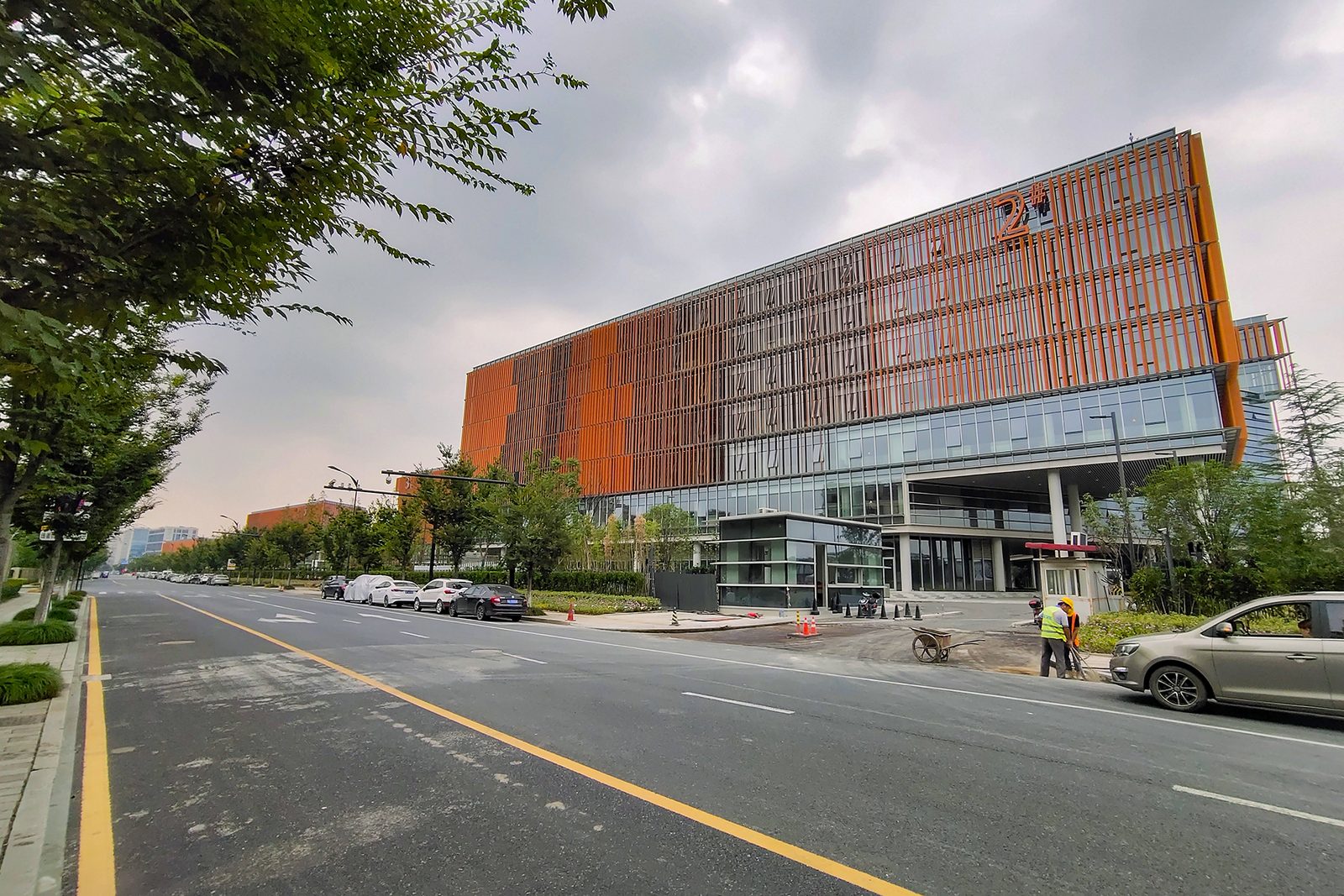
Image context: the cover uses a real Wikimedia Commons photograph of Alibaba Xixi Park in Hangzhou. That is the right visual here because this article is about company-scale product direction and workflow infrastructure, not about another synthetic IDE mockup or benchmark graphic.[7]
January already framed Qwen Code as more than a terminal toy
The January 30 announcement matters because it set the base geometry before April accelerated it.[1]
Alibaba did not introduce Qwen Code as a narrow terminal convenience wrapper. The launch post described an open-source and free coding agent built around a "true agentic workflow," then placed it across five environments: terminal, IDE, CI/CD, browser, and SDK-level programming integration.[1] The article also highlighted Skills, SubAgents, Plan Mode, approval controls, and a headless mode for automated use.[1]
That starting point matters because it changes how later updates should be read. If the product had begun as "chat with a code model in your shell," Channels and Cron could look like scattered experiments. Because the launch already treated Qwen Code as a shared runtime across multiple environments, the April additions look more coherent. They extend the same runtime outward in space and time rather than inventing a new product direction from scratch.[1][2][3]
April 9 made remote access and scheduled execution first-class
The 2026-04-09 weekly update is the key hinge.[2]
That release introduced Channels for remote operation through Telegram, WeChat, and DingTalk, plus Cron scheduled tasks and /plan planning mode.[2] This is the point where Qwen Code stops looking like a tool that only waits for a person at one keyboard. A terminal-native agent that can also receive prompts through chat platforms and run prompts on a schedule starts to behave like a small workflow surface.
The Channels documentation shows that Alibaba is not treating remote access as a novelty layer pasted on top.[3] The docs define a real service process, tracked through a PID file under ~/.qwen/channels/service.pid, and they also expose governance controls: direct-message versus group behavior, sender approval rules, allowlists, pairing flows, mention gating, and explicit warnings around token storage.[3] In other words, once Qwen Code leaves the terminal, Alibaba immediately has to answer identity and routing questions. The docs show that it knows this.
The scheduling docs are just as revealing. CronCreate accepts a standard 5-field cron expression; a session can hold up to 50 scheduled tasks; recurring tasks expire after 3 days; and tasks only fire while Qwen Code is both running and idle.[4] The scheduler checks every second, but a task waits if the current turn is still in progress.[4] This is important because it defines the real boundary. Qwen Code is not yet a persistent job system. It is a bounded, session-level automation loop. That boundary makes the feature more interesting, not less: Alibaba is deliberately placing lightweight workflow automation inside the agent session instead of pretending to replace larger orchestration systems.[2][4]
April 16 and 23 widened the product from use to orchestration
The next two weekly updates pushed the same pattern further.
On 2026-04-16, Qwen Code shipped smart tool parallel execution and fork sub-agent context sharing.[4] That may sound like an internal optimization note, but it matters at the workflow layer. Once the system can parallelize tool calls more intelligently and fork sub-agents with copied context, a user is no longer only asking for one answer from one model turn. The runtime is being optimized to manage multiple concurrent work branches inside one task surface.[4]
The 2026-04-23 release then pushed beyond concurrency into continuity.[5] Qwen Code added cross-session memory with automatic cleanup, /batch multi-file operations, Hook expansion with HTTP, Function, and Async hooks, background sub-agent execution, directory-specific rules, /doctor, plus direct reading of PDFs and Jupyter notebooks.[5] Two details stand out.
First, the Hooks language is unmistakably workflow language. Alibaba says HTTP hooks can notify outside services such as Feishu or DingTalk, Function hooks can run custom code, and Async hooks can perform long tasks in the background.[5] That is already one layer above "write me code." It is "trigger side effects while work is happening."
Second, the sub-agent change makes headless automation more credible. The update says sub-agents can now run in the background and that the SDK supports this mode for CI/CD pipelines and automation scripts.[5] That is the strongest control-plane signal in the public record. Qwen Code is being taught to launch, delegate, wait, report, and resume without requiring the primary interface to stay blocked in the foreground.[4][5]
Auto-memory belongs in the same story. A coding assistant with memory is one thing. A remote workflow surface with memory is more important, because the remembered object is not only coding style. It can also be project structure, operational habits, directory-specific rules, and recurring task context.[5]
Why this matters in AI-China
This is a useful ai-china signal because it adds a different layer to the Qwen story than the recent open-model and hosted-model coverage.
Alibaba already has open-weight mindshare, Model Studio distribution, and consumer-facing Qwen surfaces elsewhere in the stack. Qwen Code gives the company something more specific: a developer execution surface that can stretch from a local shell into chat channels, scheduled prompts, and headless automation while keeping the same Qwen identity.[1][2][3][4][5][6]
My inference from these materials is that Alibaba wants Qwen Code to become a place where workflow decisions accumulate. Which prompts should run at 9am, which directory rules apply to backend versus frontend code, who is allowed to trigger the bot in a group chat, which hooks should notify an audit system, and when work should split across background sub-agents: these are not model-benchmark questions. They are control-plane questions.[2][3][4][5][6]
That is why the April sequence matters more than the headline list of features. It shows Alibaba trying to capture not just model usage but workflow topology: where work enters, how it is scheduled, how it is governed, how it fans out, and how it touches external systems.
The boundary is still real
The strongest version of this thesis would be wrong if it ignored the constraints that the docs state plainly.
Channels still require explicit approval and configuration choices around group scope, mention gating, and sender policies.[3] Scheduled tasks are not persistent across restarts and do not catch up after downtime.[4] Background sub-agents and hooks widen the automation surface, but they do not by themselves prove durable enterprise adoption.[6] The article's claim is therefore not "Qwen Code has become enterprise workflow infrastructure." The claim is narrower: Alibaba is clearly shaping it in that direction.
That distinction matters. A field-signal synthesis should not overclaim maturity when the product-authored docs are really showing intention plus early mechanics. Those mechanics are still meaningful. In AI-China, one of the most durable competitive moves is often not the flashiest model release, but the moment when a vendor starts making a workflow hard to leave.
Bottom line
Qwen Code's April 2026 updates are best read as a product-surface shift. The terminal is still the entry point, but it is no longer the whole frame. Channels move the agent into remote messaging surfaces; Cron moves it into time; hooks move it into outside systems; smart parallel tools and background sub-agents move it into delegated execution; and auto-memory makes that whole loop harder to reset.[2][3][4][5][6]
That combination is why Qwen Code now looks less like "one more coding agent" and more like Alibaba's attempt to build a lightweight remote workflow control plane under the Qwen brand.
Sources
- Qwen Team, "Announcing Qwen Code: An AI Coding Agent That Thinks Like a Programmer" (January 30, 2026; open-source/free positioning, five-environment rollout, true agentic workflow, Skills, SubAgents, Plan Mode, and headless automation framing).
- Qwen Team, "Qwen Code Weekly: Channels Multi-Platform Access, Cron Scheduled Tasks, /plan Planning Mode, Qwen 3.6 Plus Launch" (April 9, 2026; Channels across Telegram/WeChat/DingTalk, Cron, and planning-mode additions).
- Qwen Team, "Channels" documentation (accessed April 27, 2026; PID-tracked channel service, sender/group policies, pairing flow, allowlists, mention gating, and token-security guidance).
- Qwen Team, "Run Prompts on a Schedule" documentation (accessed April 27, 2026; 5-field cron syntax, 50-task cap, idle-session execution, 3-day expiry, and restart/persistence boundaries).
- Qwen Team, "Qwen Code Weekly: Smart Tool Parallelism, Fork Sub-Agent Context Sharing, CJK Word Segmentation" (April 16, 2026; smart parallel tool execution and forked sub-agent context sharing).
- Qwen Team, "Qwen Code Weekly: AI Remembers Across Sessions, Auto Chat Titles, Batch Multi-File Operations" (April 23, 2026; auto-memory, /batch, Hook expansion, background sub-agents, directory-specific rules, /doctor, and direct PDF/notebook reading).
- Wikimedia Commons, "Phase 4 of Alibaba Xixi Park 20200913.jpg" by Windmemories (source page for the real photograph used as this article's cover image).
Editor's Pick Review
This piece takes today’s merged standard/add-on editor-pick slot because it has the strongest 24-hour quality profile under the stricter curation rubric. The article turns a fast-moving Qwen Code release sequence into a clean product-surface thesis: remote channels, scheduled prompts, hooks, background sub-agents, and memory are read as one emerging workflow control plane rather than as loose feature churn. It also keeps the boundary honest by treating Cron persistence limits, channel approval rules, and enterprise-adoption uncertainty as part of the argument instead of afterthoughts.
The image-policy gate is clean: the cover is an immersive, topic-grounded real photograph of Alibaba’s Hangzhou campus, not an analytical chart, synthetic dashboard, or symbolic coding graphic. The Chinese edition also clears the mandatory bilingual scoring dimension especially well: terminology stays stable across Channels, Cron, hooks, sub-agents, memory, and control-plane language; the prose keeps a natural technical rhythm; and the translation preserves the English argument spine without sliding into literal or jargon-heavy Chinese.