A document can change character without changing a word. Print a clean PDF, bend the paper, and photograph it from an angle: the paragraphs remain, but their geometry becomes harder to divide into tidy rectangles. For software that first cuts a page into regions and then reads each crop, that difference can determine which words survive.
ByteDance's Dolphin-v2 makes the choice of reading method part of document parsing. Its December 12, 2025 release added photographed-document support, more detailed element detection, and dedicated code parsing. The new strategy keeps photographed pages whole when cutting them apart could damage the evidence.[1][4]
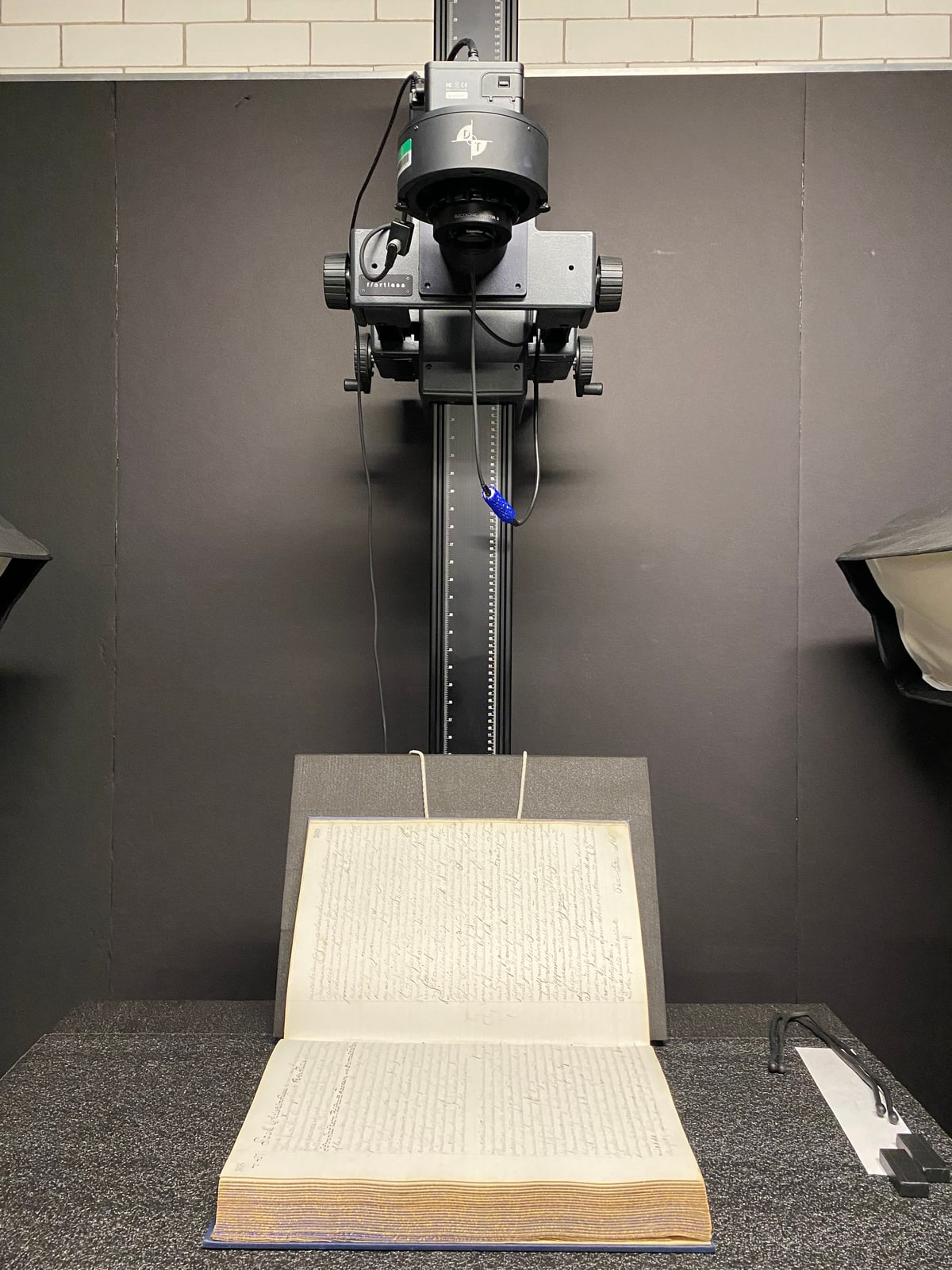
What changed from the first Dolphin
The original Dolphin, released in May 2025, used one vision-language model in two stages. First it identified page elements in reading order. Then it read those elements with prompts suited to their contents. A table and a paragraph could receive different instructions while their recognition work proceeded in parallel.[1][2]
That division answered two practical problems. Combining many specialist models makes a document pipeline harder to coordinate; asking a model to generate an entire page as one long sequence can become slow and lose structure. Dolphin's layout anchors provided a way to organize separate reading tasks and reassemble their results.[2]
The October 2025 Dolphin-1.5 release retained the small, approximately 0.3-billion-parameter architecture. December's v2 expanded the supported tasks to 21 element categories, attribute extraction, code, and photographs.[1] The v2 model card describes a 3-billion-parameter system with separate strategies for digital and photographed documents.[4] This is a broader revision than a new score attached to the same parser.
Two ways to read the same kind of content
For a digital page, v2 predicts layout elements and reading order, then parses the regions separately. For a photographed page, it uses whole-page recognition. Its model card also distinguishes the output needed for different material: tables become HTML, formulas become LaTeX, and code retains indentation.[4]
These are consequential distinctions. A correctly recognized word can still become misleading when placed under the wrong heading. A code listing can contain the right characters and become a different program if its indentation changes. Document parsing has to preserve relationships as well as letters.
The public demonstration makes the routing unusually inspectable. In demo_page.py, the process_elements function falls back to a distorted_page route if the layout cannot be parsed into the expected list, or if predicted boxes overlap excessively. That route passes the entire image onward; ordinary elements are cropped using their predicted coordinates.[5]
This code detail qualifies the neat research description. Whole-page processing can act as a recovery path when layout analysis looks unreliable. It is therefore worth recording why a page took that route, rather than assuming that every whole-page result reflects a successful photograph classification.
The demonstration groups tables, formulas, code, and text for their respective parsing tasks and exposes a batch-size control for element processing.[5] This is where the release becomes useful to engineers: the choice between keeping context and splitting work is visible in the implementation.
What the experiments can establish
The February 2026 report's RealDoc-160 experiment directly tests the photographic claim. The authors printed documents and photographed them with phones, creating 160 pages divided equally between English and Chinese. In that in-house evaluation, average edit distance fell from 0.4363 for the original Dolphin to 0.0392 for v2; lower is better. An ablation removing document-type classification scored 0.1871.[3]
The ablation supports routing within v2. The comparison with the original Dolphin cannot assign every gain to routing, because v2 also changes the model and training. Neither comparison establishes performance on every receipt, folded form, or archival manuscript.
The paper acknowledges a revealing failure: mildly distorted photographs can be classified as digital pages. Subsequent cropping may then lose information.[3] The first decision can constrain everything the recognizer sees later.
A separate evaluation concerns general document parsing. The Chinese release notes report an overall OmniDocBench v1.5 score of 89.78, against 85.06 for Dolphin-1.5.[1] OmniDocBench's own documentation separates text, formula, table, and reading-order evaluation, with structured annotations and distinct metrics.[6] Its aggregate score should be read alongside those components, not converted into a claim that roughly nine out of ten documents are flawless. This is a reported parsing result, with no claim here about latency on a particular deployment.
What to watch after the release
My reading of Dolphin-v2 is that its most useful change is making an early structural decision explicit. Parallel crops can be efficient when their boundaries are dependable. A whole-page view can retain context that an inaccurate crop would discard. A production system needs evidence about both paths.
A useful next test would take the same documents through clean exports, flat photographs, curved pages, and oblique photographs. Keep the expected content fixed, record the selected route, and inspect omissions and reading order alongside character errors. That would reveal whether a gain comes from better recognition, better routing, or both.
The distinction matters for China's expanding document-AI stack because extracted text often becomes the evidence supplied to another model. If a parser drops a qualification or separates a value from its label, a fluent downstream answer may conceal the damage. Keeping the source image and its relationship to the extracted content makes such errors easier to investigate.
Dolphin-v2 offers a concrete improvement to examine: a parser that can reconsider how much of the page it needs to see at once. The next measure of progress is whether that decision remains reliable when the paper leaves the benchmark and reaches someone's camera.
Sources
- ByteDance, Dolphin Chinese-language README; dated release history, v2 capabilities, and OmniDocBench v1.5 results, accessed October 21, 2026.
- Hao Feng et al., “Dolphin: Document Image Parsing via Heterogeneous Anchor Prompting,” Findings of ACL 2025; original analyze-then-parse design.
- Hao Feng et al., “Dolphin-v2: Universal Document Parsing via Scalable Anchor Prompting,” arXiv version 1, February 5, 2026; RealDoc-160 construction, comparisons, ablation, and limitations.
- ByteDance, Dolphin-v2 model card; model scale, document-dependent parsing, and supported output formats.
- ByteDance, Dolphin demopage.py; processelements, whole-page fallback, element cropping, and batch processing, accessed October 21, 2026.
- OpenDataLab, OmniDocBench; benchmark scope, annotations, and evaluation metrics.
- Matt Minor, “The Problem of Books,” NYC Department of Records & Information Services, October 14, 2022; source of the overhead-camera photograph, credited to Matt Minor and NYC Municipal Archives.