The most revealing thing about Deepexi is not its phrase AI employee. It is the assembly line behind the phrase. A general model may know what a store manager or process engineer usually does. Deepexi wants to encode how one particular company names its products, calculates its metrics, routes approvals, applies business rules, and decides when a person must take over. Only then does it package the resulting knowledge and tools into a role-shaped agent.[1][4]
That makes the Beijing company a useful dossier for China's enterprise-AI turn. The frontier-model race is still visible, but Deepexi is competing lower in the stack, where a plausible answer has to survive contact with permissions, databases, legacy systems, and accountable action. Its current product language joins a Deepexi enterprise model, an ontology layer, the DeepWorks agent platform, and reusable Skills under DeepexiOS. At the July 2026 World Artificial Intelligence Conference in Shanghai, the company presented that stack as infrastructure for creating, operating, coordinating, and governing digital workers.[3]
The architecture is coherent, and 2025 revenue gives it more weight than a demo. The unresolved question is whether the ontology becomes a maintained operating asset—or another expensive model of the business that drifts as soon as the business changes.
A role becomes a graph before it becomes an agent
Deepexi's product page divides its ontology logic into four jobs. Planning converts objects, metrics, rules, and constraints into a task path. Orchestration assigns data, systems, tools, roles, and approvals to the steps. Autonomy checks completion, continues reasoning or transfers the work to a person, while retaining a trace. Living memory is meant to absorb new organizational knowledge and reuse prior computation.[1]
This is more specific than saying that an agent uses retrieval. Retrieval can fetch a document; an enterprise ontology tries to state what the document means inside a working system. “Inventory” may be a table in one application, a replenishment threshold in another, and an approval obligation in a third. If those relationships stay implicit, a model can produce a fluent stock recommendation while using the wrong definition, warehouse, or authority level.
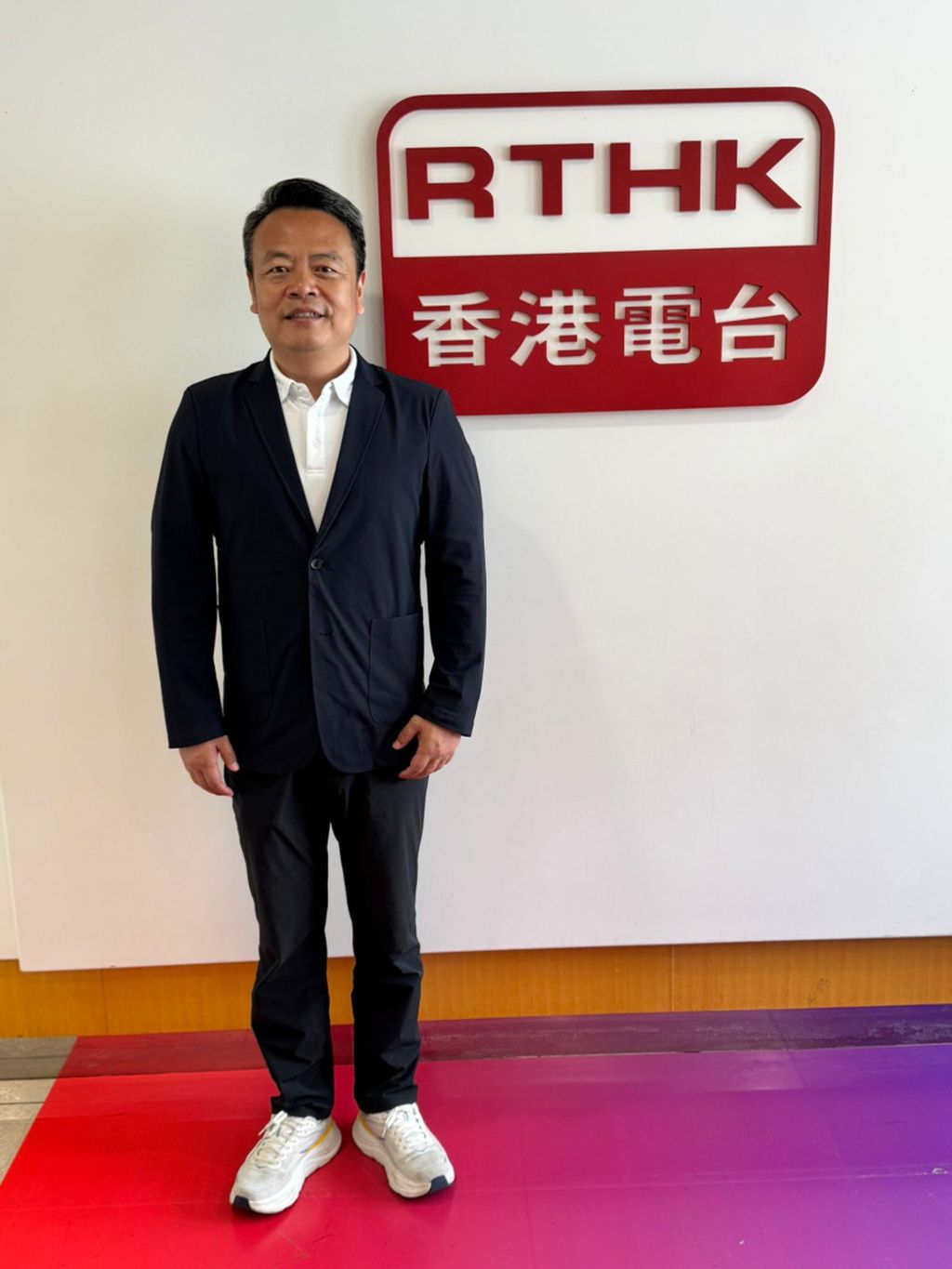
In a May 2026 RTHK interview, founder and chief executive Zhao Jiehui described the conversion in role terms: raw company material becomes a role-specific “wiki”; that knowledge produces Skills; Skills combine into an AI job; and several jobs can form a larger agent. He said manufacturing supplied more than half of company revenue and retail and consumer customers about 30 percent, which helps explain the emphasis on drawings, process knowledge, stores, supply chains, and repeatable operating rules.[4]
The distinction matters. A role is not merely a prompt with a job title. It is a changing bundle of definitions, exceptions, tools, and authority. Deepexi's product has value if it makes that bundle explicit enough to test and update. It becomes brittle if every new promotion, machine type, approval rule, or ERP field requires specialists to rebuild a private semantic world by hand.
The accounts show a real product transition
Deepexi began with FastData, its enterprise data-intelligence business, and commercialized FastAGI at the end of 2023. The 2025 annual report shows the newer AI line overtaking the older data line. Total revenue reached RMB415.0 million, up 70.8 percent from RMB242.9 million in 2024. FastAGI revenue rose 181.5 percent to RMB254.5 million and supplied 61.3 percent of the total; its customer count increased from 20 to 70. FastData grew only 5.2 percent to RMB160.5 million.[2]
That is the dossier's strongest receipt. It does not prove that an ontology improves any particular workflow, but it shows customers paying for the agent product rather than merely attending its launch. The company also reported a 55.1 percent gross margin, up from 51.9 percent, and a non-HKFRS adjusted net loss of RMB27.5 million, narrowed from RMB96.4 million.[2]
The shift accelerated in the unaudited first half of 2026. Deepexi renamed FastAGI as DeepexiOS and reported RMB226.0 million of revenue from the line, up 209.2 percent from RMB73.1 million a year earlier. FastData revenue was almost flat at RMB58.0 million. DeepexiOS therefore supplied 79.6 percent of the RMB284.0 million group total, while gross profit rose 120.5 percent to RMB160.3 million. The period's adjusted net loss narrowed to RMB26.9 million from RMB52.2 million.[9]
The commercial proof is stronger; the revenue-quality boundary is sharper too. Of first-half 2026 revenue, RMB281.8 million was recognized when goods or services transferred at a point in time and RMB2.2 million over time. Trade receivables and notes reached RMB444.7 million at June 30, up from RMB307.6 million at the end of 2025, and the company recorded RMB17.7 million of impairment on them during the half.[9] None of those figures proves that customers will not renew or that receivables will not convert to cash. Together, they make collection, repeat deployments, and expansion within existing customers more useful evidence than the platform's revenue growth alone.
The July 2026 DeepWorks launch tries to move the story toward a persistent operating layer. Deepexi said the upgraded platform added a Harness architecture, multi-agent teamwork, long-task loops, organizational controls, and a cloud service for token-based productivity. It also described Deepology as more than 2,000 Skills combinations built from manufacturing, retail, research, and public-service work.[3]
That catalog number needs a boundary. In the May interview, Zhao referred to more than 280 Skills; two months later, the launch material referred to more than 2,000 Skills combinations.[3][4] The units may be different, so the figures should not be read as a sevenfold capability gain. A large catalog proves breadth only when buyers can see versioning, prerequisites, permissions, failure rates, and the cost of adapting each combination to their own systems.
Deepexi has started building the test it needs
In June 2026, Deepexi initiated AgentOS OpenLab with Southern University of Science and Technology and researchers from several other universities. The premise is unusually well matched to the company's commercial claim: once an agent plans, calls tools, interacts with an environment, and corrects itself, scoring only the final answer hides too much.[5][6]
The announced evaluation loop records a trajectory, marks checkpoints, generates rubrics and tasks, executes tests, produces scores, and retains trajectory memory. Its preferred frame is a rubric-based verifier rather than a one-shot model judge. The plan also gives the university-led group responsibility for research and operations, while Deepexi acts as initiator, sponsor, and resource provider.[5][6]
That governance design is promising precisely because Deepexi cannot validate its own “AI employee” category by assertion. Yet the public evidence is still early. As of August 9, the OpenLab GitHub organization exposed three small repositories centered on ResearchClaw evaluation and arena material; the announcement scheduled the broader tools, results, datasets, and interim research for the end of September.[5][7] The right reading is neither “empty lab” nor “solved evaluation.” It is a dated promise whose artifacts can soon be compared with its method.
The proof also has to travel beyond browser work. A separate Deepexi–Tianjin University laboratory, inaugurated in April 2026, named enterprise multimodal models, industrial vision-language-action models, and domestic-compute adaptation among its targets.[8] Once an agent moves from editing a record to influencing a machine, a wrong path can no longer be rescued by a correct-looking paragraph. State, latency, interlocks, human override, and physical recovery become part of the evaluation envelope.
The moat is maintenance, not vocabulary
Deepexi has identified a real enterprise problem. General models do not arrive knowing the local meaning of a metric, the permitted route to an ERP action, or the exception that an experienced operator applies before a costly mistake. Encoding those relationships can make agents more useful and more inspectable.
But ontology is not a magic word. The durable product would need to show how a business definition is sourced, approved, versioned, tested, retired, and propagated into every affected Skill. It would need action traces that distinguish model reasoning from deterministic policy, permission scopes that fail closed, and replay tests that expose what changed after a model or tool update. It would also need commercial evidence that customers renew and expand after the initial integration, rather than starting a fresh consulting project for every role.
That is why the OpenLab effort matters more than another leaderboard. If its trajectory tools become public and vendor-neutral enough to reproduce failures, they could give Deepexi a language for proving the governed execution it already sells. If the artifacts remain thin while the catalog keeps multiplying, “AI employee” risks becoming a neat label over familiar systems-integration work.
Deepexi has already crossed one threshold: its agent operating stack is nearly four-fifths of a reported half-year revenue line, not a prototype. The next threshold is harder. The company has to demonstrate that its representation of work stays accurate as the organization changes, and that the agent's action can be reconstructed when the result does not. Naming the employee is product design. Proving the work is the company.
Sources
- Deepexi, “Deepexi enterprise model — core capabilities” (accessed August 9, 2026; official product description of ontology planning, orchestration, autonomy, and organizational memory).
- Deepexi Technology Co., Ltd., 2025 Annual Report, filed with Hong Kong Exchanges and Clearing (April 8, 2026; revenue mix, customer counts, margins, losses, contract timing, and product history).
- Deepexi, “At WAIC 2026, Deepexi releases the upgraded DeepWorks enterprise-agent platform” (July 17, 2026; official architecture, customer-base, and Skills-combination claims).
- RTHK, “Deepexi (1384) chairman and CEO Zhao Jiehui” (May 21, 2026; interview on the wiki-to-Skills product model, customer mix, deployment logic, and source photograph).
- Deepexi, “Deepexi initiates AgentOS OpenLab to build process-level agent-evaluation infrastructure” (June 12, 2026; official company announcement covering the evaluation loop, governance, and release roadmap).
- Southern University of Science and Technology, “AgentOS OpenLab intelligent-agent evaluation laboratory inaugurated at SUSTech” (June 23, 2026; institutional confirmation of participants, university leadership, and evaluation scope).
- AgentOS OpenLab, GitHub organization (accessed August 9, 2026; current public repository surface for the announced evaluation initiative).
- Tianjin University, “Tianjin University–Deepexi Embodied Intelligence Brain Joint Laboratory unveiled” (April 10, 2026; official account of the industrial multimodal, VLA, and domestic-compute research scope).
- Deepexi Technology Co., Ltd., “Interim Results Announcement for the Six Months Ended June 30, 2026,” filed with Hong Kong Exchanges and Clearing (July 30, 2026; unaudited revenue mix, profit, recognition timing, receivables, impairment, and product-renaming disclosures).