
As of 2026-04-16 UTC, the useful way to watch Baidu's 91-second video "DuMate | Your Desktop AI Agent" is not as one more generic promise that an AI assistant will live on your laptop and somehow handle everything.[1] The surrounding Baidu documentation points to a narrower and more concrete claim. DuMate is being sold as a managed desktop-agent surface: it can see the screen, operate software, process files, and connect business systems, but it is supposed to do that inside a local security sandbox, through authorized access, and with prebuilt skills rather than through pure open-ended improvisation.[2][3][4]
That distinction matters for AI-China coverage because desktop-agent videos are unusually easy to misread. A short clip can make any on-screen action look autonomous if the viewer is not given a system boundary. Baidu's own materials do provide one. The introductory document says DuMate is aimed at individuals and teams, uses natural-language instructions as the main interface, and is designed to convert an office goal into planning, skill dispatch, and end-to-end execution.[2] The same document is equally insistent on the other half of the proposition: the agent runs in a local security sandbox, does not access device resources without explicit authorization, and is meant to move through actual office surfaces such as files, browsers, and business systems rather than float above them as a chat-only shell.[2]
The release trail makes that read even stronger. Baidu's Qianfan update log says the MVP went live on 2026-03-20 with MacOS and Windows support, interruption and resume in conversation, parallel task execution, a preinstalled security sandbox, and second confirmation for high-risk operations.[4] DuMate's own update log then fills in the operating shape: formal paid service on 2026-04-01, a skill plaza and daily-summary feature on 2026-04-02, richer native skills and stability improvements on 2026-04-12.[3] Read together, those sources suggest that the video is not advertising one magical general agent. It is advertising a desktop entry point into a managed execution lane that Baidu has been steadily hardening.
Baidu's investor materials provide the broader frame for that inference. In its Q3 2025 results, the company said Qianfan had been upgraded to become more agent-centric, and it described GenFlow as a general-purpose agent platform built around multi-agent collaboration and natural-language interaction.[5] My inference from sources [2] through [5] is that DuMate matters because it brings that Baidu stack closer to the user edge. The company is not only exposing models and tools in the cloud. It is trying to turn the desktop itself into a governed handoff surface where language, files, skills, and software actions can meet.[2][3][4][5]
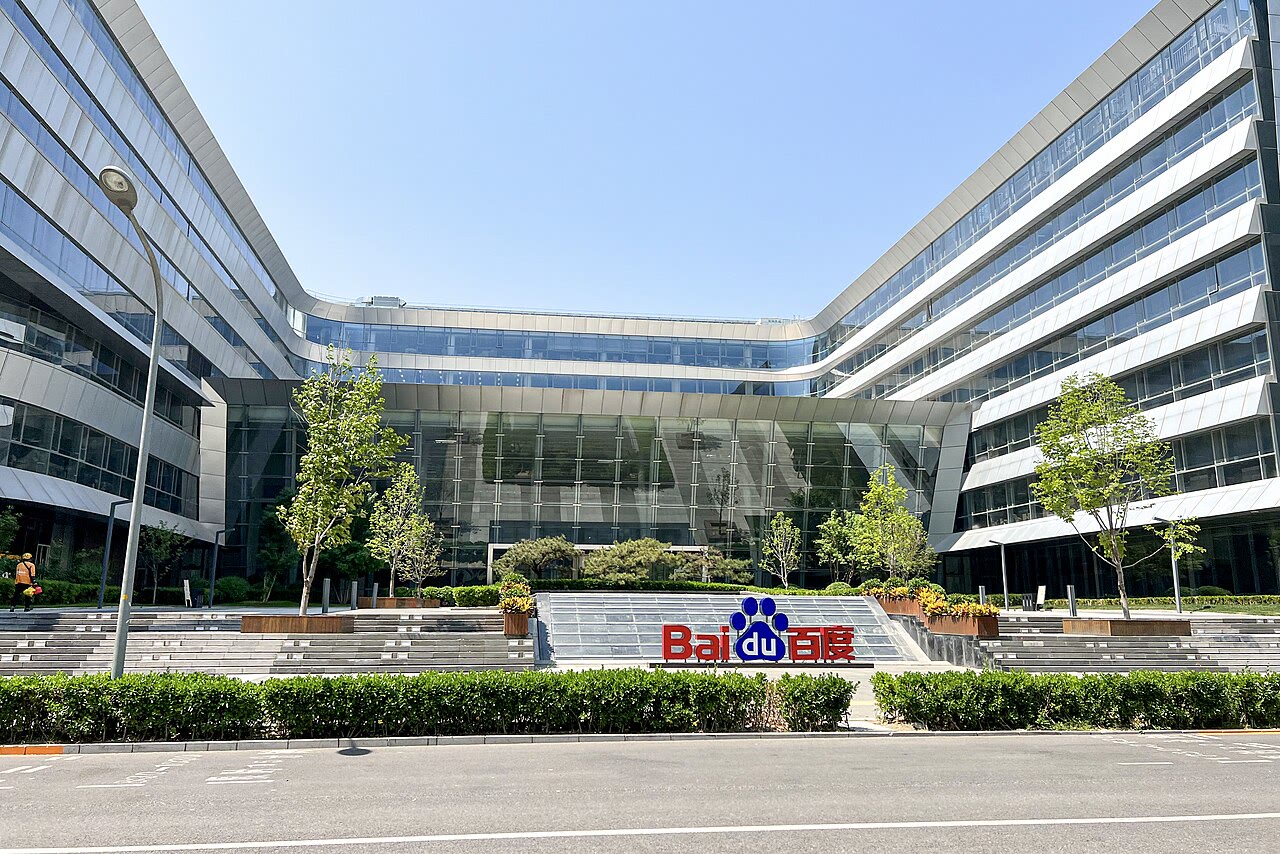
Image context: the cover uses a real Wikimedia Commons photograph of Baidu Technology Park at ZPark Phase II in Beijing. That is the right visual here because the video's real subject is not an abstract assistant persona. It is Baidu's attempt to package a desktop agent as part of a larger system product with infrastructure, skills, and enterprise routing underneath the friendly shell.[6]
Around 0:00 to 0:12, the clip starts with the desktop because Baidu wants the agent to inherit a real work surface
The opening frames stay on a Windows desktop and a DuMate window rather than on a heroic model animation.[1] The English subtitle says the product is integrated with Baidu AI Cloud's comprehensive skills and can interact directly with the screen, files, and browser.[1] That matters because it tells the viewer where the agent is supposed to live. This is not a browser tab that answers questions at a distance. It is meant to sit on the machine's working surface and use that surface as part of the execution path.
That placement matches the product document closely. Baidu says DuMate can see the screen, operate software, process files, and link business systems, which is a much more operational framing than "chat with an assistant."[2] In practice, that means the desktop is not decorative context. It is the product boundary. The user's files, open windows, and authorized software are supposed to become the materials the agent can work through.
Around 0:12 to 0:24, the command box shows the real handoff: goal-first input, then file and workflow execution
The next useful sequence centers on the prompt box and a task about organizing desktop spreadsheets, followed by the subtitle line about handling documents, data analysis, and emails from one desktop agent.[1] This is where the video's sales logic becomes more precise. Baidu is not telling the user to script every click. It is telling the user to describe the goal and let DuMate choose the route.
That claim only works because Baidu has already limited the route. The intro page says the user gives a goal and a working scope, after which DuMate handles task planning, built-in skill dispatch, and full-process execution.[2] The Qianfan update note adds the other necessary guardrails: parallel execution exists, but so do interruption and high-risk-operation confirmation.[4] My inference is that Baidu wants the viewer to read the command box less as a pure-language fantasy and more as a goal-to-workflow handoff. The agent is useful if it can turn one sentence into a controlled sequence across files, apps, and office tasks without requiring the user to micromanage every step.[1][2][4]
Around 0:24 to 0:54, the abrupt game metaphor reveals the product's real center of gravity: skills and orchestration
At about the quarter mark, the video stops looking like office software and turns into a side-scrolling game. The DuMate mascot runs through badges labeled enterprise-grade skills, then passes signs for Miaoda App Builder and other skill surfaces before collecting power-ups.[1] On a first watch this looks like pure advertising whimsy. On a second watch it explains the product much more clearly than the opening does. Baidu is saying that the desktop agent is valuable because it is attached to an ecosystem of callable capabilities rather than left alone as a blank general model.
This is exactly where the supporting documents become useful. DuMate's own update log says the product added a skill plaza on 2026-04-02 and later expanded native skills on 2026-04-12.[3] Baidu's Q3 2025 investor release says Qianfan had become more agent-centric and names GenFlow as a multi-agent platform.[5] Put beside the video, those sources make the game metaphor legible. The point is not that the mascot is cute. The point is that DuMate is being positioned as an orchestration shell that can pick up more skills, route into adjacent Baidu application surfaces, and become more useful by composition rather than by raw model generality alone.[1][3][5]
Around 0:54 to the end, the vertical signs and the closing promise make the product boundary even narrower
The last third of the video becomes more vertical. One sign advertises an intelligent marketing assistant; another presents AI-powered visual analysis across industries; then the video closes with a promise to unleash AI productivity through Baidu AI Cloud.[1] This is the least subtle part of the clip, but it is also the most revealing. Baidu is not really showing a universal desktop mind. It is showing a desktop shell that can route into narrower business functions.
That is why the local sandbox language matters so much. Without it, the whole pitch would sound like uncontrolled automation theater. With it, Baidu can make a more disciplined argument: the agent acts across real software and files, but it does so within a local isolated environment, under authorization rules, and with confirmation on risky actions.[2][4] The office desktop becomes an execution surface, not an excuse to ignore governance.
That is what makes this short worth embedding now. Its strongest claim is not that Baidu has solved the desktop once and for all. Its stronger and more durable claim is that Chinese AI products are moving toward managed execution surfaces. DuMate matters because it compresses several layers into one visible interface: natural-language task intake, skill routing, local sandboxing, business-software handoff, and a growing catalog of vertical functions.[1][2][3][4][5] The video looks playful, but the underlying strategy is sober. Baidu wants the desktop agent to feel less like a speculative copilot and more like a governed operating lane for everyday work.
Sources
- Baidu Inc., "DuMate | Your Desktop AI Agent," official YouTube video, published April 8, 2026.
- 百度智能云文档中心,《了解DuMate》(产品定义、屏幕/软件/文件/业务系统能力、本地安全沙箱与主要办公场景)。
- 百度智能云文档中心,《更新动态》 for DuMate(2026 年 3 月至 4 月版本更新,包括正式服务、技能广场与原生技能扩展)。
- 百度智能云文档中心,《更新动态》 for 百度千帆·大模型服务及Agent开发平台(2026 年 3 月 20 日关于 DuMate MVP 的上线说明,包括 MacOS/Windows、并行任务、安全沙箱与高风险操作二次确认)。
- Baidu, "Baidu Announces Third Quarter 2025 Results" (Qianfan upgraded to be agent-centric; GenFlow described as a general-purpose agent platform).
- Wikimedia Commons, "File:Baidu Technology Park at ZPark Phase II (20220502113650).jpg" (source page for the article image).