
Wireshark is easy to reduce to the moment everyone recognizes: a capture window fills with packets, a suspicious flow appears, and the investigator expands rows until the problem becomes visible. Graham Bloice's SharkFest 2019 class is useful because it pushes below that familiar surface. The talk is not mainly about clicking around the interface. It is about how Wireshark learns a protocol in the first place: a dissector receives bytes, registers where it belongs in the protocol stack, and writes structured fields back into the packet tree.[1][2]
That framing still matters for open-source operators in 2026 because Wireshark's value is not only that it can observe traffic. Many tools can capture or summarize traffic. Wireshark's deeper advantage is that its interpretation layer is extensible. If a proprietary industrial protocol, internal binary format, lab device, or emerging application protocol is not already decoded well enough, the project gives engineers several ways to teach Wireshark what those bytes mean.[1][4][5] The official user guide's packet-details pane is the everyday face of that system: protocol layers appear as expandable tree items, and fields become readable, filterable facts rather than anonymous offsets inside a payload.[3]
The video belongs in an annotated viewing because it makes a design boundary concrete. Bloice keeps returning to a practical question: how much machinery should a developer accept in exchange for better decoding, performance, and integration with Wireshark's existing framework?[1] The answer is not one-size-fits-all. Text descriptions, Lua scripts, and C dissectors each occupy a different point on the curve.
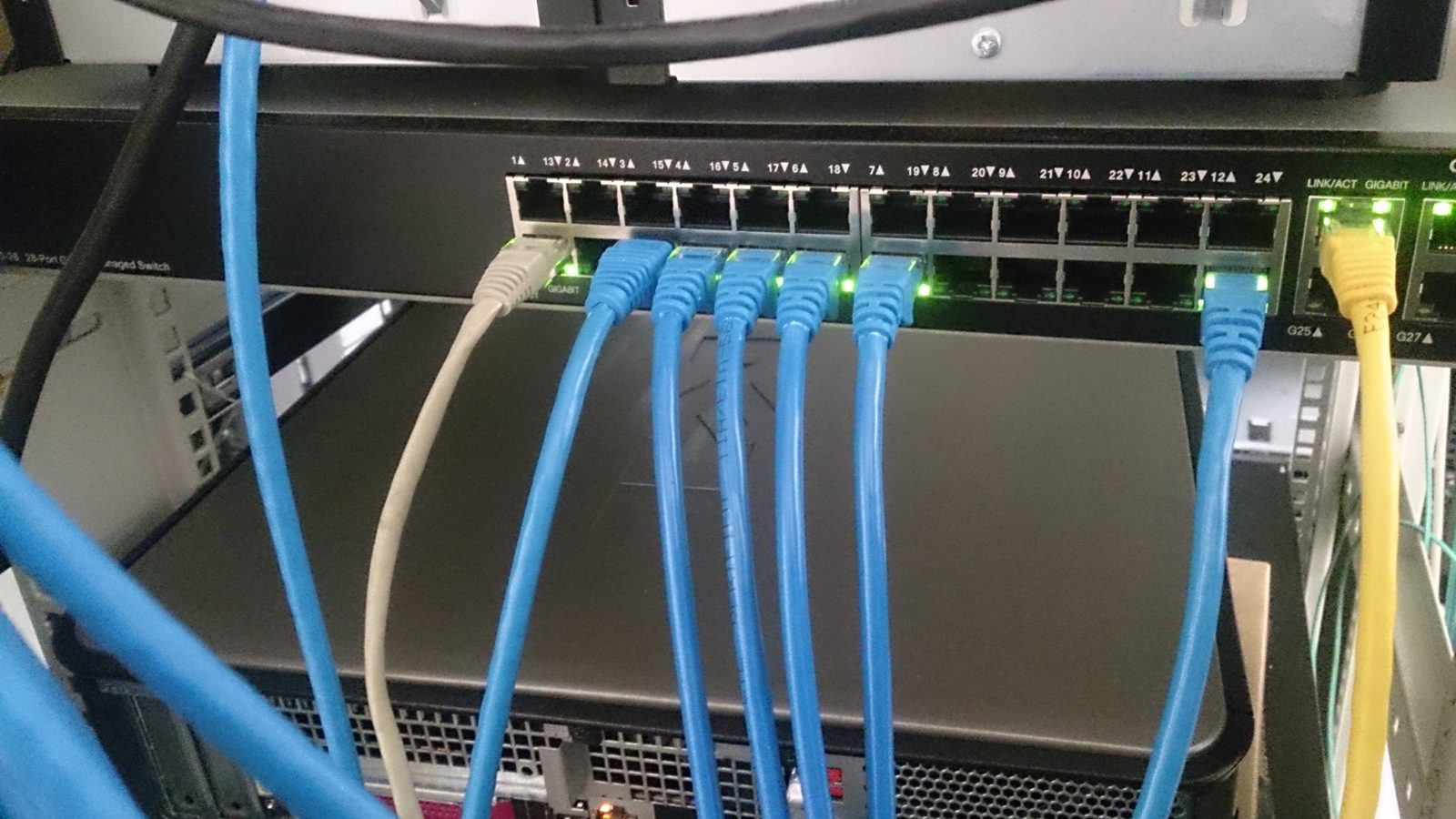
Image context: the cover image is a real photograph of Ethernet cables in a network switch. It is deliberately mundane. Wireshark's magic only matters because ordinary cables, switches, hosts, and captures generate opaque byte streams that need a disciplined interpretation layer before humans can reason about them.[6]
Around 4:11, capture input is separated from protocol meaning
One of the best early moments arrives when Bloice explains that Wireshark abstracts where traffic came from. A dissector writer does not need to care whether the bytes came from a live network card, a file format, or an external capture source. The dissector's concern is narrower: it receives a buffer of bytes and turns that buffer into protocol meaning.[1] That separation is easy to underappreciate. Without it, every protocol decoder would have to know too much about capture plumbing, file formats, and output presentation.
The official documentation reflects the same division from the user's side. The packet-details pane presents decoded protocol information as a hierarchy of expandable items, while the underlying packet bytes remain available separately.[3] In other words, Wireshark keeps capture, raw bytes, and interpreted structure distinct enough that each layer can be inspected on its own terms. That is why a packet analyzer can be useful to both a network operator and a protocol implementer. The operator needs a readable tree. The implementer may need the byte offsets and field encodings that produced that tree.
This is the first useful lesson from the video: a dissector is not a visual formatter. It is an adapter between raw transport payload and Wireshark's common model of protocol fields. Once a field enters that model, it can show in the GUI, appear in command-line output such as TShark, support filtering, and participate in the broader analysis workflow.[1][3]
Around 6:06, registration turns decoding into a stack contract
Bloice then moves from "what a dissector does" to how Wireshark knows when to run it. Dissector registration is the hinge. A decoder declares the kind of traffic it handles, and in the common TCP case it attaches itself to a lower-level table such as a TCP port table.[1] That means Wireshark decoding is not just a pile of independent parsers competing for bytes. It is a stack of delegated interpretation.
The current developer guide is explicit that dissectors live inside Wireshark's dissection framework and are called to analyze packet data, add fields, and pass remaining data to subdissectors where appropriate.[4] That is the important architectural shape. Ethernet, IP, TCP, application protocols, and nested formats do not all flatten into one parser. Each layer consumes the part it understands, then hands off the payload or substructure to the next registered interpreter.
For teams debugging internal protocols, this matters operationally. The first design question is not "Can I parse this payload?" It is "Where should this parser attach?" A fixed TCP port is simple. Heuristic detection, preference-driven ports, tunneling, or content-type dispatch become more delicate because the registration decision itself affects whether Wireshark will call the right code at the right layer.[1][4] A bad parser can be annoying, but a bad attachment point can make good parsing invisible.
Around 10:31, the three implementation lanes expose the tradeoff
The talk's title promises three ways to eat bytes, and this is where the structure becomes clear. Bloice describes text-based protocol descriptions first, then Lua, then C dissectors.[1] That ordering is valuable because it moves from low barrier to high integration rather than pretending that the "most powerful" route is always the right first route.
Text descriptions are attractive when a protocol is simple and the goal is quick visibility. The barrier is low: write a description file, keep the format readable, and let supporting machinery interpret or generate the dissector.[1] The cost is flexibility and, in interpreted cases, speed. Bloice is careful to separate generated C paths such as ASN.1 tooling from simpler interpreted descriptions, which is the right distinction. "Text-based" can mean a quick decoder, or it can mean a source format that feeds a stronger generated implementation.[1]
Lua sits in the middle. Wireshark's Lua support gives developers a scripting path into much of the dissection interface without building Wireshark from source.[1][5] That makes it a strong lane for internal protocols, temporary investigations, field work, and teams that need a decoder before they need a polished upstream contribution. The official Lua dissector example shows the key pattern: define a protocol object, define fields, implement a dissector function, and register it with a table such as tcp.port.[5] That is the same architectural contract as the C path, but with a more forgiving development loop.
C is the deep integration lane. It has the highest setup cost, but it gives access to the full infrastructure and the same style used by Wireshark's built-in dissectors.[1][4] The tradeoff is not only syntax. It is maintenance responsibility. A C dissector can be fast and complete, but it also has to meet project expectations around code style, memory safety, review, build integration, and long-term protocol behavior.
Around 50:10, Lua shows why the middle lane is often the practical one
The Lua section is the most useful part of the video for many real teams because it demonstrates how little ceremony is needed to make a private protocol visible. Bloice walks through a script that declares the protocol, processes a buffer, fills the protocol tree, retrieves the TCP dissector table, and adds itself for a chosen port.[1] The official Lua example documents the same general pattern: Lua can create Proto and ProtoField objects, define the dissector body, and register with a dissector table.[5]
That makes Lua a good default for the first serious decoder in many organizations. If the protocol is still changing, a Lua dissector can evolve quickly. If an incident requires interpreting a capture today, a Lua file can be loaded without waiting for a full C build path. If the decoder later proves valuable enough to upstream or harden, the script has already clarified field names, offsets, length rules, and registration behavior.
The boundary is equally important. Lua is not a shortcut around protocol design. It still forces the author to decide which bytes are lengths, flags, enums, strings, checksums, nested structures, or payload handoffs. That is the discipline Wireshark adds. It makes the developer write down the protocol's actual shape rather than merely eyeballing hex dumps and keeping tribal knowledge in a chat thread.[1][5]
Around 55:15, C becomes a maturity signal rather than a badge
Near the end, Bloice notes that C gives access to the full Wireshark infrastructure but requires higher knowledge, a development setup, debugging, and attention to the existing developer documentation.[1] He also points out that the source tree contains many dissectors that can be studied, from simple examples to very large and complicated implementations.[1] That advice is pragmatic. C is powerful because it joins the same ecosystem as the rest of Wireshark, but joining that ecosystem means accepting its expectations.
The broader lesson is that Wireshark's extensibility is tiered on purpose. A text description may be enough to make a small format readable. Lua may be enough to support a team's private protocol for years. C may be justified when performance, completeness, upstream distribution, or deep framework integration matters.[1][4][5] The best choice is the one that matches the protocol's stability, audience, complexity, and failure cost.
That is why this SharkFest class still earns attention. It shows Wireshark as a protocol workbench, not only a packet viewer. The project becomes most powerful when engineers treat decoding as an explicit extension contract: attach at the right layer, consume the right bytes, emit the right fields, and leave enough structure behind that the next person can filter, inspect, and debug without rediscovering the protocol from scratch.[1][3][4]
Sources
- SharkFest Wireshark Developer and User Conference, "SF19US - 03 Writing a Wireshark Dissector: 3 ways to eat bytes (Graham Bloice)," YouTube video, uploaded June 12, 2019.
- SharkFest retrospective, "SharkFest'19 US" - event archive listing the Graham Bloice dissector session and conference context.
- Wireshark User's Guide, "The Packet Details Pane" - official guide to protocol-tree presentation in packet analysis.
- Wireshark Developer's Guide, "Packet Dissection" - official developer guide to dissector behavior and framework integration.
- Wireshark Developer's Guide, "Example: Dissector written in Lua" - official Lua dissector pattern with protocol fields and table registration.
- Wikimedia Commons, "File:Network cables and switch.jpg" - source page for the article's real photographic cover image.