Tekton is easy to misunderstand if the first question is, "Can it replace Jenkins?" Sometimes it can, but that framing hides the actual migration. Tekton is not mainly a CI product with a Kubernetes deployment option. It is a set of Kubernetes custom resources for declaring build and delivery work as cluster-native objects: Task, TaskRun, Pipeline, PipelineRun, event triggers, result storage, and supply-chain signing surfaces.[1][2][4][5][6]
As of 2026-06-04T22:32:41Z UTC, the tektoncd/pipeline repository showed 8,981 stars, 1,925 forks, 549 open issues, and a push timestamp of 2026-06-04T18:42:12Z through the GitHub API.[8] The latest GitHub release was v1.13.0, published on 2026-05-29.[7] Those numbers are not a blanket adoption argument. They are a freshness check for a project that sits directly in the build path, where stale controllers, unclear CRD versioning, and weak operational ownership become production friction quickly.
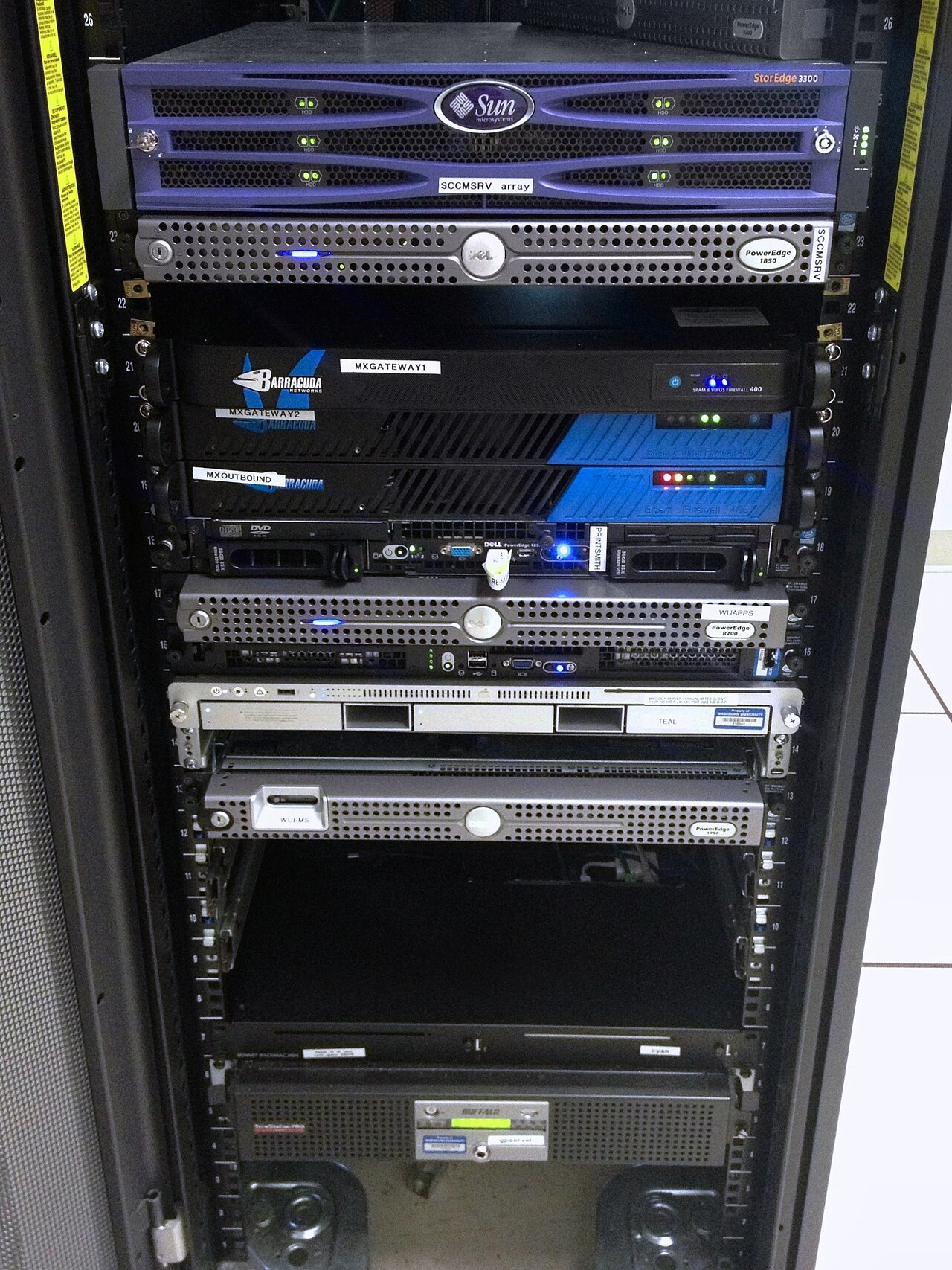
Image context: the cover avoids product marks and abstract CI/CD visuals. A mixed server rack is the right visual register because the article's question is operational: once CI/CD work becomes Kubernetes work, the hard parts are execution locality, network access, storage, credentials, cleanup, and audit trails.[9]
The migration starts with the unit of work
Tekton's concept model defines a Task as a collection of steps, and each step runs as a container in a Kubernetes pod.[1] That detail is the adoption hinge. A Tekton task is not a shell stage hiding inside a central CI server. It is a pod-shaped execution contract with images, scripts, parameters, workspaces, results, sidecars, service-account permissions, and Kubernetes scheduling consequences.[1][2]
That makes Tekton attractive when a platform team already wants CI/CD work to live near Kubernetes primitives. Build steps can use ordinary container images. Credentials can be attached through Kubernetes service accounts and secrets. Workspace volumes can make source trees, caches, or intermediate files visible to the right steps. Task results can pass small string values forward to later tasks, while larger payloads should move through a workspace or external storage instead of abusing the result channel.[2]
This is also where casual migrations fail. If a team lifts one giant Jenkinsfile into one giant Tekton task, it keeps the old control surface and adds Kubernetes complexity. A stronger migration breaks the work into task contracts that can be reused and reviewed independently: clone, test, build image, scan, sign, publish, deploy. The split should follow ownership and data boundaries, not just visual pipeline boxes.
The practical rule is simple: use Results for small facts that steer the graph, use Workspaces for shared files, and use external artifact storage for real build outputs.[2] If every task writes to one large shared workspace with loose conventions, the pipeline becomes a remote shell script with YAML overhead. Tekton's value appears when the data moving between tasks is explicit enough that another team can safely reuse or replace one piece.
Pipelines are graphs, not stage lists
A Pipeline collects tasks and describes how they relate. The docs frame pipelines as sets of tasks whose order can be controlled through dependencies, runAfter, task results, parameters, workspaces, and other execution controls.[3] That sounds familiar to any CI user, but the Kubernetes-native shape changes the maintenance model.
In a classic CI server, the pipeline engine owns the whole runtime. In Tekton, the pipeline controller reconciles Kubernetes resources that create pods and related objects. That means failures are easier to inspect with cluster tooling, but they also inherit cluster concerns: namespace boundaries, RBAC, pod security, node capacity, image pull policy, PVC behavior, cleanup, and controller upgrades.[1][3]
This is the first decision point for adoption. Tekton is a good fit when a platform group wants CI/CD to be part of the same control plane that already governs workloads. It is weaker when the organization wants a batteries-included CI appliance with a thick UI, hosted runner fleet, and minimal cluster operations. Tekton gives flexibility by exposing the machinery. Exposed machinery still needs owners.
The best early pipeline is therefore boring and narrow. Pick one service, one image build path, and one deployment lane. Define the tasks as reusable contracts. Keep the first pipeline short enough that every workspace, result, parameter, and credential can be explained in review. Then add fan-out, matrix behavior, or cross-repo orchestration only after the simple path is observable.
Triggers are the webhook boundary, not a magic front door
Tekton Triggers adds the event-ingress layer. Its docs describe an EventListener as a Kubernetes object that listens for events, then uses Triggers, TriggerBindings, TriggerTemplates, and optional Interceptors to extract payload fields and instantiate TaskRuns or PipelineRuns.[4]
That is powerful, but it should be treated as an exposed boundary. A webhook payload is not just a convenient start button. It is untrusted input that can select revisions, repositories, environments, or deployment paths. TriggerBindings map event data into parameters. TriggerTemplates turn those parameters into run objects. Interceptors can filter, validate, or transform payloads before the run is created.[4]
For adoption, this means the trigger layer needs the same design care as an API endpoint. Which service account creates runs? Which namespaces are allowed? Which repositories can trigger production pipelines? Which fields are trusted from the payload, and which are resolved server-side? Which events are recorded for debugging when a run was not created? Tekton does not remove these questions. It gives them Kubernetes resources.
The clean migration path is to start with manually created PipelineRuns, then add Triggers once the run contract is stable. If the team cannot explain a manual run, adding webhook automation will only make failures harder to separate: was the bug in the pipeline, the event payload, the binding, the template, the interceptor, or the permissions?
Results and Chains mark the maturity line
Tekton Results and Tekton Chains are useful precisely because basic pipeline execution is not enough for a serious delivery system. Results aims to group CI/CD workload history and separate long-term result storage from the Pipeline controller, so completed TaskRun and PipelineRun objects can be cleaned up while run records and logs remain queryable elsewhere.[5] That matters because Kubernetes etcd is not meant to be an infinite CI history database.
Chains addresses another boundary. Its docs describe a controller that observes completed TaskRuns and PipelineRuns, snapshots them, converts the data into standard payload formats, signs it, and stores signatures or attestations in configured backends.[6] That moves Tekton from "run these steps" toward "produce evidence about what ran, what artifact came out, and how that evidence can be verified."[6]
Those components should not be treated as decoration. Results asks who owns run history, retention, and query access. Chains asks who owns key management, attestation policy, artifact identity, and downstream verification. A small team can defer both while proving the execution model. A regulated or supply-chain-sensitive team should design them early, because retrofitting audit trails after pipelines sprawl is usually harder than adding one more task.
Where Tekton fits
Tekton is strongest for platform teams that already operate Kubernetes well and want CI/CD to share that operational substrate. It fits organizations that value reusable task contracts, pod-level execution control, cluster-local credentials, Kubernetes-native audit surfaces, and the option to add event triggers, result storage, and signed attestations as first-class components.[1][4][5][6]
It is weaker when the real need is a hosted CI service with minimal platform ownership. Tekton will not erase the need for runner capacity planning, image hygiene, secret boundaries, log retention, UI expectations, or developer support. It makes those responsibilities more explicit. That is a good trade only if the team is prepared to own them.
The adoption sequence should be conservative:
- Model one build path as reusable
Tasks, with parameters, workspaces, and small task results kept deliberately narrow.[2] - Compose those tasks into one
Pipelinewhose graph is understandable without hidden shell state.[3] - Run it manually before exposing it through Triggers.[4]
- Add Results when run history and logs need a durable home outside live CRDs.[5]
- Add Chains when artifact provenance and signed execution evidence are part of the delivery contract.[6]
That sequence keeps Tekton from becoming YAML theater. The point is not to recreate an old CI server inside Kubernetes. The point is to decide, explicitly, which parts of delivery should become Kubernetes objects and which parts should stay outside the cluster. Tekton pays off when that boundary is intentional.
Sources
- Tekton documentation, "Concept model" - basic components,
Task,TaskRun,Pipeline,PipelineRun, and pod-based step execution. - Tekton Pipelines documentation, "Tasks" - steps, parameters, workspaces, task results, sidecars, and result-size guidance.
- Tekton Pipelines documentation, "Pipelines" - pipeline task composition, dependencies, parameters, workspaces, and pipeline execution model.
- Tekton documentation, "Triggers and EventListeners" -
EventListener,Trigger,TriggerBinding,TriggerTemplate, andInterceptorroles. - Tekton documentation, "Results" - long-term result storage, Records, Results API, watcher, retention agent, and cleanup motivation.
- Tekton documentation, "Supply Chain Security" - Tekton Chains controller behavior, signing, attestations, and storage backends.
- GitHub releases,
tektoncd/pipelinev1.13.0 - current release tag and publication timestamp used for the freshness check. - GitHub API,
tektoncd/pipelinerepository metadata sampled on 2026-06-04 - stars, forks, open issues, and push timestamp. - Wikimedia Commons, "Rack with varoius servers.jpg" - real data-center rack photograph used as the article image source.