OSV-Scanner is easy to describe as a vulnerability scanner. That description is accurate but too broad to be useful. Its more precise architecture is a two-stage evidence pipeline: first extract package facts from the software surface in front of it, then match those facts against vulnerability records that are designed to describe affected package versions or commit ranges.[1][5] The scanner matters in 2026 because many teams do not need another dashboard claiming to know risk in the abstract. They need a dependable way to connect a lockfile, SBOM, source tree, or container image to known open-source vulnerability data without losing track of where each finding came from.
That evidence boundary is the useful way to read the project. OSV-Scanner is not a complete application-security program, and it should not be judged as one. It does not know whether a vulnerable function is reachable in every language, whether an exploit path is exposed in production, or whether a business exception is justified. What it can do is keep the first question clean: which packages, versions, commits, and artifacts are present, and which OSV records match them?[1][2][5]
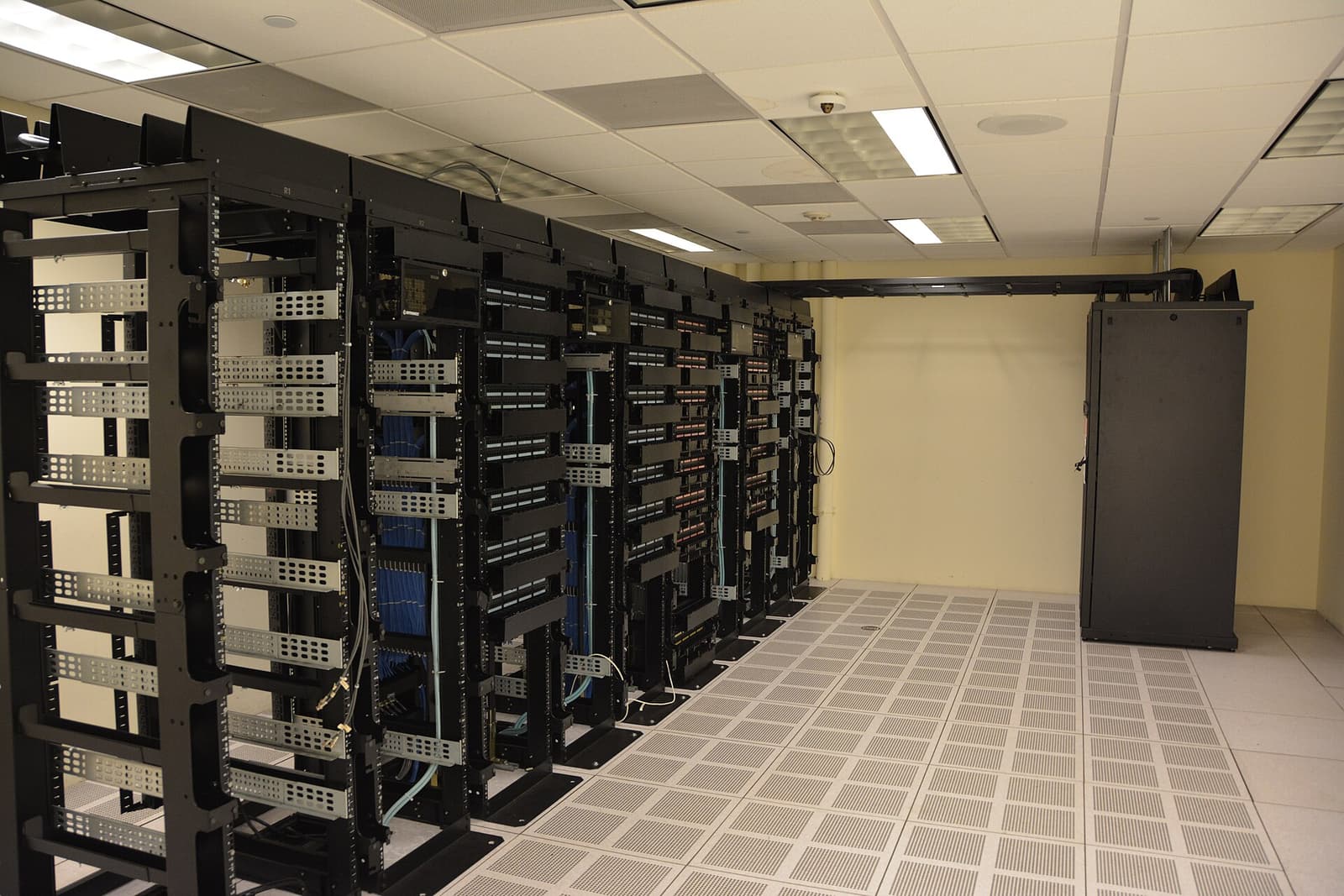
Image context: the lead image is a real Wikimedia Commons photograph of data-center server racks, not a generated security graphic or diagram. The choice is deliberate: OSV-Scanner's architecture is about operational evidence. Vulnerability data becomes useful only when it is connected to the software inventories that actually pass through build and runtime infrastructure.[8]
The core split is extraction before judgment
The official usage documentation states the model plainly: OSV-Scanner first extracts package information from a project, container image, or other target, then matches that extracted package information against known vulnerability databases.[1] That sounds obvious until you compare it with how vulnerability scanning often fails in practice. Teams skip straight to severity counts, then discover that the input was a stale manifest, an incomplete SBOM, an image that differed from production, or a transitive dependency graph resolved under different registry assumptions.
OSV-Scanner's design pushes the conversation back toward input quality. A source scan is different from an image scan because the evidence is different. The supported-artifacts documentation makes that distinction explicit: when scanning source, the scanner looks for lockfiles and manifests; when scanning containers, installed artifacts matter more than lockfiles lying around inside the filesystem.[2] That is the right architectural boundary. A package-lock.json tells you what a project intended to resolve. A container layer tells you what actually landed in the image. Treating both as identical evidence would be convenient and wrong.
This also explains why OSV-Scanner integrates extraction logic through OSV-Scalibr and then exposes a broad but structured list of supported inputs. Source scanning covers lockfiles and manifests across Go, JavaScript, Python, Rust, Ruby, PHP, .NET, Java, Dart, Elixir, Haskell, R, and other ecosystems; image scanning can extract installed OS packages and language artifacts such as Go binaries, Java uber jars, Node modules, and Python wheels.[2][6] The point is not that every ecosystem is solved forever. The point is that the scanner's architecture begins by asking what kind of artifact it is looking at.
OSV's database shape is part of the scanner's architecture
OSV-Scanner is tightly coupled to the OSV database model. OSV describes itself as an aggregator of vulnerability databases using the OSV schema, including GitHub Security Advisories, PyPA, RustSec, the Global Security Database, and other sources.[5] Its public API can query known vulnerabilities by commit hash or package version.[5] The OSV introduction adds the architectural reason: OSV is meant to help developers identify known third-party dependency vulnerabilities that pose genuine risk, while its infrastructure works to represent affected versions accurately through bisection and version analysis.[5]
That is why OSV-Scanner can be more exact than a generic CVE string matcher. The OSV schema is maintained through the OpenSSF Vulnerability Disclosures Working Group, and the schema's purpose is to represent open-source vulnerability data in a machine-readable form that can map to package ecosystems and affected ranges.[7] For scanner users, that governance detail matters. A vulnerability record is not merely a headline. It is a structured claim about which package, version range, or commit range is affected.
The C/C++ support shows the value and the limit of that model. Because C and C++ often lack a single central package-manager truth, OSV-Scanner can use OSV commit-level data for submoduled or vendored dependencies, and it can use OSV's determineversion API to estimate versions for copied-in dependencies that do not retain Git histories.[2] That is a strong design choice because it respects how C/C++ dependencies are actually embedded. It is also a reason for caution: the same docs warn that commit-level data covers the majority of C/C++ vulnerabilities in OSV, but some vulnerabilities may still be excluded from results.[2] In other words, better evidence does not become perfect evidence.
Output should preserve provenance, not just count findings
The scanner's output design reinforces the same principle. For each vulnerability, OSV-Scanner reports the OSV URL, severity score, ecosystem, package, version, fixed version when available, and the source path where the package originated.[3] For container layer scanning, it can additionally report the layer where a package was introduced, layer history and commands, base images, and OS or distro information.[3] Those fields are not cosmetic. They are what make a finding reviewable.
A triage meeting that begins with "we have 47 highs" is usually too late and too vague. A better triage question is narrower: which package version from which lockfile, image layer, or SBOM triggered which OSV record, and is a fixed version known?[3] OSV-Scanner is useful when it keeps that chain visible. It is less useful if teams flatten the output into a single red number and then lose the source path that would let an owner fix the issue.
Call analysis is the most interesting triage layer because it tries to separate vulnerable packages from vulnerable code paths. In table output, OSV-Scanner can split findings between vulnerabilities affecting code called by the project and vulnerabilities affecting code paths not called by the project, when --call-analysis=<lang> is enabled.[3] That does not make the uncalled category safe by definition. Reachability analysis is language-specific, incomplete, and subject to runtime behavior. But it does add a crucial middle layer between "present in dependency tree" and "known to be exploitable here."
That middle layer is where mature vulnerability management lives. Presence should trigger attention. Reachability should sharpen priority. Production exposure, compensating controls, and exploit maturity should still be evaluated by humans and policy. OSV-Scanner can support that sequence; it should not replace it.
Configuration is where policy starts to become auditable
OSV-Scanner's osv-scanner.toml support is easy to overlook, but it is one of the architecture's practical control surfaces. The configuration docs allow ignored vulnerability IDs, optional expiry dates, reasons, and package overrides that can ignore packages, ignore vulnerabilities, ignore or override licenses, and set effective-until dates.[4] This is the difference between a scanner that trains people to click past noise and a scanner that can carry reviewable exceptions.
The important rule is that ignores should be treated as policy records, not as local silencing. An exception with a reason and expiry date is reviewable. A permanent unreasoned ignore is just hidden debt. OSV-Scanner gives teams enough structure to make that distinction visible, but it cannot force the governance habit. That belongs to the repository owner.
The GitHub Action shape points in the same direction. The official docs offer a pull-request workflow that compares a target branch scan with a feature branch scan and reports new vulnerabilities introduced through the PR, plus a full scheduled scan that can run on pushes or a regular schedule.[9] That split is healthy. PR scanning is for preventing new intake. Scheduled scanning is for catching advisory drift after dependencies have already landed. Treating those as the same control creates false confidence.
Remediation is useful only when its risk is explicit
OSV-Scanner's guided remediation feature is powerful because it moves from detection toward change planning. The docs describe osv-scanner fix as an experimental feature that can analyze the full transitive graph, prioritize direct dependency upgrades by the number of transitive vulnerabilities fixed, weigh severity and dependency depth, and modify manifests or lockfiles for supported ecosystems.[10] That is exactly the kind of assistance teams need when vulnerability queues are long.
The warning attached to the feature is equally important. The docs state that guided remediation can be risky on untrusted projects because it may trigger package-manager behavior, scripts, or external registries specified by the project.[1][10] That warning should not be treated as boilerplate. It defines the boundary between scanner output and build-system execution. A command that reads evidence is one thing. A command that runs a package manager and rewrites dependency state is another.
The practical adoption pattern follows from that boundary. Run OSV-Scanner early and often for evidence. Use PR checks to block newly introduced known vulnerabilities when the signal is clear. Use scheduled scans to catch newly disclosed issues. Use configuration files to make exceptions auditable. Use guided remediation in trusted repositories where review, tests, and package-manager behavior are understood.
OSV-Scanner's best architecture claim is modest and durable: vulnerability scanning should stay close to dependency evidence, and the output should preserve enough provenance for humans and policy engines to make the next decision. That is not a complete security program. It is the layer a complete program needs before severity, reachability, ownership, and remediation can mean anything precise.
Sources
- OSV-Scanner documentation, "Usage" - core package-extraction and vulnerability-matching model, scan subcommands, output flags, offline matching, license scanning, and guided-remediation warning.
- OSV-Scanner documentation, "Supported Artifacts and Manifests" - source versus container evidence boundaries, supported lockfiles and artifacts, C/C++ commit scanning, vendored dependency handling, and transitive Maven scanning.
- OSV-Scanner documentation, "Output" - reported fields, container layer output, formats, SARIF details, and call-analysis output behavior.
- OSV-Scanner documentation, "Configuration" -
osv-scanner.toml, ignored vulnerability IDs, reasons, expiry dates, and package override controls. - OSV.dev, "Open Source Vulnerabilities" and OSV introduction - database aggregation, OSV schema use, API queries by commit hash or package version, and affected-version accuracy goals.
- Google Security Blog, "Announcing OSV-Scanner V2" - OSV-Scalibr integration, expanded extraction support, layer-aware container scanning, and local HTML output.
- OpenSSF, "OSV Schema" - OpenSSF Vulnerability Disclosures Working Group stewardship of the OSV schema and reference tooling.
- Wikimedia Commons, "Datacenter Server Racks (22370909788).jpg" - real data-center rack photograph by Carl Lender, source page for the lead image.
- OSV-Scanner documentation, "GitHub Action" - pull-request scanning, scheduled scanning, release scanning, and workflow behavior.
- OSV-Scanner documentation, "Guided Remediation" - experimental
fixcommand, graph analysis, prioritization signals, manifest and lockfile changes, and supported remediation strategies.