osquery is often introduced as "SQL for endpoints," and that phrase is accurate enough to be useful. It is also incomplete. The stronger architecture claim is that osquery separates endpoint visibility into three layers: a table abstraction over local operating-system state, a daemon that can run scheduled queries across time, and a logging model that turns changing host facts into records other systems can consume.[1][2][3]
That separation matters because endpoint tooling often hides too much behind a product surface. A dashboard can show risk, but it may not show how a host fact was collected, how often it was sampled, or whether the same question can be asked outside the vendor's workflow. osquery takes the opposite posture. It exposes operating-system concepts as relational tables and lets teams ask direct SQL questions about them. The repository describes it as a SQL powered operating-system instrumentation, monitoring, and analytics framework for Linux, macOS, and Windows; the README gives examples such as users, processes, loaded kernel modules, open network connections, browser plugins, hardware events, and file hashes.[1]
The architectural center is the table layer. Instead of treating an endpoint as a special-purpose security appliance, osquery treats it as a database whose tables are generated from local system APIs. A process list, listening ports, users, packages, kernel extensions, certificates, shell history, scheduled tasks, and many other host facts can become queryable rows. That does not make endpoint security simple, but it changes the shape of investigation. The first question can become "What SQL describes the state I need?" rather than "Which proprietary screen might contain it?"[1][5]
The original Meta engineering post is still useful because it explains why the SQL model was not a gimmick. Meta framed osquery as a way to maintain real-time insight into infrastructure by representing current operating-system attributes as tables, then joining tables for context. One example joins processes to listening ports so the query can connect a network exposure to the process behind it.[5] That is the key move. osquery is not only a collection agent. It is a local context engine.
There are two practical modes. osqueryi is the interactive shell for prototyping and local exploration; it is the place to learn table names, test joins, and understand whether a question is cheap or expensive. osqueryd is the daemon that runs scheduled queries and emits logs over time.[5] Teams that skip this distinction tend to misuse the project. Interactive SQL is for exploration and triage. Scheduled daemon work is for controlled collection across a fleet.
The scheduling model is where osquery becomes operational infrastructure. Configuration can define scheduled queries and query packs. Packs are named sets of queries grouped around use cases such as compliance or vulnerability management, and each query can carry an interval, description, platform filter, version, shard, and other controls.[2] That gives platform and security teams a vocabulary for rollout. A query can start in a narrow pack, run only on selected platforms, execute at a specific cadence, and expand only after its cost and value are understood.
This is not cosmetic. Endpoint queries have blast radius. A cheap query against a few laptops can become expensive when it touches every server every minute. The configuration docs call out several controls that matter in production: scheduled query intervals, packs, snapshots, event-style tables, query denylisting, and the behavior of suspended machines.[2] The suspended-machine detail is a good example of osquery's real-world texture: a 24-hour interval means daemon runtime, so a laptop that sleeps at night may not execute the query exactly once per wall-clock day.[2] Fleet visibility is not only schema design; it is also timing, power state, and local execution behavior.
The logging model completes the architecture. osquery's scheduled query results are written as results logs. By default, these are differential changes between the previous query result and the current one, with JSON records indicating rows that were added or removed.[3] This makes osquery more efficient and more useful than a naive full dump of every table on every interval. A package appearing, a user being added, a process with a deleted executable, or a listening port changing can become a compact event-like record.
Differential logging also creates a boundary that teams need to understand. A differential result is not the same as a complete current inventory unless the query is designed and interpreted that way. The docs distinguish differential behavior from snapshot queries, which return the full result set at the given interval rather than only changes.[2][3] This is a small operational decision with large consequences. Use differentials when the important fact is change. Use snapshots when the important fact is complete state at a point in time. Confusing the two leads to missing context or flooding downstream storage.
The best osquery deployments start with boring questions. Which hosts have unexpected listening ports? Which machines have local users outside the expected set? Which browser extensions are installed? Which packages changed since yesterday? Which process is running from a deleted binary? These questions are not glamorous, but they fit the tool. They are local facts that become powerful when asked uniformly across a fleet.[1][5][6]
The independent ecosystem around osquery reinforces that reading. Elastic's documentation describes osquery as an open source tool for querying operating systems like a database, with use cases that include vulnerability detection, compliance monitoring, incident investigations, and infrastructure visibility across servers, containers, and computers running Linux, macOS, or Windows.[6] That is a useful secondary framing because it keeps osquery in the infrastructure layer. The value is not that every team gets one more console. The value is that endpoint facts can become portable data.
Governance history matters here too. In 2019, the Linux Foundation announced the formation of an osquery foundation, with Facebook, Google, Kolide, Trail of Bits, Uptycs, and other users or contributors involved in supporting a neutral ecosystem.[4] The announcement described osquery as having more than 280 contributors and 5,000 commits at that point, and emphasized the goal of long-term stewardship under an open governance model.[4] For a tool that may sit on many production endpoints, that neutrality signal is part of the architecture. Operators need confidence that the table layer and daemon are not merely an abandoned internal tool.
The adoption boundary is clear. osquery is a strong fit when a team already has a place to send, store, alert on, and review endpoint records: a log pipeline, SIEM, data lake, security platform, or custom analysis workflow. It is weaker when a team expects the agent alone to become a complete endpoint detection program. osquery can ask structured questions and emit structured answers. It does not automatically decide which questions matter, tune every interval, normalize every downstream schema, or turn raw host facts into incident response maturity.
A sensible rollout has four steps. First, use osqueryi to prototype a small set of high-signal queries on representative hosts.[5] Second, package those queries into a narrow scheduled config with conservative intervals and clear descriptions.[2] Third, send results logs into an existing pipeline and verify whether differential versus snapshot behavior matches the investigation need.[3] Fourth, measure cost and usefulness before broadening coverage. The point is not to query everything. The point is to make host questions repeatable enough that security and operations teams can trust the answers.
The failure modes are just as important. Overly broad schedules create noisy logs and local overhead. Under-described packs become mystery policy. Snapshot queries against large tables can generate more data than anyone will use. Differential queries can be misread as full inventory. Evented tables can create expectations of perfect real-time detection when the real deployment is still bounded by local buffering, schedule design, and downstream latency.[2][3] osquery gives teams a powerful grammar, but grammar still needs editorial discipline.
That is why osquery remains interesting in 2026. Many endpoint products promise visibility by wrapping the host in a vendor experience. osquery makes a different promise: expose the host as tables, let teams write explicit questions, schedule the questions carefully, and ship the answers as ordinary records. It is not the whole endpoint program. It is the layer that lets a team keep endpoint facts legible before higher-level tools turn them into alerts, scores, tickets, and dashboards.
Sources
- osquery GitHub repository - project description, supported operating systems, table abstraction, example SQL queries, schema links, and source code.
- osquery documentation, "Configuration" - scheduled queries, query packs, intervals, platform filters, snapshots, event tables, and denylisting behavior.
- osquery documentation, "Logging" - results logs, differential output, added/removed rows, snapshot behavior, and JSON logging formats.
- Linux Foundation, "The Linux Foundation Announces Intent to Form New Foundation to Support osquery Community" - governance transition, contributor ecosystem, and project stewardship context.
- Meta Engineering, "Introducing osquery" - original design framing, SQL over operating-system state,
osqueryi,osqueryd, and example investigative joins. - Elastic documentation, "Osquery" - independent product documentation framing osquery's infrastructure, security, compliance, and investigation use cases.
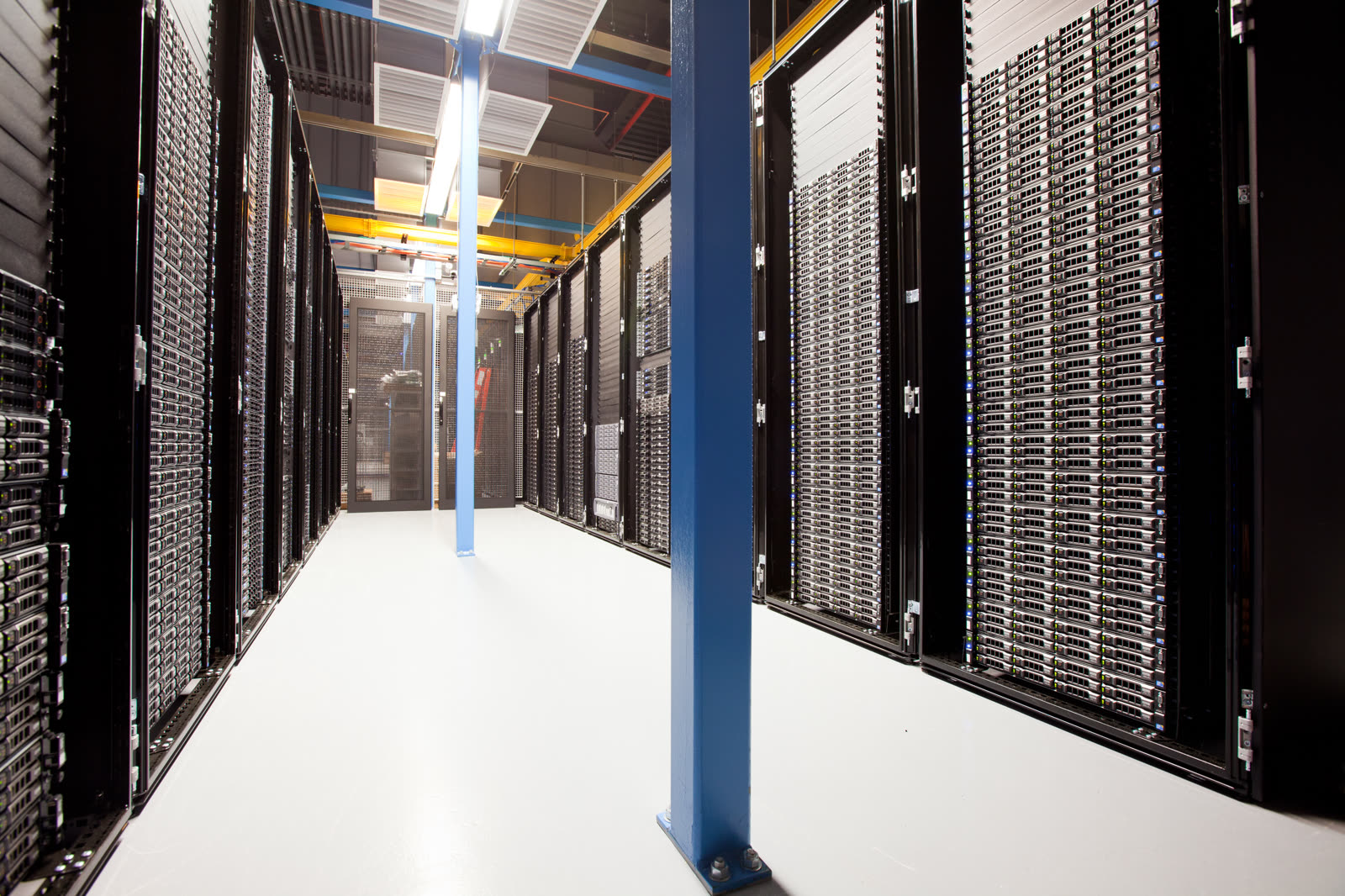
- Wikimedia Commons, "Wikimedia Servers-0051 19.jpg" - real 2012 server-rack photograph by Helpameout used as the article image source.