NetBox becomes interesting when the main network problem is no longer lack of data, but too many half-authoritative places to keep it. A prefix list lives in one spreadsheet, rack notes in another, VLAN intent in a wiki, device facts in configs, and automation has to guess which copy is real this week. NetBox exists to collapse that confusion into one network-specific source of truth. Its own documentation still describes it in the clearest terms: combine IP address management (IPAM) and datacenter infrastructure management (DCIM) with strong APIs and extensions, and you get a system built specifically for network engineers rather than a generic CMDB with network fields bolted on.[1]
That distinction matters more than the marketing phrase. NetBox is not valuable because it can hold "infrastructure information" in the abstract. It is valuable because its model is opinionated about what network operators actually need to track, how those objects relate, and how automation should read them back.[1][2][3] The boundary is just as important: NetBox works best when an organization can define which domains it will treat as authoritative there. It works badly when every team wants it to become the final resting place for all IT data, or when operators still expect live device state to outrank intended state whenever the two diverge.[2][7]
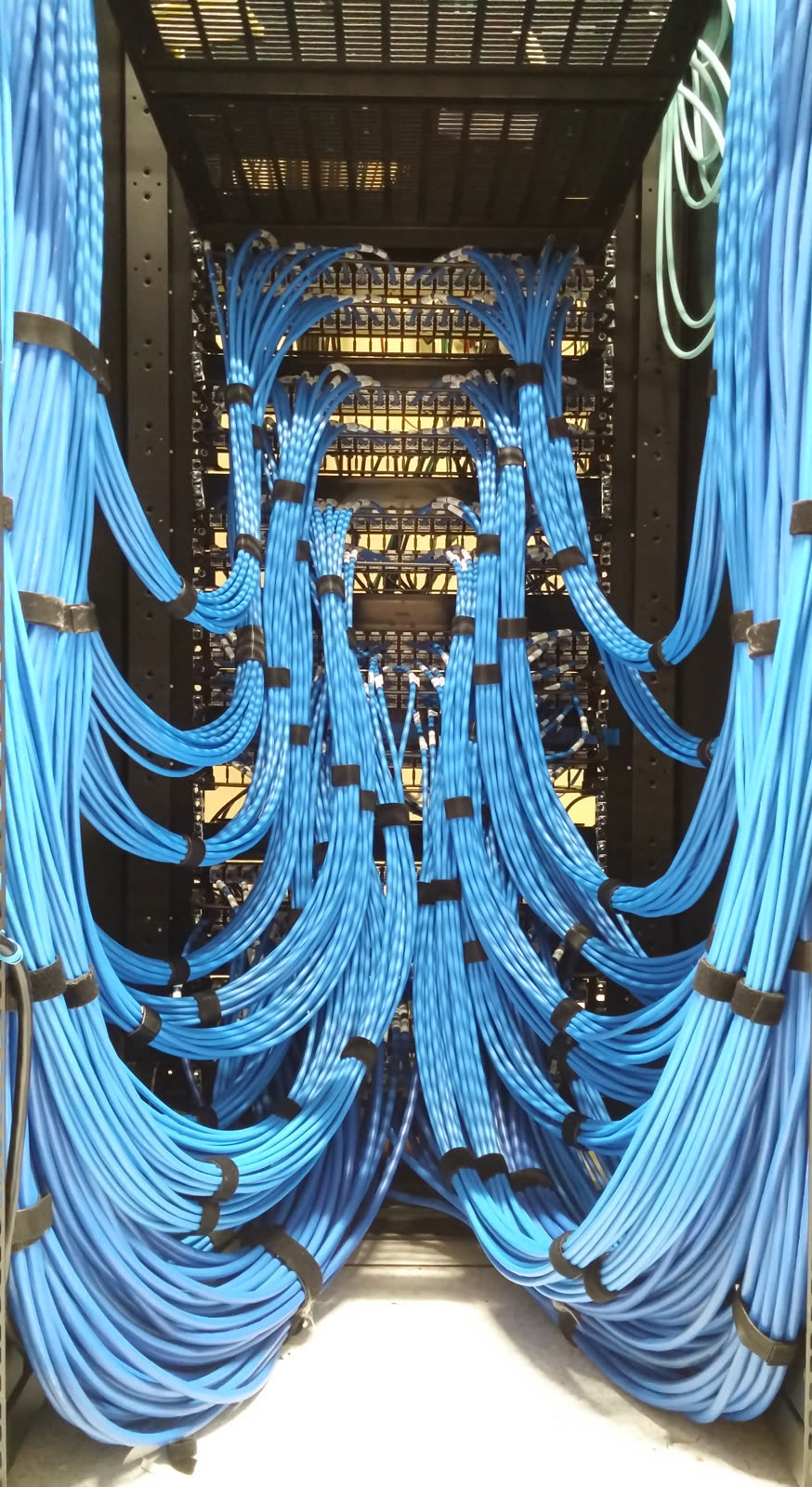
Image context: the cover uses a real Wikimedia Commons photograph of the rear side of a datacenter Ethernet patch panel.[8] That choice is deliberate. NetBox is not an abstract inventory philosophy. Its value shows up when records line up with actual ports, cables, racks, prefixes, and devices in the physical world.
1. The project is really about authority by domain
The most useful page in the official docs may be the planning guide, because it makes the source-of-truth problem sound less mystical and more operational. NetBox says anything can be a source of truth if two conditions hold: relevant parties agree it is correct, and the domain to which it applies is well-defined.[2] That sentence is the real product introduction.
It explains why NetBox gets traction in serious environments. Teams do not adopt it because they suddenly want one more inventory interface. They adopt it because network data often lacks an agreed authority. A spreadsheet may know prefixes, the device config may know what was typed at 2 a.m., and an automation repo may know what last week's template intended. None of those automatically deserves to win. NetBox's planning guide pushes the harder but healthier approach: decide which data belongs where, decide what should move into NetBox, and then validate that data before trusting automation to consume it.[2]
This also explains why NetBox is not just "a network wiki with an API." The point is not passive documentation. The point is to define a place where intended network state can be modeled strongly enough that other systems can depend on it. Red Hat's network-automation write-up makes the same practical argument from the outside: reading configuration directly from devices every time is inefficient and assumes the device already reflects intended state, when it may simply reflect what was left there during troubleshooting or drift.[7]
2. Why NetBox feels different from a generic CMDB
The homepage is blunt about the design philosophy. NetBox says it is "built for networks" and emphasizes a curated data model for network engineers and operators, covering IPAM, cabling, overlays, and related infrastructure objects.[1] That sounds like branding until you compare it with a broad CMDB pattern. Generic systems often promise that everything can be modeled eventually. NetBox starts by saying certain network objects already deserve first-class treatment.
That choice pays off in the IPAM layer especially. The documentation describes a concrete hierarchy of aggregates, prefixes, IP ranges, and IP addresses, with support for both IPv4 and IPv6 plus VRF-aware modeling.[1][6] This is not merely address bookkeeping. It is an attempt to make addressing intent legible enough that allocation, delegation, and overlap problems can be reasoned about structurally instead of through one-off notes.
The same logic extends into the physical estate. Racks, devices, interfaces, cables, sites, and similar objects are not side tables around the edges of the system; they are part of the main grammar.[1] That is why NetBox often becomes the place where IPAM and DCIM stop behaving like separate disciplines. A prefix can be tied back to devices and interfaces. A rack row or site model can live in the same authoritative system as VLAN groups and assigned addresses. The project becomes compelling when those previously separate truths start needing each other.
3. The API and extension surface are a large part of the product
NetBox would be much less interesting if it stopped at data entry. The REST API documentation makes clear that the whole application is exposed under /api/, split by application areas such as DCIM, IPAM, circuits, tenancy, users, and virtualization.[3] That structure matters because it turns the data model into something automation systems can query directly rather than scrape from HTML or reverse-engineer from exports.
This is one reason NetBox has remained sticky in automation-heavy teams. It does not ask engineers to treat the UI as the product and the API as a courtesy. The API is part of the operating surface. A provisioning system can look up prefixes. A config generator can resolve device relationships. Validation scripts can inspect intended state before changes are pushed. Once the network source of truth becomes addressable as ordinary API data, it stops being only a documentation tool.[3][7]
The extension story matters too, but the docs frame it with useful restraint. Custom fields let teams attach extra attributes to supported models without breaking the core schema, and those values remain available through the REST API as structured data.[4] Plugins go further: they can add models, views, menu items, middleware, and their own configuration parameters, but they are explicitly prevented from modifying or overriding core models.[5] That limitation is a strength. It preserves the integrity of the central network model while still giving organizations room to extend around it.
This is where the project boundary gets clearer. NetBox is flexible, but it is not trying to become an anything-goes platform. If the core model does not own a domain, you either extend carefully or keep that domain authoritative somewhere else.[2][4][5] That is much healthier than pretending one tool should absorb every operational fact in the company.
4. Why it still matters now
A lot of mature OSS infrastructure projects get praised long after their actual development energy becomes hard to see. NetBox does not currently look like one of those museum pieces. The GitHub releases page shows v4.6.0 as the latest release on 2026-05-05, and the release itself is revealing.[6] The headline changes are not cosmetic. New cable bundles improve how physical cable runs can be represented as managed units; REST responses for individual objects now include ETag headers so clients can protect updates with If-Match; and the API adds cursor-like start pagination to avoid the cost of scanning large result sets with relative offsets.[6]
Those details tell you what the maintainers think the project is for. Cable bundles tighten the physical-network side of the model. ETags and improved pagination tighten the automation side. In other words, NetBox is still investing in the same two promises that made it useful in the first place: model real network structure well enough, and expose it safely enough that machines can depend on it.[3][6]
That is the strongest "why now" case for a new adopter. NetBox is not just conceptually right; it is still being sharpened along the same operational lines that serious users care about.
Best fit and boundary
NetBox is strongest when a network, platform, or infra team needs one authoritative system for intended network structure, and is willing to decide where authority starts and stops.[1][2][7] It is a good fit when prefixes, sites, racks, devices, interfaces, and related metadata need to feed automation, review, and operational coordination from one coherent model. It is also a good fit when the team is ready to treat API access, custom fields, and narrowly scoped extensions as first-class operating tools rather than afterthoughts.[3][4][5]
The mismatch appears in three common cases. First, when nobody can agree which data domains NetBox should actually own, the tool becomes another place to duplicate uncertainty instead of removing it.[2] Second, when teams want a universal CMDB for every application, asset, and business process, NetBox's network-first model will feel deliberately narrow.[1][5] Third, when operators expect live device state to remain the highest authority and merely want NetBox to mirror it later, the source-of-truth contract becomes unstable.[2][7]
That is why the right introduction to NetBox is not "open-source IPAM/DCIM." The better introduction is this: NetBox is a network-specific authority system. It matters when the work depends on one trustworthy model of prefixes, devices, racks, and relationships, and when that model has to be legible to both humans and automation. The moment your team is ready for that contract, NetBox starts making a lot of sense.[1][2][3][7]
Sources
- NetBox Documentation, "The Premier Network Source of Truth" - project framing, network-specific data model, and the IPAM/DCIM + APIs + extensions positioning.
- NetBox Documentation, "Planning Your Move" - the two conditions for a source of truth, domain boundaries, and guidance on deciding what belongs in NetBox.
- NetBox Documentation, "REST API Overview" -
/api/structure, application hierarchy, and the API-first operating surface. - NetBox Documentation, "Custom Fields" - how teams extend supported models while keeping custom data available through the API.
- NetBox Documentation, "Plugins" - plugin capabilities, version compatibility, and the rule that plugins cannot modify core models.
- GitHub, "Releases · netbox-community/netbox" - latest
v4.6.0release, cable bundles, REST API ETags, andstartpagination. - Red Hat, "Using NetBox for Ansible Source of Truth" - external operator framing for intended state and why device configs alone are a weak authority.
- Wikimedia Commons, "File:Ethernet Patch Panel 20171121 130458.jpg" - source page for the photographic patch-panel image used in this article.