MediaWiki is easy to underestimate because the user-facing metaphor is old: edit a page, link to another page, let history preserve what happened. The governance signal in 2026 sits somewhere less nostalgic. MediaWiki keeps working because it has learned to turn a very large, heavily extended, multilingual publishing system into a sequence of explicit boundaries: what belongs in core, what belongs in an extension, what may ship to Wikimedia production this week, what belongs in an LTS branch, and which technical decisions need a recorded process rather than a hallway consensus.[1][2][3][4][6]
That makes MediaWiki a useful open-source case study for teams running internal platforms. The project is not just "the software behind Wikipedia." The Wikimedia Foundation describes it as free and open-source wiki software used beyond Wikimedia, including organizations such as NASA and SFMOMA.[1] But the real lesson for operators is not that every company should install a wiki. It is that a long-lived platform survives when extensibility, release support, production deployment, and decision rights are treated as one operating system.
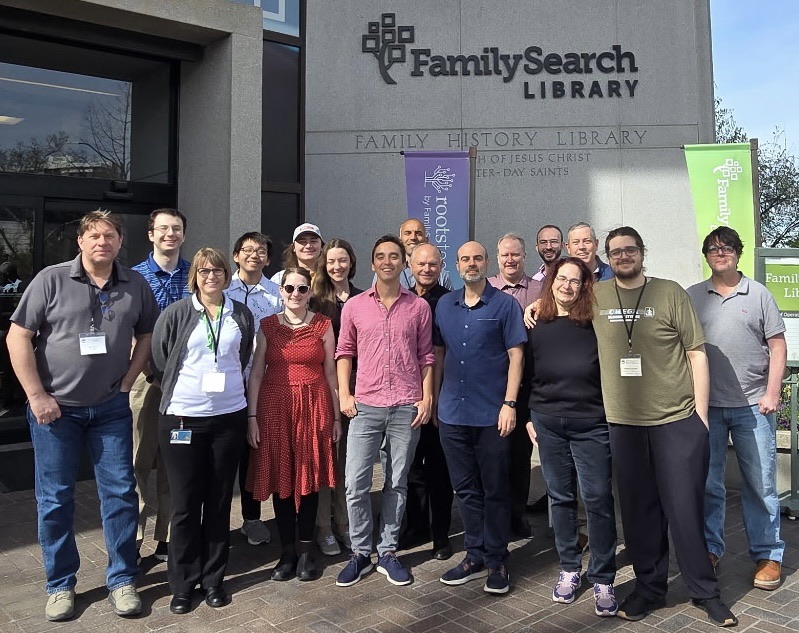
Image context: the cover is a real conference photograph from the March 2026 MediaWiki Users and Developers Conference, not a diagram, logo, or generated visual.[8] It belongs here because this article is about governance as practiced by maintainers, extension authors, site operators, release engineers, and institutional users who have to keep one shared platform coherent.
The Signal
The strongest signal is the release train. Wikimedia's deployment documentation describes MediaWiki as deployed weekly through the Deployment Train, while other services follow their own schedules.[4] The train process page frames the train as a weekly Release Engineering process for taking the latest alpha version of MediaWiki at WMF into production, with group-based rollout across test and production wikis.[4][5] That is more than calendar discipline. It is a public expression of how a platform with constant edits, extensions, skins, database migrations, and operational risk avoids turning every merge into a bespoke drama.
The release train also explains why MediaWiki's public tarball lifecycle cannot be read in isolation. The version lifecycle page says MediaWiki follows a continuous-integration development model for Wikimedia sites, while also issuing major releases on a roughly six-month cycle, quarterly minor releases, and an LTS every two years.[3] Current site operators are warned away from obsolete releases because security and critical fixes do not keep flowing forever.[3] That split is the governance shape: Wikimedia production moves continuously, independent installations need named support windows, and extension authors have to bridge the two.
This is the first adoption boundary. If your organization wants MediaWiki because it is familiar, mature, and extensible, you are not buying a quiet PHP app that can be ignored for five years. You are adopting a release policy. The supported-lifecycle table, the mediawiki-announce habit, and the LTS overlap are part of the product.[3] The question is not "can we get it running?" It is "who owns upgrades, extension compatibility, and security notices after the honeymoon?"
Core Is Protected by Extensions
MediaWiki's architecture document is blunt about why extensions matter: the extension system keeps specialized code modular, helps prevent core from expanding too much, and lets third-party users build custom functionality on top of MediaWiki.[2] That is a governance claim disguised as architecture. A mature platform does not stay healthy by refusing customization; it stays healthy by deciding where customization is allowed to attach.
The modern extension-registration contract makes that boundary concrete. Extensions and skins declare themselves through extension.json or skin.json, and MediaWiki uses that metadata to register hooks, modules, services, configuration, and dependencies.[7] Hooks then let core call extensions, or extensions call into extension points, without turning every local feature into a fork.[2][7] For teams that have lived through plugin ecosystems, this is the difference between a surface and a landfill. The extension boundary gives customization a shape that release tooling can inspect.
The hard part is that extension flexibility creates its own compatibility budget. The version lifecycle page notes that Wikimedia wikis often carry around 140 extensions, and it encourages extension maintainers to keep branches corresponding to MediaWiki versions when needed.[3] That one number is a warning label. A successful MediaWiki installation tends to become institutional memory: access control, templates, search, visual editing, content workflows, semantic metadata, spam controls, import/export habits, and local skin choices. The more useful the wiki becomes, the more upgrade planning becomes about the extension graph rather than only core.
This is why MediaWiki governance is stronger than a simple "large old project" story. The platform does not pretend extensions are harmless. It exposes them as the actual operating surface. If an internal platform team borrows one habit from MediaWiki, it should be this: make extensions declare their contract, make version compatibility visible, and keep deployment pressure regular enough that broken assumptions are found while the responsible people still remember what changed.
Decision Rights Are Part of the Stack
The second signal is explicit decision-making. MediaWiki's technical decision-making background says the current process was adopted in 2020 as an evolution of the older RFC and TechCom process.[6] That matters because platform architecture eventually produces questions that cannot be settled only by code review: persistence boundaries, API stability, compatibility promises, cross-team deployment risk, and changes that affect volunteer developers as well as Wikimedia Foundation production teams.
The useful point is not that every decision needs bureaucracy. It is that a platform with this many stakeholders needs a way to distinguish normal engineering judgment from system-level commitments. MediaWiki has third-party site admins, Wikimedia production operators, volunteer developers, product teams, extension maintainers, and communities whose workflows are encoded in templates and gadgets. A breaking change can be technically correct and socially expensive at the same time.
Good governance therefore has to answer two questions. First, who has enough operational context to approve the change? Second, where will future maintainers find the reasoning when the people involved have moved on? Decision records, RFC successors, release notes, and deployment pages are not glamorous, but they are how institutional memory survives staff churn and volunteer turnover.[3][4][6]
What Teams Should Copy
For small teams, the copyable lesson is a disciplined extension boundary. Do not let local wiki changes become an undocumented fork. Prefer supported extensions, read their compatibility notes, and track them as part of the upgrade plan rather than as an afterthought. If a local extension is necessary, make its registration metadata, hooks, services, and dependency assumptions explicit.[7]
For platform teams, the copyable lesson is the train. A weekly or biweekly train does not have to mimic Wikimedia's scale, but it should create a named rhythm for integration, staging, rollout, and blocker handling.[4][5] The benefit is cultural as much as technical: people stop treating deployment as an exceptional event and start treating it as a production habit with known roles.
For governance leads, the copyable lesson is separating everyday review from architectural decisions. Most changes should flow through ordinary code review and release procedures. System commitments need a different paper trail: the problem being solved, alternatives rejected, compatibility impact, and rollback or migration expectations.[6] Without that distinction, the platform either slows everything down or lets irreversible choices hide inside routine patches.
Boundary Conditions
MediaWiki is not the right answer for every knowledge base. If the team wants a lightweight internal notebook with minimal operational ownership, a hosted document system may be cheaper. If the organization cannot staff upgrades, extension review, backups, and authentication policy, MediaWiki's maturity will not compensate for neglect. Mature software still needs mature ownership.
The falsifier is clear: if a MediaWiki installation cannot keep supported core versions, extension branches, and deployment ownership aligned, then the governance advantages described here collapse into maintenance debt. The project gives operators a strong model, but it does not run their institution for them.
Read the project the other way and the signal is impressive. MediaWiki has lasted because it did not reduce openness to "anyone can edit code" or extensibility to "drop in anything." It built recurring release clocks, documented extension contracts, public decision processes, and production deployment habits around a messy human platform. That is the part worth studying in 2026: the wiki is visible; the train is what keeps it moving.
Sources
- Wikimedia Foundation, "MediaWiki" - overview of MediaWiki as free and open-source wiki software, its 2003 naming, and institutional users outside Wikimedia.
- MediaWiki.org, "Manual:MediaWiki architecture" - architecture overview, extension architecture, hooks, skins, namespaces, and modularity rationale.
- MediaWiki.org, "Version lifecycle" - continuous-integration framing, supported versions, release policy, LTS cadence, upgrade support, and extension lifecycle guidance.
- Wikitech, "Deployments" - Wikimedia deployment calendar, weekly MediaWiki deployment train, backport windows, and production coordination rules.
- Wikitech, "Deployments/Train" - weekly Release Engineering train process, branch rollout groups, blocker handling, and production deployment model.
- MediaWiki.org, "Technical decision making/Background" - background on the technical decision-making process adopted in 2020 after the RFC and TechCom process.
- MediaWiki.org, "Manual:Extension registration" -
extension.json,skin.json, hook registration, service wiring, dependencies, and extension metadata. - Wikimedia Commons, "File:MediaWiki Users and Developers Conference Spring 2026 Group Photo.jpg" - real March 27, 2026 conference photograph by Cindy.cicalese.