Most Litestream discussions start from the slogan: SQLite, but safer. That is directionally true, but it undersells what the project is actually for. Litestream is not a magic layer that turns SQLite into a full multi-node database server. It is a deliberately narrower tool: keep the application on a single host, keep SQLite's file-based simplicity, and add continuous off-host replication plus recoverable history so a machine failure does not automatically become a total database loss.[1][2][3]
That is a meaningful design choice in 2026 because a large class of software still does not fail for lack of SQL features. It fails because the operational stack gets inflated too early. Teams promote a small service, internal tool, edge workload, or solo-product database into Postgres not because the query shape demands it, but because they want durability, backups, and a path back after the box dies. Litestream exists for that exact gap.[1][2][5]
As of 2026-03-28 UTC, the GitHub API reports 13,386 stars, 353 forks, 39 open issues, and push activity as recent as 2026-03-27T20:52:41Z for benbjohnson/litestream; the releases feed shows v0.5.10 published on 2026-03-19.[7][8] Those numbers do not prove fit, but they do show the project is still actively shipped rather than lingering as a clever backup experiment.
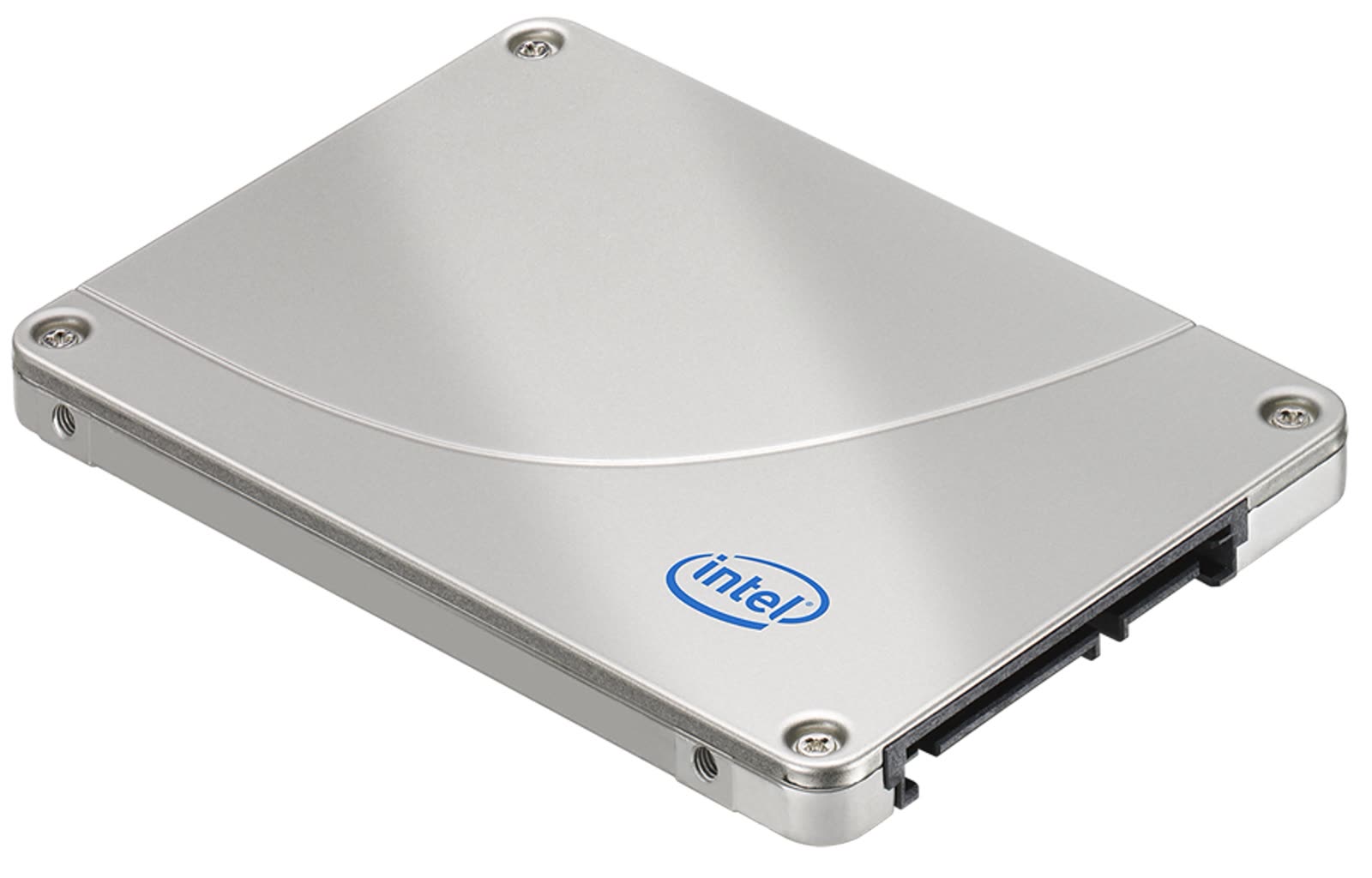
Image context: the cover image is a real solid-state drive because Litestream's core promise is refreshingly literal. The system begins with one physical storage boundary on one host, then builds recoverability by streaming SQLite's write-ahead-log changes away from that machine.[9]
1. What Litestream is actually trying to preserve
The Litestream homepage states the pitch plainly: it is an open-source, real-time streaming replication tool that lets you safely run SQLite applications on a single node.[1] The "single node" phrase matters more than the "streaming replication" phrase. This is not a product that wants to hide SQLite's nature. It wants to preserve SQLite's strengths and patch the biggest operational weakness around host loss.
That makes Litestream easiest to understand as a durability extension for the class of applications that already fit SQLite well: small services, embedded control planes, internal tools, edge apps, sidecar admin systems, and products where one database file on one machine is a feature rather than an embarrassment.[1][2] If the application already wants distributed writers, cross-host shared state, or a true HA control plane, Litestream is the wrong answer because SQLite itself is the wrong center for that problem.[6]
The useful question is therefore not "Can Litestream replace Postgres?" The useful question is narrower: "If SQLite is already the right local database, can we make failure recovery good enough that we do not have to introduce a server database purely for operational comfort?" Litestream's answer is yes, within a very explicit boundary.[1][2][5]
2. How it works without changing the application
The strongest practical feature in the docs is also the least flashy one: Litestream runs as a separate background process, so existing apps can integrate it without application-code changes.[1][2] That matters because many backup or replication stories become unattractive the moment they demand a framework rewrite, custom hooks, or a bespoke storage layer. Litestream is deliberately parasitic on normal SQLite behavior.
Its mechanism depends on SQLite's WAL mode. SQLite appends changes into a separate -wal file before later checkpointing them back into the main database file; WAL is faster in many scenarios, allows readers and writers to proceed concurrently, and requires all participating processes to stay on the same host because shared memory is involved.[2][3][6] Litestream exploits that checkpoint boundary. The project docs say it starts a long-running read transaction, prevents other processes from restarting the WAL at the wrong moment, copies new WAL pages into a "shadow WAL" staging area, and then performs checkpoints under its own control.[2]
That is the heart of the product. Litestream is not snapshotting a database file every few minutes and calling it replication. It is continuously turning WAL activity into a replayable off-host history. To restore, it starts from a snapshot and replays the later WAL sequence; Litestream calls each contiguous snapshot-plus-WAL chain a generation.[2] If WAL continuity breaks, it creates a new generation with a fresh snapshot rather than pretending history is intact.[2]
The restore side is equally important. The restore command can recover the latest state, recover to a point in time covered by the WAL range, and run in follow mode for continuously updated read-only replicas. It also refuses to overwrite an existing output database file, which is a small but high-value operational safeguard.[5]
3. The boundary conditions are the product, not a footnote
Litestream is attractive precisely because it stays narrow, but that means the narrowness has to be read literally.
First, Litestream only works with SQLite WAL mode.[3][6] That brings SQLite's own WAL conditions with it. SQLite's WAL design requires all processes using the database to live on the same host, not on a network filesystem across multiple machines.[6] If your application architecture already wants network-shared writers, Litestream cannot paper over that architectural mismatch.
Second, the durability model is asynchronous. Litestream's tips page says replication happens out of band from the original write transaction, and by default new changes are replicated to an S3 replica every second.[3] In a catastrophic crash during that interval, the most recent writes in that window can be lost.[3] That does not make Litestream unserious; it makes it honest. The recovery story is strong, but it is not synchronous consensus.
Third, restore performance is governed by retention and snapshot cadence. Litestream's docs explain that the default retention is 24 hours, and that longer gaps between snapshots mean more WAL to replay during restore.[2][4] If a database writes frequently, you should lower the snapshot-interval or adjust retention so recovery time does not quietly stretch into something operationally awkward.[3][4]
Fourth, high-write workloads need discipline. The docs recommend setting PRAGMA busy_timeout = 5000;, note that Litestream itself needs short write locks when checkpointing, and recommend disabling SQLite autocheckpoints for very high write rates so the application does not race Litestream and force new full snapshots.[3] This is not a reason to reject the tool. It is the reason to treat it like infrastructure instead of a backup checkbox.
4. Why it can be a better fit than a "real" database server
The best case for Litestream is not cost-minimization theater. It is operational shape. Many teams do not actually want leader election, vacuum tuning, pooled connections, failover ceremony, and a separate database service lifecycle for a modest workload. They want a smaller system surface and a database that lives close to the app.[1][2]
Litestream makes that smaller surface less naive. You keep SQLite's file-local speed and simple deployment model, but you add off-host replicas, point-in-time restore, retention management, and, with the optional VFS extension, read-only access directly from replica storage without restoring a full database first.[2][5] That combination is unusually sharp for edge deployments, internal control tools, low-ops SaaS products, and services where one writer on one host is already the natural shape.
This is also why Litestream should not be sold as a universal database simplifier. If the application truly needs multi-writer coordination, cross-zone failover semantics, or guarantees tighter than an async shipping window, the correct move is to choose a different database architecture altogether.[3][6] Litestream wins when it lets a team stay with the right small database longer, not when it is forced to impersonate a large one.
Where it fits best
Litestream is strongest when:
- the application already fits SQLite's single-host model and benefits from keeping the database next to the app[1][6]
- the main operational gap is disaster recovery, backup continuity, and point-in-time restore rather than distributed write coordination[2][5]
- the team values a smaller database surface enough to accept WAL-mode constraints, snapshot tuning, and an asynchronous loss window[3][4]
It is a weaker fit when the database problem is fundamentally about multi-node coordination, shared-writer topology, or zero-gap durability guarantees. In those cases, Litestream is solving the wrong problem very elegantly.
Sources
- Litestream homepage, "Streaming SQLite Replication" overview and single-node product framing.
- Litestream documentation, "How it works" (separate process model, shadow WAL, generations, retention, and VFS read replicas).
- Litestream documentation, "Tips & Caveats" (WAL mode requirement,
busy_timeout, async replication window, snapshot tuning, and autocheckpoint guidance). - Litestream documentation, "Configuration File" (replica settings, retention, snapshot interval, and storage backends).
- Litestream documentation, "Command: restore" (latest restore, point-in-time restore, follow mode, and non-overwrite behavior).
- SQLite documentation, "Write-Ahead Logging" (WAL concurrency benefits and same-host/shared-memory boundary).
- GitHub API,
benbjohnson/litestreamrepository metadata snapshot used for stars, forks, open issues, and push activity. - GitHub release page for Litestream
v0.5.10(published March 19, 2026). - Wikimedia Commons file page for the Intel X25-M SSD photograph used as the article image.