Most self-hosted identity stacks get assembled by historical accident. One system holds people and groups, another handles OAuth, Linux machines still read from something LDAP-shaped, and strong authentication arrives later as an integration project. Kanidm is interesting because it tries to collapse that sprawl into one authority for accounts, authentication, and authorization without pretending every legacy protocol deserves equal design weight.[1]
That is the point of this project introduction. Kanidm is not best understood as "an open-source Active Directory clone" or as "yet another OIDC server." The docs describe something narrower and more opinionated: one source of truth for account data, modern credentials, OAuth2/OpenID Connect, and Unix client integration, with legacy LDAP exposed only where old applications still force the issue.[1][2][3][4][5][6]
As of 2026-04-06T03:06:04Z UTC, the GitHub API reports 4,758 stars, 311 forks, 248 open issues, and a most recent push at 2026-04-05T22:21:06Z for kanidm/kanidm.[8] Recent releases include v1.9.2 on 2026-03-13, v1.9.1 on 2026-02-24, and v1.9.0 on 2026-02-17.[9] The project's own support page says stable releases follow a quarterly schedule and stay supported for 4 months, creating a short overlap between successive stable lines.[7] That matters because identity systems are only useful when their upgrade and support story is legible.
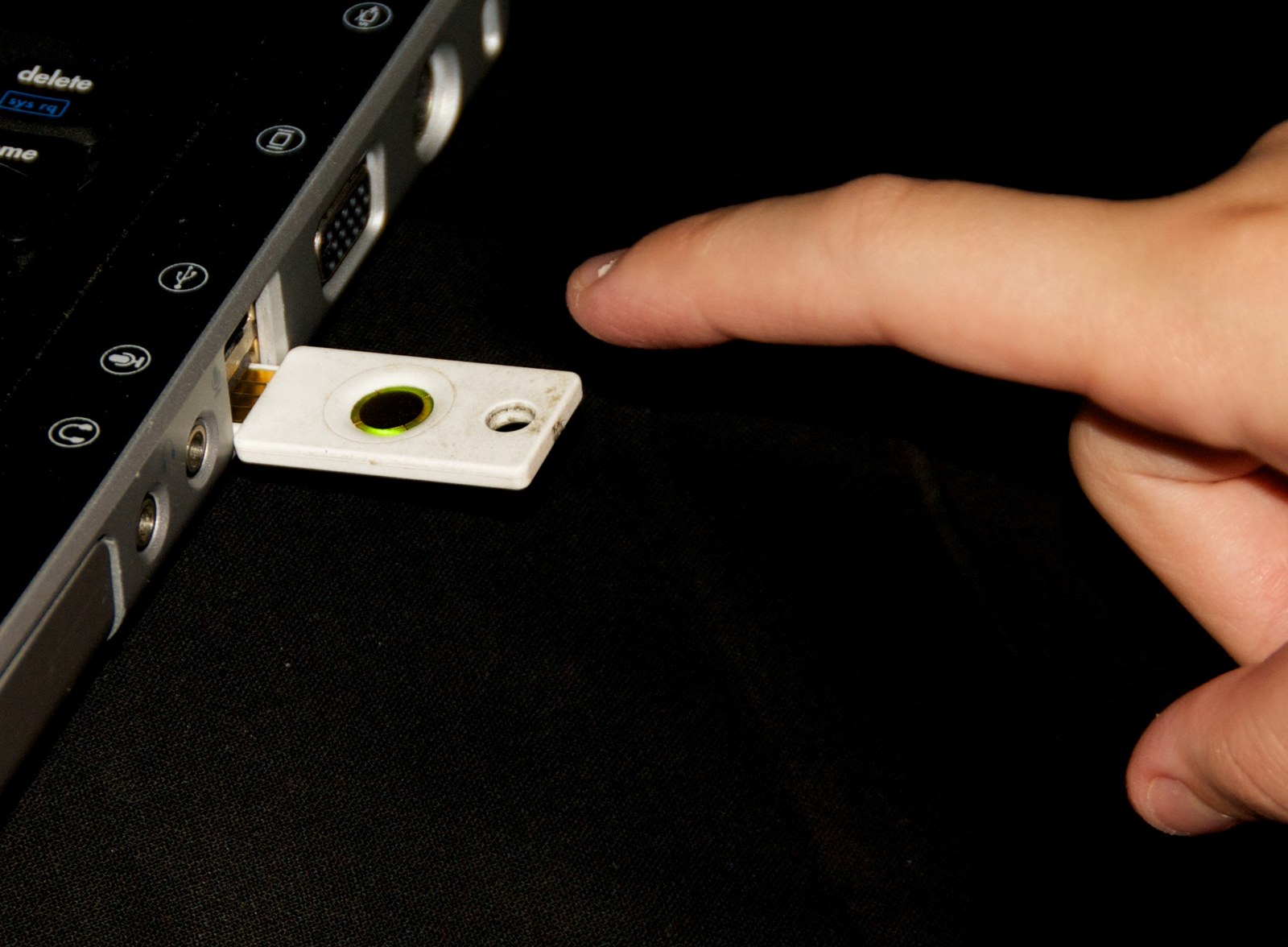
Image context: the cover uses a real photograph of a YubiKey in a laptop rather than a lock icon or an IAM dashboard. That choice fits because Kanidm's strongest differentiator is not abstract "identity management." It is the way the project makes modern authenticators and account-bound device trust feel like the center of the system rather than a side module.[2][10]
What problem Kanidm is actually trying to solve
The introductory docs are unusually direct about the problem shape. Kanidm exists to provide a single source of truth for authorization and authentication, and to make system, network, application, and web authentication easier to manage from one place.[1] That sounds familiar until you notice what kinds of sprawl the docs choose to emphasize: too many accounts, too many keys, inconsistent privilege boundaries, and the usual drift toward shared secrets and over-entitled credentials.[1]
That framing is useful because it keeps Kanidm in the identity plane rather than in general platform mythology. The project is not trying to be an all-purpose enterprise suite. It is trying to tighten credential quality, unify account data, and reduce the number of places where identity state can rot.[1][6]
In that sense, Kanidm is strongest for teams that already feel the pain of credential fragmentation. If the same user population needs to sign into web apps through OIDC, authenticate to Linux systems, and carry stronger factors than passwords alone, the product shape becomes much easier to justify.[1][3][4]
The project is modern-first on purpose
The sharpest design signal appears in the authentication docs. Kanidm says plainly that passkeys are the preferred method of authentication and describes them as unphishable, self-contained multifactor authenticators.[2] That phrasing matters. In many identity products, phishing-resistant auth exists, but the default operational story still revolves around passwords plus compatibility exceptions. Kanidm writes the hierarchy the other way around.[2]
The OAuth2/OpenID Connect docs reinforce the same posture. They expect services to support PKCE S256, and if OIDC is in use they expect ES256 token signatures; clients that need older patterns are pushed into an explicit "legacy clients" path instead of becoming the project's default center of gravity.[3] Kanidm also issues RFC 9068 JWT access tokens and documents token introspection and OIDC discovery in a way that reads like current identity infrastructure, not directory-software archaeology.[3][6]
Inference from the docs: Kanidm is not trying to maximize backward comfort for every old integration surface. It is trying to set a cleaner default for environments willing to move toward passkeys, modern OIDC, and stronger token semantics.[2][3][6]
The Linux client is part of the product, not an afterthought
This is where Kanidm becomes more interesting than a generic identity server. Its PAM and nsswitch integration is not presented as a thin connector. The project ships a dedicated Unix daemon that caches users and groups, securely caches credentials, can use optional TPM-backed cryptographic operations, creates home directories, and even caches /etc/passwd and /etc/group content for performance.[5] That is a serious client story, not a checkbox.
The broader point is architectural. Kanidm treats Linux login as a first-class boundary it wants to own end to end, not as a minor directory lookup attached to a web-centric identity core.[5] That changes what "identity system" means in practice: the client layer is part of the product surface.
The packaging story backs that up. The client tools page lists packages or tested builds across OpenSUSE, SLE, Debian, Fedora, Ubuntu, Arch, Alpine, NixOS, FreeBSD, and macOS, with Windows clients built but not yet routinely packaged.[12] That spread is not the same as universal enterprise fit, but it does show a project that expects heterogeneous operator environments rather than one blessed distro.
The legacy boundary is deliberately narrow
The LDAP page is one of the most revealing documents in the set. Kanidm can expose a read-only LDAP interface for legacy applications, but the docs explicitly warn that it is not a complete LDAP implementation and that this is intentional.[4] The explanation goes deeper than a simple feature gap. Kanidm's internal model contains structured data such as tagged SSH keys and multi-value credentials that do not map cleanly onto LDAP's simpler string-oriented object model.[4]
That design choice should shape adoption decisions. If your estate still depends on broad LDAP write semantics, exhaustive schema compatibility, or directory behavior modeled around historical AD or FreeIPA expectations, Kanidm will feel restrictive. If your real need is narrower, modern auth plus a contained bridge for a few old apps, the same restriction becomes a strength.[3][4][6]
The internal access-control model points in the same direction. Kanidm separates service-management privilege from people-and-group administration, and it supports privilege access mode so elevated actions require reauthentication for a short time window.[13] That is not glamorous, but it shows the project treating blast-radius control as part of everyday administration rather than as an enterprise add-on.
Why it looks viable in 2026
The maintenance picture is not only a stars-and-release story. The support docs publish a concrete schedule, versioning rules, and an overlap window between stable lines.[7] The current GitHub release stream shows the project shipping patches after the February 1.9.0 stable, with 1.9.1 and 1.9.2 following inside the same cycle.[9] That is the kind of cadence identity operators want to see: active enough to fix things, structured enough that upgrade planning is possible.
An independent operator write-up from RCS Networks arrives at a compatible fit judgment from outside the project itself: Kanidm is presented as a modern, comparatively lightweight identity management system with built-in passkeys, OIDC/OAuth2, Unix integration, and two-node replication, suitable from home labs upward.[11] I would not use that source to prove the whole adoption case, but it does matter as a second signal. The project is readable to outside operators in the same terms the primary docs emphasize.
Best-fit boundary
Kanidm is easiest to recommend when three conditions hold at once:
- Your user base is primarily signing into Linux systems and web apps rather than into a heavy Windows domain estate.[1][3][4][5]
- You want passkeys, OIDC, and Unix login to share one account model instead of being three separate systems.[1][2][3][4]
- You can treat LDAP as a compatibility lane for old software, not as the definition of what the identity system must be.[4][6]
That is a real boundary, not a universal one. Teams whose operational center still depends on deep legacy directory semantics should read Kanidm as intentionally selective. Teams that want a cleaner, modern-first identity plane with strong Linux integration should read that same selectivity as the project's main advantage.
Sources
- Kanidm Administration, "Introduction to Kanidm" - project purpose, single-source-of-truth framing, and the credential-sprawl problem it is trying to solve.
- Kanidm Administration, "Authentication and Credentials" - preferred passkey model, attested passkeys, and phishing-resistant authentication posture.
- Kanidm Administration, "OAuth2" - PKCE S256, ES256 OIDC expectations, legacy-client boundary, and RFC 9068 token details.
- Kanidm Administration, "LDAP" - read-only LDAP compatibility, incomplete-by-design LDAP implementation, and mapping limits between Kanidm data and LDAP objects.
- Kanidm Administration, "PAM and nsswitch" - native Unix daemon features, credential caching, TPM-backed options, and Linux client integration details.
- Kanidm Administration, "Supported Features" - supported OAuth2/OIDC, WebAuthn, LDAP read-only mode, replication, Unix client, and access-control-related standards.
- Kanidm Administration, "Kanidm - Support and Release Processes" - quarterly release schedule, semver policy, and 4-month stable support window.
- GitHub API snapshot for
kanidm/kanidm- stars, forks, open issues, and most recent push timestamp. - GitHub API release listing for
kanidm/kanidm- recent release tags and publication timestamps. - Wikimedia Commons file page for the YubiKey photograph used as the article image.
- RCS Networks, "kanidm" - independent operator overview emphasizing passkeys, OIDC/OAuth2, Unix integration, and lightweight deployment posture.
- Kanidm Administration, "Installing Client Tools" - packaged or tested client coverage across major Linux distributions, FreeBSD, macOS, and Windows build status.
- Kanidm Administration, "Access Control" - separation between service-management and people-management roles, plus privilege access mode.