Eclipse Mosquitto is usually introduced as a lightweight MQTT broker, and that description is true. It is also too small. Mosquitto matters because it makes the broker visible as an architectural boundary. In a system full of sensors, actuators, dashboards, gateways, scripts, and cloud connectors, MQTT is not just a pleasant way to avoid HTTP polling. It is a contract about who may speak, which messages survive, what late subscribers see, and where local state ends.[1][5]
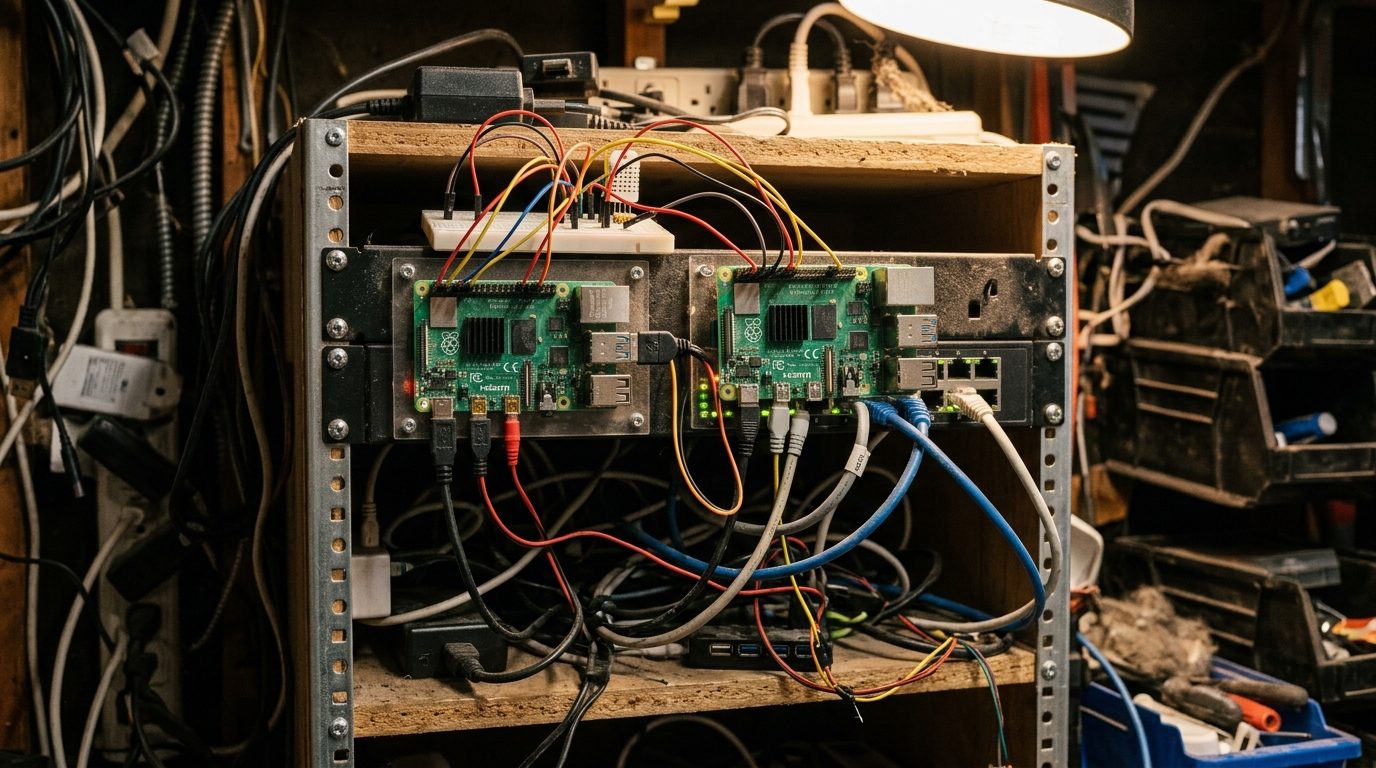
That boundary is why Mosquitto keeps showing up in systems that are otherwise very different from one another. The project ships the broker, command-line clients, and related tools under the Eclipse umbrella, but its real shape is most visible in mosquitto.conf: listeners, protocols, authentication, retained-message behavior, persistence, plugins, and bridge connections all sit in the same operational surface.[1][2] The configuration file is not an appendix. It is where a device network becomes a designed system.
The first architectural decision is the listener. Mosquitto can expose different listeners with different protocols and security expectations, so the broker can separate local devices, WebSocket clients, management traffic, and bridge links instead of pretending that every MQTT connection is equivalent.[2] That matters because topic names are not a security model by themselves. A readable topic tree can make an installation understandable, but the broker still has to decide which client can connect, publish, subscribe, or administer anything.
Mosquitto's Dynamic Security plugin makes that second part explicit. It provides a runtime-managed model for clients, groups, roles, and ACLs, allowing operators to alter access without treating every authorization change as a broker rebuild.[3] The important detail is not only convenience. It is that identity and authorization become first-class broker state. In a small deployment, that can stop a dashboard client from gaining publish access by accident. In a larger deployment, it can keep gateways, maintenance tools, and external consumers from collapsing into one shared password.
The next decision is whether broker state should survive. MQTT's session and quality-of-service features are only operationally meaningful if the broker's restart behavior is understood. Mosquitto's configuration exposes persistence controls such as persistence, persistence_file, persistence_location, and persistent_client_expiration, which means operators must decide what is durable, where it is stored, and how long abandoned client state should remain useful.[2] This is where "lightweight" can mislead. A small broker can still be the only thing remembering that a client missed a command while it was offline.
Retained messages make the same point from another angle. A retained value is not just a recent packet. It is the broker's answer to a future subscriber's first question: what is the current state of this topic? Mosquitto exposes retained-message behavior and availability in configuration, making it possible to choose whether the broker should preserve that kind of last-known state at all.[2] In a home, lab, factory cell, or field gateway, that decision affects whether a rebooted dashboard starts with a useful picture or a blank one.
Bridges are where Mosquitto's boundary role becomes most obvious. The broker can connect outward to another broker and map selected topics across that relationship.[2] Used well, this lets a local system keep fast, local device coordination while forwarding only chosen state, telemetry, or commands to a regional or cloud broker. Used carelessly, it turns a clean local architecture into a leaky mirror of everything. The useful question is therefore not "Can Mosquitto bridge?" It is "Which topics deserve to cross the boundary, in which direction, and with what failure behavior?"
This makes Mosquitto a good counterexample to a common IoT mistake: assuming the message broker is plumbing. The broker is not merely a route between a publisher and a subscriber. It is the place where disconnected clients, retained state, subscriptions, credentials, protocol listeners, and remote broker links meet. MQTT's standards define the protocol vocabulary, and independent threat-model work on Mosquitto treats the broker, clients, configuration files, plugins, and local filesystem touchpoints as security-relevant parts of one system.[5][6] A production installation still has to decide how those semantics become recoverable operations. Mosquitto keeps those choices close enough to be reviewed.
Recent maintenance also matters. The Mosquitto project followed the 2.1 feature line with a 2.1.2 bugfix release on February 9, 2026, and operator-facing coverage of Mosquitto 2.1 treated visibility, plugin flexibility, security, WebSocket behavior, bridges, and persistence as meaningful operational changes rather than cosmetic patches.[4][7] For infrastructure software, that signal is part of the architecture. A broker that sits between devices and applications needs a project that still ships fixes, reviews protocol behavior, and keeps its operational interfaces understandable.
The best reason to choose Mosquitto is not that it disappears. It is that it gives a small team a clear place to draw the line. Put the broker on a local host, give listeners different purposes, require explicit authorization, decide what state should survive, keep retained messages intentional, and bridge only the topics that should leave the site. The result is not a glamorous architecture. It is something more useful: a message boundary that can be inspected before it fails.
Sources
- Eclipse Mosquitto GitHub repository - project overview, broker/client/tool scope, Eclipse Public License 2.0, and README context.
- Eclipse Mosquitto, "mosquitto.conf(5)" - official broker configuration reference covering listeners, persistence, retained-message behavior, bridge configuration, authentication, and plugin options.
- Eclipse Mosquitto Documentation, "Dynamic Security" - official plugin documentation for managing clients, groups, roles, and ACLs at runtime.
- Eclipse Mosquitto Blog, "Version 2.1.2 released," February 9, 2026 - official bugfix release announcement for the 2.1 line.
- MQTT.org, "MQTT Specifications" - OASIS standard references for MQTT 5.0, MQTT 3.1.1, and related protocol materials.
- Open Source Technology Improvement Fund and Trail of Bits, "Eclipse Mosquitto Threat Model," November 2023 - independent security architecture review of Mosquitto components and data flows.
- Cedalo, "Introducing Eclipse Mosquitto 2.1," February 5, 2026 - operator-facing overview of Mosquitto 2.1 changes in visibility, plugins, security, WebSockets, bridges, and persistence.
- Wikimedia Commons, "File:Raspberry PI.jpeg" - real photograph used as the article image.