
DuckDB is often sold with one very effective slogan: SQLite for analytics. The slogan is useful because it quickly tells readers two true things at once. DuckDB is embeddable, and it is built for analytical rather than transactional workloads. But Mark Raasveldt's Push-Based Execution in DuckDB is valuable because it shows where that slogan stops being precise enough.[1][4] The 2019 DuckDB paper framed the project as an embeddable analytical database meant to run inside another host process, precisely because interactive analysis and edge-style deployment need analytical SQL without the operational weight of a stand-alone server.[4] The current internals overview is even more direct about the execution side: DuckDB uses a push-based vectorized model in which DataChunks move through the operator tree.[2]
That combination is the real reason DuckDB matters. The project is not just "a small OLAP database." It is a deliberately in-process execution engine that keeps work in vectors, arranges operators into pipelines, and turns parallelism into a scheduling problem rather than a client-server round trip problem.[1][2][3][4] The execution-format docs make the mechanics explicit: operators work on vectors of a fixed size, with STANDARD_VECTOR_SIZE set by default to 2048 tuples, and those vectors may stay compressed or semi-compressed by using flat, constant, dictionary, or sequence representations during execution.[3] My inference from the talk and the current docs is that DuckDB's practical strength comes from this boundary discipline. It wants to stay close to the host process, but it does not simplify itself into a toy. Instead, it pushes chunks through a serious analytical pipeline and only materializes or spills where the query shape actually forces that move.[1][2][3][5]
That is the frame worth carrying into the video. If you watch the talk only as a niche implementation lecture, you miss the architectural point. The important story is how DuckDB makes embedded analytics feel bigger than a linked library usually does: vectors instead of rows, morsels instead of monolithic scans, and explicit sink boundaries where a pipeline must stop being purely streaming and become a staged system.[1][3][4][5]
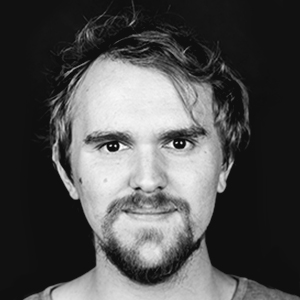
Image context: the cover uses Mark Raasveldt's real author photo from the DuckDB website. That choice fits because this article is anchored on his own walkthrough of the execution engine, not on generic database branding or a product screenshot.[6]
Around 0:57, the old "vector volcano" model reveals what DuckDB is trying to leave behind
The first useful moment comes when Raasveldt explains DuckDB's earlier pull-based model and calls it the "vector volcano."[1] That phrase matters because it keeps one foot in classical iterator-style database execution while already admitting that DuckDB does not want to move one tuple at a time. In the talk, the point is that the unit of work has already become vectors moving through a pipeline rather than single rows bouncing from operator to operator.[1] The execution-format page matches that architecture exactly. DuckDB's operators are optimized for vectors of a fixed size, and the default batch size is 2048 tuples.[3]
That detail sounds low-level, but it changes how to read the project. If the execution unit is a vector instead of an individual row, then function evaluation, filtering, projection, and decompression can all be organized around cache-friendlier blocks of work.[3] The vector docs also show why DuckDB feels fast without constantly copying data into one canonical form. Constant vectors store repeated values once, dictionary vectors can preserve dictionary-compressed storage during execution, and sequence vectors represent regular increments compactly.[3] So when the talk begins by contrasting pull-based execution with the newer push-oriented model, the real issue is not only control flow. It is also that DuckDB wants the execution engine to treat compact columnar batches as the natural currency of work.[1][3]
This is where the paper's "embeddable analytical database" claim becomes more concrete.[4] Running inside the host process is only half the story. The other half is that once the query is inside DuckDB, the engine processes it with analytical batch semantics rather than row-oriented convenience. The result is a system that is easy to import but not conceptually lightweight.[3][4]
Around 3:29 and 4:40, morsel-driven parallelism turns one query into schedulable fragments
The talk's next major turn comes when Raasveldt says DuckDB uses morsel-driven parallelism, then explains that the pipeline model splits a query tree into linear fragments.[1] This is the moment where DuckDB stops looking like "one embedded engine attached to one thread" and starts looking like a scheduler. He is explicit that the goal is not merely to run different pipelines side by side. The harder problem is parallelism inside the heavy pipeline that would otherwise dominate wall-clock time.[1]
That is an important correction to the usual embedded-database intuition. Readers often hear "embedded" and imagine convenience first, execution ambition second. The DuckDB paper points in the other direction. It argues that embedded analytics matters because interactive analysis and edge-style workloads need analytical power without stand-alone-server friction.[4] Morsel-driven parallelism is one reason that claim holds up. The project is not waiting for the host application to chop up the workload manually. It is decomposing scans and operators into smaller units it can schedule across cores while staying inside the same process.[1][4]
Seen this way, DuckDB's in-process design is not just about deployment simplicity. It is about removing a layer of operational ceremony while keeping a real execution engine underneath. The linked-library story gets you into the process. The pipeline-and-morsel story explains why the engine can still behave like a serious analytical runtime once it is there.[1][4]
Around 7:11 and 7:25, sinks and dependent pipelines show where streaming has to stop and staging begins
The most revealing section of the talk arrives when Raasveldt says that a sink is "a very push-based thing" because you just push chunks into it, and then explains that after finalization DuckDB schedules dependent pipelines.[1] This is the place where the architecture stops sounding like a clean stream of vectors and starts admitting the hard truth about analytics: not every operator can stay purely flowing forever.
That distinction matters because analytical queries are full of boundaries where data must be accumulated, partitioned, hashed, or sorted before the next stage can proceed. The current tuning guide names these as blocking operators: grouping, joining, sorting, and windowing all require buffering and are the most memory-intensive operators in relational systems.[5] DuckDB's answer is not to deny those boundaries. It is to make them explicit. Some parts of the query can stay as pipelines of vectorized operators; others terminate in a sink, finalize state, and then release dependent work.[1][5]
This is also where the project's larger-than-memory story becomes legible. The performance guide says DuckDB supports larger-than-memory workloads by spilling to disk, including workloads where intermediate results do not fit in RAM.[5] That is the practical consequence of making blocking operators first-class architectural events rather than embarrassing exceptions. Once joins, sorts, windows, and grouped aggregations are treated as pipeline-breaking stages, the engine can manage temp storage and restart downstream work without pretending the whole query was one uninterrupted stream.[5]
So the right way to read this part of the talk is not merely "DuckDB has sinks." The stronger point is that DuckDB's elegance comes from knowing exactly where the elegant pipeline ends. The system stays vectorized and local for as long as it can, then stages, finalizes, spills if needed, and schedules the next fragment.[1][3][5]
DuckDB feels larger than a library because the library boundary is not the execution boundary
That is the lasting value of this video. It clarifies why DuckDB has become more than a handy SQL package for notebooks. The host process boundary is intentionally thin: the paper emphasizes embeddability, direct use from analytical environments, and the appeal of avoiding a separate database server for many workloads.[4] But inside that boundary sits a much stricter engine than the project's marketing shorthand sometimes suggests. The internals overview says DataChunks are pushed through the operator tree.[2] The execution-format docs show that those chunks stay vectorized and often compressed in memory.[3] The tuning guide then explains where the model must harden into blocking operators and disk spill behavior for bigger workloads.[5]
Put together, those sources make the talk's architectural lesson quite sharp. DuckDB is compelling not because it makes analytics small, but because it makes a serious analytical pipeline importable. If you watch this talk with that thesis in mind, the best moments are not the ones that advertise speed in the abstract. They are the moments where Raasveldt keeps drawing boundaries: vectors rather than rows, morsels rather than one giant task, sinks rather than magical infinite streaming, and dependent pipelines rather than a shapeless operator graph.[1][2][3][4][5]
That is why DuckDB keeps fitting places where a conventional warehouse would be absurdly heavy and a row-store library would be analytically weak. The unit you import is a library. The thing you get is a pipeline engine.
Sources
- Mark Raasveldt, "Push-Based Execution in DuckDB," YouTube video, published November 26, 2021.
- DuckDB documentation, "Overview of DuckDB Internals" - parser-to-physical-plan flow and the push-based
DataChunksexecution model. - DuckDB documentation, "Execution Format" - fixed-size vectors,
STANDARD_VECTOR_SIZE = 2048, and flat/constant/dictionary/sequence vector representations. - Mark Raasveldt and Hannes Mühleisen, "DuckDB: an Embeddable Analytical Database," SIGMOD 2019 demo paper.
- DuckDB documentation, "Tuning Workloads" - larger-than-memory processing, disk spill behavior, and blocking operators.
- DuckDB, "Mark Raasveldt" author photo on duckdb.org - source image used for this article.