containerd is easy to misunderstand because the software sits in the middle of several container stories at once. Docker uses it, Kubernetes nodes often depend on it, and the project itself describes it as an industry-standard runtime.[1] That vocabulary encourages a flattened mental model: one daemon, one runtime, one obvious place where containers "happen." The docs point in a different direction. containerd makes more sense when you read it as a boundary manager. It keeps immutable image content separate from mounted filesystems, separates container metadata from runnable processes, and separates the high-level daemon from the low-level runtime logic that actually starts and supervises a container.[1][2][3][4][5]
That framing matters even more in 2026 because the project is still actively tightening those seams rather than hiding them. As of 2026-05-03T12:35:47Z UTC, the latest GitHub release is containerd 2.3.0, published on 2026-04-30.[9] The release policy says the project now ships minor releases on a four-month cadence aligned to Kubernetes, and the support table marks 2.3 as the current LTS branch with Kubernetes 1.36 support.[8] Those are not cosmetic release notes. They tell you containerd remains important exactly where node runtimes, snapshotters, shims, and CRI compatibility have to keep evolving without collapsing into one opaque binary.
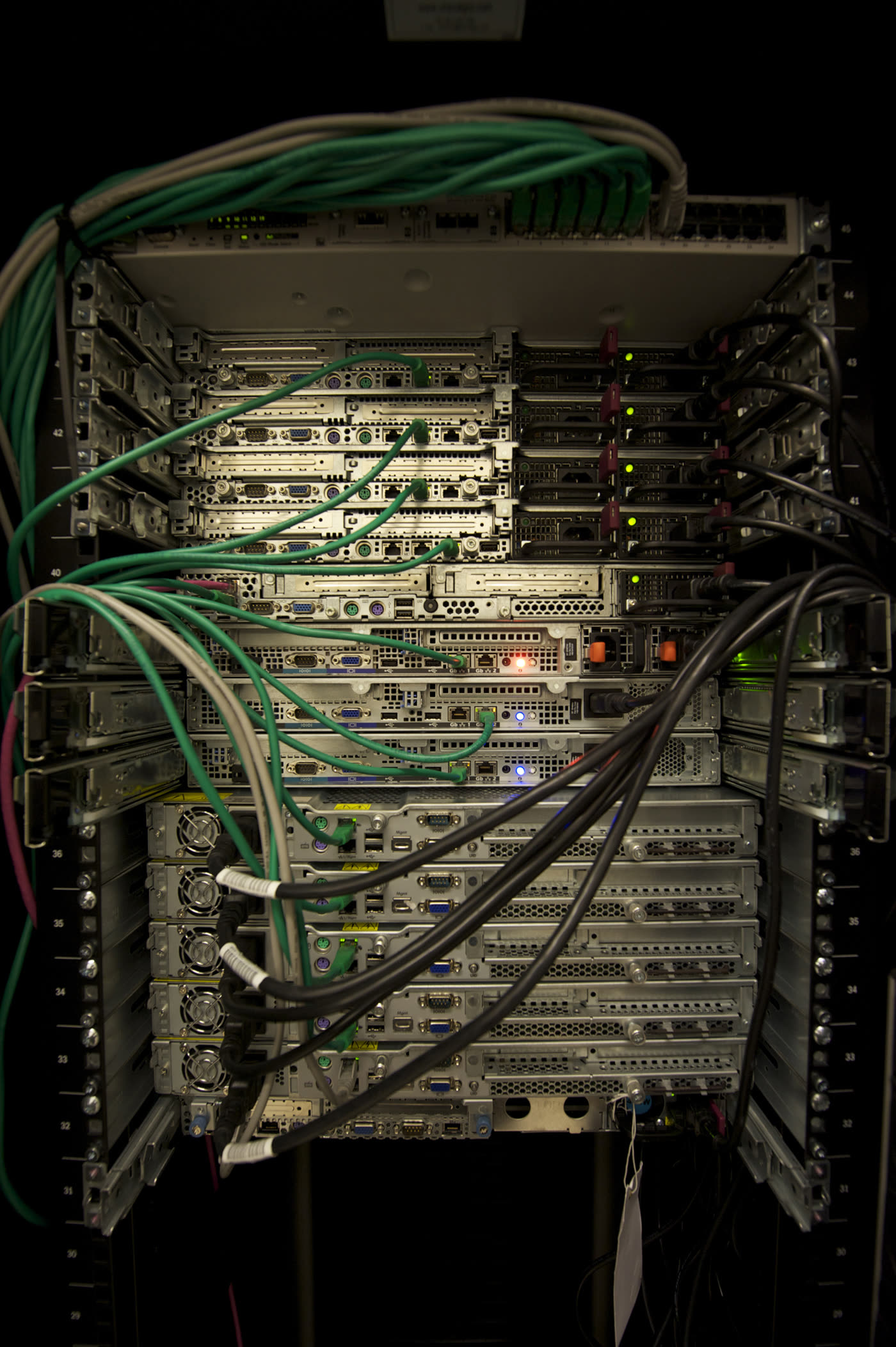
Image context: the hero image is a real photograph of production server racks from Wikimedia Commons.[11] That is the right visual here because containerd is strongest when you think in terms of host-level storage, runtime sockets, and node services. A glossy whale logo or a terminal glamour shot would point to the wrong layer of the stack.
The first split is container metadata versus runnable state
One of containerd's most useful clarifications is also one of its easiest to miss: in containerd, a container and a task are deliberately different things. The features document says a container is a metadata object to which you attach resources such as an OCI runtime specification, an image, and a root filesystem reference.[2] A task is the runnable object created from that container.[2] That distinction sounds fussy until you notice how much operational confusion it removes.
If a team treats "container" as the same thing as "the running process," the system becomes harder to reason about. Image configuration, rootfs preparation, runtime choice, and live process supervision blur together. containerd keeps them apart on purpose. The client can create a container object, wire in image config, assign a snapshot, and only later materialize a task from it.[2] That sequencing is one reason containerd works well as an embedded substrate for larger systems. The daemon is not trying to be the complete end-user experience; it is giving higher layers a clean place to attach state before execution begins.[1][2]
This is also why containerd is a poor fit for people who want a single, developer-first surface with every convenience already bundled. The README says the project is designed to be embedded into a larger system rather than used directly by end users.[1] That is not modesty. It is an architectural boundary. Tools such as Docker, nerdctl, or Kubernetes can sit above containerd precisely because containerd keeps the underlying execution model narrower than a full platform UX.[1][2]
The second split is content store versus snapshotter
The cleanest technical boundary in containerd is the line between content and filesystem state. The historical architecture document describes the content component as content-addressable storage for immutable blobs keyed by hash, while the snapshot component manages filesystem snapshots into which layers are unpacked.[3] The current snapshotter documentation keeps the same split in operational language: snapshotters manage snapshots of container filesystems, with overlayfs as the default and alternatives such as native, btrfs, zfs, erofs, and external snapshotter plugins for specialized cases.[4]
This matters because image data and mounted root filesystems are related but not identical problems. The content store answers "do I have this blob and can I verify it by digest?" The snapshotter answers "how do I materialize a usable rootfs view for this workload on this host?" Once that distinction is visible, a lot of containerd behavior stops feeling magical. Pulling an image does not automatically mean choosing one storage strategy forever. Unpacking into overlayfs is one host-level decision; using a remote or external snapshotter is another.[2][4]
It also explains why the project can support so many storage paths without rewriting the whole daemon. The features document explicitly allows external snapshot plugins over gRPC, while the plugins document shows proxy plugins and built-in plugins living under one common loading model.[2][5] In other words, snapshotters are not bolt-on hacks. They are one of the main interfaces through which containerd acknowledges that different hosts and different performance goals need different filesystem machinery.
The downstream importance of that boundary is now visible outside containerd's own community. Docker's documentation for its containerd image store says Docker Engine uses snapshotters rather than classic storage drivers when that path is enabled.[10] That is a useful cross-check because it shows the snapshotter model has escaped the realm of runtime-internals trivia. Operators can now run into that abstraction even when they start from a Docker-shaped workflow.[10]
The third split is daemon versus shim versus runtime engine
The runtime-v2 documentation is the source that most decisively breaks the "containerd directly launches containers" misconception. It says containerd does not directly launch containers. Instead, it coordinates image content, rootfs layout, and config, then invokes a runtime shim that listens on a socket and processes lifecycle operations over ttRPC.[5] The shim may then invoke a separate runtime engine such as runc to do the actual create/start/stop work.[5]
That is the architectural heart of the project. containerd keeps a durable control-plane role; the shim owns the execution-facing API surface; the runtime engine performs the platform-specific process work.[5] The same doc goes further: the relationship between shims and containers does not have to be one-to-one. A shim can manage multiple containers, and the io.containerd.runc.v2 shim groups Kubernetes pod containers using the CRI sandbox label.[5] That is a strong design choice because it lets containerd support both ordinary single-container flows and pod-shaped execution boundaries without pretending they are the same thing.
The release and upgrade story reinforces that this boundary is real, not historical baggage. The 2.0 migration notes say support for the old Runtime V1 and Runc V1 shims was removed, pushing users toward io.containerd.runc.v2 and the newer shim model.[7] Starting with 2.3, the start path also gains a protobuf-based bootstrap protocol for shim startup, with the legacy mechanism retained only for transition compatibility.[5] In plain engineering terms, containerd is still investing in the shim contract because the project treats runtime separation as a core asset.
CRI is the Kubernetes adapter, not an incidental plugin
The Kubernetes path makes containerd's layering even easier to see. The CRI architecture document says the cri plugin sits on the same node as kubelet, receives CRI requests, manages pod networking through CNI, and uses containerd internals to create the sandbox container, pull images, and start application containers.[6] That is already a lot of orchestration responsibility, which is why it is useful that the CRI layer is explicit rather than hidden inside every other subsystem.
The 2.0 notes show the same pattern from the release side. The sandbox service is now stable, sandboxed CRI is enabled by default, and containerd's CRI path has moved onto the sandbox-controller implementation for pod-sandbox support.[7] Put differently, the project is leaning further into the idea that pods, sandboxes, device injection, and runtime adaptation deserve named interfaces. If you operate Kubernetes nodes, that is what makes containerd legible: the kubelet talks CRI, the CRI plugin handles pod-level concerns, and containerd's lower layers keep content, snapshots, and task execution organized underneath.[5][6][7]
What teams should take from this
The practical read is that containerd is strongest for teams building or operating a container substrate: Kubernetes nodes, embedded runtimes, specialized snapshotter stacks, alternate shims, or host-level tooling that needs a stable execution core.[1][2][5][8] It is weaker as a direct "developer product" unless another tool supplies the user-facing workflow above it. That is not a flaw. It is the consequence of the same design discipline that makes the project extensible.
If you need one falsifier for this thesis, it is straightforward. containerd gets less compelling the moment these separations stop being trustworthy. If content storage and rootfs materialization blur, snapshotter choice becomes dangerous. If container objects and tasks lose their distinction, clients lose a clean staging model. If shims become an accidental afterthought, runtime diversity and live process management get harder to maintain. In 2026, the documents and release posture suggest the opposite trajectory. containerd remains valuable because it keeps teaching the same lesson at every layer: the runtime stack works better when one component owns one kind of job.[1][2][3][4][5][6][7][8][10]
Sources
- containerd README - project definition, embedding posture, lifecycle scope, registry support, and CRI overview.
- containerd
docs/features.md- container metadata versus tasks, namespaces, root filesystems, client behavior, and external snapshot plugin support. - containerd historical architecture note - high-level component split between content, metadata, snapshots, events, and runtime execution.
- containerd snapshotter docs - built-in snapshotter options, external snapshotter hooks, and mount-target behavior.
- containerd
docs/runtime-v2.md- shim/runtime-engine model, ttRPC socket flow, named runtime resolution, pod-level shim grouping, and 2.3 bootstrap protocol. - containerd CRI architecture - kubelet-to-CRI flow, CNI wiring, sandbox creation, and app-container startup path.
- containerd 2.0 notes - sandbox service stabilization, CRI default-path changes, shim removals, and upgrade-relevant breaking changes.
- containerd
RELEASES.md- release cadence, support horizons, LTS policy, and Kubernetes compatibility matrix. - containerd GitHub release
v2.3.0- latest release date and version anchor at article creation time. - Docker Docs, "containerd image store with Docker Engine" - downstream operator-facing use of snapshotters and the containerd image store model.
- Wikimedia Commons, "File:Servers in a Rack.jpg" - source page for the documentary server-rack photograph used as the article image.