As of 2026-07-09 09:34 UTC, WHO's new cancer warning is easy to misread as a distant population forecast. The headline number is stark: annual cancer cases are projected to rise from an estimated 20.6 million in 2024 to nearly 35 million by 2050 if current patterns hold.[1][3]
The practical news is closer than 2050. WHO's Global Status Report on Cancer 2026, released July 8 with IARC, says the world already has stronger prevention tools, more national cancer plans, and faster research output, but those gains are not reaching people evenly.[1][2] The decision test for governments is therefore not whether cancer biology is getting harder. It is whether health systems can make screening, diagnosis, surgery, radiotherapy, medicines, palliative care, survivorship support, and financial protection arrive before disease is advanced and unaffordable.
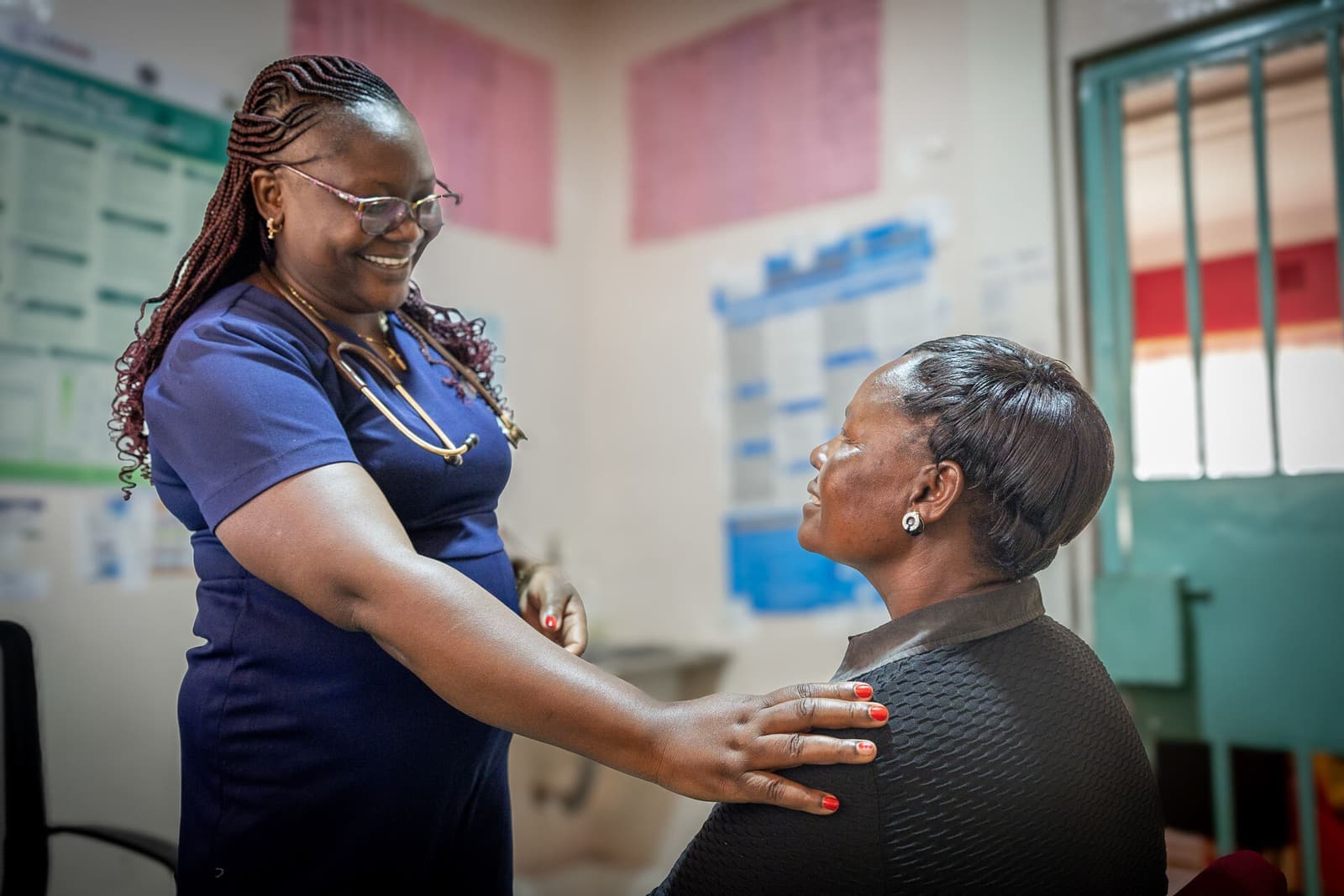
Image context: the cover uses WHO's real photograph from Kenya's Women's Integrated Cancer Screening program. The image is deliberately service-level: a health worker and patient in a clinic room, because the story turns on delivery systems rather than a laboratory breakthrough or a global burden chart.[1]
Fact File
| Timestamp / source | Key signal | Confidence note |
|---|---|---|
| WHO news release, July 8 | WHO says cancer causes more than 26,000 deaths every day, with about 20.6 million new cases and close to 10 million deaths annually.[1] | High for WHO's release summary; individual country numbers should be checked through IARC/GCO. |
| WHO Global Status Report on Cancer 2026, July 8 | The report frames cancer control across prevention, early detection, diagnosis, treatment, palliative care, survivorship, equity, and system performance.[2] | High for the report's scope and recommendations; implementation depends on country capacity. |
| IARC/ACS GLOBOCAN 2024 article, July 8 | IARC and ACS estimate 20.6 million cancer diagnoses and 9.8 million deaths in 2024 across 34 cancers and 186 countries.[3] | High for global estimates; modeled estimates can be revised as registry coverage improves. |
| Nature Medicine, July 8 | New WHO breast-cancer survival estimates show regional median 5-year net survival ranging from 39.1% in the African Region to 88.5% in the Region of the Americas for women diagnosed in 2017-2021.[4] | High for the published estimate; survival data remain thinner in lower-resource settings. |
| WHO cancer fact sheet, July 3 | Lung, breast, colorectal, prostate, non-melanoma skin, and stomach cancers were the most common new cancers in 2024; lung cancer was the leading cancer killer.[5] | High for WHO's global baseline; national cancer profiles differ sharply. |
| WHO Global Breast Cancer Initiative | WHO's breast-cancer initiative uses three operational pillars: early detection, timely diagnosis, and comprehensive management.[6] | High for the program design; it is a model for delivery discipline, not a substitute for broader cancer-control plans. |
What Changed
The new report lands at a moment when cancer policy can no longer be divided into two tidy stories: rich countries innovate, poorer countries prevent. WHO's release argues that both stories are incomplete. Prevention still matters enormously: nearly four in ten cancer cases are linked to preventable risk factors, including infections such as HPV and hepatitis, tobacco, alcohol, high body mass index, insufficient physical activity, unhealthy diets, and air pollution.[1][5] At the same time, cancer survival increasingly depends on access to routine system capacity: pathology, imaging, operating rooms, radiotherapy machines, oncology medicines, trained staff, referral pathways, and follow-up.
That is why the breast-cancer survival figures are such a useful alarm. The same disease category can mean very different odds depending on where a woman enters the system. WHO's release says 5-year breast-cancer survival is about 87% in high-income countries and about 42% in low-income countries.[1] The new Nature Medicine analysis gives the regional version of the gap: median survival below 40% in the African Region, above 80% in Europe and the Western Pacific, and near 90% in the Americas.[4] Those are not only treatment statistics. They reflect detection timing, diagnostic delay, treatment completion, affordability, and whether patients can keep moving through care after the first abnormal finding.
WHO is also trying to move the cancer debate beyond narrow clinical endpoints. Its release says fewer than one in three countries currently include cancer care in universal health coverage packages, while WHO's first survey of people affected by cancer found financial hardship, mental-health strain, and heavy caregiver burden.[1] That matters because a cancer plan can look adequate on paper while still failing at the household level if patients abandon treatment, borrow destructively, travel too far, or miss follow-up because care is fragmented.
There is good news in the same file. WHO says tobacco use has declined by 27% since 2010, national cancer control plans now exist in 82% of countries compared with 50% in 2010, and registered clinical trials rose at an annual rate of 7.3% between 2005 and 2021.[1] The problem is translation. Essential cancer medicine availability remains much lower in low- and lower-middle-income countries than in high-income countries, and the scientific pipeline does not automatically create local access.[1][2]
Decision Impact
Next 24 hours: health ministries and cancer agencies should treat the report as an audit prompt. The fastest useful question is not "What is our 2050 burden?" but "Where does our current patient pathway break?" The likely breakpoints are familiar: no HPV vaccination catch-up, weak symptom awareness, late presentation, missing pathology, radiotherapy backlogs, medicine stockouts, no navigation, and weak financial protection.[1][2][5]
Next 7 days: cancer programs should separate prevention wins from delivery gaps. Tobacco control, vaccination, and infection prevention can bend future incidence, but they will not help a person who already needs a biopsy, staging, surgery, chemotherapy, radiotherapy, or pain relief. WHO's breast-cancer initiative is useful here because its targets are operational rather than rhetorical: detect earlier, diagnose quickly, and complete multimodal treatment.[6]
Next 30 days: donors, finance ministries, and health insurers should look for budget lines that connect the continuum. A new screening campaign without pathology capacity can manufacture anxiety and waiting lists. A chemotherapy procurement push without diagnosis and follow-up can leave patients late in the pathway. A high-end oncology unit without transport support or coverage can become an urban access island. The report's equity argument is that value sits in the chain, not in any single impressive node.[2][4]
For researchers and life-sciences companies, the message is not that innovation is irrelevant. It is that innovation will be judged increasingly by whether it fits public-health value and can move through real systems. WHO's report calls for better value and alignment of research with public-health needs.[2] In practice, that means price, cold-chain burden, dosing complexity, diagnostic companion tests, workforce requirements, and health-system readiness will matter alongside efficacy.
Scenario Map
Base case: countries use the WHO report as a planning and funding reference, but progress remains uneven. Prevention improves in places with strong tobacco policy, vaccination programs, and primary care; survival gaps narrow slowly where cancer centers, referral networks, and medicine procurement are already improving; the lowest-resource settings remain exposed to late diagnosis and treatment abandonment.[1][2][4]
Upside case: the report becomes a common accountability frame before the 2030 checkpoint for noncommunicable-disease goals. In this branch, governments connect national cancer plans to UHC benefit packages, use patient navigation to reduce delay, protect medicine and radiotherapy access from stop-start financing, and measure survival rather than only counting new cases.[2][4][6]
Downside case: the 2050 projection becomes the headline but not the operating plan. Countries announce cancer strategies without financing diagnostic capacity, treatment completion, pain relief, or household protection. Incidence rises with population ageing and risk exposure, while survival gaps widen because early detection finds more need than systems can absorb.[1][2][5]
Uncertainty boundary: global estimates are only as strong as underlying registry, mortality, and health-system data. WHO and IARC are the best available global sources for this story, but country-level decisions should still use local registry data, facility audits, and patient-pathway studies where available.[2][3][4]
Action Checklist
- Map the patient pathway from first symptom or screening result to treatment completion, then identify the first point where people drop out.[2][6]
- Pair prevention policy with service capacity: HPV and hepatitis vaccination, tobacco control, alcohol policy, and obesity prevention should run alongside diagnostic and treatment expansion, not compete with it.[1][5]
- Audit whether cancer services are actually included in UHC packages, and whether coverage protects patients from travel, medicines, diagnostics, surgery, radiotherapy, and palliative-care costs.[1][2]
- Measure survival and stage at diagnosis, not only new cases. The breast-cancer survival gap shows why outcome measurement is central to equity.[4][6]
- Treat medicine availability and radiotherapy access as infrastructure questions. Stockouts, machine downtime, and workforce shortages can erase the value of a formal cancer plan.[1][2]
The falsifier is specific. If countries can show sustained improvements in early-stage diagnosis, treatment completion, essential medicine availability, radiotherapy access, and financial protection, then the 2050 forecast becomes less deterministic. If the next wave of cancer plans does not change those delivery measures, the report's warning should be read as a lagging indicator of widening survival inequality rather than only a future incidence curve.[1][2][4]
Sources
- World Health Organization, "WHO calls for urgent action as new cancer cases are projected to nearly double by 2050" (July 8, 2026) - news release, headline estimates, equity findings, and WHO/Yasin Abdullahi image source.
- World Health Organization, Global status report on cancer 2026: the future we choose together (July 8, 2026) - report overview, cancer-control continuum, strategic shifts, and recommendations.
- International Agency for Research on Cancer, "Global cancer statistics 2024: GLOBOCAN estimates of incidence and mortality worldwide for 34 cancers in 186 countries" (July 8, 2026) - IARC/ACS publication note and global estimate baseline.
- Fabio Girardi et al., "Global breast cancer survival estimates in 2017-2021 to advance the WHO Global Breast Cancer Initiative," Nature Medicine (July 8, 2026) - regional 5-year breast-cancer survival estimates and evidence boundary.
- World Health Organization, "Cancer" fact sheet (July 3, 2026) - common cancers, mortality baseline, risk factors, and regional variation.
- World Health Organization, "The Global Breast Cancer Initiative" - operational pillars, survival-equity framing, and health-system strengthening approach.