As of 2026-07-08 04:33 UTC, Texas's app-store age-verification law is no longer only a constitutional argument in briefs. The U.S. Supreme Court declined on July 6, 2026 to block enforcement while the case continues, leaving the Texas App Store Accountability Act in force for now.[1][2]
The practical change is simple to state and hard to operate: app stores serving Texas must verify age categories for new users, minor accounts must connect to a parent or guardian account, and parental consent becomes part of downloads, purchases, and some significant app changes.[3][4][5] The Court did not decide whether the law is constitutional. It decided, through the emergency posture of the case, not to restore the injunction while the lower-court fight moves ahead.[1][2][6]
That distinction matters. For Texas officials, the order gives the state a live child-safety enforcement model. For opponents, it turns the compliance burden into current harm before the First Amendment challenge is fully heard. For app developers, it moves the issue from policy tracking into product, legal, privacy, support, and release-management workflows.[3][4][5][6][7]
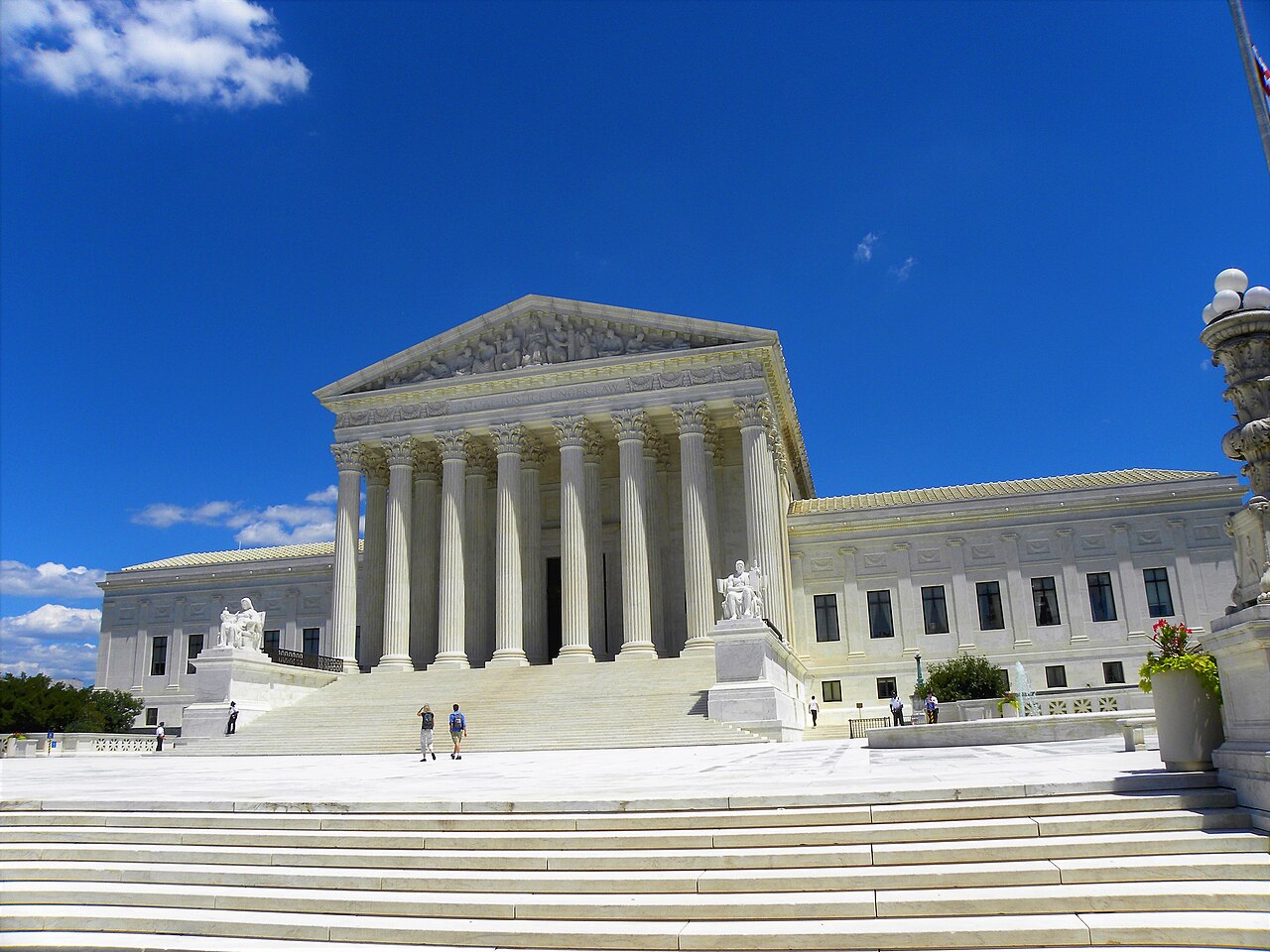
Image context: the cover uses a real photograph of the Supreme Court Building, not a platform logo, phone mockup, chart, or generated image. The point is institutional: an emergency order changed the operating status of a state digital-safety law before the merits were settled.[2][8]
Fact File
| Timestamp / source | Key signal | Confidence note |
|---|---|---|
| AP, July 6 | The Supreme Court declined to block Texas from enforcing the state law, and AP identifies the plaintiffs as CCIA and Students Engaged in Advancing Texas.[1] | High for the immediate news; the order is procedural, not a final merits decision. |
| Supreme Court docket, July 6 | In 25A1390, Justice Alito referred CCIA's application to the Court, and the Court denied the application to vacate the stay.[2] | High for docket status; the docket itself does not explain the Court's reasoning. |
| Texas enrolled bill text | SB 2420 creates Chapter 121 of the Texas Business & Commerce Code, names the law the App Store Accountability Act, defines app stores and minors, and sets duties for app stores and developers.[3] | High for statutory text; implementation details still depend on platform systems and legal interpretation. |
| Apple Developer, November 2025 | Apple described Texas account requirements, age-assurance signals, parental consent for minors, significant-change consent, revocation, and developer APIs.[4] | High for Apple's stated implementation plan; exact behavior may evolve as tools and OS releases change. |
| Google Play Help | Google says the Texas law is in effect after the appeals-court stay and describes Play age signals, age-verification flow, parental approval, significant-change handling, and developer responsibility.[5] | High for Google Play's developer-facing guidance; developers still need their own legal analysis. |
| CCIA statement, July 2026 | CCIA says the emergency ruling lets Texas enforce the law until the lower court decides whether to strike it and expects an expedited Fifth Circuit hearing in August.[6] | High for plaintiff-side position; it is advocacy, not neutral adjudication. |
| Texas Attorney General statement, June 2026 | Paxton's office frames the Fifth Circuit stay as a child-protection victory, saying app stores must verify ages and give parents approval control over minors' downloads.[7] | High for state position; it should be read as advocacy by a party defending the law. |
What The Court Actually Did
The July 6 order did not bless every part of the Texas statute. It also did not tell platforms exactly how to build age checks. The Supreme Court's immediate action was narrower: it refused to vacate the Fifth Circuit stay that had allowed the law to take effect after a district court had blocked it.[1][2][6][7]
That procedural posture is why the same event reads so differently to the two sides. Texas sees the denial as space to enforce a law it says gives parents more control over minors' app downloads and purchases.[7] CCIA sees it as a period in which users and app stores must comply with what the group calls an unconstitutional access and speech regime before the full appeal is resolved.[6]
The important boundary is that the constitutional merits remain unsettled. The plaintiffs argue that the law burdens access to protected speech and lawful information, including news and educational apps.[1][6] Texas argues that children can download apps, expose private data, accept terms, and reach harmful material without parental knowledge, so the state may require age verification and parental approval.[1][7]
For readers, the useful question is not "who won the whole case?" They did not. The better question is what happens when a challenged speech-and-safety law becomes enforceable during the appeal.
How The Law Moves Through The App Store
The statutory architecture has three layers. First, the app store must verify age category when a person in Texas creates an account. The law's age categories are under 13, 13 to 15, 16 to 17, and adult.[3][4] Second, if the account belongs to a minor, the app store must affiliate it with a parent or guardian account and obtain consent for downloads and purchases.[3] Third, developers must provide age ratings, notify app stores of significant changes, and use age-category and consent information they receive to support compliance.[3][4][5]
The key operational word is signal. Apple tells developers they may need capabilities to receive age category information, trigger consent for significant changes, and learn when a parent or guardian revokes approval.[4] Google Play similarly describes a Play Age Signals API, age-verification flows for eligible Texas users, parental approval status, significant-change reporting, and in-app purchase age ratings.[5]
That is why the law is not just an app-store problem. App stores are the front gate, but developers inherit downstream obligations. A developer may need to know whether a user is in a protected age category, whether parental consent exists, whether a significant change has occurred, whether a parent has revoked approval, and whether a feature or purchase needs a different flow.[3][4][5]
There are limits written into the statute. The Texas text includes provisions on data minimization, encryption, good-faith use of widely adopted standards, emergency-services exceptions, standardized-test exceptions, and restrictions on sharing personal data collected for age verification.[3] Those limits matter, but they do not erase the implementation problem. They create the compliance story that app stores and developers will have to prove.
The Main Tradeoff
Texas's theory is parent-centered: app distribution is now one of the main ways children encounter content, purchases, terms of service, privacy practices, and data collection, so app stores should not treat a minor's download like an ordinary adult transaction.[7] On that view, the law moves consent closer to the moment when a child gets access.
The plaintiffs' theory is access-centered: requiring age proof before app-store access turns a broad universe of lawful digital speech into a checkpoint, including apps that are not adult, social, risky, or child-directed.[1][6] On that view, a law designed around child safety may still chill adults, teenagers, publishers, developers, and families who do not want identity or age checks attached to ordinary downloads.
The hard part is that both concerns can be real at the same time. A parent may reasonably want better tools than after-the-fact screen-time policing. A user may also reasonably object to proving age before downloading a weather, Bible, news, transit, homework, or health app. The policy question is not whether children need protection online. It is whether the state has chosen a method narrow enough, private enough, and workable enough to survive constitutional and operational scrutiny.
Decision Impact
Next 24 hours: app stores and developers should treat Texas as active, not hypothetical. The live work is to confirm which users are covered, which account-creation flows trigger verification, how parental consent is requested, how support teams handle blocked downloads, and how revocation or failed verification affects access.[3][4][5]
Next 7 days: legal, privacy, and engineering teams need one shared map. The statute's duties are not identical for stores and developers. Stores handle account age category, parental affiliation, consent presentation, ratings display, and data protection. Developers handle age ratings, significant-change notices, verification logic based on store-provided information, and deletion limits for personal data received from stores.[3]
Next 30 days: watch the Fifth Circuit schedule and platform behavior. CCIA says an expedited hearing is expected in August.[6] If the case moves quickly, companies may have to build for a live law while preserving rollback options in case the injunction returns or the statute is narrowed.
Scenarios
Base case: the law stays active through the August appellate hearing. Apple and Google continue platform-level flows, developers implement or test age-signal handling where needed, and the visible consumer impact lands mostly on new Texas accounts, minor downloads, in-app purchases, and significant app changes.[4][5][6]
Child-safety upside: the state shows that app-store-level consent can work without excessive data collection or arbitrary blocking. Parents get clearer approval prompts, minors get age-appropriate defaults, and developers receive enough signal to comply without seeing more personal information than necessary.[3][4][5][7]
Speech-and-privacy downside: age checks become a broad access toll for ordinary apps, support failures block lawful use, developers over-restrict teenagers to avoid liability, or identity-verification data becomes the weak point in a system built to protect children.[1][3][4][6]
Action Checklist
- For app stores: document the verification method, parental-consent flow, revocation path, data retention policy, and how exceptions are handled for emergency and standardized-test apps.[3]
- For developers: identify whether the app has Texas users, minors, in-app purchases, material age-rating issues, ads, monetization changes, privacy-policy changes, or feature changes that could count as significant.[3][4][5]
- For parents: test the consent path before a child needs an app urgently, especially for school, transit, health, finance, messaging, or safety-related uses that are not obviously entertainment.
- For civil-liberties and child-safety advocates: separate the emergency-order question from the merits question. The law is live for now, but the constitutional dispute has not been fully resolved.[1][2][6]
- Invalidation condition: this explainer needs revision if the Fifth Circuit restores the injunction, narrows the law, or issues a merits ruling that changes the duties for app stores or developers.[2][6]
The clean read is that July 6 turned Texas's law into an operating constraint before it became settled doctrine. That is the pattern to watch in state online-safety laws: litigation moves at court speed, while platforms and developers have to decide whether product flows, privacy systems, support scripts, and consent records are ready for enforcement today.[3][4][5]
Sources
- Mark Sherman, Associated Press, "Supreme Court won't block Texas from enforcing a law requiring age verification for app downloads" (July 6, 2026) - immediate news report on the Supreme Court order, parties, lower-court posture, and competing arguments.
- Supreme Court of the United States, docket No. 25A1390, Computer & Communications Industry Association v. Ken Paxton - docket entries showing the June 2026 application and July 6 denial after referral to the Court.
- Texas Legislature Online, enrolled text of SB 2420, 89th Legislature, Regular Session - statutory text of the App Store Accountability Act, including app-store duties, developer duties, exceptions, data provisions, enforcement, and January 1, 2026 effective date.
- Apple Developer News, "Next steps for apps distributed in Texas" (November 4, 2025) - Apple's developer guidance on Texas age assurance, parental consent, significant-change APIs, revocation, sandbox testing, and privacy concerns.
- Google Play Console Help, "Changes to Google Play for upcoming app store bills for users in applicable US states" - Google Play developer guidance on Texas status, Play Age Signals API, age-verification flows, parental approval, significant changes, and purchase ratings.
- Computer & Communications Industry Association, "Supreme Court Opts not to Intervene and Block a Texas App Store Law that Likely Violates First Amendment" (July 2026) - plaintiff-side statement on the emergency ruling, First Amendment argument, district-court injunction, Fifth Circuit stay, and expected August hearing.
- Office of the Texas Attorney General, "Attorney General Ken Paxton Secures Major Victory Protecting Children Online By Requiring Age Verification and Parental Approval for Minors' App Downloads" (June 2026) - state-side statement on the Fifth Circuit stay, child-safety rationale, and parental-approval framing.
- Wikimedia Commons, "Supreme Court Building Washington DC.jpg" - 2018 real photograph of the front of the United States Supreme Court Building by Mathieu Landretti, used as the article image.