As of 2026-11-16 10:34 UTC.
Thirty University of Juba students have completed training to run the university's first campus radio station, UNESCO reported on November 11. The station is preparing to launch in the coming months, giving journalism students a place to turn classroom instruction into programmes for listeners.[1]
That preparation now meets a changing election calendar. On November 14, Radio Tamazuj reported that South Sudan's National Elections Commission had moved polling from December 22 to February 11, 2027. UNESCO's announcement still referred to the earlier December timetable. For aspiring broadcasters, the change supplies an immediate example of the job ahead: keeping public information current when the institutions behind it change course.[2]
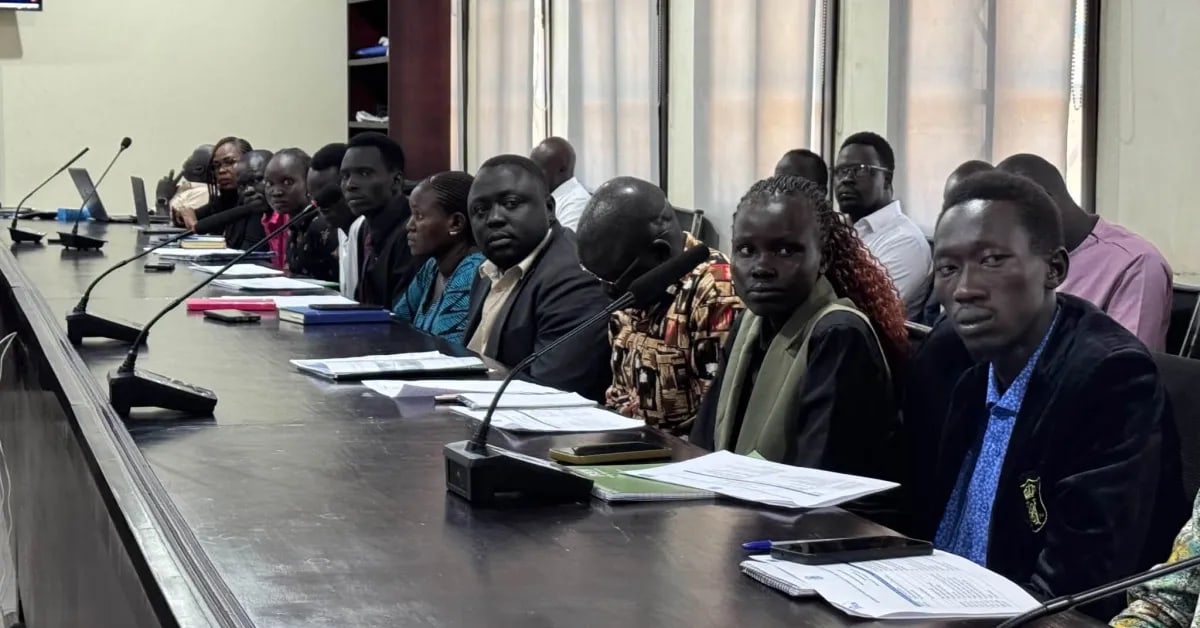
A newsroom takes shape before the signal
UNESCO describes students debating programme names during their four-day October workshop. Bakhita Aluel, a third-year journalism student, hoped girls and young women would see journalism as a profession they could enter.[1]
The work has roots earlier in the year. On January 9, Radio Tamazuj reported that the university's School of Journalism, Media and Communication Studies had formed a student press club with the National Press Club of South Sudan. Deputy dean Delpina Roba connected the club to practical reporting on university activities, including admissions, and to the planned renovation of the station.[3]
The club's plans included podcasts, a newsletter and contact with experienced journalists. The National Press Club identified weak professional networks and limited opportunities to practise ethical reporting as problems facing graduates. Those are useful details because they give the campus station a purpose beyond acquiring equipment: students need stories to pursue, editors to learn from and an audience whose questions they can answer.[3]
An admissions bulletin is a modest example of that relationship. A useful report would establish which office supplied the information, what applicants need to do and how a correction will reach them if arrangements change. That is an editorial possibility, rather than a programme already documented on this station. It shows how routine campus reporting can exercise the same verification habits needed for a national announcement.
Five stations, different starting points
The campus project belongs to a wider radio rehabilitation programme supported by Japan and the Japan International Cooperation Agency. UNESCO's February account described renovations to two University of Juba studios, work at Wau and Yambio, reconstruction in Malakal and the establishment of Terekeka Community Radio.[4]
The starting conditions vary sharply. In Malakal, UNESCO traced damage to the broadcasting infrastructure to the 2013 conflict. In Terekeka, an unused building was to become the county's first community station, serving an area where dispersed settlements and transport difficulties can make communication hard. A governance board, listener club and volunteer training accompanied the building work.[4]
Three dated records establish what has happened without assuming the next stage is complete:
- January 9: local reporting documented the student press club and plans for practical journalism activities.[3]
- February 13: UNESCO described studio renovations and a broader programme then expected to make its stations operational by year-end.[4]
- November 11: UNESCO published its account of the training.[1]
A course, a renovated room and a broadcast service are distinct milestones.
The work after opening day
Reporters Without Borders describes radio as South Sudan's most popular medium. Its country assessment also identifies political pressure, censorship and financial constraints: registration costs and taxes strain outlets, while state-owned and politically backed media attract more advertising. It reports that economic pressures have contributed to closures.[5]
Those are national conditions, not findings about misconduct or financial trouble at the university station. They nevertheless make operating arrangements central to assessing its prospects. A continuing service needs people who can review sensitive reporting, respond to complaints and keep programmes running after the training ends. Neither a new studio nor a confident first broadcast would answer all of those questions.
The revised election timetable makes the distinction concrete. Radio Tamazuj's November 14 report placed voter registration on November 14–28, even though polling had moved into February. Postponing a vote therefore does not postpone every information need. Any civic programming prepared for later transmission would need another check against the latest calendar before reaching listeners.[2]
What would show that preparation is becoming a service?
The following are reporting scenarios, not forecasts or official project deadlines:
- Base case: preparations continue and the launch remains pending. Until a verified broadcast or launch notice appears, describe the station as being prepared.
- Upside: a published schedule is followed by repeat broadcasts and documented listener feedback. That would support a stronger account of a functioning service with an audience.
- Downside: a missed announced launch or repeated interruptions expose unresolved operating problems. Those observations would weaken claims of readiness; they would not erase the training already completed.
For university partners, educators and reporters following the project, a short checklist can keep the next account precise:
- Within 24 hours: check the university's latest launch information and the current electoral timetable before repeating either. A newer dated announcement supersedes the dates cited here.
- Within seven days: seek the planned schedule and identify who supervises student reporting and corrections. Training participation alone does not establish editorial oversight.
- Within 30 days: look for repeat broadcasts, arrangements to cover running costs and evidence that listeners can raise concerns. If only launch publicity is available, claims of a sustained public service remain unproven.
The students have begun learning how to make programmes. The next visible achievement will be giving listeners a reliable reason to return.
Sources
- UNESCO, “University of Juba students prepare to take first campus community radio station on air,” November 11, 2026.
- Radio Tamazuj, “NEC pushes elections beyond December deadline set in law,” November 14, 2026; reporting on the revised National Elections Commission calendar.
- Radio Tamazuj, “University of Juba forms student press club with media group,” January 9, 2026; practical training, campus reporting and station renovation plans.
- UNESCO, “World Radio Day: UNESCO is rebuilding radio and reconnecting communities in South Sudan,” February 13, 2026, updated February 16; five-station programme, studio work and earlier completion target.
- Reporters Without Borders, “South Sudan,” country profile accessed November 16, 2026; radio's role, political pressures and media economics.