As of 2026-05-06 04:05 UTC, Europe's May 3 Falcon 9 rideshare looks less like a generic small-satellite pileup than a policy-execution report. ESA says 13 European satellites reached orbit on the CAS500-2 mission: seven Hawk for Earth Observation spacecraft for Italy's IRIDE programme, four wildfire-monitoring satellites for Greece's Hellenic Fire System, and two Greek CubeSats for the Hellenic Space Dawn connectivity demonstration.[1][2][6] The useful question is no longer whether Italy and Greece can announce ambitious sovereign-space plans. It is whether those plans can now commission hardware fast enough to deliver routine public services.
That shift matters because both programmes sit on public-capital stories rather than pure startup narratives. ESA describes IRIDE as an Italian government mission coordinated by ESA with ASI support and funded through Italy's National Recovery and Resilience Plan.[1][3][5] ESA and OroraTech describe the Greek wildfire system as part of the Greek National Small Satellite Programme, backed by the EU Recovery and Resilience Facility and designed to improve disaster response and environmental monitoring.[2][4] Put bluntly, money that began as post-crisis recovery policy is now flying as operational hardware.
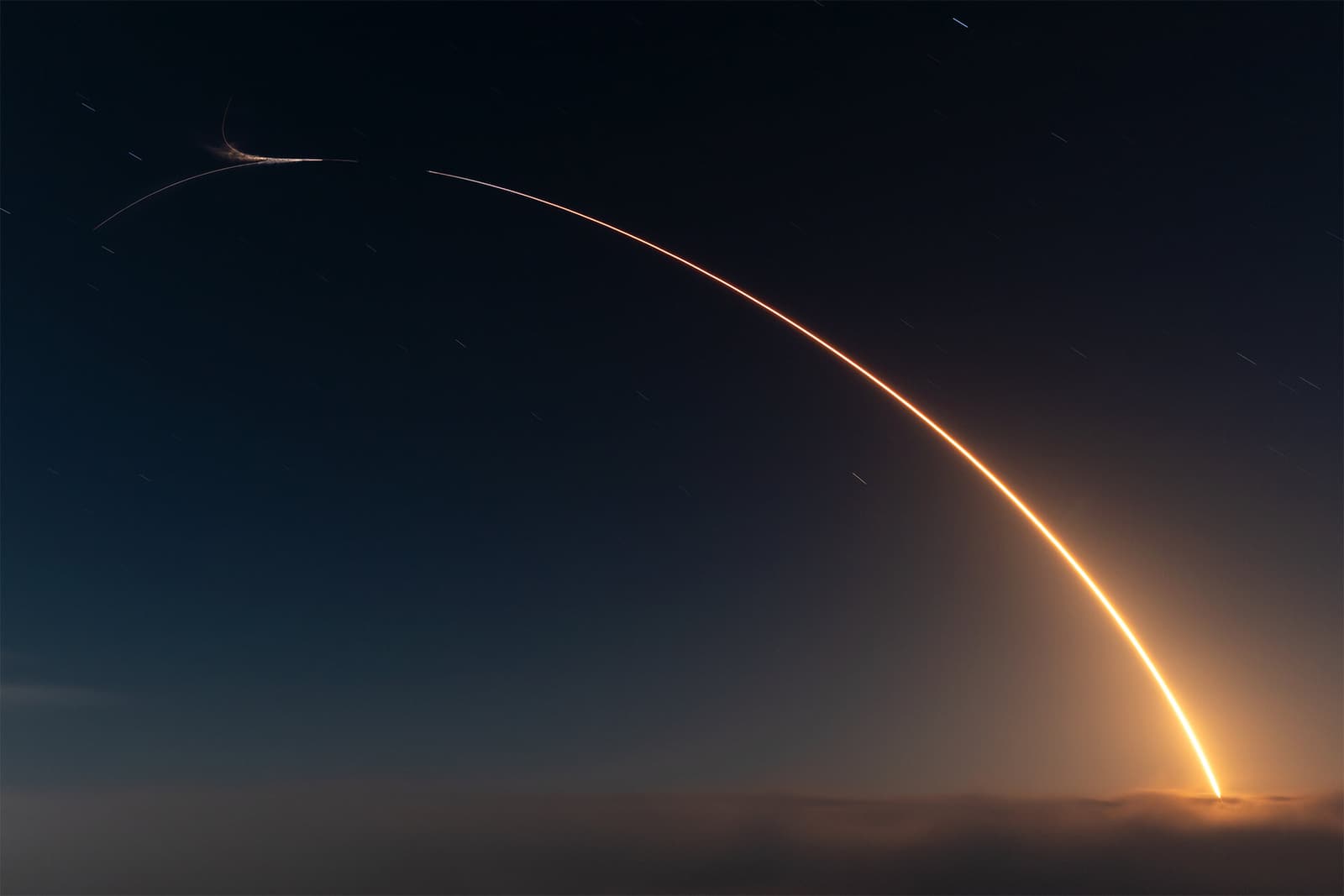
Image context: the cover uses ESA's launch photo credited to SpaceX.[7] It is the right documentary image here because this story is no longer about renderings or contract signatures. The satellites are already in orbit, and the real debate has shifted to commissioning, data latency, service uptake, and whether these national systems can stay useful after the launch headline fades.
Fact file
| Item | What is live now | Confidence note |
|---|---|---|
| Launch event | ESA says the mission launched from Vandenberg aboard a SpaceX Falcon 9 on 3 May 2026 at 09:00 CEST.[1] | Strong. Direct from ESA's launch story. |
| Italy payload | ESA says seven new HEO satellites joined Italy's IRIDE programme, bringing the total number of IRIDE satellites in orbit to 31.[1] | Strong. Direct from ESA. |
| IRIDE operating baseline | ESA says the first eight HEO satellites are already fully operational and producing data and images.[1] | Strong. Direct from ESA. |
| Greece wildfire payload | ESA says four Hellenic Fire System CubeSats reached orbit, calling it a world first for a national wildfire-detection and tracking constellation.[2][4] | Strong. ESA and OroraTech align on the claim. |
| Fire-service handoff | ESA says OroraTech expects the wildfire satellites to complete commissioning and become ready for service in a few months.[2] | Strong on the schedule language; the service outcome still needs proof. |
| Greek connectivity demo | ESA says Helios and Selene carry CubeCAT laser terminals for secure optical links, with up to 1 Gbps downlink speeds.[1] | Strong. Direct from ESA. |
| Wider rideshare context | Via Satellite says the broader CAS500-2 mission carried 45 payloads and included multiple non-European commercial customers alongside the Italian and Greek satellites.[6] | Strong. Independent trade coverage. |
What actually changed on 3 May
The simplest change is that IRIDE became harder to dismiss as a paper constellation. ESA's mission page describes IRIDE as a multi-constellation Earth-observation system aimed at ground motion, land cover, water resources, coastal areas, and other civil-monitoring use cases, with 60+ satellites planned across six constellations.[3] That overall architecture is still incomplete. But the 3 May launch matters because it moved one important slice of the programme from planned scale to orbital scale. ESA says the new HEO batch brings IRIDE to 31 satellites in orbit, while Argotec says the launch confirms the value of Italy's PNRR-backed industrial buildout.[1][5]
The second change is sharper because Greece's wildfire mission is more specific. ESA says the Hellenic Fire System's four 8U CubeSats carry midwave and longwave infrared imagers designed to detect active fires, thermal anomalies, and fire radiative intensity across Greece and other areas of interest.[2] OroraTech adds the operational claim: the system is meant to provide continuous coverage across Greek territory, route data into Greek emergency workflows, and identify hotspots as small as 4 by 4 meters, with latency measured in minutes.[4] That is a real public-safety promise, not just a space-industry talking point.
The third change is smaller in near-term public impact but important for the programme mix. The two Hellenic Space Dawn CubeSats are not another imaging fleet; they are a technology-validation lane for optical communications and onboard data handling.[1] ESA says Helios and Selene carry laser terminals and cameras, aiming to test secure high-rate links from small satellites while still supporting mapping and land-use applications.[1] In practical terms, the Greek programme is not only buying eyes in orbit. It is also testing how data move off those eyes faster and more securely.
Why this rideshare reads bigger than a payload count
The launch matters because it shows a particular European method taking material form. Instead of waiting for one giant all-purpose constellation to solve every problem at once, Italy and Greece are flying narrower mission blocks: one stack for national Earth observation, one for wildfire detection, one for optical connectivity experiments. The sources support that reading even if they do not state it in one sentence. IRIDE is explicitly framed around national monitoring services and economic modernization.[1][3][5] The Greek systems are explicitly framed around disaster response, environmental monitoring, national capability, and technological validation.[1][2][4]
There is also a quieter orbital point. None of these systems needed an exclusively national launcher to become nationally meaningful. ESA's story is clear that the payloads flew on a commercial SpaceX rideshare out of California.[1] The strategic value therefore does not come from launch pageantry alone. It comes from what happens after deployment: who operates the data, who owns the service logic, and whether local public agencies can absorb the output. That inference goes beyond the press releases, but it is the cleanest interpretation of why official statements keep stressing governance, resilience, and public-service use.[1][2][3][4][5]
The shared funding backdrop reinforces the point. These are not isolated venture bets. Both the Italian and Greek systems are tied to recovery-era public investment, then routed through ESA frameworks and national agencies into space hardware.[1][2][3][4][5] In that sense, the May 3 mission was a governance milestone as much as a launch milestone. It showed that post-pandemic recovery money and digital-sovereignty ambitions can survive the slow grind from policy document to functioning spacecraft.
What is still unproven
None of this is finished infrastructure yet. IRIDE's headline number, 31 satellites in orbit, only matters if the constellation keeps turning imagery into dependable services for coastal monitoring, land-use analysis, and emergency operations.[1][3] The remaining gap is not orbital presence. It is workflow quality, revisit performance, and whether public agencies actually use the data at operational tempo.
The same caution applies even more strongly to Greece's wildfire system. ESA says the four satellites are now under close monitoring and should be ready for service after commissioning in a few months.[2] OroraTech's press release makes bigger operational claims about national coverage, minute-level latency, and small-hotspot detection.[4] Those claims may well prove out, but they still belong to the verification phase rather than the completed-results phase.
Hellenic Space Dawn sits one step earlier again. The two CubeSats now have to prove that optical data transfer and onboard processing work reliably enough in orbit to justify the national capability language around them.[1] If they do, Greece gains more than two test satellites. It gains a template for handling higher-value Earth-observation data with fewer compromises on speed and interception risk. If they do not, the mission remains a useful experiment rather than a connectivity breakthrough.
What to watch next
The first watch item is commissioning evidence. ESA and partner updates on satellite health, first data, and ground-segment integration will matter more than celebratory launch language over the next several weeks.[1][2][3]
The second is service proof. For IRIDE, that means new evidence that the enlarged HEO fleet is feeding actual public-authority workflows, not simply enlarging a satellite count.[1][3][5] For the Hellenic Fire System, it means seeing whether the promised wildfire-detection performance survives real Mediterranean fire-season conditions.[2][4]
The third is whether the Greek connectivity lane produces hard technical results. ESA has already framed Hellenic Space Dawn as a test of secure optical transfer from small satellites.[1] The meaningful next milestone is not that the satellites deployed, but that Helios and Selene start returning data in a way that justifies repeating the architecture.
The narrow conclusion is the strongest one. Europe's 3 May rideshare did not just add more small satellites to orbit. It moved two national space-policy stories, Italy's IRIDE buildout and Greece's wildfire-response stack, into the phase where performance can finally be judged against public promises.[1][2][3][4][5][6]
Sources
- European Space Agency, "Launch boosts European Earth monitoring and connectivity" (4 May 2026).
- European Space Agency, "Hellenic Fire System satellites launched for Greece" (4 May 2026).
- European Space Agency, "IRIDE" mission page (accessed May 6, 2026).
- OroraTech, "Greece Launches World's First National Wildfire Satellite System" (4 May 2026).
- Argotec, "SPACE, THE ITALIAN IRIDE CONSTELLATION EXPANDS: SEVEN MORE SATELLITES FOR EARTH OBSERVATION." (3 May 2026).
- Via Satellite, "Lynk, EarthDaily, True Anomaly Launch Satellites on Weekend SpaceX Rideshare Mission" (3 May 2026).
- European Space Agency Multimedia, "Launch boosts European Earth monitoring and connectivity" (image source page, 4 May 2026).