As of 2026-11-02 19:35 UTC.
New cocoa research highlighted by CGIAR on October 24 places farmers’ access to buyers and cash alongside tree planting in the effort to expand agroforestry in Côte d’Ivoire and Guinea.[1]
The findings arrive as international institutions examine how to finance that transition. FAO’s programme for the October 29–30 Investable Beans meeting in Rome paired producer business cases with sessions on investment risk and government policy. Its stated objective was a collaborative framework for sustainable coffee and cocoa supply chains.[5]
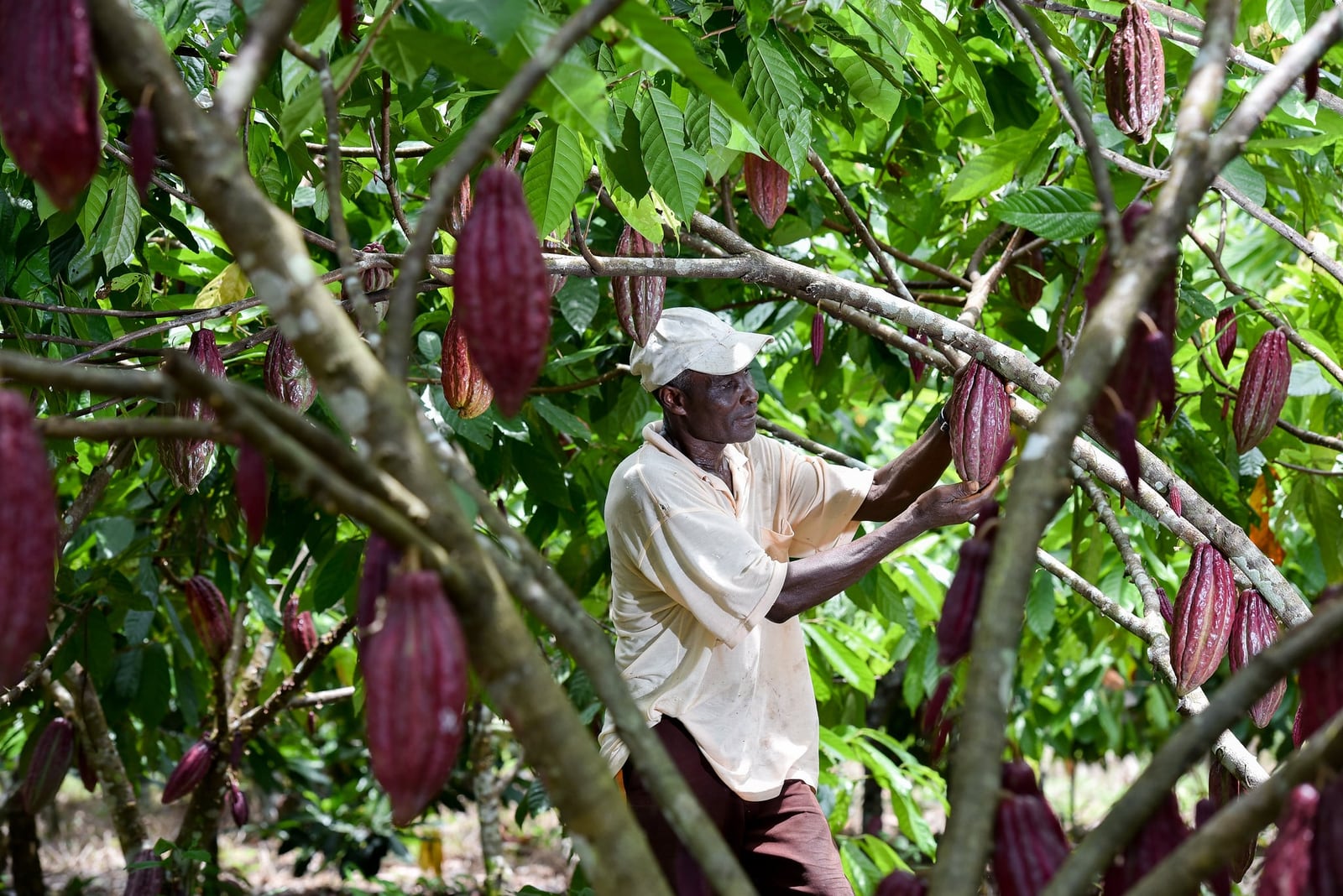
The buyer who brings cash
In Côte d’Ivoire, CGIAR describes informal cocoa buyers, known as pisteurs, who reach remote farms and pay promptly. Their transactions can be difficult to trace. Registering these buyers and recording purchases could preserve their service; removing them could leave farmers waiting for money.[1]
Guinea’s smaller sector has weaker formal finance, extension and processing. Farmers already combine cocoa with other trees, but need dependable support to manage those systems. The proposed business arrangements remain unproven.[1]
An earlier consultation explains why the payment question belongs in a discussion about trees. At a June 16 workshop in Abidjan, participants ranked access to markets for agroforestry products ahead of technical support and financing. The Alliance of Bioversity International and CIAT reported that insecure rights to land and trees, labour demands and delayed returns could discourage adoption.[2]
Participants also challenged a familiar measure of progress: seedlings supplied. Some seedlings never reach the ground; others die. Their recommendations extended investment through planting, maintenance and continuing advice. A distribution total, therefore, cannot establish how many useful trees a programme has helped farmers retain.[2]
These were stakeholder priorities and research findings discussed at a workshop. They do not establish that a particular credit contract will succeed everywhere. They do identify practical questions for a buyer or development programme: when does the farmer receive payment, and who remains available when a planted tree needs care?
A forest claim needs evidence from the farm
Traceability adds another obligation to that commercial relationship. FAO’s June 3 guidance describes a technical difficulty: tree-covered cocoa and coffee farms can resemble natural forest in satellite imagery. Small, irregular plots beneath a canopy are particularly challenging to identify.[3]
FAO recommends combining different observations and checking mapped results against field information and local expertise. It also calls for consistent definitions and documentation explaining a map’s methods and limitations. The consequence for procurement is straightforward: a green patch on a screen cannot, by itself, settle what a supplier grows there.[3]
This makes farm records and field verification part of the cost of establishing a credible sourcing claim. A programme assessing its own progress should budget for both, then check whether small producers can actually participate. Better maps have limited commercial value to a farmer whose crop cannot be connected to them.
Large financing figures, local delivery
There is evidence that policy reform can support substantial financing. In a June 29 results account, the World Bank said forest and cocoa reforms in Côte d’Ivoire, backed by its policy-based guarantee, improved traceability across 500,000 hectares and enabled up to approximately $507 million in sustainability-linked commercial financing.[4]
Those are the Bank’s reported programme results. They are not a tally of cash paid to individual cocoa farmers, nor proof that the newly discussed business models have reduced forest loss. The distinction matters when evaluating a financing announcement: the availability of capital and the conditions on which a producer receives it are separate questions.
The Bank’s wider approach combines governance and data reforms with guarantees, credit lines and advisory work. Its account supports examining the institutions around lending, as well as the amount raised.[4]
Rome’s published agenda similarly moved from business cases to a second day devoted to assigning responsibilities and developing a framework. The agenda establishes the intended work; it does not document a completed agreement or new disbursements. No such outcome is claimed here.[5]
What would count as progress
Three conditional paths provide a useful test for the next announcements:
- Base case: proposals advance into pilots, demonstrated by named operators, eligibility rules and a timetable.
- Upside: pilots preserve prompt payment while improving traceability; transaction records and farmer feedback would substantiate that gain.
- Downside: new requirements interrupt sales or delay payment; evidence of either would undermine claims that participation has become easier.
These are assessment criteria, not forecasts. Buyers, cooperatives and programme managers can use a short follow-up checklist:
- Within 24 hours: separate a research recommendation, an event agenda and a signed financing commitment.
- Over seven days: identify who would pay for records, field checks and continuing farm support.
- Over 30 days: seek published payment terms and evidence of producer access before describing a programme as delivering benefits.
These intervals are suggested review windows, not institutional deadlines. Any early claim of success should be withdrawn if participation comes with payment delays or excludes the farmers the programme intended to reach.
Sources
- CGIAR Climate Action, account of cocoa value-chain reports from Côte d’Ivoire and Guinea, October 24, 2026; photograph source.
- Alliance of Bioversity International and CIAT, Abidjan workshop report on scaling cocoa agroforestry, July 17, 2026.
- FAO, forest monitoring guidance for tree crops and smallholder data governance, June 3, 2026.
- World Bank, “Unlocking Private Capital to Scale Environmental Solutions,” June 29, 2026; Côte d’Ivoire results and financing approach.
- FAO, Investable Beans event programme, October 29–30, 2026; stated objectives, sessions and proposed collaborative framework.