As of 2026-06-30 01:36 UTC, Spain's August 12 eclipse is already being undersold if it is treated mainly as an astronomy outing. It is a public-operations test with a celestial trigger: a late-summer, sunset-hour event crossing northern Spain when people will want western horizons, roads will narrow toward viewpoints, and eye-safety messaging will have to be simple enough for tired travelers to follow.
The opinion here is straightforward: the success metric should not be how many people see totality. It should be how many people reach sensible viewing sites, understand the safety boundary, avoid improvising on road shoulders, and leave without turning one or two minutes of darkness into hours of preventable risk.
NASA says the total eclipse path will sweep across Greenland, Iceland, northern Russia, the Atlantic, Spain, and a small corner of Portugal, while much of the Northern Hemisphere sees a partial eclipse.[1] Spain's National Geographic Institute says this will be the first total solar eclipse visible from the Iberian Peninsula in more than a century, crossing Spain from west to east and reaching places from A Coruna to Palma, including Leon, Bilbao, Zaragoza, and Valencia.[2] Those two facts explain why ordinary event planning is not enough. This is rare, scenic, national, and low on the horizon.
Fact File
| Signal | What matters now | Confidence note |
|---|---|---|
| Timing | NASA lists totality in Leon from 8:28 p.m. to 8:30 p.m. local time, Zaragoza from 8:29 p.m. to 8:30 p.m., and Valencia from 8:32 p.m. to 8:33 p.m.; some listed partial phases end at sunset rather than after a complete visible sequence.[1] | High for astronomical timing; local viewing quality still depends on horizon, weather, access, and site crowding. |
| Geography | IGN says Spain sits near the end of the path, with totality arriving while the Sun is low and setting, so western visibility becomes a hard constraint.[2] | High for geometry; weather and smoke/haze cannot be known this far out. |
| Public coordination | Spain's official Trio of Eclipses site frames the 2026-2028 sequence as a mobility, security, logistics, health, safety, tourism, education, and public-information coordination challenge.[3] | High for government posture; local execution will vary by autonomous community and municipality. |
| Legal machinery | Spain's BOE created an interministerial commission for the 2026-2028 eclipses, explicitly tying the work to public information, mobility, citizen security, health-risk prevention, tourism, and coordinated administration.[4] | High for national governance structure; it does not by itself prove local readiness. |
| Eye safety | NASA says direct viewing is unsafe except during the brief total phase when the Sun's bright face is completely covered; partial phases require eclipse glasses or a safe handheld viewer, and optics need front-mounted solar filters.[5] | High for safety principle; counterfeit or damaged viewers remain a practical risk. |
The Operational Mistake Is Treating Totality As The Whole Event
Totality may last roughly a minute or two in many Spanish locations, but the event that public agencies have to manage will last far longer. People will arrive early to secure a western view. They will move again if hills, buildings, haze, clouds, dust, or smoke block the horizon. They will try to park near ridgelines, beaches, overlooks, rural roads, and bridges. Families will stay through sunset. Then everyone will leave at nearly the same time.
That is why "where is the centerline?" is not the only useful question. A bad centerline site with one access road, no toilets, no water, no shade, no safe pedestrian space, and a blocked western horizon is worse than a slightly less optimal site with capacity and clear management. The official Spanish portal is right to group mobility, security, logistics, public health, and science communication together rather than pretending the problem belongs only to astronomers.[3]
The sunset geometry makes this sharper. IGN notes that Spain is at the end of the totality band and that observers need a good view toward the west.[2] That turns ordinary view-seeking into crowd behavior. People who would happily watch a midday eclipse from a town square may need open western sightlines in 2026. The best public guidance should therefore name places to go, places not to go, and what makes a site unsuitable. "Find a clear horizon" is not enough when thousands of people may interpret the same sentence as permission to stop on a road shoulder.
Eye Safety Has To Survive The Sunset Illusion
The low Sun can make the event feel safer than it is. That is the dangerous part. A sunset Sun may feel less harsh, but NASA's safety guidance does not make "it looks dimmer" a safe-viewing category. During partial phases, viewers still need proper eclipse glasses or handheld solar viewers, and regular sunglasses are not a substitute.[5] The American Astronomical Society also maintains safety guidance for solar viewers and filters, including the ISO 12312-2 standard and supplier vetting context.[6]
Public messaging should repeat one simple boundary: glasses on for every partial phase; glasses off only when totality is fully established; glasses back on as soon as bright Sun returns. That message is harder at sunset because the return may coincide with distraction, crowd movement, photography, or a rush to beat traffic. It is also harder because Spain will have many near-total or deep-partial viewers outside the path. NASA lists Madrid and Barcelona at 99% coverage, but that is not totality.[1] Near-total is not the same safety condition as total. The difference has to be loud, because 99% sounds close enough to invite bad judgment.
Optics are the second weak point. Cameras, binoculars, and telescopes concentrate sunlight. NASA warns that eclipse glasses are not enough when someone looks through optics; those devices require proper solar filters attached at the front.[5] That should matter to local authorities because scenic sunset totality will pull casual photographers into the field. A safety campaign aimed only at naked-eye viewing will miss the people most tempted to improvise with zoom lenses and tripods.
Decision Impact
Next 24 hours: national and regional authorities should publish site categories, not just sky maps: official viewing areas, discouraged roads, no-stopping corridors, transit options, accessible sites, medical posts, water points, toilets, and horizon limitations. The official platform and BOE structure already support that kind of coordinated public information; the missing piece is how specific it becomes for ordinary travelers.[3][4]
Next 7 days: municipalities in the totality path should stress-test the exit, not only the arrival. The hard moment will come after sunset when darkness, fatigue, heat, and traffic converge. Road closures, shuttle loops, staggered departures, temporary lighting, and pedestrian separation will matter more than promotional language.[3][4]
Next 30 days: the safety campaign needs to move from astronomy audiences to general audiences. Schools, hotels, tourist offices, rail operators, rental-car counters, campsites, pharmacies, and camera shops should all carry the same basic message: use certified solar viewers for partial phases, do not use regular sunglasses, do not look through unfiltered optics, and do not assume 99% coverage is totality.[1][5][6]
Scenarios
Base case: Spain gets a spectacular but strained event. Most people who plan ahead find safe places, official sites absorb the largest crowds, and traffic delays are annoying but manageable. This requires early publication of local mobility plans, clear horizon guidance, and consistent eye-safety messaging.[3][4][5]
Upside case: authorities use the eclipse as a rehearsal for the 2027 and 2028 events. If public agencies treat August 12 as the first event in a three-year sequence, then signage, viewing-site selection, public-safety staffing, crowd modeling, and safety messaging can improve before the longer 2027 totality.[3][4]
Downside case: the public learns the wrong lesson from the map. Too many people chase the exact centerline, too many near-total cities market the event as if 99% were total, and too many drivers make last-minute moves toward western viewpoints. The warning signs would be vague local guidance, promoted viewpoints without capacity limits, counterfeit-viewer confusion, and road-control plans published too late.[1][3][5][6]
Action Checklist
- Treat horizon access as infrastructure. A site without a clean western view is not a good eclipse site, no matter how attractive it looks on a map.[2]
- Publish "do not stop here" guidance for roads, bridges, beaches, rural shoulders, and overlooks likely to attract last-minute viewers.[3][4]
- Separate totality guidance from deep-partial guidance. Madrid and Barcelona being near 99% coverage does not create a safe naked-eye viewing window.[1][5]
- Make solar-viewer procurement boring and early. Point people to ISO 12312-2 compliant viewers and AAS safety resources before counterfeit panic starts.[5][6]
- Plan the exit as a public-safety event. Sunset, heat, darkness, and synchronized departures are the risk stack.[3][4]
- Mark uncertainty honestly. Weather, wildfire smoke, haze, and local cloud cover cannot be settled on June 30, 2026, so backup-site communication matters.[2]
The falsifier is also clear. If Spain's national and local authorities publish granular viewing-site capacity, road-control, transit, medical, and eye-safety plans well before August 12, the eclipse can be a managed national celebration. If they mainly publish maps and inspiration, the country will still get a sky event, but the practical test will move to roadside improvisation. The Moon's shadow is predictable. Human movement around it is the part that needs governing.
Sources
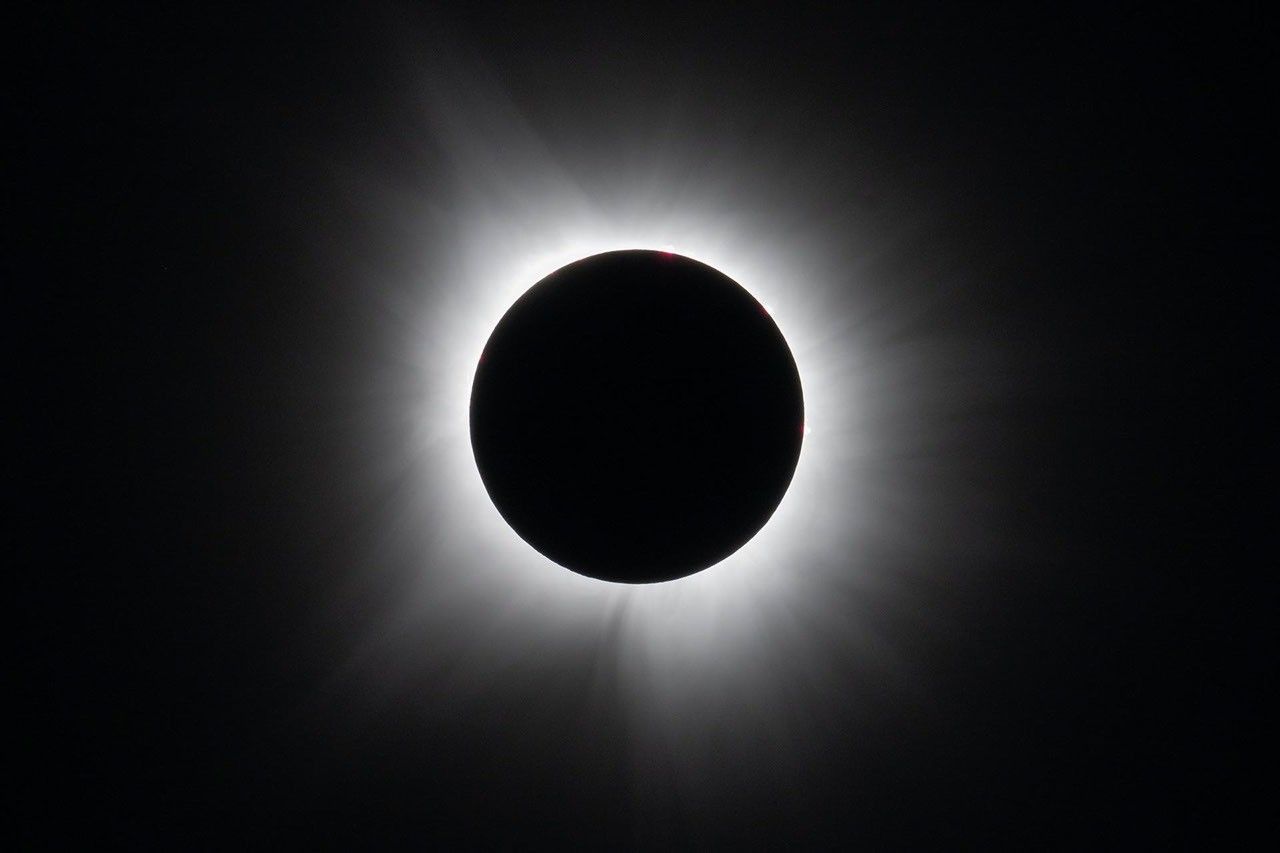
- NASA Science, "Total Solar Eclipse on August 12, 2026" - path, sunset-eclipse framing, city timing table, partial-coverage table, and NASA/Keegan Barber totality photograph used as the cover image.
- Instituto Geografico Nacional, "Eclipse total de Sol del dia 12 de agosto de 2026" - Spain visibility, low-horizon context, provincial examples, event duration, and safe-observation links.
- Government of Spain, "Trio de Eclipses en Espana (2026-2028), Web Oficial" - official platform for the 2026-2028 eclipse sequence, with coordination priorities around mobility, security, logistics, health, safety, tourism, and public information.
- Boletin Oficial del Estado, Real Decreto 686/2025, de 29 de julio - creation, composition, and functions of the interministerial commission for the Trio de Eclipses 2026-2027-2028.
- NASA Science, "Eclipse Viewing Safety" - safe viewing rules for partial and total phases, eye protection, optical filters, and skin-safety guidance.
- American Astronomical Society Solar Eclipse Task Force, "Solar Filters & Viewers" - eclipse viewer and filter safety guidance, ISO 12312-2 context, and supplier-vetting resources.