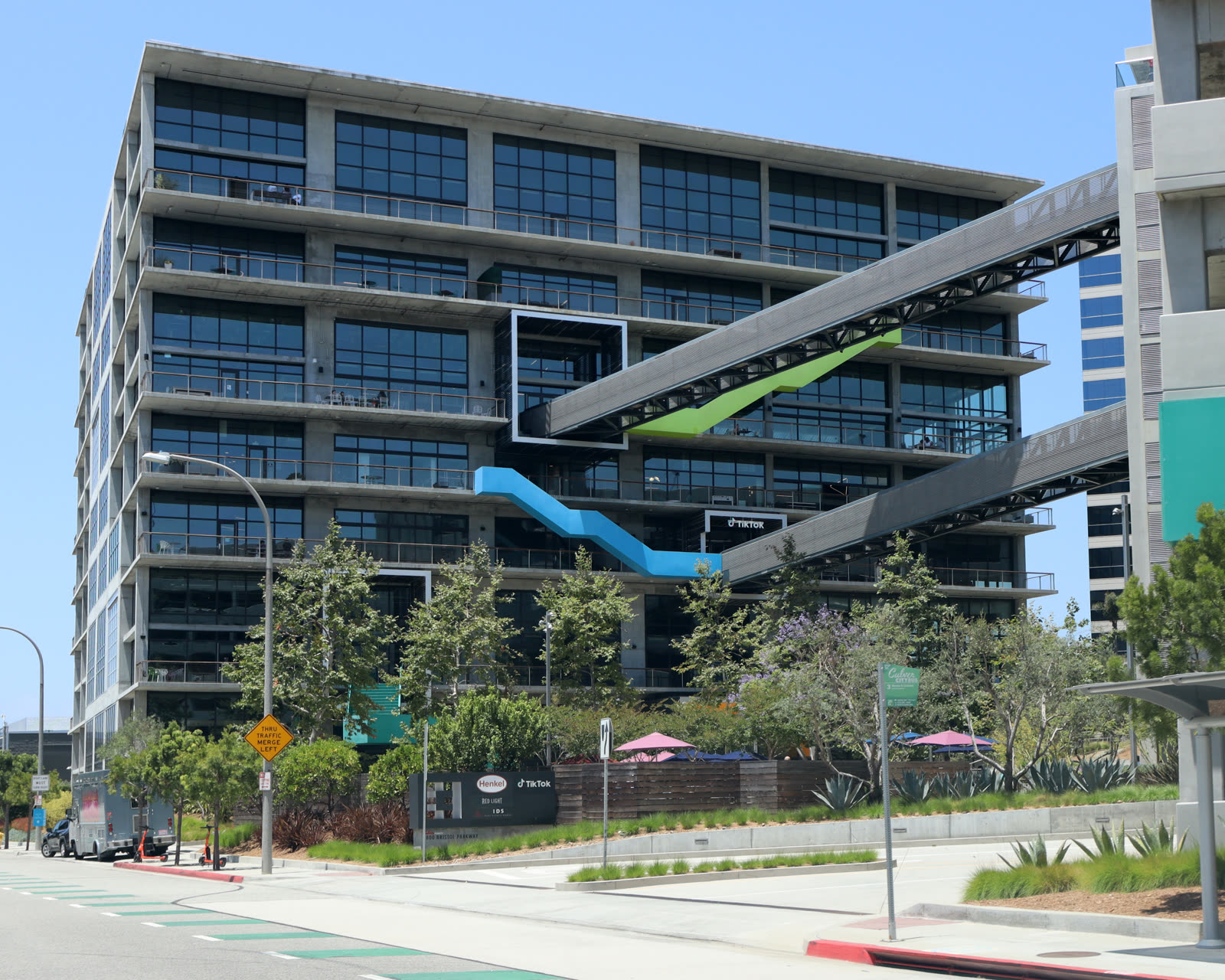
As of 2026-08-21 23:39 UTC, the Justice Department says TikTok, ByteDance and affiliated entities have agreed to pay $400 million to resolve the government’s child-privacy case. But the two parts of that number do different jobs: $300 million is due immediately; $100 million is due only “upon entry of an order vacating” the 2019 consent decree against TikTok’s predecessor, Musical.ly.[1]
That condition is the most consequential sentence in the announcement. The 2019 decree is not merely an old penalty receipt. It permanently enjoins the covered companies from violating the Children’s Online Privacy Protection Act rule, requires records that demonstrate compliance, gives the government monitoring tools, and leaves the court with authority to enforce or modify the order.[2]
The Justice Department says changes in TikTok’s ownership, management, compliance functions and privacy practices have materially strengthened protection for younger users. It also says the claims being settled remain allegations and that no liability has been determined. The release itself, however, does not link the executed settlement, a motion to vacate, payment instructions, a replacement injunction, or quantitative evidence for those compliance claims. CBS News’s contemporaneous report says ByteDance and TikTok did not immediately respond to its request for comment.[1][6]
This is a document investigation of the announcement, the entered 2019 order, the 2024 complaint, federal fiscal rules and prior reporting. It does not claim access to the signed settlement or a live PACER docket.
The headline number is therefore clear. The exchange behind it is not.
Four Records, Four Different Jobs
| Record | What it establishes | Confidence and limit |
|---|---|---|
| August 21 settlement announcement | A total stated recovery of $400 million, split into an immediate $300 million and a conditional $100 million; claimed compliance improvements; no determination of liability.[1] | High confidence on the department’s description; no linked agreement or independent payment record establishes execution details. |
| March 2019 entered order | A $5.7 million civil penalty, deletion duties, a permanent COPPA-rule injunction, compliance reporting, recordkeeping, monitoring, and retained court jurisdiction.[2] | High confidence on the entered text; the effect of a future vacatur depends on the language of an order not yet linked by DOJ. |
| August 2024 complaint | The government’s detailed allegations that TikTok violated COPPA and the 2019 order after it was entered.[3][4] | High confidence on what was alleged, not on its truth; the settlement announcement says liability was not determined.[1] |
| Federal receipts law | The ordinary rule that money received for the United States is deposited in the Treasury unless another law provides otherwise.[7][8] | High confidence on the general rule; indeterminate for this transaction without payment and authority records. |
Reading the four together produces a narrower finding than either celebration or scandal: the government has announced a very large civil recovery, while describing one-quarter of it as contingent on removal of a still-operative enforcement instrument and leaving the successor protections and money route out of the announcement.
The Final $100 Million Is Tied To A Defined Event
The announcement does not say the last $100 million arrives after an audit, deletion program, age-gate benchmark or period without another violation. Its trigger is judicial: entry of an order vacating the earlier decree.[1]
That matters for two reasons. First, DOJ’s description turns vacatur from housekeeping into a priced condition. The final quarter of the announced total is not due until that event occurs. Second, the condition tells the public what ends, but not what begins. A new order could preserve or strengthen protections elsewhere; a private agreement could impose contractual controls; existing law and the FTC’s ordinary investigative authority would continue to apply. None of those possibilities can be treated as the answer until the actual instruments appear.
“Settlement” also should not be confused with “completed sequence.” The department announced a resolution, while its own payment description contemplates a later court order. At this cutoff, the defensible statements are that the parties have reached a deal, $300 million is described as immediate, and another $100 million depends on a future docketed event. It is not yet defensible to say that the decree has been vacated or that the full $400 million has been paid.
What The 2019 Order Still Carries
The entered order defines the Musical.ly defendants to include their successors and assigns. It permanently restrains them from violating the COPPA rule and originally required the removal or destruction of specified information associated with children and users whose ages could not be identified.[2] The 2024 complaint says Musical.ly and Musical.ly Inc. were renamed TikTok Ltd. and TikTok Inc. in 2019 and alleges that the renaming did not alter their obligations.[3]
The durable machinery is unusually concrete:
- For ten years after entry, the defendants must create specified compliance records and retain each record for five years. Those include material needed to demonstrate compliance, child-privacy complaints and responses, and versions of screens or documents through which children’s information is collected or the companies’ practices are represented.[2]
- On written request, the government can demand sworn compliance reports, depositions and documents. The order also authorizes discovery without another grant of leave and permits interviews with consenting employees or affiliates.[2]
- The district court retains jurisdiction to construe, modify and enforce the order.[2]
On the order’s face, the ten-year record-creation period runs into March 2029, with some five-year retention periods extending beyond that. Vacatur before then could therefore remove live recordkeeping and enforcement architecture, depending on the wording and scope of the court’s order. This article cannot determine that effect in advance; the motion and proposed order are the documents that will.
The Allegations Make Verification More Than A Formality
The 2024 complaint did not allege an isolated age-gate mistake. It alleged that children could retry after identifying themselves as under 13; that third-party logins created millions of “age unknown” accounts; and that TikTok did not require every user to pass through its own age gate until at least 2022. It further alleged that some human moderators spent an average of only five to seven seconds reviewing accounts flagged as potentially belonging to children.[3]
The complaint also alleged obstructed parental deletion requests, failures to delete accounts flagged by TikTok’s own systems, continued retention of children’s information in multiple databases, and inadequate records of what happened to affected accounts. In the government’s account, the precise scale of the alleged violations was difficult to determine because TikTok had not kept records required by the 2019 order.[3] The FTC, which investigated and referred the matter to the Justice Department, described the same case as involving repeated failures to honor parents’ deletion requests and continued data collection from children.[4]
TikTok disputed that account when the case was filed. A company spokesperson said many allegations concerned past practices and were inaccurate or had been addressed.[11] There was no new company comment in CBS News’s initial August 21 report.[6]
These are allegations, not findings. They should not be converted into a verdict after the case settles without one. But they explain why an unmeasured assertion of “extensive measures” cannot substitute for a public compliance record. The most probative indicators would track the alleged failure points: age-gate retry rates, disposition of “age unknown” accounts, time spent on underage-account review, completion of parental deletion requests, deletion across every storage location, and preservation of records sufficient to reconstruct each decision.
The August 21 release publishes none of those figures. Nor does it identify an independent assessor, audit period, test population, error rate, or remedy for regression.[1] TikTok may have evidence that would answer every question. The announcement does not provide it.
The Money Trail Stops At The Press Release
There is another unresolved chain. In May, ABC News reported—citing people familiar with settlement discussions—that the administration intended to direct a contemplated $400 million TikTok payment toward Washington, D.C., beautification projects, possibly through the Interior or Commerce Department. ABC also reported that the proposed terms were not expected to identify a specific project. The Justice Department declined to comment for that story.[5]
The exact dollar figure in that report now matches the announced total. That correspondence makes the earlier reporting relevant; it does not confirm the intended destination. The final Justice Department release says “recovery” and “payment,” but does not name a receiving account, an agency, a project, compensation for affected families, or any other use.[1]
Federal fiscal law supplies a default, not the missing facts. Under 31 U.S.C. § 3302(b), an official receiving money for the government generally must deposit it in the Treasury without deduction, except where law provides otherwise.[7] In a 2004 decision addressing a different agency transaction, the Government Accountability Office explained that an agency cannot avoid that rule merely by changing the form of money otherwise owed to the United States; the result depends on the agency’s statutory authority and the transaction’s actual structure.[8]
Applied here, those authorities identify the records to inspect. They do not prove that settlement money will finance beautification, and they do not prove that any such use would be unlawful. A Treasury deposit, an interagency transfer, and a congressional appropriation are legally and operationally different steps. The signed agreement, receipt record, account code, transfer authority and appropriation would show which steps—if any—occur.
The Department’s Own Policy Is A Benchmark, Not A Verdict
Attorney General Pam Bondi’s February 2025 settlement memorandum says department settlements should be used first to compensate victims, redress harm, or punish and deter unlawful conduct. Its operative prohibition is aimed at required payments to non-governmental third parties that were neither victims nor parties.[9]
That distinction is important. The memorandum does not, by its terms, settle the legal question raised by a possible payment to another federal agency. It does sharpen the policy question: which result here compensates, repairs, punishes or deters? The department points to a large recovery and changed company practices. Without the agreement, performance evidence or destination of funds, the public cannot see how those outcomes were valued against surrendering the old decree.
The Documentary Chain That Would Resolve This
Five records would turn the announcement into an auditable resolution:
- The executed settlement and payment instructions would identify releases, timing, recipients, contingencies and enforcement for nonpayment.
- The motion to vacate and the court’s resulting order would show the legal basis, scope and effective date of vacatur.
- Any replacement compliance instrument would reveal whether audits, deletion duties, age controls, records, reporting and court enforcement survive in another form.
- Treasury and appropriations records would identify where the money was credited and the authority for any earmarked use.
- The FTC’s public position or commission record would clarify how the agency that referred the 2024 case evaluates the loss or replacement of the order’s monitoring tools.[4]
Decision Impact: The Next Month
Next 24 hours: reporters, child-privacy advocates and fiscal watchdogs should describe the split as DOJ describes it: $300 million due immediately, not independently confirmed as paid, and $100 million contingent on a vacatur order. The two case numbers to watch are the 2024 enforcement case, 2:24-cv-06535, and the 2019 Musical.ly matter, 2:19-cv-01439.[2][3]
Next 7 days: any settlement filing, motion or proposed order should be compared obligation by obligation with the 2019 decree. The decisive fields are not the page count or headline penalty; they are who can demand records, who verifies deletion and age controls, what the court can enforce, and when the old terms cease.[1][2]
Next 30 days: receipt and appropriations records become the strongest evidence for the money route. Continued silence would leave the destination unresolved; it would not establish the beautification account reported during negotiations or disprove it.[5][7][8]
Three Conditional Paths
Base path — implementation follows the announced sequence. The parties file settlement papers, a court enters a vacatur order, and the final $100 million becomes due under DOJ’s description. The trigger is a docketed order matching the announced condition; the unresolved question remains what compliance terms and payment instructions accompany it.[1]
Upside path — the old machinery is replaced with a measurable instrument. A filed order or agreement preserves audit access and recordkeeping while adding published benchmarks for age controls, parental deletion and data destruction. The trigger is enforceable language plus a named verifier and reporting cadence, not another general assurance of improvement.
Downside path — the decree disappears before equivalent protections become visible. Vacatur is entered, but no public successor instrument identifies monitoring rights, metrics or remedies, and fiscal records do not clarify the money route. The trigger is the court order combined with the continued absence of those records. These paths are conditional, not predictions.
Action And Invalidation Check
- Keep due, paid, vacated and replaced separate in every update; each requires a different record.
- Treat the 2024 claims as allegations and include TikTok’s documented denial unless a later filing establishes or withdraws a fact.[1][11]
- Compare any successor instrument line by line with the 2019 order’s injunction, recordkeeping, monitoring and retained-jurisdiction provisions.[2]
- Revise the money analysis when a receipt, account code, transfer authority or appropriation appears; prior reporting alone is not proof of final use.[5][7][8]
- Invalidate this article’s central “unpublished exchange” finding if the executed agreement, court papers, replacement protections and payment route are released and answer those questions. If they show equivalent or stronger enforceable controls and an ordinary Treasury route, the two principal uncertainties close. If the old decree remains in force, the announced condition for the final $100 million has not occurred.
Until those records appear, the settlement should be described with its condition intact: $300 million described as due immediately; $100 million if the 2019 decree is vacated. The unresolved issue is not whether $400 million is a large number. It is whether the public will receive a traceable exchange—money deposited under identified authority, an old order removed by a visible judicial act, and child-privacy protections that can be measured after the litigation ends.
Sources
- U.S. Department of Justice, “Justice Department Secures $400M Settlement with TikTok and ByteDance to Resolve Children’s Privacy Litigation” (August 21, 2026) — official payment split, vacatur condition, compliance claims and liability boundary.
- U.S. District Court for the Central District of California, entered stipulated order in United States v. Musical.ly et al. (March 27, 2019), hosted by Justia — injunction, deletion, reporting, recordkeeping, monitoring and retained-jurisdiction terms.
- U.S. Department of Justice, complaint in United States v. ByteDance Ltd. et al. (August 2, 2024) — the government’s detailed allegations and the 5800 Bristol Parkway address.
- Federal Trade Commission, “FTC Investigation Leads to Lawsuit Against TikTok and ByteDance for Flagrantly Violating Children’s Privacy Law” (August 2, 2024) — agency account of its investigation, referral and allegations.
- ABC News, “Trump administration eyeing $400M settlement from TikTok for DC ‘beautification’: Sources” (May 8, 2026) — prior reporting on proposed destination of settlement proceeds.
- CBS News, “TikTok to pay $400 million to settle claims it violated children’s online privacy laws” (August 21, 2026) — contemporaneous report and current company-response status at publication.
- Legal Information Institute, 31 U.S.C. § 3302 — statutory text governing custody and deposit of money received for the United States.
- U.S. Government Accountability Office, Decision B-303413 (November 8, 2004) — application of the miscellaneous-receipts rule and the importance of transaction structure and statutory authority.
- U.S. Department of Justice, Attorney General memorandum, “Reinstating the Prohibition on Improper Third-Party Settlements” (February 5, 2025) — settlement purposes and the scope of the non-governmental-third-party restriction.
- Wikimedia Commons, “TikTok Headquarters” — source, authorship, date and CC BY 4.0 license for the documentary photograph.
- Ars Technica, “DOJ sues TikTok, alleging ‘massive-scale invasions of children’s privacy’” (August 3, 2024) — TikTok’s response disputing the government’s allegations.