As of 2026-04-06 23:05 UTC, the April 2 Section 232 metals proclamation is easy to misread as a partial step down from last year's across-the-board 50% tariff regime. The rate card now looks more graduated: 50% for core metals and close derivatives, 25% for many downstream manufactured articles, a temporary 15% floor for some further-downstream steel and aluminum derivatives through the end of 2027, 10% lanes for certain U.S.-metal content articles, and a zero-duty lane for some low-metal products.[1][2][3]
The more important shift sits underneath that ladder. Starting at 12:01 a.m. EDT on April 6, the proclamation moved these tariffs from metal-content value to full customs value and forced importers into a new annex-and-heading map under HTSUS 9903.82.02 through 9903.82.17.[1][3] That is why this is an investigation story rather than a clean "tariffs were lowered" recap. Some products truly get relief. Some leave Section 232 scope altogether. But a broad class of downstream goods can now face a larger effective burden even with a lower nominal rate, because the tax base widened from the metal portion of the good to the whole imported product.[1][4][5]
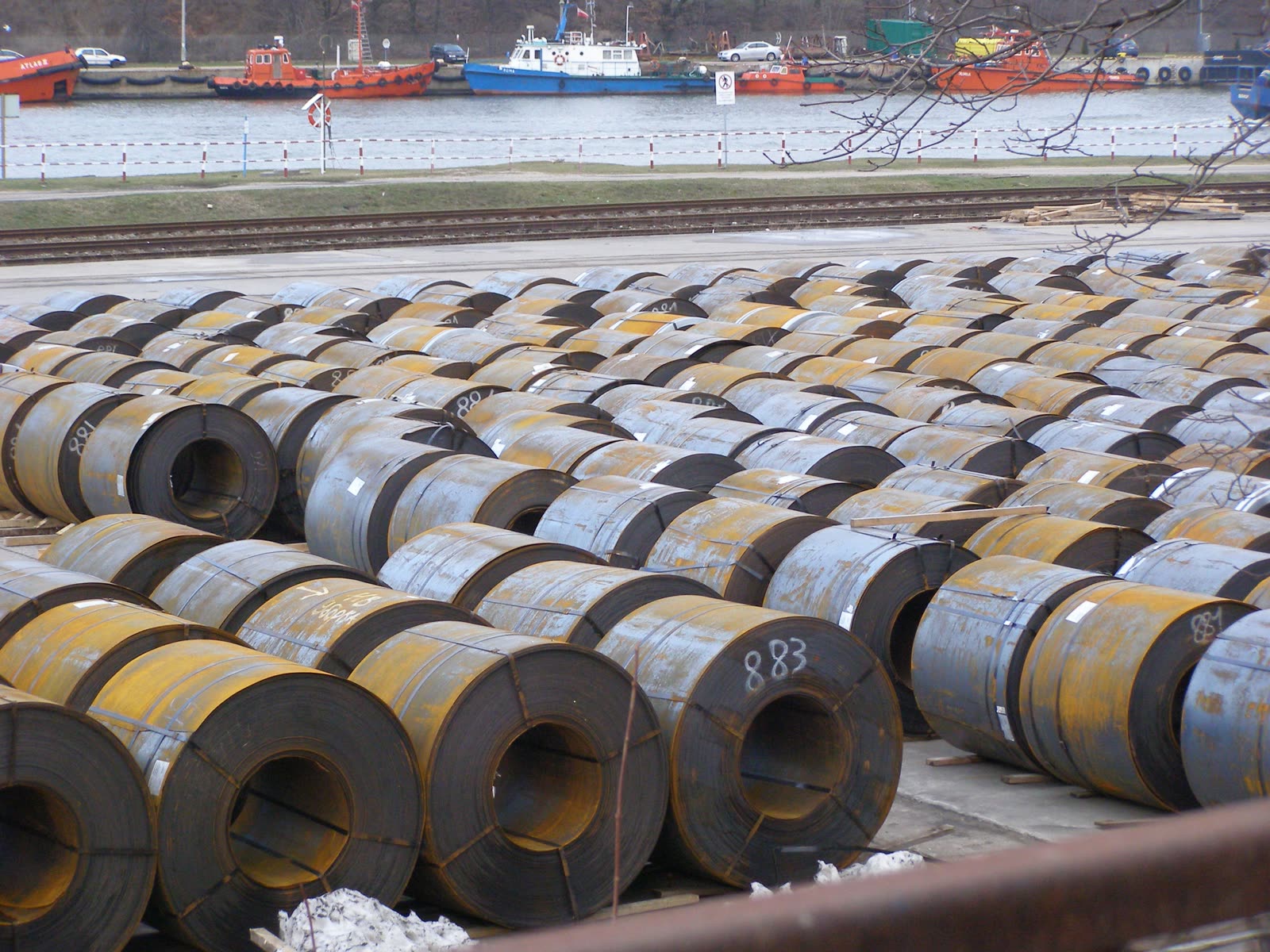
Image context: the header photo shows steel coils in Gdansk's Nowy Port harbor. It fits this article because the live U.S. policy change is about how actual metal articles and derivatives are taxed when they cross the customs line, not about an abstract tariff graphic.[6]
The headline rate fell, but the tax base widened
The proclamation's most consequential operative sentence is not the new 25% lane. It is clause (1): for covered aluminum, steel, copper, and derivative products, the additional Section 232 duty now applies to the full customs value of the imported product, regardless of metal content, beginning April 6.[1]
That single change alters the economics of the whole regime. Under the prior structure, a finished good that contained some metal could face the 50% metals tariff only on the value of its steel, aluminum, or copper content. Under the new structure, many of those same goods move into Annex I-B or Annex III and face a lower nominal rate that is charged on the entire entered value.[1][4] Global Trade Alert gives the cleanest worked example: if metal makes up 20% of a product's value, the old regime produced an effective 10% tariff on the whole product; an Annex I-B item under the new regime can face 25% on the whole value instead.[4]
AP's April 3 reporting translated that math into plain objects. Administration officials told reporters that a low-metal item such as the cap on a perfume bottle can fall out of Section 232 if the relevant metal makes up less than 15% of the product's weight, while a largely steel product such as a washing machine can attract a 25% duty on the whole product value.[5] The new system is therefore more selective than the old one, but also more punishing for importers who sit above the weight threshold with products whose metal content is economically important without dominating the invoice.
The annex system decides who actually gets relief
The White House fact sheet compresses the new structure into a politically attractive ladder: 50%, 25%, 15% through 2027, 10%, and 0%.[2] The better way to read the system is through the annexes and the product reallocations behind them.
Global Trade Alert says the old regime covered roughly 1,055 product codes and about $538 billion in 2024 U.S. import value.[4] The April 2 proclamation then redistributed that universe into four different lanes. According to GTA's mapping, 554 products worth $96 billion stayed in Annex I-A at the 50% rate, 326 products worth $227 billion moved into Annex I-B at 25%, 38 products worth $36 billion entered Annex III's temporary floor system, and 144 products worth $183 billion were removed from Section 232 scope through Annex II. GTA also says seven additional products entered the metals regime for the first time.[4]
That breakdown matters because it shows why the new order cannot be summarized as either a broad tariff hike or a broad tariff cut. The products that leave the regime via Annex II get real relief. Core metals and close derivatives in Annex I-A stay hit at 50%.[1][4] Many downstream goods in Annex I-B see a lower nominal rate than before but lose the old metal-content base.[1][4] Annex III is different again: for certain downstream steel and aluminum derivatives, the proclamation creates a temporary rule through December 31, 2027 that lifts the total tariff to 15% when the normal column 1 duty is below 15%, and adds no extra duty when the normal tariff is already at or above that level.[1][3]
The political rhetoric emphasizes the rate ladder. The commercial outcome depends on which annex a SKU lands in.
Customs filing, not politics, is the live operational problem
CBP's April 3 Cargo Systems Messaging Service bulletin is what turns the proclamation from speech into operational rule.[3] The bulletin says the new regime runs through Chapter 99 headings 9903.82.02 to 9903.82.17, each tied to specific annex logic, origin tests, or temporary Annex III treatment.[3] In other words, importers do not just need to know that the White House announced a metals reset. They need to know which new Chapter 99 line belongs on the entry summary.
That is especially true for the new low-metal exemption. CBP created heading 9903.82.03 for products outside chapters 72, 73, 74, and 76 where the relevant metal content is under 15% of aggregate weight and said filers must report that aggregate metal weight in kilograms as a second quantity on the entry line.[3] That is a filing burden, not a slogan. A company that cannot document weight well enough to support the exemption will not enjoy the headline zero-duty lane just because the fact sheet says it exists.[2][3]
The same operational turn appears in the preferential lanes. CBP's guidance implements reduced U.K. and U.S.-metal rates through detailed content tests inside the Chapter 99 headings, generally using 95% thresholds for smelt-and-cast or melt-and-pour qualification.[3] It also carves out a 0% lane for certain motorcycle parts in chapters 84, 85, and 87 when they are imported for U.S. motorcycle manufacturing, keeps the 200% Russia aluminum surcharge alive, and signals additional copper smelt-and-cast reporting for certain HTS classifications once ACE functionality is ready.[1][3]
That is the quiet shift inside the April 6 reset. The public story is about tariffs. The private-sector workload is about product mapping, metal-weight evidence, origin-content evidence, and getting the Chapter 99 code right before customs rejects the entry or collects the wrong duty.
A lower average tariff can still hide sharper individual shocks
Global Trade Alert calculates that the trade-weighted average U.S. tariff under the metals regime falls from 11.44% to 10.91% after the April 2 restructuring.[4] That number is useful. It is also a good example of why averages can mislead.
The average falls because some products leave Section 232 altogether, some downstream products move into Annex III's floor system, and the structure is no longer a single 50% rule across every in-scope code.[1][4] But that same average says very little about the importer whose product moved from "50% on the metal portion" to "25% on the whole entered value."[1][4] For low-metal-content derivatives, the change in tax base can outweigh the change in the nominal rate. That is why the April 6 reset can look less aggressive in a press release and still land as a harder bill at the port.
The White House fact sheet openly frames that as the point: the proclamation is meant to ensure tariffs reflect the "full value" of imported metal products rather than what it calls an artificially low foreign price.[2] AP's paraphrase lands in the same place from the outside: the administration wanted to stop importers from escaping higher payments by limiting the tariff to a narrower slice of value.[5] The new system is more differentiated. It is not softer in any universal sense.
What matters next
The immediate test is whether CBP's implementation record stays stable as entries begin to clear under the new headings. If importers struggle to document the sub-15% weight exemption, the practical relief in that lane will be narrower than the White House presentation implies.[2][3] If companies cannot substantiate U.S.-metal or U.K.-metal origin claims under CBP's content rules, the advertised 10% and 15% lanes will also prove harder to reach in practice.[2][3]
The second test is whether Annex II removals are large enough to offset the broader full-value base for downstream manufacturers. GTA's annex mapping suggests that the relief is real for a meaningful block of products, but also that Annex I-B remains the single largest bucket by trade value.[4] That means the part of the system most exposed to the full-value switch is also the part with the largest commercial footprint.
The third test sits on a longer clock. Annex III's temporary floor logic ends on January 1, 2028, when covered products are scheduled to move to the rates that would apply under clause (3) of the proclamation.[1][3] For companies planning multiyear sourcing, the current system is already a two-step timetable rather than one steady rate.
The useful conclusion is narrower than the White House headline and sharper than the simple "50 became 25" read. The April 6 metals reset did not just redraw the rate card. It changed the tax base, redistributed products across annexes, and shifted the real compliance burden into customs classification, weight evidence, and origin proof.[1][2][3][4][5]
Sources
- The White House, "Strengthening Actions Taken to Adjust Imports of Aluminum, Steel, and Copper Into the United States" (April 2, 2026).
- The White House, "Fact Sheet: President Donald J. Trump Strengthens Tariffs on Steel, Aluminum, and Copper Imports" (April 2, 2026).
- U.S. Customs and Border Protection, "CSMS # 68253075 - GUIDANCE: Section 232 Duties on Imports of Aluminum, Steel, and Copper" (sent April 3, 2026).
- Johannes Fritz, "The Updated Section 232 Tariffs on Metals and Their Derivative Products." Global Trade Alert, April 4, 2026.
- Wyatte Grantham-Philips, "Trump unveils 100% tariff on some patented drugs on 'Liberation Day' anniversary." Associated Press, April 3, 2026.
- Wikimedia Commons, "File:Gdansk Nowy Port kregi.jpg" (steel coils in Nowy Port harbour, image source).