As of 2026-03-11 23:07 UTC, the EU battery passport is often described as a coming transparency layer for industrial and EV batteries. That framing is directionally true and operationally misleading. For operators, the hard part is not publishing a passport page. The hard part is assembling a defensible chain of supplier-level data, model mappings, and document evidence early enough that the published passport is not an empty shell.
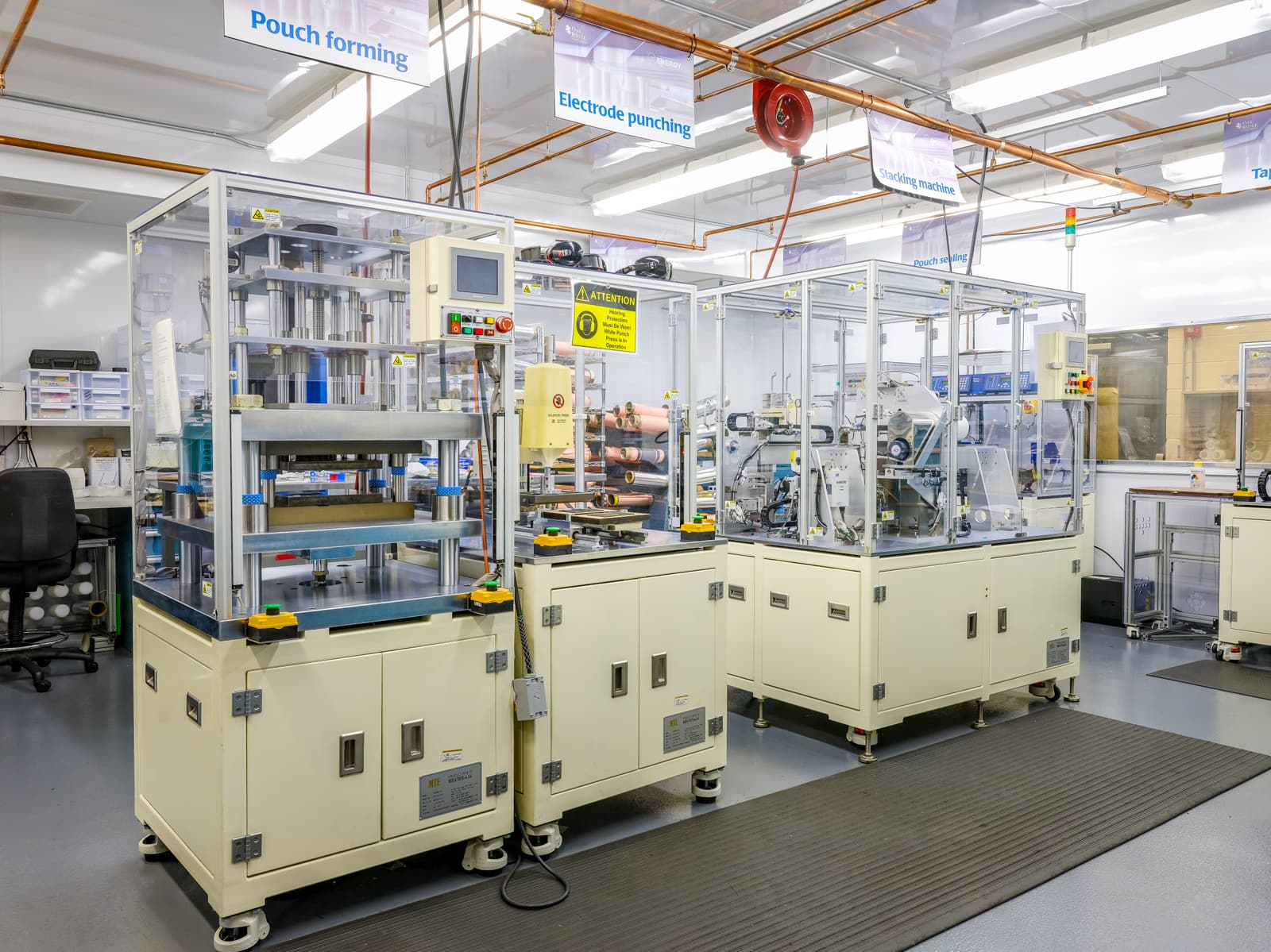
Image context: the hero image shows a battery manufacturing lab because the passport problem begins upstream, where pouch forming, electrode handling, batch identity, and process evidence first become data that later has to survive customer, auditor, and regulator scrutiny.
What changed
Three developments pulled the issue out of the future tense and into execution planning:
- The legal deadline is no longer vague. Article 77 of Regulation (EU) 2023/1542 says that from 18 February 2027 each LMT battery, each industrial battery with a capacity greater than 2 kWh, and each electric vehicle battery placed on the market or put into service must have a battery passport.[2]
- The data plumbing has already started moving upstream. Article 14 of the same regulation requires up-to-date state-of-health and expected-lifetime parameters in the battery-management systems of stationary battery energy storage systems, LMT batteries, and EV batteries from 18 August 2024 onward, which means some of the record-keeping logic is already supposed to exist before the passport deadline itself.[2]
- Implementation work is no longer hypothetical. In its 2024 pilot round, the Global Battery Alliance said 10 consortia led by major cell manufacturers, representing more than 80% of global EV battery market share, tested real-life sustainability data exchange across six materials and seven rulebooks — and published 10 prototype battery passports, which makes the distance between a polished demo and an evidence-rich record easier for buyers and operators to see.[3]
That combination changes the execution story. The market is no longer waiting for a concept sketch. It is moving into a phase where deadline scope, data fields, and interoperability expectations are all concrete enough that weak internal master data becomes visible.
The real bottleneck is upstream evidence
Battery passport discussion often collapses into a front-end metaphor: QR code, record page, sustainability facts. In practice, the bottleneck sits upstream. GS1’s standards stack is a useful clue here. The ecosystem is no longer short on identifier and event-model building blocks—GTIN, GLN, EPCIS/CBV, and Digital Link already exist to identify products, parties, locations, and traceability events.[4] The harder question is whether a company can get supplier evidence, plant records, and model-level mappings into those structures without quietly reintroducing spreadsheets, PDFs, and one-off exceptions as the real system of record.
A usable passport needs at least four layers to line up:
- Product identity — what exact battery or batch is being described.
- Supplier traceability — which component, material, or process inputs map to that identity.
- Evidence governance — what documentation exists, who owns it, and whether it can survive audit or customer challenge.
- Update discipline — how changes in chemistry, sourcing, processing, or manufacturing location propagate through the record.
Many organizations can produce one or two of those layers in isolation. Fewer can keep all four synchronized without spreadsheet drift or vendor-by-vendor exceptions.
The most dangerous false comfort is a passport demo that renders beautifully while nobody can answer which supplier declaration, plant record, or batch event populated a disputed field. That is a front-end success and an evidence-governance failure at the same time.
Why this becomes an execution risk
The regulation creates a timing asymmetry. External expectations can harden faster than internal systems.
That is what makes this a newsworthy execution story rather than a distant compliance explainer. The visible deadline sits on the outside, while the actual work depends on supplier onboarding, master-data cleanup, identifier discipline, and document normalization inside the firm and across counterparties.
For companies that operate across multiple plants, contract manufacturers, or chemistry variants, the problem scales nonlinearly. A team may believe it has “battery passport work underway” because a dashboard or pilot exists, while the real failure point remains unsolved: incomplete upstream attestations and inconsistent field definitions.
What a weak implementation will look like
A weak passport rollout is unlikely to fail as a dramatic launch-day outage. It will fail as low-trust output:
- records that exist but cannot be refreshed reliably,
- data fields populated with incomparable supplier inputs,
- sustainability metrics that cannot be reconciled to source documentation,
- customer-facing pages that are formally present but operationally shallow.
That kind of failure matters because a passport regime only creates value if users believe the object is decision-useful. A page that satisfies superficial presence requirements but cannot carry audit-grade or buyer-grade trust does not solve the real market problem.
Facts vs interpretation
Facts
- Regulation (EU) 2023/1542 sets a battery-passport requirement from 18 February 2027 for LMT batteries, EV batteries, and industrial batteries above 2 kWh.[2]
- The regulation also already requires certain battery categories to keep state-of-health and expected-lifetime data in battery-management systems from 18 August 2024.[2]
- Standards and implementation work around identifiers, data exchange, and interoperability are active across the ecosystem, including GBA pilot work and GS1 traceability standards.[3][4]
- GBA’s 2024 pilot outputs are public, but the alliance also warns that pilot scores are not yet comparable across consortia because scope, verification, and reporting methods still vary.[3]
- Industrial buyers increasingly ask not only for claims, but for evidence structure and update reliability.
Interpretation
- The market is likely to split between firms that treat passport work as an IT page-launch project and firms that treat it as a data-governance program.
- The second group will be better positioned when customer scrutiny, auditor scrutiny, or cross-border documentation demands become tighter.
24h / 7d / 30d decision impact
24h
- Check whether your battery-passport workstream is owned by product/IT alone or jointly by compliance, sourcing, manufacturing, and master-data teams.
7d
- Identify the top 10 fields that depend on upstream supplier evidence rather than internal ERP data, and map current ownership gaps.
30d
- Run a pilot on one real product family with evidence trace-back, not just page rendering. If you cannot reconcile source docs to published fields quickly, the program is not production-ready.
Base / upside / downside
Base case
- Firms with partial pilots discover that system integration is manageable but supplier-data normalization is slower than expected.
Upside case
- Early structured onboarding and identifier discipline turn passport prep into a reusable commercial trust asset with customers.
Downside case
- Teams spend on portal surfaces before they solve evidence lineage, then face rework under deadline pressure.
Invalidation conditions
This investigation weakens if major in-scope operators can demonstrate that supplier evidence, identifier mapping, and update governance are already standardized at scale with low manual intervention. It also weakens if market enforcement converges on a much thinner minimum-data practice than current implementation signals suggest.
Sources
- European Commission — Batteries Regulation overview
- Regulation (EU) 2023/1542 text
- Global Battery Alliance — Battery Passport initiative
- GS1 standards work relevant to digital product data exchange
- World Economic Forum / GBA materials on battery passport interoperability and value-chain transparency
- Wikimedia Commons image source, Battery Manufacturing Lab (Oak Ridge National Laboratory)