As of 2026-04-28 09:37 UTC, the most useful way to read WHO's Exercise Polaris II is not as a declaration that the world is ready for the next pandemic. It is a narrower and more operational signal. Over two days on 22-23 April, WHO says 26 countries and territories, 600 health emergency experts, and more than 25 partners worked through a simulation built around a fictional new bacterium spreading across borders.[1]
What WHO was testing was the handoff between detection and action. The participating countries were asked to activate emergency coordination structures, move information across borders, align policy decisions, and surge workforce under time pressure.[1] The exercise also built on Polaris I, a 2025 simulation centered on a fictional virus, which gives the 2026 run the shape of a repeated coordination cycle rather than a one-off experiment.[1][2] That makes Polaris II less about laboratory science or vaccine invention than about whether ministries, emergency operations teams, and partner networks can turn an early alarm into organized response before fragmentation takes over.
The timing matters because WHO is trying to push preparedness work out of the one-off drill era and into standing operating architecture. The exercise explicitly put two newer WHO frameworks into practice: the Global Health Emergency Corps (GHEC) framework and the National health emergency alert and response framework. A month earlier, WHO also released new guidance urging countries to institutionalize simulation exercises through National Health Simulation Exercise Programmes, rather than treating exercises as occasional set pieces.[1][3][4][6]
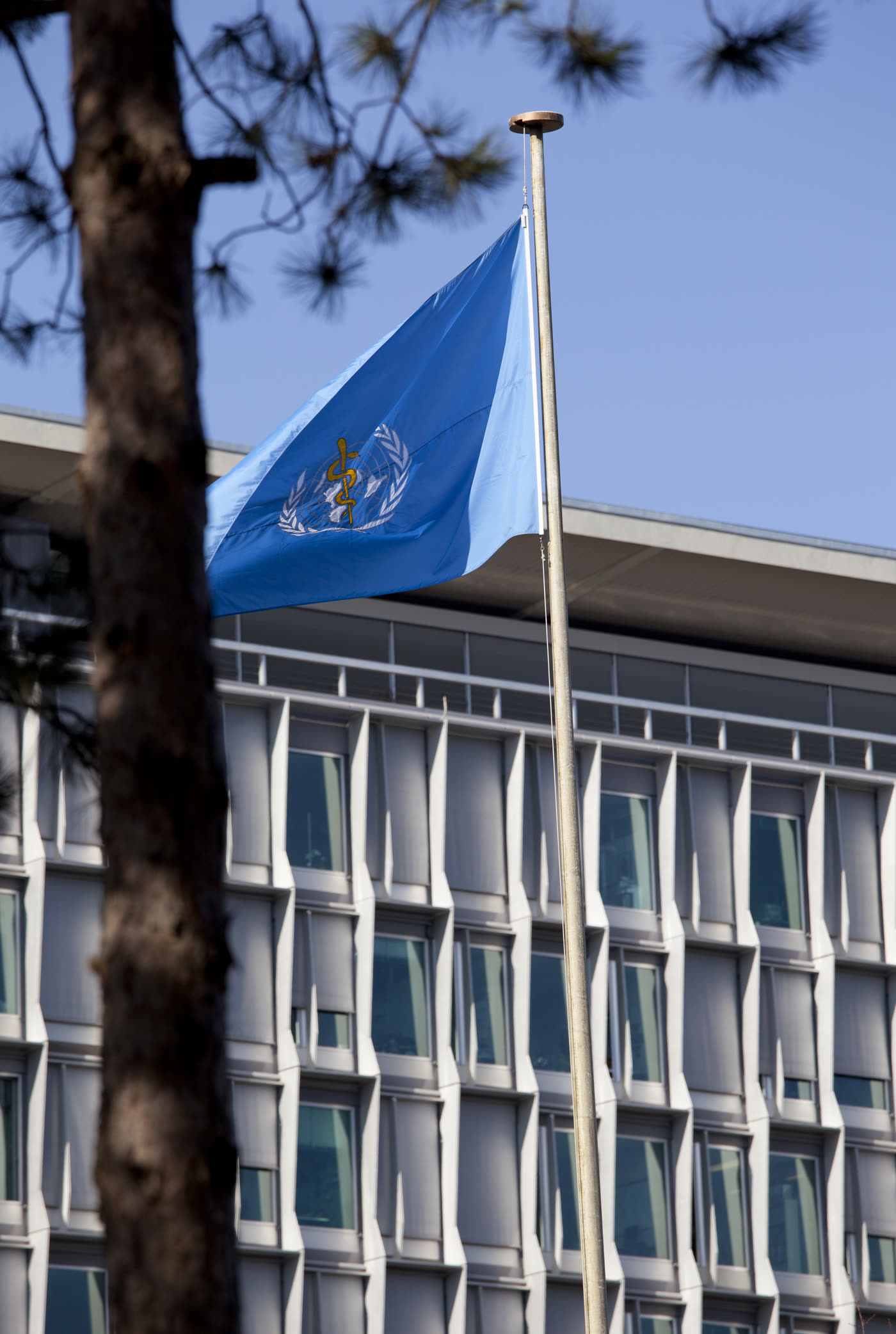
Image context: the cover image shows WHO headquarters in Geneva. It belongs here because the live story is about the global coordination layer of outbreak response: the machinery that connects national alert systems, workforce rosters, and international policy handoffs before the clinical burden becomes visible in hospitals.[7]
Fast facts
- Exercise dates: WHO says Polaris II took place on 22-23 April 2026 and the public wrap-up was published on 27 April 2026.[1]
- Scenario: the drill was built around a fictional new bacterium spreading internationally, not a real outbreak.[1]
- Scale: WHO says the exercise involved 26 countries and territories, 600 experts, and over 25 partners.[1]
- Core operational test: countries practiced activating emergency workforce structures, sharing information, aligning policy, and coordinating with WHO and partners.[1]
- Frameworks in play: WHO says the exercise operationalized the GHEC framework and the National health emergency alert and response framework.[1][3][4]
- Why simulations matter: WHO's simulation-exercise guidance says drills are meant to validate plans, test interoperability, reveal planning weaknesses and resource gaps, and clarify roles and chains of command.[5]
- Important boundary: a successful simulation does not prove that real countermeasure supply, political decision-making, border measures, or hospital surge would work smoothly in a live event.[5][6]
What Polaris II actually tested
The first thing Polaris II tested was whether countries can make their emergency structures move on command rather than on paper. WHO's release says each participating country worked under "real-life conditions" to share information, align policies, and surge its workforce.[1] That phrasing matters. In many real emergencies, the breakdown does not begin with a lack of expert knowledge. It begins when the right officials, rosters, approvals, and escalation channels do not connect quickly enough across agencies and borders.
That is where the Global Health Emergency Corps framework comes in. WHO describes GHEC as a way to standardize health-emergency workforce structures, strengthen surge capacity, improve information exchange, and make expertise easier to access across countries and regions.[3] Polaris II therefore was not just a tabletop discussion about a fictional pathogen. It was also a stress test of the people-and-roles layer: who is supposed to answer the phone, who can be deployed, who owns which decision, and whether those answers are legible to partners outside the country.
The second thing the exercise tested was the alert-to-response transition inside a country. WHO's National health emergency alert and response framework is built around local, sub-national, and national coordination systems for a broad range of emergencies.[4] In practical terms, that means the exercise was asking whether an early international warning can be translated into a country-level operating picture with clear command, reporting, and response responsibilities, instead of remaining a stream of disconnected updates.
WHO also says Polaris II explored AI-enabled tools for workforce organization and planning.[1] That is worth noting, but it is not the main analytical point. The decisive issue is still governance discipline. Software can accelerate routing and visualization; it cannot compensate for missing workforce rosters, unclear authority, or poor cross-border trust.
Why this still falls short of proof
Preparedness exercises have value precisely because they expose weakness before a real emergency does. WHO's own simulation-exercise materials are explicit on this point: a good exercise should validate plans, test interoperability, and reveal planning and resource gaps.[5] That means even a well-run drill is best understood as a diagnostic tool, not as a success certificate.
So Polaris II should not be overstated. A fictional bacterium does not create the political hesitation, procurement friction, media pressure, clinician fatigue, or supply-chain scarcity that accompany a real event. It does not force governments to balance public messaging against uncertain evidence in front of actual voters. It does not answer whether oxygen, antimicrobials, lab consumables, border-health staff, or hospital beds would appear at the necessary speed once the scenario moves from screens to streets.
That is why WHO's March 2026 guidance on institutionalizing simulation exercises matters almost as much as the Polaris II release itself.[6] The guidance argues that countries should move from ad hoc drills to recurring national programmes. The logic is sound: one exercise can expose bottlenecks, but only repeated exercises, after-action review, and plan revision can show whether the bottlenecks are actually being removed.
The 24-hour, 7-day, and 30-day impact
In the next 24 hours, the high-signal question is whether participating countries treat the exercise as an after-action workload or as a communications event. If ministries and emergency agencies are already assigning owners to gaps in workforce activation, reporting chains, and partner coordination, the exercise has immediate operational value. If not, it becomes mostly theater.[1][5]
Over the next 7 days, the key test is alignment with existing national architecture. Countries that participated now have a clean opportunity to compare what happened in the drill with the structures described in WHO's alert-and-response framework and with their own standing emergency plans.[4] This is also where WHO's newer push for structured national simulation programmes becomes concrete: the countries that learned the most from Polaris II are likely to be the ones that already have repeatable exercise routines rather than improvised one-offs.[6]
Over the next 30 days, the question shifts from exercise performance to organizational memory. The useful signals will be updated rosters, clarified escalation rules, revised standard operating procedures, and better-defined interfaces with WHO and external partners. If those artifacts do not appear, then the global system may have learned about its weaknesses without yet becoming stronger.[3][5][6]
Scenario map
Base case: Polaris II becomes one more building block in a slower move toward repeatable preparedness architecture. Countries absorb some lessons on coordination and workforce organization, but the effect is incremental rather than transformative.
Trigger: after-action findings are folded into existing emergency plans and future exercises instead of being left as stand-alone reports.[5][6]
Upside case: participating countries use the exercise to sharpen emergency workforce rosters, clarify alert thresholds, and deepen cross-border partner interfaces under the GHEC logic.
Trigger: WHO and participating governments convert the drill into recurring programme changes, not just a single-event summary.[1][3][6]
Downside case: Polaris II stays mostly symbolic. The simulation demonstrates cooperation in principle, but countries do not revise staffing structures, command chains, or national exercise cycles in a way that would matter during a live outbreak.
Trigger: few visible updates to national procedures or workforce organization follow the exercise.[4][5][6]
Action checklist
- Health ministries and emergency agencies: review whether the people who were supposed to activate during Polaris II are already mapped into current rosters, escalation rules, and cross-border liaison roles.[1][3][4]
- Preparedness teams: compare drill behavior against the functions laid out in the national alert-and-response framework and identify where reporting or command assumptions failed.[4][5]
- WHO and partners: publish or circulate after-action lessons that are specific enough to change staffing, coordination, and exercise design rather than remaining general praise.[1][5]
- Policy watchers: separate the existence of an exercise from proof of deployment readiness. The real evidence of improvement will be revised plans, repeated drills, and clearer workforce structures.[5][6]
The strongest reading of Polaris II is therefore disciplined rather than triumphant. WHO has shown that countries can still be brought into a shared simulation around cross-border outbreak response, and that newer preparedness frameworks can be exercised in a structured way.[1][3][4] What it has not shown yet is that those coordination gains will survive the heat, scarcity, and political friction of a real international emergency. That next proof does not come from the exercise itself. It comes from what governments change after the exercise ends.[5][6]
Sources
- World Health Organization, "Practicing today for tomorrow's emergencies - WHO convenes countries and partners to simulate response to major disease outbreak" (April 27, 2026).
- World Health Organization, "WHO brings countries together to test collective pandemic response" (April 4, 2025).
- World Health Organization, Global health emergency corps framework (June 17, 2025).
- World Health Organization, National health emergency alert and response framework (October 23, 2025).
- World Health Organization, "Simulation exercises" (WHO emergencies operations page).
- World Health Organization, "New WHO Guidance Helps Countries to Institutionalize Simulation Exercises to Strengthen Health Emergency Readiness" (March 24, 2026).
- Wikimedia Commons, "File:World Health Organization Headquarters and Flag.jpg" (cover image source).