As of 2026-04-29T22:01:38Z (UTC), the useful way to read the European Commission's preliminary DSA finding against Meta is not as one more vague demand for child safety online. The sharper signal is that Brussels is trying to convert a platform age floor into a controls question. Facebook and Instagram have long said users must be at least 13. On April 29, the Commission said that statement is not worth much if a child can clear it by typing a false birth date and the system has no effective check behind it.[1]
That matters because the Commission paired two moves on the same day. It issued the preliminary finding against Meta, and it also urged Member States to accelerate rollout of an EU age-verification app by the end of 2026.[1][4] Taken together, the message is narrower and more concrete than the broad culture-war framing that often surrounds social-media regulation. Brussels is trying to build an enforcement lane in which platforms can no longer defend themselves with "we prohibit this in our terms" while governments still avoid turning age assurance into a blunt identity disclosure requirement for every user.[1][4]
This is why the Meta case matters beyond Meta. If the Commission holds this line, the compliance test for youth protection in Europe shifts from policy wording to operational proof: risk assessment methodology, account-creation friction, detection, removal, and the quality of whatever age-assurance stack a platform actually deploys.[1][3][5]
What Brussels actually alleged
The April 29 preliminary finding is specific. The Commission says Meta failed to identify, assess, and mitigate the risks of minors under 13 accessing Instagram and Facebook with enough diligence under the DSA.[1] The most concrete example is simple: a child under 13 can enter a false date of birth during signup, declare an age of at least 13, and face no effective control that checks whether the self-declared birth date is accurate.[1]
That detail is important because it moves the case away from abstract arguments about harmful content and into a product-design fault line. The Commission is not saying only that under-13s might see age-inappropriate experiences. It is saying the platforms' front-door logic and follow-up enforcement do not adequately prevent entry or promptly remove children who already got in.[1] AP's account of the case adds the procedural point: the finding is preliminary, Meta can respond, and a final non-compliance decision could still lead to fines of up to 6% of worldwide annual revenue.[2]
Reuters' reporting adds the company-side defense. Meta says it already has measures to detect and remove accounts belonging to children under 13, argues that age understanding is an industry-wide problem, and says additional measures will be announced next week.[3] That is not a trivial defense. Age estimation is messy, cross-border, and technically imperfect. But the Commission's line is that difficulty does not excuse a weak control plane when the company itself advertises a minimum age rule.[1][3]
Why this is bigger than one fake birthday field
The fake-birthday example matters because it exposes the gap between a policy threshold and an enforceable threshold. A self-declared age field is cheap, low-friction, and easy to scale. It is also easy to route around. Once regulators decide that such a field does not count as a serious control by itself, the cost model changes. Platforms have to think about what level of certainty is operationally necessary, what evidence they can preserve, how quickly they can disable underage accounts after detection, and how much user friction they are willing to tolerate in exchange.[1][3]
That is the deeper reading of the Commission's move. The practical claim is not that every online service must immediately build a passport checkpoint for all users. The practical claim is that "13+" cannot remain a decorative policy number when the service design still behaves as if the platform does not really want to know who is below it. In other words, the Commission is trying to force alignment between declared rules and actual product incentives.[1][2]
The European Board for Digital Services gave that reading more weight two weeks earlier. On April 15, 2026, the Board said the DSA protection-of-minors guidelines would be used as a benchmark for judging compliance with Article 28(1) across the EU, and it described effective age-assurance solutions in terms such as accuracy, reliability, robustness, and non-intrusiveness.[5] That matters because it shows the Meta case is not a one-off political flourish. It sits inside a broader effort to define what a credible minors-protection system should look like.
The same-day second signal: enforcement is being paired with a rollout path
If the Commission had only attacked Meta, the story could still be read as punishment without implementation. The second April 29 move changes that. Brussels also urged Member States to make the EU age-verification app available by the end of the year.[4] The Commission's age-verification materials say the solution became feature-ready on April 15, 2026, is designed to let users prove an age threshold without revealing exact identity or exact birth date, and can be adapted to different brackets, including 13+ rather than only 18+ use cases.[4]
That combination matters politically. One of the most common objections to age-assurance enforcement is that it becomes a privacy disaster: either children slip through, or everyone gets pushed toward excessive identity disclosure. The Commission is trying to answer that objection by building toward anonymous proof-of-age tools while simultaneously telling major platforms that "we have a minimum age in the terms" is no longer enough.[4][5] Whether the rollout lands smoothly is a separate question. The policy architecture is now visible.
Why Meta still has an argument
Meta's best argument is that the regulator is describing a real problem with no clean universal fix.[3] A global platform faces false ages, family-shared devices, jurisdiction-specific age thresholds, privacy limits on data collection, and the risk that stricter onboarding turns into both growth drag and political backlash. Reuters also reports that the Commission wants Meta to change its risk-assessment methodology, not only patch a signup screen.[3] That implies the case is about system design and governance as much as one specific technical defect.
This is where the issue becomes expensive. Once the standard becomes "show that the system works," platforms inherit a continuing audit burden. They need measurements, escalation paths, and documented enforcement logic. Terms and conditions are cheap. Control systems are not.
What changes next
In the near term, the key fact is still procedural: this is a preliminary finding, not the last word.[1][2] Meta will respond. The Commission will decide whether the case ends in commitments, a revised design path, or a formal non-compliance decision with penalties attached.[2][3] The watch items are concrete.
First, does Meta announce only cosmetic safeguards next week, or does it change the actual signup and detection stack?[3] Second, do Member States move quickly enough on the age-verification app for Brussels to argue that privacy-preserving age assurance is no longer hypothetical?[4] Third, do other large platforms read this as a Meta-specific embarrassment or as a warning that their own age floors will now be tested against evidence rather than policy text?[5]
The broad point is now harder to ignore. Europe's DSA child-safety file is no longer only about whether platforms promise to protect minors. It is about whether those promises survive contact with the product. Meta's April 29 warning turns the 13-plus threshold into an engineering and governance problem, which is exactly where the Commission wants the fight to move.[1][4][5]
Sources
- European Commission, "Commission preliminarily finds Meta in breach of Digital Services Act for failing to prevent minors under 13 from using Instagram and Facebook" (April 29, 2026).
- Associated Press, "EU says Meta is failing to keep underage users off Facebook and Instagram" (April 29, 2026).
- Reuters, "Facebook and Instagram must do more to block under-13s, EU warns in Meta charges" (April 29, 2026), mirrored at Investing.com.
- European Commission, "The EU approach to age verification" (last updated April 29, 2026).
- European Board for Digital Services, "Press statement of the European Board for Digital Services" (April 15, 2026).
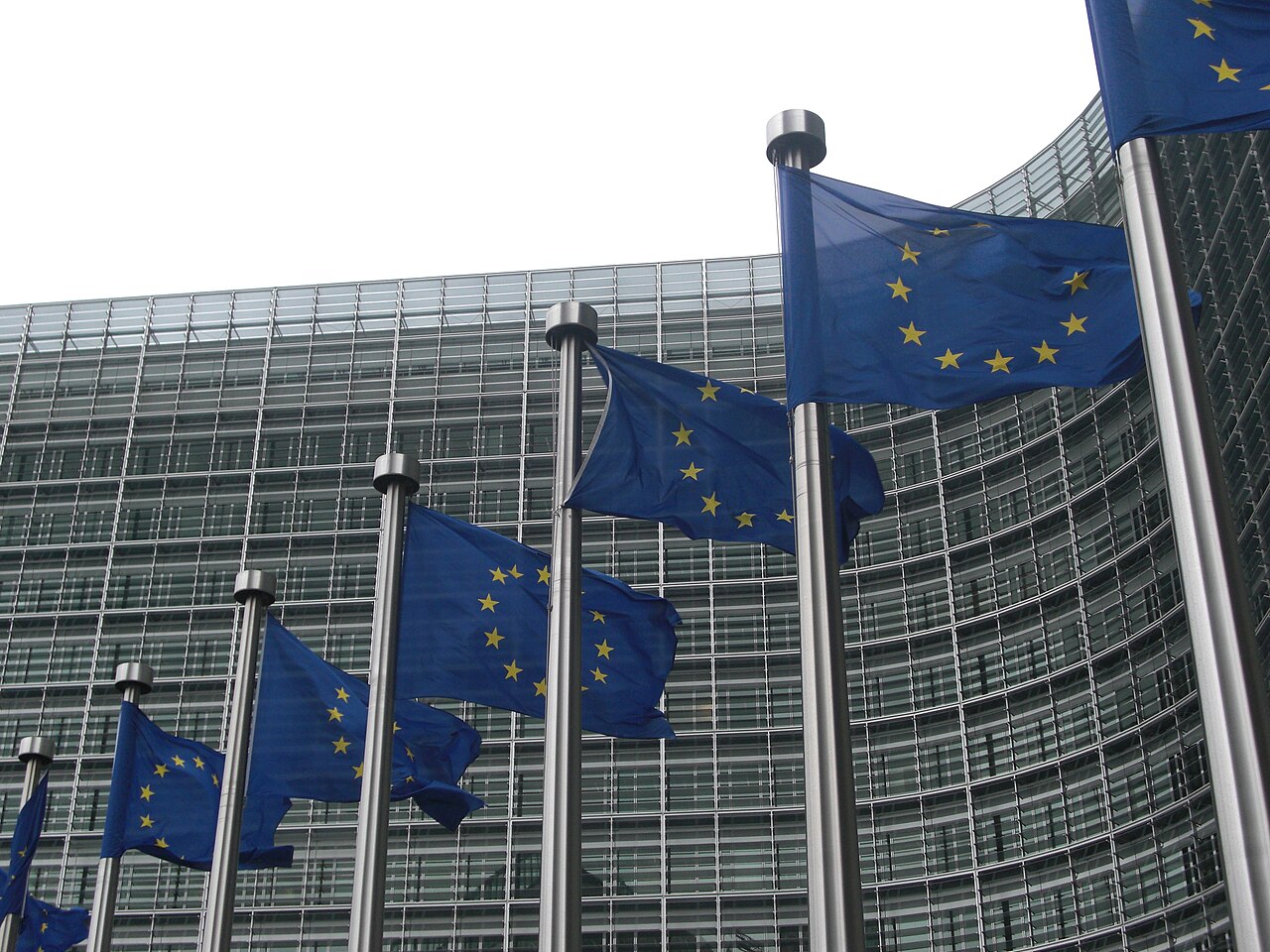
- Wikimedia Commons, "File:European Commission flags.jpg" - photograph of flags in front of the European Commission building in Brussels by Sébastien Bertrand.