As of 2026-05-05 12:05 UTC, the useful way to read Treasury's April 30 sanction on former Democratic Republic of the Congo president Joseph Kabila is as a peace-process enforcement move, not a battlefield magic switch.[1][2] OFAC did not announce a ceasefire, reopen a corridor, or retake any ground in North or South Kivu. What it did was push a former head of state into the same sanctions architecture Washington has been using to police the eastern Congo file, after Treasury said Kabila had supported M23 and the Congo River Alliance (AFC) in efforts to destabilize the current government.[1][2]
That distinction matters because sanctions can be misread in two opposite ways. One mistake is to treat them as symbolic theater that changes nothing. The other is to treat them as if one designation automatically changes front-line behavior. The April 30 move sits between those extremes. It raises legal and financial friction around Kabila, signals that Washington is willing to name high-status political actors rather than only soldiers or middlemen, and ties the U.S. peace track more tightly to a threat of punishment for spoilers.[1][3][5] It does not, by itself, disarm M23 or settle the DRC-Rwanda conflict.
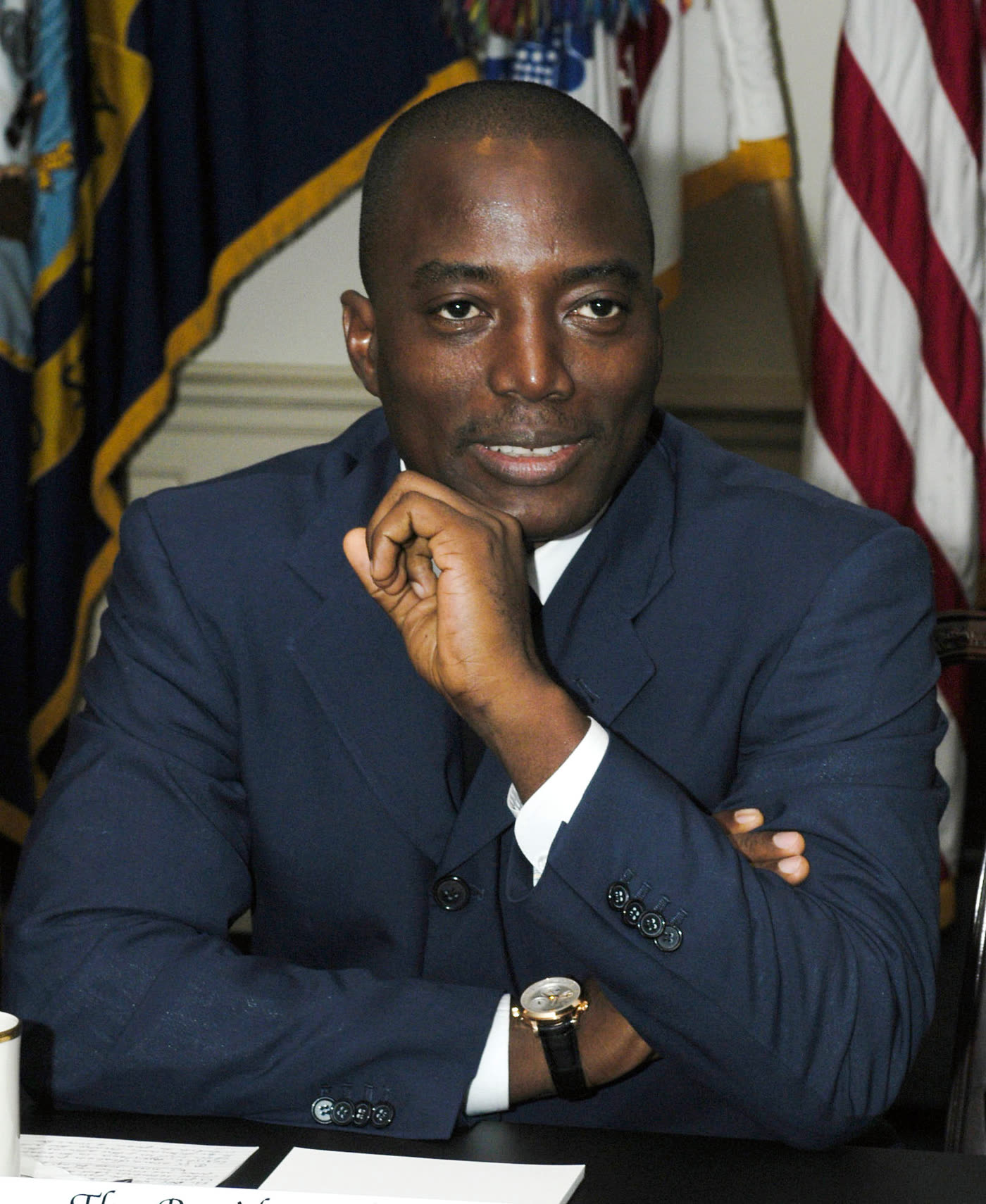
Image context: the cover uses a real Wikimedia Commons photograph of Joseph Kabila during a 2003 Pentagon visit. That archival image fits the story because the core news is political repositioning. A man once handled as a head of state inside official Washington is now being handled as a sanctions target in a conflict-enforcement file.[6]
Fact file
- What Treasury did: on April 30, 2026, Treasury sanctioned Joseph Kabila under the Democratic Republic of the Congo program, saying he had materially assisted or supported M23 and AFC.[1][2]
- What OFAC lists: OFAC's recent-actions page added Kabila to the SDN list as a former DRC president linked to M23 and the Congo River Alliance, with a listed location in Goma.[2]
- What Treasury alleges: Treasury says Kabila provided financial support to AFC, encouraged defections from the Congolese armed forces, and sought to launch attacks from outside the DRC on government forces in the east.[1]
- What the sanctions mean legally: property and interests in property subject to U.S. jurisdiction are blocked; U.S. persons are generally barred from dealing with him; and entities owned 50 percent or more by blocked persons are also treated as blocked.[1]
- Why the Washington angle matters: Treasury's March 2 DRC sanctions round had already framed U.S. policy as support for the Washington Accords, sanctioned the Rwanda Defence Force, and said the parties would be expected to uphold the peace commitments tied to that process.[3]
- Why M23 matters in the file: Treasury's March 2 press release described M23 as a U.S.- and UN-sanctioned armed group responsible for human rights abuses and mass displacement, while OFAC's March 2 recent-actions page recorded the Rwanda Defence Force designation under the same DRC sanctions program.[3][4]
Why Kabila's name changes the U.S. message
The April 30 action does something more pointed than adding one more armed commander to a crowded list. Kabila is a former president, still a recognizable political center of gravity in Congo's power system, and Treasury is alleging that his role went beyond rhetoric.[1][2] The press release says he returned to the DRC with the intent to destabilize the government through support for M23 and AFC, provided financial support to AFC, and worked to build political conditions for renewed influence.[1] That is a different kind of signal from sanctioning a militia spokesman or a shell company. Washington is saying the peace process can be obstructed from the presidential tier as well as from the battlefield tier.
That matters because Treasury had already escalated the DRC file on March 2. In that earlier round, the United States sanctioned the Rwanda Defence Force and four senior officials, said RDF support was critical to M23's offensives, and framed sanctions as a tool to protect the Washington Accords for Peace and Prosperity.[3] The Kabila designation extends that logic inward. March 2 said outside military backing for M23 would carry cost. April 30 says an internal Congolese political heavyweight can also carry cost if Washington concludes he is helping the same rebellion.[1][3]
In other words, the new step is not only about Kabila himself. It is about the credibility of an American enforcement ladder. If Washington wants the peace track to look serious, it cannot stop at naming foreign military structures while leaving politically connected Congolese actors untouched. The Kabila move suggests Treasury and the wider administration want to show that their spoiler definition is broader than cross-border troop support alone.[1][3]
What the designation actually changes
The direct legal consequences are standard OFAC ones, but still important. Treasury says any property or interests in property of Kabila that are in the United States or within the possession or control of U.S. persons are blocked and must be reported to OFAC.[1] U.S. persons are generally barred from transactions involving that property, and the 50 percent rule can extend the effect to entities he owns, directly or indirectly, at or above the threshold.[1] Even where there is no obvious U.S. asset pool, the reputational and compliance effect can spread wider because banks, counterparties, service providers, and intermediaries frequently choose to de-risk beyond the strict legal minimum.
The bigger change is strategic and evidentiary. OFAC's recent-actions page now places Kabila formally in the DRC sanctions file with explicit links to M23 and AFC.[2] That gives U.S. agencies, compliance teams, and partner governments a cleaner official hook for future scrutiny. It also makes it harder for foreign institutions to treat him as a politically controversial but still ordinary former statesman. Once the SDN designation is live, the default posture around dealings changes.[2]
This is especially relevant in a conflict where armed movements, political coalitions, business ties, and regional patrons overlap. Sanctions do not need to seize every dollar to change behavior. They can also alter who takes phone calls, who can travel through formal financial channels, who can use Western intermediaries, and who becomes expensive to touch. That is why the Kabila move should be read as an isolation tool around a political actor, not only as a punishment label.[1][2]
What it does not change
The hard boundary is just as important. Treasury has not claimed that sanctioning Kabila ends M23's operational capacity, breaks RDF support, or repairs the wider eastern Congo security crisis overnight.[1][3][4] The March 2 Treasury action itself described an armed group still backed, trained, and fought alongside by the RDF, and OFAC's March 2 recent-actions page formalized the RDF designation under the same DRC sanctions authority.[3][4] That means the conflict remains embedded in military logistics, regional calculations, and local political economies that go far beyond one individual.
So the correct reading is narrower. The designation raises the cost of dealing with Kabila inside U.S.-reachable channels and strengthens Washington's claim that the peace process has an enforcement spine.[1][2][3] It does not prove that the administration can force compliance across the whole conflict system. If M23 retains battlefield backing and regional patrons retain incentives, the sanction remains a pressure signal, not a settlement mechanism.[3][4]
What to watch next
- Next 7 days: whether the United States follows the Kabila move with more designations tied to AFC/M23 financing, procurement, or political support networks. If this was meant as a one-off headline, the file will go quiet. If it was meant as an enforcement ladder, more names should follow.[1][2]
- Next 30 days: whether Washington links future peace-process milestones more explicitly to sanctions relief or further sanctions escalation. Treasury already tied the March 2 round to the Washington Accords; the next test is whether that linkage becomes a repeatable discipline device.[3]
- Key invalidation condition: evidence that the parties are moving into better compliance without any wider sanctions buildup would weaken the argument that Kabila's designation marks the opening of a thicker enforcement phase. Evidence of continued territorial gains or fresh spoiler behavior despite the sanction would point the other way.[1][3][5]
The most precise conclusion is the least dramatic one. Treasury's Kabila sanction matters because it tells participants in the eastern Congo file that Washington is prepared to punish political spoilers at a higher level of status than before.[1][2][3] That is real. It is also incomplete. The designation is a peace-process enforcement signal first, and only then a battlefield story.
Sources
- U.S. Department of the Treasury, "Treasury Sanctions Former Democratic Republic of the Congo President for Ties to Armed Conflict" (April 30, 2026).
- Office of Foreign Assets Control, "Democratic Republic of the Congo-related Designation" (release date April 30, 2026).
- U.S. Department of the Treasury, "Treasury Sanctions Rwanda Officials, Condemns Blatant Violations of Washington Peace Accords" (March 2, 2026).
- Office of Foreign Assets Control, "Democratic Republic of the Congo-related Designations; Issuance of Associated General License" (release date March 2, 2026).
- Associated Press, "US hits Congo's former president with sanctions over support for rebels" (April 30, 2026).
- Wikimedia Commons, "File:Joseph kabila.jpg" - source page for the archival photograph used with this article.