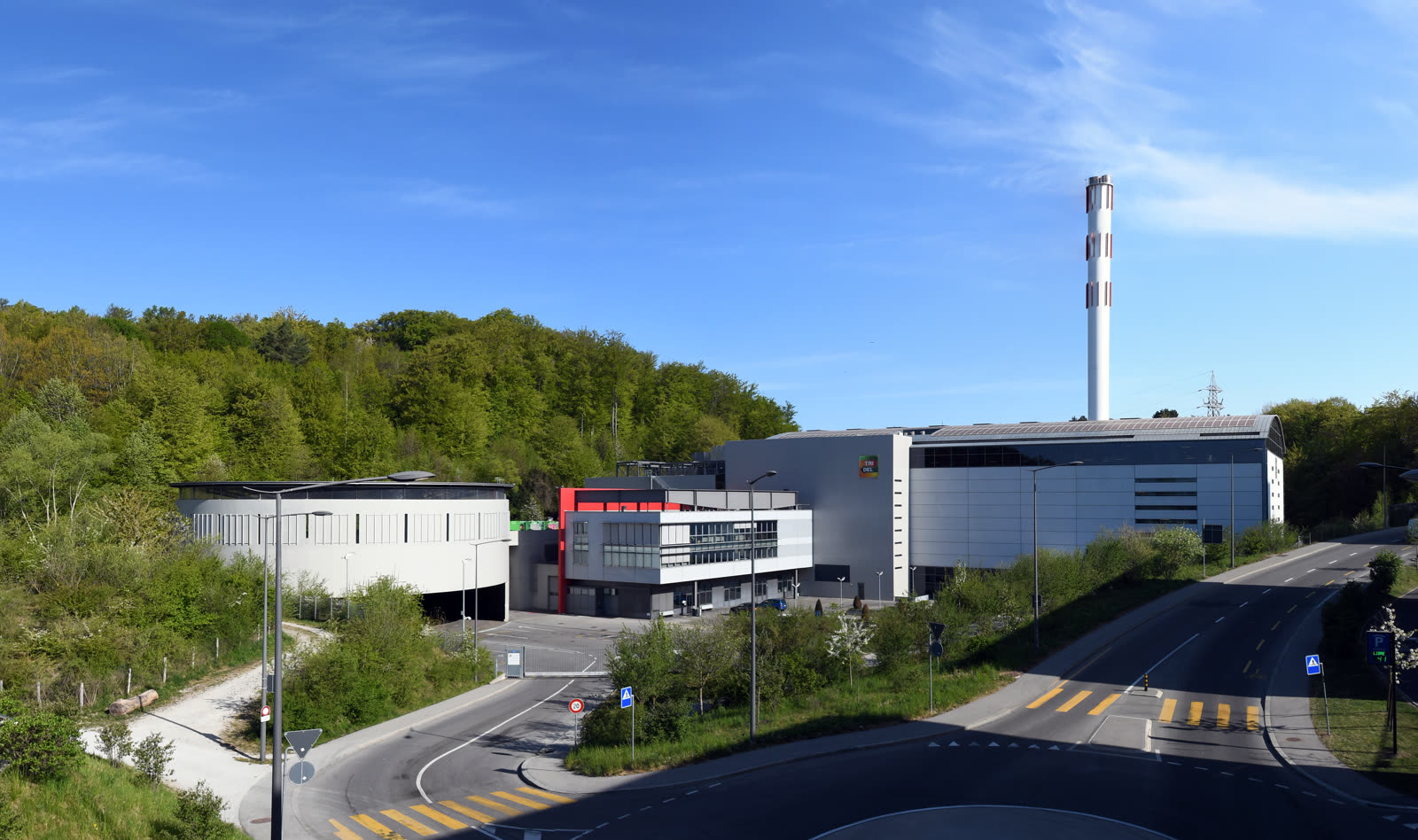
As of 2026-04-30 17:34 UTC, the European Commission is trying to stop one awkward policy collision before the calendar turns on 2026-05-21. Under the EU's new Waste Shipment Regulation, exports of mixed municipal waste for recovery to countries outside the European Economic Area will be banned from that date, which would also cut off a long-running flow from nearby EU regions into Swiss waste-to-energy plants.[1][2][3]
The proposed fix is narrow on purpose. Brussels is not asking to reopen the wider political bargain behind the 2024 waste-shipment overhaul. It is asking Parliament and the Council to carve Switzerland out of one specific prohibition because, in this case, the nearest environmentally sound facility is often across the border rather than deeper inside the EU.[1][2]
That is why this story matters beyond waste law specialists. It is really about whether the EU will treat proximity as the governing logic when geography is obvious, or whether it will keep a formal non-EEA ban even when that means longer truck routes, higher municipal costs, and more emissions.[1][2]
Facts on the file
| Item | What is live now | Confidence note |
|---|---|---|
| Commission action | The Commission published a proposal on 2026-04-29 to amend Regulation (EU) 2024/1157 so the mixed-municipal-waste export prohibition does not apply to Switzerland.[1][2] | Official Commission proposal and news notice. |
| Current legal clock | Most new Waste Shipment Regulation provisions start applying on 2026-05-21; that is the date the mixed-municipal-waste export ban would begin to bite.[3][4] | Commission implementation page and Swiss FOEN note align on the date. |
| Scale of the affected flow | The Commission says around 200,000 tonnes of mixed municipal waste move from EU member states to Switzerland each year.[1][2] | Figure appears in the official proposal rationale. |
| Scope of the carve-out | The proposal covers mixed municipal waste destined for recovery in Switzerland only; exports for disposal stay banned.[1][2] | Explicit in both the Commission news page and explanatory memorandum. |
| Broader policy direction | The wider waste-export tightening framework remains in place, including later export controls and audit obligations.[3][4][5] | The proposal describes itself as targeted and limited. |
Why Switzerland became the exception
The Commission's own explanation is not ideological; it is logistical. A large share of the affected waste comes from border regions in Austria, France, Germany, and Italy that already use nearby Swiss facilities. In those cases, forcing all treatment back inside the EU would not necessarily bring waste closer to where it was generated. It could do the opposite.[1][2]
The proposal's quantified examples are what make the argument more than hand-waving. In the Austrian region of Vorarlberg, the Commission says shipping mixed municipal waste to the nearest Swiss facility is about 40 km, versus roughly 400 km to the most likely option inside Austria.[2] It also says much of the Austria-Switzerland flow currently moves by rail, and replacing that with longer-distance trucking would erase an existing transport advantage.[2]
The environmental case follows from the distance case. Using the current Swiss route, the Commission estimates annual savings of about 1,400 tonnes of CO2 compared with the relevant EU alternative in the Austrian example.[2] In the German border area, authorities estimated that diverting the waste to Baden-Wurttemberg plants would add roughly 887,000 km of annual travel and about 383 tons of extra CO2 even under a relatively favorable scenario.[2]
That is the heart of the file. The new regulation was written to stop the EU from exporting its waste problem outward.[3][5] But the Switzerland case looks less like offshoring and more like regional infrastructure geometry.
Why this is not a general rollback
The most important boundary is what the proposal does not do. It does not reopen the broader 2024 waste-shipment package. The Council's 2024 sign-off framed that package around tougher enforcement, more traceability, tighter export controls, and stronger safeguards that waste sent abroad is handled in an environmentally sound way.[5]
The Commission is also explicit that this amendment is supposed to preserve the broader architecture.[2] The draft says the change is a "very targeted and limited amendment" and that possible further derogations fall outside the scope of the file.[2] In plain English: Brussels wants to solve the Swiss border problem without inviting every other sector to reopen the regulation.
Even in the Swiss lane, the carve-out is narrower than it may first sound. The exemption is for recovery operations, not for landfilling or incineration without energy recovery.[1][2] The Commission's waste-shipment implementation page also shows that other new obligations remain on the horizon, including stricter export rules from 2027-05-21 and broader digital and audit machinery around cross-border waste handling.[3][4]
Why the timing is awkward
The political pressure comes from the mismatch between the legislative clock and the operational clock. The ban is set to apply on 2026-05-21, but the Commission notes that shipment consents issued before that date can remain valid for up to one year, which means some already-approved flows can continue until 2027-05-20.[2][4]
That buys a little breathing room, not a durable answer. The Commission says the amendment still needs to be agreed and enter into application before that final date to avoid a hard stop in the Swiss lane.[2] So the real question for operators is no longer whether the problem exists. It is whether the co-legislators can keep the amendment narrow enough to move quickly.
What to watch next
The base case is straightforward: Parliament and the Council accept the narrow Switzerland fix, mixed municipal waste for recovery keeps moving on the current border routes, and the broader export-tightening regime stays intact.[1][2]
The first risk is legislative drift. If the file turns into a wider fight over export bans, exceptions, or circular-economy burdens, the narrow speed case weakens quickly.[2]
The second risk is precedent. If other sectors or geographies argue that their own routes also deserve carve-outs, the politics could shift from one border-specific correction to a broader argument about whether the EU's anti-export stance has been drawn too rigidly.[3][5]
The third risk is practical rather than political. Switzerland's own federal guidance already tells operators that the May 21 transition changes paperwork, digital procedures, and audit expectations under the new regime.[4] Even if the carve-out survives, the lane is not staying administratively static.
The invalidation condition is concrete. If the co-legislators reject the amendment, or widen it so much that the fast-track logic breaks down, this becomes a countdown to the end of the current Swiss recovery lane. Until then, the live signal is narrower: Brussels is not retreating from the waste-export crackdown; it is trying to keep one nearby recovery route from becoming a self-inflicted detour.[1][2][3]
Sources
- European Commission, "Commission proposes change to waste shipment rules to allow continued municipal waste exports to Switzerland" (April 29, 2026).
- European Commission, Proposal for a Regulation amending Regulation (EU) 2024/1157 as regards the prohibition to export mixed municipal waste destined for recovery, COM(2026) 183 final (April 29, 2026).
- European Commission, "Waste shipments" implementation overview page.
- Swiss Federal Office for the Environment (FOEN), Enforcement of the new EU Waste Shipment Regulation: Impact on Switzerland (2026 guidance note).
- Council of the European Union, "Waste shipments: Council signs off on more efficient, updated rules" (March 25, 2024).
- Wikimedia Commons, "File:Tridel Lausanne.jpg," photograph by Gzzz.