As of 2026-04-03T00:12:29Z (UTC), EPA's March 2026 proposal on perchloroethylene and carbon tetrachloride has changed the practical question around two solvent rules. The live issue is no longer whether EPA still thinks the chemicals pose unreasonable risk. The agency says that finding remains in place. The live issue is whether EPA can keep the rules legally durable and operationally implementable while it pushes some non-federal workplace deadlines back to match the later dates already used for federal agencies and their contractors.[1][2][4]
That distinction matters because the March move is narrower than a rollback headline suggests. EPA proposed extending certain Workplace Chemical Protection Program dates for PCE and CTC, but it also said the "ultimate level of protection required" is unchanged and that the underlying unreasonable-risk finding is not being revisited.[1] EPA's own PCE and CTC pages then filled in the proposed calendar: for PCE, non-federal entities would move to June 21, 2027 for initial monitoring, September 20, 2027 for meeting the ECEL and related respiratory-program requirements, and December 20, 2027 for the exposure-control plan; for CTC, non-federal entities would move to June 21, 2027 for initial monitoring and September 20, 2027 for the ECEL and related respiratory requirements.[2][4]
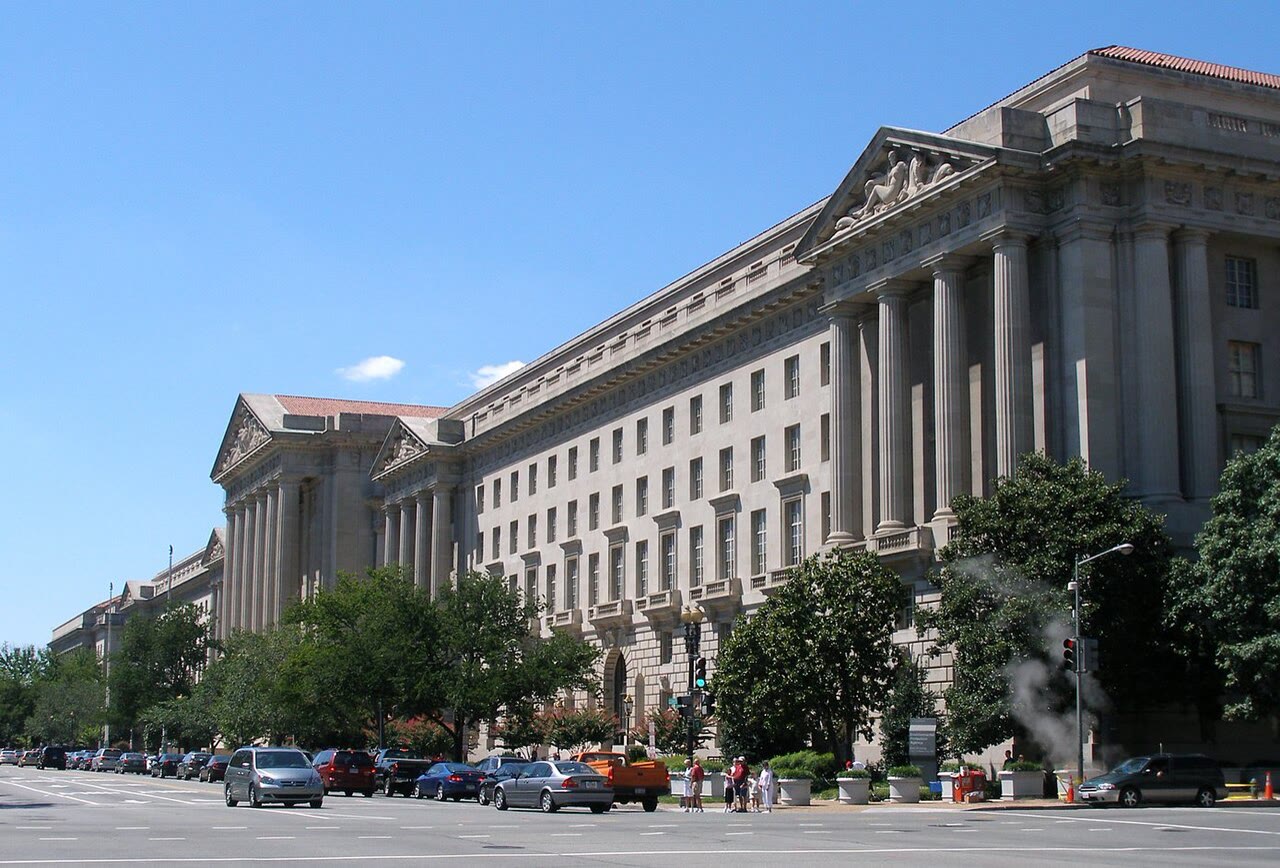
Image context: the cover photo shows EPA headquarters in Washington, D.C. It fits this story because the central issue is administrative sequencing and rule design, not an abstract chemicals graphic or a generic factory image.[8]
What actually moved
The March 2026 proposal sits on top of two already-finalized 2024 TSCA rules. In December 2024, EPA finalized a PCE rule and a separate CTC rule after finding unreasonable risk under TSCA and prescribing workplace controls, prohibitions, and phaseout structures for particular uses.[6][7] The 2026 proposal does not reopen those findings. It changes selected implementation dates while the agency prepares broader reconsideration work.[1][2][4]
For PCE, EPA's updated risk-management page is unusually clear about what remains fixed. The agency says the 10-year phaseout for the use of PCE in dry cleaning is unchanged, and so is the ban on use in newly acquired dry-cleaning machines after six months.[2][7] What moves are certain non-federal workplace deadlines inside the Workplace Chemical Protection Program. That is a narrower intervention than reopening the full dry-cleaning transition or discarding the PCE rule's core structure.[2]
For CTC, the same pattern holds. EPA's carbon tetrachloride page says the final rule from 2024 still closes the door on several discontinued uses and still requires worker-protection measures for allowed uses.[4][6] The March 2026 proposal simply shifts the non-federal initial-monitoring and ECEL-related dates to the later federal timetable.[1][4]
So the best reading is procedural rather than ideological. EPA is not telling the market that PCE and CTC have become harmless, or that the rule files are going away. It is telling regulated entities that the agency wants one implementation calendar while it reworks pieces of both rules.[1][2][4]
Why EPA says it needs more time
The answer is in the 2025 reconsideration notices. In September 2025, EPA said it would reconsider the 2024 CTC rule through notice-and-comment rulemaking and specifically flagged the 0.03 ppm ECEL as one issue it wanted to revisit for implementability while litigation was held in abeyance at the Eighth Circuit.[5] In November 2025, EPA said it expected to publish a notice of proposed rulemaking on the 2024 PCE rule around summer 2026 and a final rule in 2027, while also considering options for extending certain compliance dates.[3]
That sequence turns the March 2026 extension into a bridge, not a destination. EPA is effectively acknowledging a mismatch between the calendar it inherited from the 2024 final rules and the calendar it now thinks it needs for reconsideration, court management, and implementation.[1][3][5] Matching non-federal deadlines to federal-agency and contractor deadlines gives the agency more room to revise the files without forcing private operators to build to one set of dates while EPA is openly drafting another.[1]
There is also a practical enforcement signal in EPA's updated risk-management pages. Both pages say that the current deadlines remain effective until modified through rulemaking, but that EPA intends to focus its resources on compliance with the new dates expected from the March 2026 action, while still reserving the right to act if human health or the environment requires it.[2][4] That is not a formal suspension, but it is a meaningful operational message.
Why 2026 still matters even after a delay
This is where the story becomes more than a simple "deadline pushed out" note.
First, the rules' risk logic is still alive. EPA continues to say both chemicals present unreasonable risk and continues to describe the 2024 rules as the controlling baseline while reconsideration proceeds.[1][2][4][5] Any company reading the March proposal as permission to stop preparing altogether would be reading past the agency's own text.
Second, the delay is uneven across uses. PCE dry cleaning remains on its separate phaseout track, which means the most visible consumer-facing PCE transition still has its original structure.[2][7] The calendar relief is concentrated in workplace-program elements for non-federal entities, not across the whole rule.
Third, the March proposal changes bargaining power inside the next round of comments. Industry now has more runway to argue over implementability, monitoring methods, respiratory protection, and the realism of the ECEL path, while worker and environmental advocates can point back to EPA's unchanged unreasonable-risk finding and ask why the agency should weaken execution speed at all.[1][3][5]
The net result is that 2026 becomes a sequencing year. The compliance cliff is lower than it looked a few months ago, but the policy file is more contested and more open than it looked when the 2024 rules first landed.[1][3][5][6][7]
What to watch next
There are four concrete things worth tracking over the next few quarters.
1. Whether EPA's PCE rewrite stays on the timetable it gave the Fifth Circuit. EPA said in November 2025 that it expected a proposed amendment around summer 2026 and a final rule in 2027.[3] If that slips, the deadline-extension logic starts to look less like sequencing and more like drift.
2. Whether EPA changes only dates or reopens technical substance. The CTC reconsideration notice singled out the ECEL explicitly.[5] If the agency revises the exposure limit or the way compliance is demonstrated, the March 2026 extension will look like the first operational sign of a deeper rewrite.
3. Whether PCE dry-cleaning rules stay fenced off from the workplace-date extension. EPA currently says the 10-year dry-cleaning phaseout is unchanged.[2] Any later move on that front would be a much bigger signal than the March 2026 timing proposal.
4. Whether the final structure preserves the same risk conclusion with a slower implementation arc, or actually narrows the rule's protective reach. EPA keeps saying the "ultimate level of protection required" will not change.[1] That promise is now the benchmark against which the later proposal and final rules should be read.
Bottom line
The March 2026 EPA move is best read as a sequencing decision inside two solvent rulemakings that the agency still wants to defend. PCE and CTC remain unreasonable-risk files under TSCA. The 2024 final rules remain the baseline. What changed is that EPA now wants some non-federal workplace deadlines to line up with federal timelines while it rewrites contested parts of both rules.[1][2][3][4][5][6][7]
That means the current moment is neither a clean implementation march nor a clean rollback. It is a transitional phase in which regulated entities have more time, EPA has admitted it needs a more workable calendar, and the real test shifts to what the agency eventually does with that extra time.[1][3][5]
Sources
- U.S. Environmental Protection Agency, "EPA Extends Compliance Dates for Perchloroethylene and Carbon Tetrachloride TSCA Rules" (March 24, 2026).
- U.S. Environmental Protection Agency, "Risk management for perchloroethylene (PCE)" (updated March 27, 2026).
- U.S. Environmental Protection Agency, "Update on TSCA risk management rule for perchloroethylene" (Released Nov. 28, 2025).
- U.S. Environmental Protection Agency, "Risk management for carbon tetrachloride" (updated March 30, 2026).
- U.S. Environmental Protection Agency, "EPA Announces Next Steps on Final TSCA Risk Management Rule for Carbon Tetrachloride" (Released September 12, 2025).
- U.S. Environmental Protection Agency, "Biden-Harris Administration Announces Final Rule on Carbon Tetrachloride to Protect Workers from Toxic Chemical" (December 11, 2024).
- U.S. Environmental Protection Agency, "Biden-Harris Administration Announces Latest Actions under Nation's Chemical Safety Law to Protect People from Cancer-Causing Chemicals Trichloroethylene and Perchloroethylene" (December 9, 2024).
- Wikimedia Commons, "File:Epaheadquarters.jpg" (photo source for cover image).