As of 2026-04-11 21:05 UTC, the useful way to read the Labor Department's new 401(k) alternatives file is to ignore both slogans now fighting over it. The proposal published on March 31, 2026 does not require employers to put private equity, private credit, real estate, or digital-asset exposure into participant menus. It does something narrower and more consequential for governance: it proposes a process-based safe harbor for selecting designated investment alternatives in participant-directed individual account plans, with comments due June 1, 2026.[1][2][3] The live question is not whether every 401(k) just turned into an endowment. The live question is whether plan fiduciaries are about to get a clearer way to defend selective use of complex investments under ERISA.
That distinction matters because this file is really a long-sequence story. In June 2020, the Department said a fiduciary would not violate ERISA solely by offering a professionally managed asset-allocation fund with a private-equity component in the manner described in the agency's information letter.[5] In December 2021, the Department added a supplemental statement emphasizing that the 2020 letter should not be read as a broad endorsement of private equity as a direct menu option for ordinary participants.[6] In May 2025, it rescinded its 2022 crypto caution, arguing that ERISA's ordinary prudence standard, rather than a special "extreme care" standard, should govern fiduciary analysis.[7] Then Executive Order 14330 in August 2025 told the Department to propose regulations or other guidance, including calibrated safe harbors, for plans that offer asset-allocation funds with alternative assets.[4] The March 31 proposal is the rulemaking embodiment of that sequence, not an isolated surprise.[3][4][5][6][7]
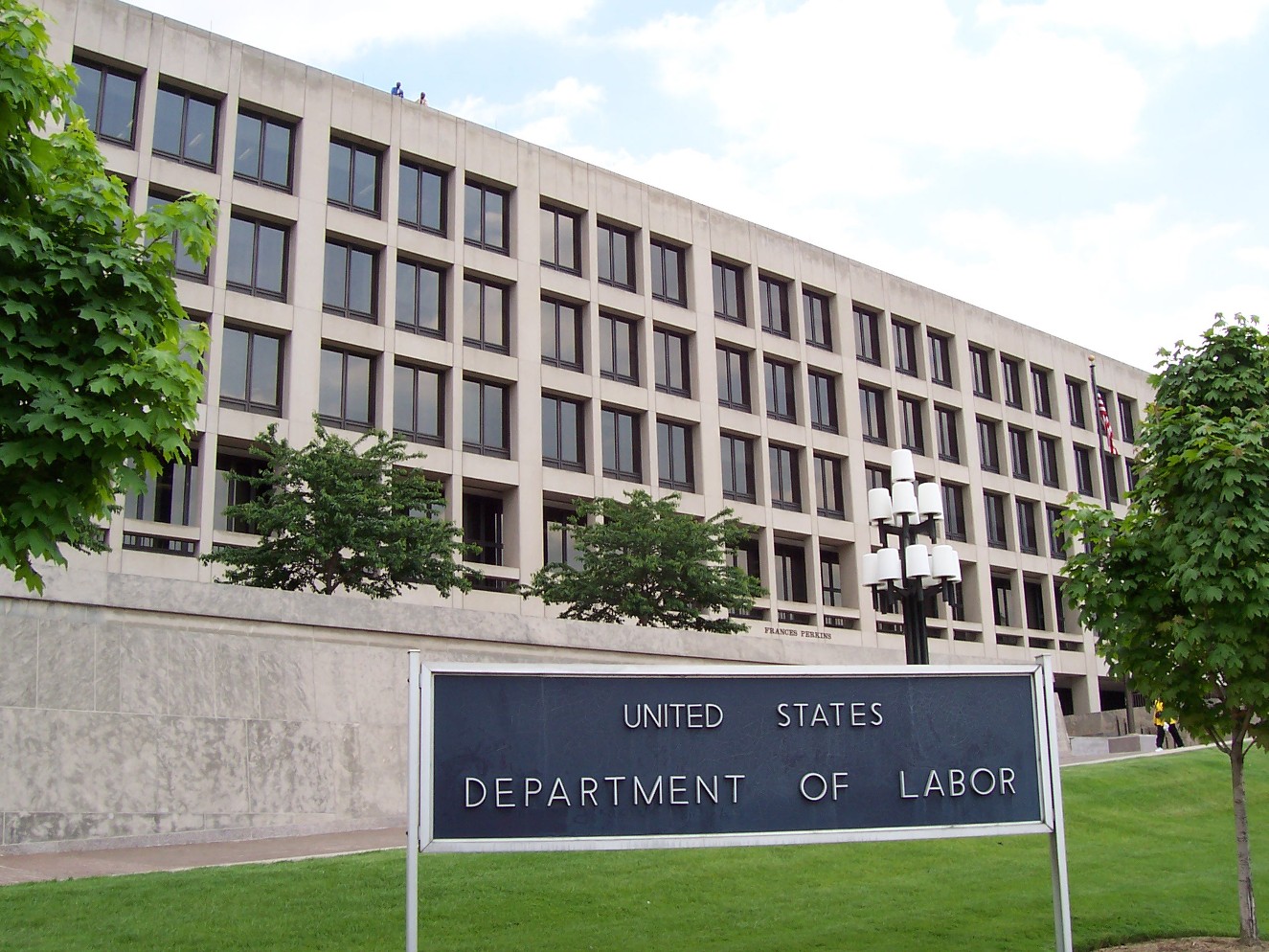
Image context: the cover shows the Frances Perkins Building, headquarters of the U.S. Department of Labor. That is the right documentary image because the present fight sits in administrative text, fiduciary process, and comment-stage rulemaking rather than in a trading screen or a generic retirement graphic.[8]
Fact file
- March 31, 2026: DOL published a proposed rule, 91 FR 16088, on fiduciary duties in selecting designated investment alternatives.[3]
- Comment deadline: comments are due June 1, 2026 through Regulations.gov.[3]
- Policy frame: DOL says the proposal creates a process-based safe harbor for participant-directed individual account plans and identifies six factors: performance, fees, liquidity, valuation, performance benchmark, and complexity.[2][3]
- Scope: DOL's fact sheet says the rule would apply to the selection of any type of investment as a designated investment alternative, even though the executive order focused on asset-allocation funds with alternative assets.[2][4]
- Important limit: the proposal does not answer how to prudently curate a whole menu of options, and the Department says it expects separate interpretive guidance on ongoing monitoring later.[3]
What the proposal actually does
The strongest reason to call this an explainer rather than a victory lap is that the proposal is about process discipline, not about a government judgment that alternatives are automatically good for retirement savers. DOL's fact sheet says the proposed regulation would apply to any type of designated investment alternative and would establish a safe harbor a fiduciary may use to meet the duty of prudence under ERISA section 404(a).[2] The Federal Register text makes the same point in more legal language: the safe harbor is tied to a prudent process in which the fiduciary gives appropriate consideration to relevant facts and circumstances and then works through six factors.[3]
Those six factors are where the real operating change sits. The Department lists performance, fees, liquidity, valuation, performance benchmark, and complexity.[2][3] That list is broad enough to cover ordinary mutual-fund choices, but it is also clearly built to make room for more complex products if fiduciaries can show the work. The liquidity examples discuss participant withdrawals, reallocations, plan loans, and redemption restrictions; the valuation examples focus on conflict-free and timely valuation processes; the benchmark examples explicitly contemplate mixed public-private portfolios; and the complexity examples ask whether the fiduciary actually understands the product well enough or needs outside help.[2][3] In other words, the proposal is not saying "alternatives are safe." It is saying "if you want to use something complex, here is the analytical file you will need."
What the proposal does not do
The easiest mistake is to confuse a safe harbor for one part of fiduciary decision-making with a federal blessing for the entire 401(k) menu. The March 31 proposal does not do that. The Federal Register preamble says the question of how to prudently curate a menu of investments overall is beyond the scope of this rulemaking.[3] The same preamble also says DOL expects to issue separate interpretive guidance in the near term on fiduciary obligations to monitor designated investment alternatives after selection.[3] So even if the rule is finalized, a committee still would not get a free pass on menu construction or on the continuing duty to revisit investments over time.
It also does not erase the importance of participant context. The 2020 information letter already described a narrow path for private-equity exposure inside a professionally managed asset-allocation vehicle rather than as a stand-alone option for unsophisticated participants.[5] The 2021 supplemental statement then stressed that the earlier letter should not be treated as a broad statement on direct offerings or on every defined-contribution situation.[6] The new proposal is broader in legal form, because it applies to any designated investment alternative, but its logic still runs through fiduciary process, participant needs, and plan-specific facts rather than through a one-line endorsement.[2][3][5][6]
Why this matters now
The immediate significance is less about portfolio theory than about litigation posture and committee behavior. Executive Order 14330 explicitly told the Department to prioritize approaches designed to curb litigation risk that may constrain fiduciaries from applying their best judgment.[2][4] The proposal follows that instruction by turning part of the ERISA prudence debate into something more structured and recordable. If a plan sponsor, investment committee, consultant, or managed-account provider wants to add an option that includes illiquid sleeves, non-public pricing inputs, or unfamiliar benchmark problems, the proposal would give them a more explicit checklist for documenting why the choice fits the plan.[2][3]
That can cut two ways. Supporters will argue the proposal modernizes defined-contribution investing by recognizing that ordinary workers should not be categorically blocked from exposures already common in public pensions and sophisticated portfolios.[4] Skeptics will argue that a litigation-safe process can still leave participants bearing complexity they did not ask for and may not understand. Both readings are partly right. My inference from the proposal is that the near-term effect is more likely to be selective expansion through professionally managed structures than a sudden flood of direct private-market line items in ordinary 401(k) menus.[2][3][5][6] The text is too process-heavy, and the committee burden is too real, for anything looser.
Decision impact by horizon
In the next 24 hours, plan sponsors and advisers should stop reacting at headline level and start classifying where the rule could matter. The relevant categories are not "pro" or "anti" alternatives. They are: existing target-date or managed-account structures with non-public sleeves, menu options with liquidity limits, products with hard-to-explain fees, and service models that require third-party valuation or benchmark construction.[2][3][5]
In the next 7 days, committees should decide whether they want to comment. The June 1 window is not a theoretical deadline. The proposal is asking, in effect, how much discretion fiduciaries should receive and what documentation should count as prudent when the investment gets complicated.[3] Recordkeepers, consultants, asset managers, participant advocates, and employer committees all have something concrete to say on valuation governance, benchmark comparability, and who bears the burden of explaining complexity to participants.[2][3]
In the next 30 days, the strategic issue becomes whether this file stays narrow or turns into a broader DC-retirement rewrite. A narrow final rule would mostly improve documentation lanes for selected products. A broader one, paired with later monitoring guidance, could reshape how committees think about menu architecture, outsourced investment expertise, and what counts as an acceptable retail wrapper for private-market exposure.[3]
Scenario map
- Base case: DOL finalizes a version close to the proposal, keeping the six-factor safe harbor and leaving overall menu design to separate guidance. Trigger: comment record supports process clarity but not a more radical rewrite.[2][3]
- Upside case for asset managers: DOL finalizes the rule with durable examples that make mixed public-private structures easier to justify inside professionally managed defaults or managed accounts. Trigger: strong institutional comments on diversification, benchmark methods, and fiduciary defensibility.[2][3][4]
- Downside case for adoption: the rule is finalized but uptake stays slow because committees still fear participant backlash, benchmarking disputes, and future litigation over valuation or liquidity. Trigger: heavy criticism in comments and cautious behavior from recordkeepers and employer committees.[3][5][6]
Action checklist
- Read the actual proposal before forwarding hot takes; the safe harbor is process-based, not mandatory product placement.[2][3]
- Inventory where your plan already has complexity exposure through target-date funds, managed accounts, annuity wrappers, or non-public sleeves.[2][3][5]
- Decide whether to comment on liquidity, valuation, benchmark, or complexity standards before June 1, 2026.[2][3]
- Separate selection from monitoring. This proposal mainly addresses the first and leaves the second for later guidance.[3]
- Treat direct-to-participant alternative menus and professionally managed diversified structures as different governance problems, because the Department's own history has drawn that distinction repeatedly.[5][6]
The narrow bottom line is that the March 31 DOL proposal has opened a real retirement-policy file, but not the one the slogans suggest. It has not ordered private assets into every 401(k), and it has not settled whether alternatives are good or bad for ordinary savers. It has put Washington on the verge of formalizing a more explicit ERISA process for committees that want to use complex investments and can defend them. Between now and June 1, the practical task is to decide how much discretion fiduciaries should receive, and what proof should be required before that discretion turns into menu reality.[2][3][4]
Sources
- U.S. Department of Labor, "US Department of Labor announces proposed rule that will give American workers greater access to alternative investments in retirement savings plans" (March 30, 2026).
- U.S. Department of Labor, "Fiduciary Duties In Selecting Designated Investment Alternatives Proposed Rule" fact sheet (2026).
- Federal Register, "Fiduciary Duties in Selecting Designated Investment Alternatives," 91 FR 16088, proposed rule published March 31, 2026; comments due June 1, 2026.
- The White House, Executive Order 14330, "Democratizing Access to Alternative Assets for 401(k) Investors" (August 7, 2025).
- U.S. Department of Labor, Information Letter 06-03-2020 on a private-equity component in a designated investment alternative (June 3, 2020).
- U.S. Department of Labor, Supplemental Statement on Private Equity in a Designated Investment Alternative (December 21, 2021).
- U.S. Department of Labor, Compliance Assistance Release 2025-01, "401(k) Plan Investments in 'Cryptocurrencies'" (May 28, 2025).
- Wikimedia Commons, "File:US Dept of Labor.jpg" (Frances Perkins Building photo source).