As of 2026-03-22 07:00 UTC, the BBNJ treaty story is no longer about whether countries can pass a global text. That phase ended when the Agreement entered into force on 17 January 2026, after the 60th instrument trigger and the treaty’s 120-day entry rule. The practical question is now narrower and harder: can the Preparatory Commission (PrepCom) convert broad legal commitments into operating rules that a first Conference of the Parties (COP1) can actually run with.[1][2][3][4]
This is a governance transition problem. Negotiation-era success rewarded coalition building and legal compromise; implementation-era success rewards sequencing, drafting precision, and institutional capacity.
What changed after entry into force
Three things have materially changed:
- Legal status changed: the Agreement is now binding on parties that deposited instruments before entry into force, so implementation obligations are no longer theoretical.[2]
- Participation scale changed: the file moved from a threshold race (60) to a broader participation map (over 80 ratifications and 140+ signatures reported in official and partner channels), which widens both legitimacy and coordination complexity.[1][4][6][7]
- Workload changed: attention shifted from text adoption to operational packages—rules of procedure, financial rules, subsidiary body modalities, secretariat arrangements, and funding architecture.[5]
In short, the treaty has crossed the political finish line and entered the administrative marathon.
Why PrepCom throughput is the real 2026 bottleneck
The third PrepCom session (23 March–2 April 2026) puts the bottleneck in plain view: the agenda includes multiple decision-shaped workstreams that determine whether COP1 starts as a decision forum or a process bottleneck.[5]
The high-impact bundles include:
- COP rules and voting workflows (how decisions move from proposal to adoption)
- Financial rules and fund operationalization (how contributions and disbursement logic are governed)
- Subsidiary body design (how scientific/technical tasks are distributed and staffed)
- Secretariat functioning and seat-related arrangements (how day-to-day institutional continuity is built)
Each bundle is interdependent. If one slips, the rest lose throughput. For example, technical body design without clear budget rules creates mandate without delivery capacity; financial rules without procedural clarity create funding with slow authorization paths.
The mechanism investors and operators should watch
A useful way to read BBNJ in 2026 is as a three-layer execution stack:
- Layer 1: legal floor — already in place after entry into force.
- Layer 2: procedural operating system — under active design in PrepCom documents and negotiations.
- Layer 3: implementation velocity — whether parties can move from adopted decisions to funded, staffed, cross-border execution.
The failure mode is straightforward: countries celebrate legal success while Layer 2 remains under-specified, producing slow Layer 3 outcomes. The success mode is equally clear: PrepCom packages arrive at COP1 in near-decision-ready form, reducing procedural drag in year one.
What to monitor over the next 90 days
If you need a practical signal dashboard, track these four indicators:
- Document convergence: do co-chairs’ revised aids and draft decisions narrow brackets and reduce unresolved process questions session by session?[5]
- Finance-operability link: are financial rules aligned with realistic fund deployment, including support channels for lower-capacity parties?[2][5][7]
- Institutional staffing realism: do subsidiary body modalities match available expert pool, workload, and timetable assumptions?[5]
- Cross-regime coordination clarity: does implementation language stay coherent with existing sectoral regimes while still enabling new biodiversity outcomes?[2][4][6]
These are leading indicators of whether COP1 will spend most of its time deciding policy, or rebuilding missing process scaffolding.
Why this matters beyond ocean diplomacy
Areas beyond national jurisdiction account for roughly half of Earth’s surface and about 95% of ocean volume, so the treaty’s implementation quality matters far beyond marine law communities.[7] If early institutional design is coherent, BBNJ can become a template for how multilateral systems turn broad legal bargains into usable, finance-linked governance under scientific uncertainty. If design coherence is weak, it becomes a cautionary case of legal ambition outrunning administrative execution.
That is the core 2026 takeaway: the headline multilateral win already happened; operational credibility is what gets priced next.
Uncertainty boundary and falsifier
The central claim here is that process throughput before COP1 is now the dominant implementation risk.
This claim weakens if PrepCom sessions rapidly resolve major procedural and finance design questions into decision-ready text with clear institutional sequencing.
It strengthens if ratification counts keep rising while foundational operating packages remain fragmented, delayed, or under-specified.
Sources
- UN BBNJ Agreement portal (entry-into-force note; four substantive pillars)
- UN BBNJ “Becoming a Party” page (signature window, 144+EU signatories, 60th-instrument trigger, 120-day rule, entry into force date)
- United Nations Treaty Collection status page (formal treaty status and party updates)
- IMO press briefing (entry into force and implementation context in ABNJ governance ecosystem)
- UN BBNJ PrepCom Third Session page (23 March–2 April 2026 agenda and official document set)
- IUCN press release (60-ratification milestone and implementation timeline framing)
- European Commission oceans & fisheries update (entry into force, participation counts, COP timing context)
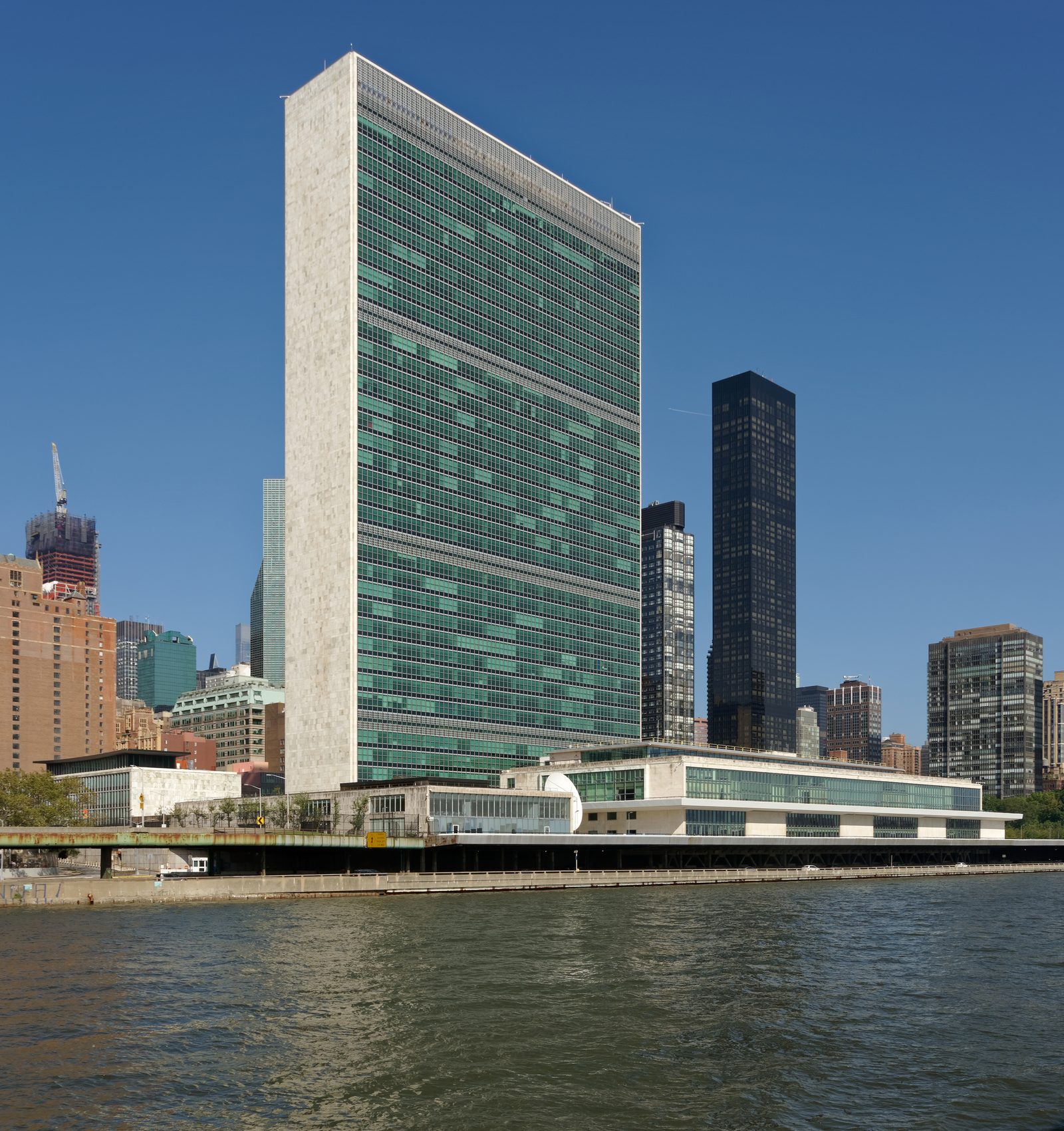
- Wikimedia Commons image source — UN Headquarters photo (New York, 2023)