As of 2026-06-09 04:31 UTC, the useful news is not simply that El Nino may return. The sharper point is timing. The World Meteorological Organization says its latest El Nino/La Nina Update gives an 80% likelihood that El Nino conditions emerge during June-August 2026, with probabilities near or above 90% that the event continues until at least November.[1]
That does not mean every region now has a precise local forecast. It means national meteorological services, humanitarian agencies, utilities, health systems, insurers, shippers, growers, and water managers have a shorter window to translate a global climate signal into local operating plans. WMO's own caution is important: every El Nino differs, other climate drivers matter, and even neutral ENSO years can still produce extremes.[1]
Fact File
| Item | What is known now | Confidence note |
|---|---|---|
| Main WMO probability | WMO says El Nino has an 80% likelihood in June-August 2026 and near-or-above 90% odds of continuing until at least November.[1] | High; direct WMO press release. |
| NOAA status | NOAA CPC's May 14 diagnostic discussion lists El Nino Watch status and says El Nino is likely to emerge soon, with 82% odds in May-July 2026 and 96% odds for December 2026-February 2027.[4] | High; direct NOAA CPC discussion, next update due June 11. |
| Strength boundary | NOAA's May strength table gives no single peak-strength category more than 37% probability, and CPC warns that event strength does not guarantee impact strength.[5] | High for probability table; local impacts remain conditional. |
| Seasonal heat signal | WMO's Global Seasonal Climate Update projects broad tilt toward above-normal temperatures for June-August, with high model consistency across much of the tropics and Northern Hemisphere low-to-mid latitudes.[3] | High for seasonal probability signal, not for city-level heat outcomes. |
| Forecast system | WMO says its update is produced with IRI and draws on National Meteorological and Hydrological Services and global climate prediction centers.[1] | High; institutional process disclosed by WMO. |
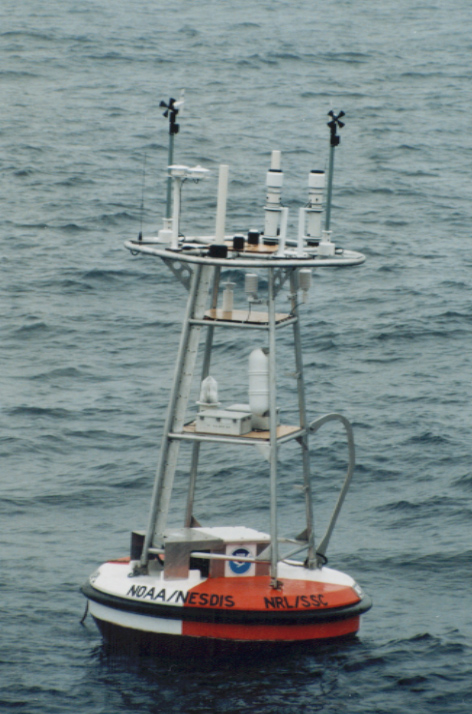
| Observation base | NOAA PMEL says the TAO array was built after the 1982-1983 El Nino exposed the need for real-time tropical Pacific observations.[6] | High; NOAA PMEL historical and technical source. |
What Actually Changed
The probability language has tightened. WMO's June 2 release says warm tropical Pacific waters are fueling El Nino development and that the central-eastern Equatorial Pacific sea-surface temperature reference region was approaching El Nino thresholds in late April to mid-May.[1] It also says unusually warm subsurface conditions across the tropical Pacific, with temperatures exceeding 6 C above average, are feeding the surface anomalies.[1]
NOAA's current public diagnostic page is slightly older, dated May 14, but points in the same direction: ENSO-neutral conditions continued at that time, the latest weekly Nino-3.4 index was +0.4 C, and the equatorial subsurface temperature index had increased for the sixth consecutive month.[4] The key phrase is "likely to emerge soon." WMO is now converting that trajectory into a stronger global preparedness message.[1][4]
The headline should still be read as probability, not declaration. Operational El Nino status depends on ocean and atmosphere coupling, not only warm water. NOAA explicitly says it remains to be seen whether the significant ocean-atmosphere coupling associated with the strongest historical El Nino events occurs in 2026.[4] That is why the practical response should be staged: update risk plans now, but keep room for the June 11 NOAA discussion, regional outlook forums, and national meteorological-service guidance to narrow the local picture.[1][4]
Decision Impact
Next 24 hours: organizations should stop treating El Nino as a vague late-year risk. The most useful immediate move is to identify which operating decisions depend on seasonal rainfall, heat, tropical-cyclone tendency, power demand, water storage, disease surveillance, crop timing, or insurance exposure. WMO's point is that advance seasonal forecasts are valuable only if they become decisions before hazards arrive.[1][2]
Next 7 days: the next NOAA ENSO Diagnostics Discussion is scheduled for June 11, 2026.[4] That update should be checked against WMO's 80% and 90% framing rather than treated as a competing headline. If NOAA raises, lowers, or qualifies the outlook, the change will matter for U.S.-linked seasonal planning and for international agencies that use CPC input inside broader forecast consensus.[1][4]
Next 30 days: the highest-value work is regional. WMO's global note names typical El Nino patterns, including increased rainfall in parts of southern South America, the southern United States, the Horn of Africa, and central Asia, and drier conditions over Central America, northern South America, the Caribbean, Australia, Indonesia, and parts of southern Asia.[1] But those are not local orders. They are prompts to pull the official regional and national outlooks that convert ENSO into sector-specific risk.
Scenarios
Base case: El Nino emerges during June-August and persists into late 2026. Heat-risk planning, drought monitoring, water allocation, agriculture advisories, and humanitarian pre-positioning become the useful policy response, while local forecasts remain probabilistic and regularly updated.[1][3][4]
Upside case: the warm ocean signal still produces a weaker or more localized event than the most severe public expectations imply. NOAA's strength table supports that caution: several strength categories remain plausible, and no single peak category dominates.[5] In that case, early preparation is still justified, but the most extreme response assumptions should be retired as newer data arrives.
Downside case: atmosphere-ocean coupling strengthens through summer and the event becomes stronger while a positive Indian Ocean Dipole develops at the same time. WMO's seasonal update says the Pacific El Nino is forecast to intensify rapidly and the Indian Ocean Dipole may turn positive, peaking alongside it.[3] That combination would make heat, rainfall, drought, food-security, and health planning more urgent in exposed regions.
Action Checklist
- Track the June 11 NOAA CPC update before locking plans that depend on U.S. or North American seasonal outlooks.[4]
- Use WMO's global warning as a trigger to consult official national and regional forecasts, not as a substitute for them.[1][2]
- Separate event probability from local impact probability. A strong El Nino signal can raise the odds of certain outcomes without guaranteeing them in any one place.[1][5]
- Move heat and water checks first: cooling-center readiness, reservoir and irrigation assumptions, health-alert protocols, crop advisories, grid peak-demand planning, and humanitarian stock positions.[1][2][3]
- Watch for overstatement. WMO explicitly says it does not use "super El Nino" as an operational classification, and NOAA says strength does not necessarily equal impact strength.[1][5]
The conclusion is narrow but consequential. WMO has not issued a deterministic weather script for the world. It has moved El Nino from background possibility into a near-term preparedness clock. The organizations that benefit most will be the ones that turn the next few weeks into local thresholds, named owners, and update points instead of waiting for the first crisis to prove the forecast mattered.[1][2][4]
Sources
- World Meteorological Organization, "WMO: Prepare for El Nino" (June 2, 2026).
- World Meteorological Organization, "Launch of the WMO El Nino/La Nina Bulletin (June-August 2026)" (June 2, 2026).
- World Meteorological Organization, "Global Seasonal Climate Update for June-July-August 2026" (May 21, 2026).
- NOAA Climate Prediction Center, "ENSO Diagnostic Discussion" (May 14, 2026).
- NOAA Climate Prediction Center, "Official NOAA CPC ENSO Strength Probabilities" (issued May 2026).
- NOAA Pacific Marine Environmental Laboratory, "Building TAO" (history and observing-system context).
- Wikimedia Commons, "File:TAO-NOPP-mooring-afloat-september-1998.jpg" (NOAA buoy photograph source).