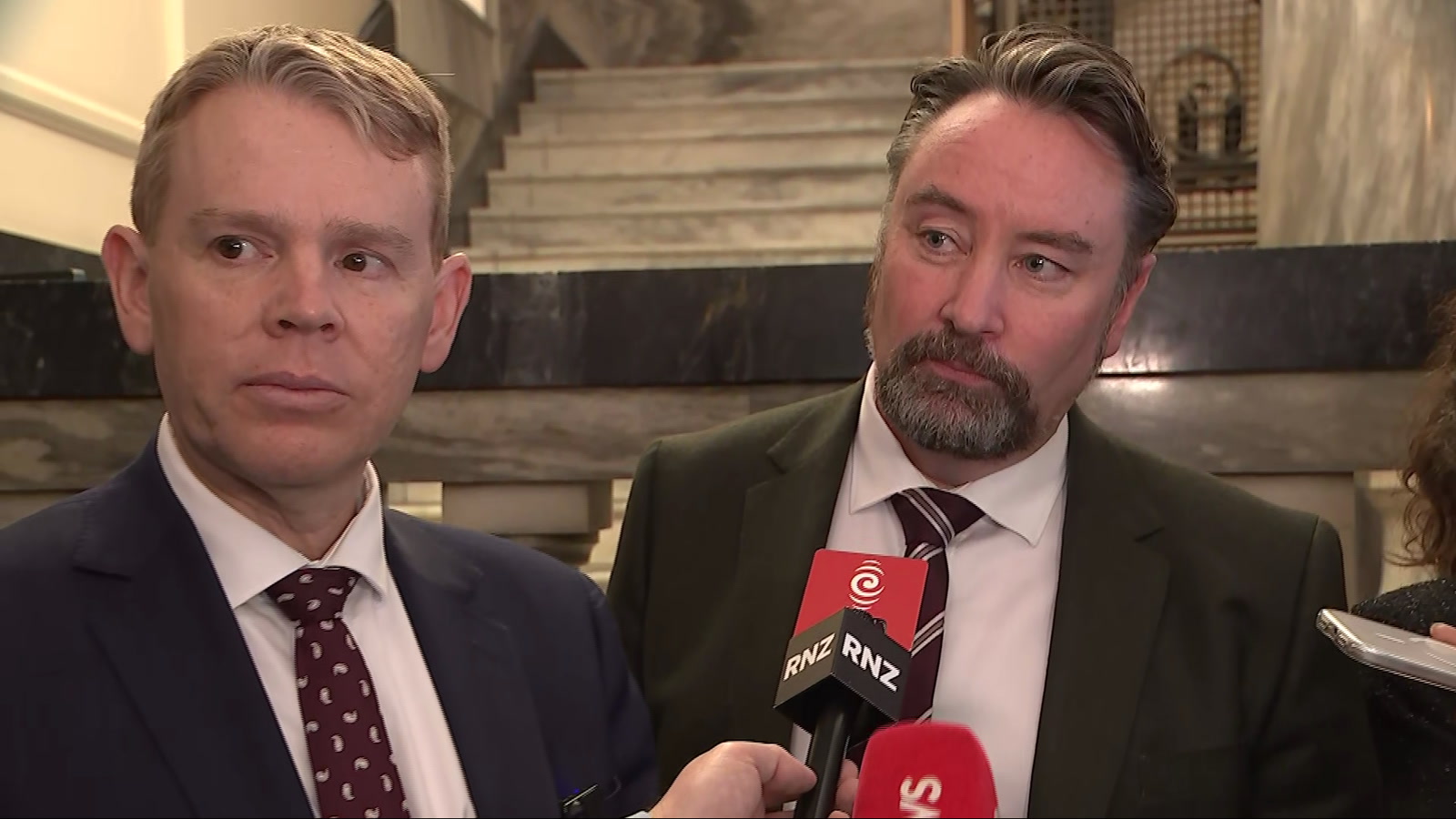
As of 2026-08-25 07:37 UTC, New Zealand's proposed under-16 social-media restrictions had something they appeared to lack a day earlier: enough promised votes to pass a first reading. Labour leader Chris Hipkins said his party would support the National-led government's bill at that stage. Leader of the House Louise Upston then held to the government's position that there was no time to schedule the vote before Parliament rises for the election.[2]
The result is an unusual but precise status. The bill has a plausible first-reading majority, no announced first-reading slot, and no legal effect. Labour's support would open scrutiny; it would not enact a ban or bind the party at later stages.[2]
That distinction matters because the policy headline is moving faster than the legislation. Parents, schools, young people and platforms face no new rule today. The next test is not another statement of support. It is whether the government puts its own bill before the House.
The state of play
| Record | What is established | Confidence and boundary |
|---|---|---|
| August 24 — introduction | The government introduced the Online Safety (Minimum Age and Child Safety Risk Assessment) Bill. Its announced design combines an under-16 account restriction for designated high-risk platforms with wider child-safety risk assessments, a regulator and platform penalties.[1][3] | High for the proposal. Introduction creates a bill, not an Act or an operating restriction. |
| August 25 — Labour support | Labour offered the votes needed for a first reading while saying the bill required substantial improvement through select committee.[2] | High for first-reading arithmetic. 1News notes that support at this stage does not commit a party at later votes. |
| August 25 — government schedule | Upston said the bill would not receive a first reading before Parliament rises, citing three remaining sitting weeks. ACT and New Zealand First, National's coalition partners, remain opposed.[2] | High for the stated position. A scheduling decision can change; no cited source reports that a vote has been placed on the Order Paper. |
| Election boundary | Independent reporting says Parliament is due to dissolve on October 1 ahead of the November election. Unfinished parliamentary business lapses at dissolution, although a new Parliament may reinstate it.[7][8] | High for the procedural boundary. Reinstatement would be a choice by the next Parliament, not an automatic continuation. |
What the bill would actually do
The proposal is broader than its familiar “ban” label, but narrower than a prohibition on everything a person under 16 can see online.
Its age-restriction duty would require operators of designated platforms to take reasonable steps to prevent New Zealand users under 16 from holding accounts. The official announcement names existing account information, facial age estimation, digital-ID services and formal identification as possible methods. It proposes no penalties for children, parents or caregivers.[1] A legal first reading of the text notes that entering a date of birth manually would not count as a reasonable step and that age-assurance data would have to be destroyed.[3][4]
The account rule is only one half of the architecture. Platforms used by children would also have to produce recurring child-safety risk assessments, while a regulator in the Department of Internal Affairs would monitor and enforce the regime. The proposed enforcement ladder reaches a maximum of the greater of NZ$40 million or 10% of global turnover for the most serious failures.[1][3][4]
Scope is not one flat blacklist. Associated Press reports that messaging services, online games and productivity-focused AI tools would sit outside the under-16 account restriction. The government separately says AI companion platforms would fall within the broader regulatory framework.[1][8] The difference between those two categories will matter more than the word “ban”: it decides which services must exclude young account holders and which may instead face risk-assessment or other safety duties.
The bill therefore creates two different tests. The legislative test is whether Parliament advances it. The policy test is whether age assurance and platform design can reduce harm without creating disproportionate privacy, access or expression costs.
Those costs are not hypothetical objections invented after the announcement. The Children's Commissioner welcomed stronger regulation but warned that age limits alone would not keep children safe and called for young people to be involved in the design.[9] The New Zealand Council for Civil Liberties argues that age proof could burden adult users as well as children and restrict young people's access to communication and civic participation.[10] AP's Australian comparison supplies an important measurement boundary: a large account-removal tally can show enforcement activity, but it does not by itself establish changes in sleep, harmful exposure, mental health or migration to other services.[8]
These are stakeholder and expert assessments, not a settled verdict on the bill. They identify what select-committee evidence would need to test: false age decisions, data retention, evasion, migration to less-regulated services, changes in exposure to harmful features, and whether young users lose beneficial connections along with risky ones.
Why a majority is not a timetable
New Zealand Parliament's own process guide says a first reading can occur no sooner than the third sitting day after introduction. If the House agrees to it, the bill is normally sent to a select committee, where public submissions and proposed amendments become possible. It must later survive a second reading, committee-of-the-whole-House consideration, a third reading and Royal assent before becoming law.[6]
Labour's offer solves only the vote count at the first of those gates. The government's refusal to allocate time leaves the gate closed. There is no constitutional paradox: parliamentary support and control of the remaining government agenda are separate constraints.
A pre-election first reading would still matter. It would place MPs' initial positions on the record and create a route for public evidence. It would not settle the age threshold, platform definitions, regulator design or age-assurance standard. Conversely, failing to hold that vote would not prove the policy has disappeared. It would convert the bill into an election commitment that the next Parliament would have to reinstate, replace or abandon after unfinished business lapses.[6][7]
The next 24 hours, seven days and 30 days
In the next 24 hours, watch the parliamentary schedule, not the party headcount. The decisive update would be a first-reading date or an explicit reversal from the Leader of the House. Publication of the full policy analysis, privacy safeguards and implementation assumptions would also make the proposal more testable.[3][5]
Over the next seven days, the useful debate should move from “ban or no ban” to the bill's operating boundaries: which services are designated, how an adult or child proves age, what data a platform may keep, how appeals work, and how the regulator measures reduced harm rather than account removals alone.
Over the next 30 days, party positions should become specific enough to survive the election. Labour has promised first-reading support while seeking changes; ACT and New Zealand First oppose the proposal; National says it would return to the bill after the election.[2][8] The missing information is the amendment map—what each party would retain, rewrite or reject.
Scenario map
These are monitoring paths, not probability forecasts.
| Path | Observable trigger | What it would mean |
|---|---|---|
| Base — no pre-election vote | The remaining sitting days pass without the bill receiving a first reading.[2] | The proposal lapses with other unfinished business at dissolution and becomes a decision for the next Parliament.[7] |
| Upside for immediate progression — a slot is found | The government places the bill for first reading and Labour supplies the promised votes.[2] | The bill advances to detailed scrutiny; no restriction begins merely because the first reading passes.[6] |
| Downside — support fragments before design questions are tested | First-reading support is withdrawn, or the next Parliament declines to reinstate or replace the bill. | The cross-party overlap on protecting children produces no common legislative vehicle, leaving platform duties and age-assurance rules unresolved. |
Action and invalidation checklist
- Government and Leader of the House: publish a yes-or-no scheduling decision and identify the last feasible sitting day, so “not enough time” can be checked against the actual agenda.
- National and Labour: distinguish support for the first reading from support for the final bill, and publish the clauses each would amend.
- Department of Internal Affairs: expose the assumptions behind platform designation, age assurance, privacy protection, enforcement cost and outcome measurement in a form the public can evaluate.[5]
- Newsrooms: use “bill” or “proposal,” not “ban in force”; use “first-reading votes,” not “votes to enact”; keep account removal separate from evidence of reduced harm.
- Parents, schools and platforms: do not treat the announcement as a current legal duty. The cited parliamentary process shows that multiple stages remain.[6]
- Update condition: revise this brief if a first-reading date appears, any party changes its voting position, or the government publishes a materially different bill or implementation analysis.
- Invalidation condition: the headline claim ends the moment the House actually holds the first-reading vote. If the bill passes, the story becomes one of select-committee design; if it fails, the current majority premise is disproved.
New Zealand's social-media debate now has more agreement than its parliamentary calendar reflects. Whether that agreement becomes law will be shown first by a small, visible act: putting the bill on the schedule.
Sources
- New Zealand Government, “Government moves to ban U16s from social media” (August 24, 2026) — official policy announcement, age-assurance options, proposed duties, regulator and penalty ceiling.
- Justin Hu, 1News, “Govt says no time for social media bill after Labour backs it” (August 25, 2026) — current first-reading positions, remaining sitting-time claim, coalition split, procedural boundary and cover-photograph provenance.
- New Zealand Legislation, Online Safety (Minimum Age and Child Safety Risk Assessment) Bill, Government Bill 339—1 (introduced August 24, 2026) — primary legislative text.
- David Harvey, LawNews, “A law that those being targeted can defeat with a felt-tip pen” (August 25, 2026) — legal first reading of the bill's duties, enforcement ladder, age-data safeguards and account-access boundary.
- New Zealand Department of Internal Affairs, “Consistency Accountability Statements and related documents” (August 2026) — official landing page for the bill's consistency statement and summary of underpinning analysis.
- New Zealand Parliament, “How a bill becomes law” — official sequence from introduction and first reading through select committee, later readings and Royal assent.
- New Zealand Parliament, “Adjournment of the House” — official explanation that unfinished business lapses at dissolution and may be reinstated by a new Parliament.
- Charlotte Graham-McLay, Associated Press, “New Zealand proposal would ban under-16s from using social media” (August 24, 2026) — independent reporting on the election clock, coalition split, platform scope and international context.
- Mana Mokopuna — Children and Young People's Commission, “Children's Commissioner calls for comprehensive approach to online safety” (August 25, 2026) — current response on regulation, age-limit boundaries and youth participation.
- New Zealand Council for Civil Liberties, “NZCCL opposes social media ban for the under 16s” (August 24, 2026) — civil-liberties objections concerning expression, association, identity proof and implementation.