As of 2026-05-11 01:34 UTC, the Federal Trade Commission's May 7 final order in Valvoline's acquisition of Breeze Autocare from Greenbriar is easiest to misread if it is treated as a national verdict on service-chain size.[1][4] The more useful reading is narrower. The FTC finalized a remedy that requires 45 quick-lube shops to be divested because the agency says the deal would otherwise eliminate competition across 25 local markets where Valvoline and Greenbriar's Oil Changers business directly overlap.[1][2][3] The live message is that quick-lube competition is still being judged where drivers actually choose between substitutes: nearby storefronts, not a national market share table.
That distinction matters because Valvoline's original transaction story was a scale story. In February 2025, the company said it would add nearly 200 stores across 17 states in a roughly $625 million acquisition meant to accelerate network growth and push its North American footprint above 2,200 locations.[4] The FTC did not answer that pitch by trying to block every part of the expansion. It answered with a map and a carve-out. If overlap is the problem, the remedy is to cut out the overlap.
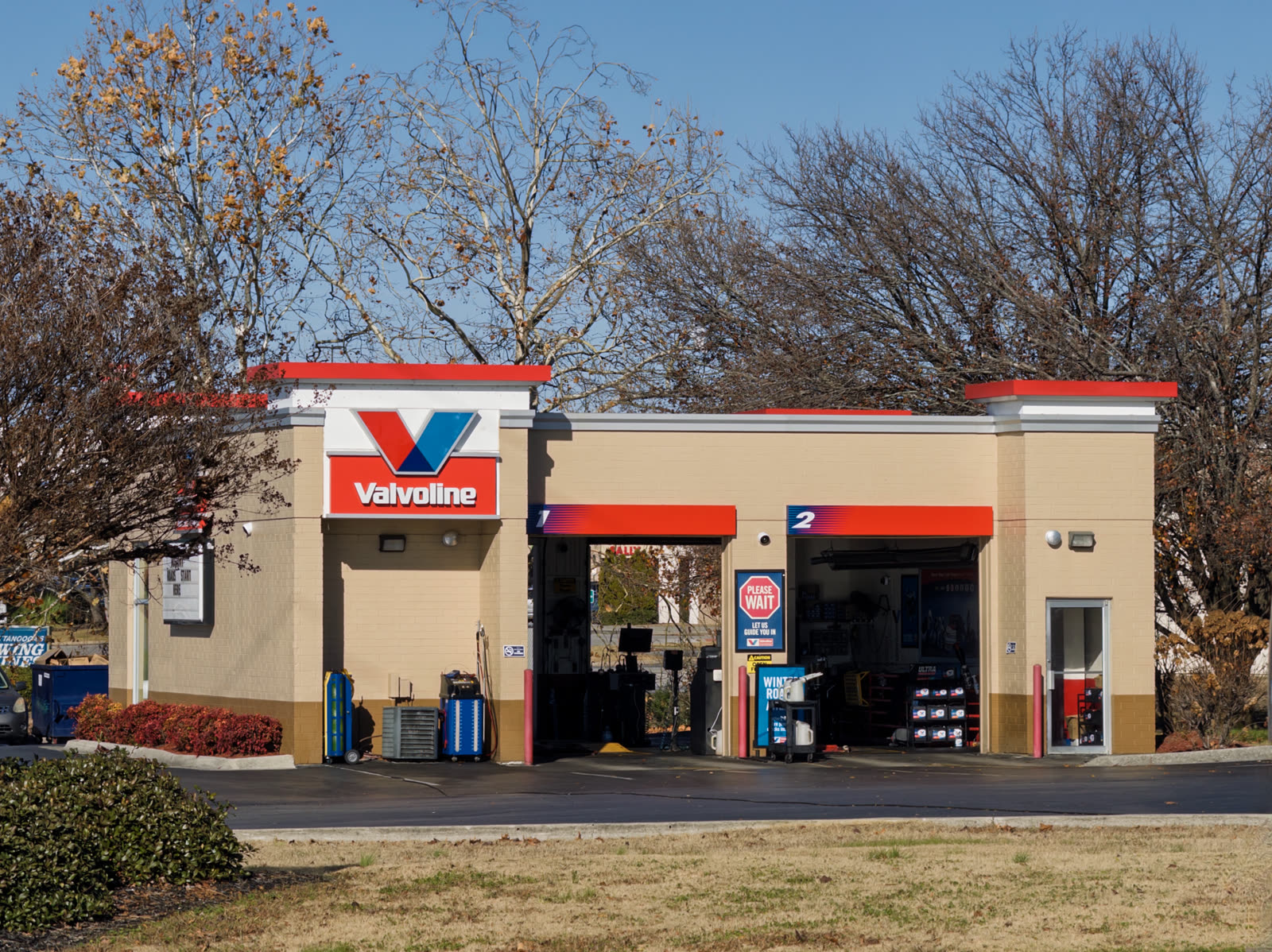
Image context: the cover uses a real photograph of a Valvoline Instant Oil Change outlet.[6] That is the right documentary image here because the merger theory in this case is intensely local. The order turns on what happens when one brand owns too many of the bays a driver might realistically compare for a fifteen-minute oil change in a given area.
Fact file
| Item | What is confirmed now | Confidence note |
|---|---|---|
| Final FTC action | On May 7, 2026, the FTC finalized the consent order after the public-comment period.[1][2] | High; direct FTC release and final case file. |
| Store remedy | The order requires divestiture of 45 quick-lube oil change shops.[1][2][3] | High; repeated across FTC materials. |
| Competition theory | FTC says the acquisition would eliminate competition across 25 local markets where Valvoline and Oil Changers directly compete.[1][3][5] | High; direct FTC release and agreement-analysis document. |
| Remedy buyer | Main Street Auto LLC will acquire the divested outlets and operate them under the Oil Changers name.[1][3] | High; direct FTC materials. |
| Geography named by FTC | The affected markets span California, Kentucky, Idaho, Illinois, Indiana, Michigan, Washington, and Wisconsin.[1] | High; direct FTC release. |
| Transaction scale | Valvoline said in February 2025 that Breeze Autocare operated nearly 200 stores across 17 states, and the purchase price was about $625 million.[4] | High; direct company transaction release. |
| Commission vote | The final order was approved 2-0.[1] | High; direct FTC release. |
Why this is a local-market merger file
The FTC's structure here is revealing. The agency did not say that quick-lube chains cannot consolidate across states. It did not claim that Valvoline became too large in the abstract. Its complaint and final order instead focus on a narrower proposition: in certain places, Valvoline and Oil Changers are close substitutes for the same errand, and merging them would likely raise the risk of higher prices and lower service quality for routine oil changes.[1][2][3] That is classic local-retail antitrust logic.
Quick-lube service is especially suited to that logic. Most customers are not comparing national platforms in the way they might compare online services or long-haul logistics networks. They are comparing a short list of nearby shops that compete on convenience, speed, trust, couponing, upsell intensity, and whether the visit feels easy enough to repeat. The FTC's use of 25 local markets says the agency sees the relevant rivalry sitting inside those immediate catchment areas.[1][3][5]
This is also why the named buyer matters. A structural remedy works only if the carved-out stores remain an actual competitive force after the merger closes. The FTC says Main Street Auto LLC will acquire the 45 stores from Greenbriar and continue operating them under the Oil Changers name.[1][3] In other words, the commission is not merely shrinking the combined footprint on paper. It is trying to keep a recognizable local rival alive in the affected markets.
What the order does and does not say
The order does say that scale has boundaries when it collapses too many local substitutes into one owner. That is the practical significance of the remedy. Valvoline was allowed to pursue the broader transaction, but not on terms that left the overlap markets intact as a single-owner network.[1][3][4]
The order does not say that multi-state quick-lube growth is presumptively unlawful. In its deal announcement, Valvoline described Breeze as geographically complementary, financially accretive over time, and useful for faster network growth.[4] The FTC did not reject that national business logic outright. It narrowed it. The agency's position is closer to this: grow if you want, but preserve the neighborhood-level competition that drivers actually experience.
That makes this case a useful template for other service-retail deals. If a buyer can offer a clean divestiture package, a named operator, and a plausible path for preserving storefront rivalry, the FTC may still prefer a structural fix over an outright attempt to unwind the whole strategic rationale. The final order in Valvoline-Greenbriar reads exactly that way: not lenient, not maximalist, but local in its mechanics.[1][2][3][5]
What to watch next
The first thing to watch is whether the divested stores continue to behave like a genuine rival set under Main Street Auto rather than a temporary holding pattern under an inherited nameplate.[1][3] A merger remedy is only as strong as the competitor it leaves behind.
The second thing to watch is whether the FTC keeps using this style of remedy in other convenience-led service deals. The local-market framework in this case is not peculiar to oil changes; it can travel to other categories where consumers choose among a handful of nearby outlets and where service quality matters alongside price.
The third thing to watch sits with Valvoline itself. Its 2025 transaction pitch was about network growth, integration discipline, and scale benefits across a larger retail base.[4] The real test now is whether the company can still capture enough of that strategic upside after carving out the overlap markets the FTC would not let it keep.
The narrow conclusion is the useful one. The FTC's final Valvoline order is best read as a reminder that some merger cases remain stubbornly local even when the buyer and seller operate across many states.[1][2][3][4][5] In this file, the agency's answer to national scale was not a national theory. It was 45 stores, 25 markets, and a remedy built around keeping local oil-change competition alive.
Sources
- Federal Trade Commission, "FTC Finalizes Consent Order in Valvoline-Greenbriar Deal" (May 7, 2026).
- Federal Trade Commission, "Valvoline Inc./Greenbriar Equity Fund V, L.P" case page, including final complaint and decision-and-order documents (updated May 7, 2026).
- Federal Trade Commission, "FTC Requires Divestiture of Oil Change Shops in Valvoline-Greenbriar Deal" (November 14, 2025).
- Valvoline Inc., "Valvoline Inc. Continues to Accelerate Network Growth; Adding Nearly 200 Stores with Definitive Agreement to Acquire Breeze Autocare" (February 20, 2025).
- Federal Trade Commission, Analysis of Agreement Containing Consent Orders To Aid Public Comment (PDF, November 14, 2025).
- Wikimedia Commons, "File:A Valvoline Instant Oil Change outlet in Chattanooga, Tennessee.jpg" - source page for the cover photograph.