As of 2026-05-10 18:07 UTC, the Federal Trade Commission chairman's May 8 warning letter to Mortgage Connect is easiest to misread if it is treated as a replay of the abandoned dream of one sweeping noncompete ban.[1][2] The stronger reading is narrower and more current. The FTC is showing what its labor-market program looks like when it moves through company-specific Section 5 scrutiny, public court records, and targeted pressure on agreements the agency thinks may be unjustified, overbroad, or unnecessary.[2][3]
The clue sits in what the letter actually says. It does not announce a rule, and it does not say Mortgage Connect has already been found to have violated the law.[2] Instead, Chairman Andrew Ferguson says the agency reviewed public materials from Mortgage Connect's lawsuit against a former worker and the competitor who hired her, and that those materials raise significant competitive concerns.[1][2] He then pushes the company to review its contracts, discontinue any noncompetes that are not reasonably necessary to achieve procompetitive aims, and notify affected workers if such agreements are dropped.[2] Read alongside the FTC's labor task force launch and the agency's April action against Rollins, the message is direct: the current FTC wants a case-by-case enforcement lane, not a one-size-fits-all headline.[3][4][5]
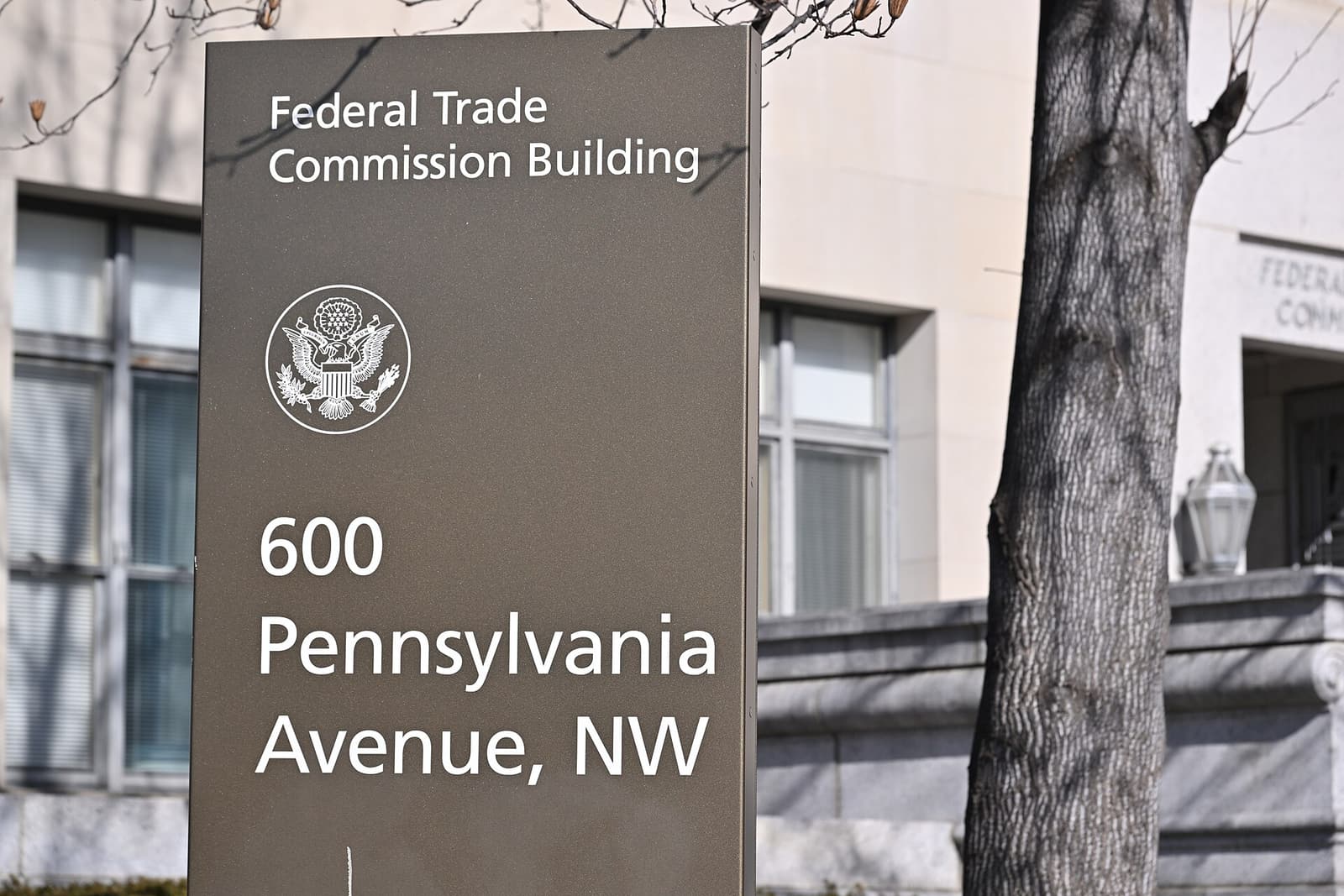
Image context: the cover uses a real Wikimedia Commons photograph of the FTC building sign in Washington, D.C.[6] That is the right documentary image here because the live story is an institutional enforcement signal. The agency is not unveiling a national rule; it is sending a letter from headquarters that warns one employer its noncompete practices may attract deeper antitrust scrutiny.
Fact file
| Item | What is confirmed now | Confidence note |
|---|---|---|
| Current FTC action | On May 8, 2026, the FTC announced that Chairman Ferguson had sent Mortgage Connect a warning letter about noncompete agreements.[1] | High; direct FTC press release. |
| Legal lane invoked | The letter says the FTC has been using its authority under Section 5 of the FTC Act to investigate particular noncompete agreements that may be unjustified, overbroad, unfair, or anticompetitive.[2] | High; direct letter text. |
| Mortgage Connect fact pattern | The letter says FTC staff reviewed public materials from Mortgage Connect's lawsuit against a former worker and a competitor, and that those materials suggest the company may require all employees to sign noncompetes without regard to role or responsibilities.[2] | High for the FTC's description of the record; no merits ruling by the FTC or a court is claimed here. |
| Narrower alternatives | The letter says at least some asserted business goals may be achievable through less restrictive means, including narrower restraints such as non-solicitation and non-disclosure agreements.[2] | High; direct letter text. |
| What the letter does not do | The FTC says it takes no position on the merits of Mortgage Connect's ongoing lawsuit and that the letter is not a statement that illegal conduct has already been determined.[2] | High; direct letter text. |
| Broader program context | The FTC said its Joint Labor Task Force was created to prioritize investigations and prosecutions of deceptive, unfair, and anticompetitive labor-market practices, including noncompetes.[3] | High; direct FTC press release. |
| Latest escalated example | On April 15, 2026, the FTC said it ordered Rollins to stop enforcing noncompetes against more than 18,000 employees and sent warning letters to 13 other pest-control employers.[4][5] | High; direct FTC press release and proposed order. |
What the FTC actually did
The May 8 move is a warning letter, not a complaint, not an administrative order, and not a new nationwide standard imposed on every employer at once.[1][2] That distinction matters. Warning letters are designed to put a company on notice quickly and publicly, without first forcing the agency into a full merits proceeding. In Mortgage Connect's case, the chairman's office is saying that public lawsuit materials already provide enough smoke to justify a direct warning.[1][2]
That is a meaningful escalation even though it is not yet a formal adjudication. The letter is addressed to counsel, names the Pennsylvania case, summarizes the FTC's competitive concerns, and tells the company what a safer response would look like: review the contracts, stop using restraints that are not reasonably necessary, and tell workers clearly if those restraints are discontinued.[2] In other words, the agency is using a lighter procedural instrument to steer conduct before deciding whether it needs a heavier one.
This is why the story matters beyond Mortgage Connect itself. A warning letter of this kind tells employers that private noncompete litigation can become federal antitrust input. Once the underlying facts are public, the FTC can read the court papers, compare the restrictions against its current labor-market priorities, and send a letter that shifts the cost-benefit calculation even before a federal case begins.[2][3]
Why this is a case-by-case lane, not a new rule
The article's title makes a negative claim, so the boundary needs to stay exact. The FTC did not say on May 8 that all noncompetes are unlawful. It did not publish a new rulemaking file. It did not issue a generally applicable ban. The letter instead says the FTC is investigating particular noncompete agreements under Section 5 and evaluating whether they are justified in their own factual setting.[2]
The agency's earlier labor-task-force announcement points in the same direction. When the FTC launched the task force, it described an enforcement structure for prioritizing investigations and prosecutions of labor-market conduct across the bureaus, with noncompetes named as one example among several practices that can harm workers.[3] That is an operating framework, not a single universal command. It tells you where the agency plans to spend time, what fact patterns it wants surfaced, and which practices are likely to draw scrutiny first.
The April Rollins action shows what the next rung looks like when the FTC decides the facts are strong enough to move beyond warning language. There the agency did not stop at an advisory signal. It announced an order aimed at ending enforcement of noncompetes against more than 18,000 workers, and the proposed public order includes cease-and-desist obligations against entering, maintaining, enforcing, or threatening to enforce a noncompete agreement.[4][5] That is the progression to watch: task-force prioritization, warning letters where the FTC sees a live concern, and formal orders when the agency decides it is ready to bind conduct more directly.
Why the Mortgage Connect facts matter
The Mortgage Connect letter is not a generic lecture about labor mobility. It is built around a very specific concern: the FTC says public court materials suggest the company may require all employees to sign noncompetes regardless of role or responsibilities.[2] Once the agency frames the practice that broadly, the legal and competitive question changes. The issue stops being whether a narrow restraint protects a discrete category of trade secrets and becomes whether a standard-form restraint is being imposed on a workforce wider than the employer can justify.
That is where the letter's discussion of less restrictive means becomes the hinge.[2] The chairman is not saying firms must leave confidential information exposed. He is saying that if the company's own public filings already point to narrower tools, such as non-solicitation and non-disclosure agreements, then a broad noncompete starts to look harder to defend as reasonably necessary.[2] The practical implication is that employers may no longer be able to rely on a familiar template and vague invocations of goodwill or specialized skill; they may need a tighter fit between job function, business interest, and contractual restraint.
The mortgage-services setting sharpens that point. The letter cites comments from market participants who described noncompetes in mortgage services as a serious recruiting constraint and a source of coercive litigation risk.[2] The FTC is therefore not treating this as an abstract policy debate. It is treating it as a competition problem with an industry record, worker-mobility consequences, and alleged effects on smaller rivals and new entrants trying to hire experienced people.[2]
What to watch next
The first thing to watch is whether Mortgage Connect narrows or abandons any part of its contract architecture without waiting for a formal FTC complaint. Warning letters are useful partly because they can trigger private compliance changes faster than litigation can.[2]
The second thing to watch is whether the agency repeats this pattern outside the pest-control and mortgage files. The labor task force was announced in broad terms, and the Mortgage Connect letter makes clear the FTC is willing to mine public case records in a new sector when it thinks the restraints may be too broad.[2][3]
The third thing to watch is escalation. If the agency believes the facts warrant more than a warning, the Rollins matter shows the next step: an order with concrete cease-and-desist obligations and conduct-specific remedies.[4][5] That is the meaningful enforcement ladder here. The May 8 letter is lower on that ladder than Rollins, but it is plainly on the same structure.
The useful conclusion is a restrained one. The FTC's Mortgage Connect letter should be read as a federal labor-enforcement signal sent through a company-specific file, not as a new national noncompete rule.[1][2][3][4][5] The current agency appears to prefer a narrower route: pick live factual records, ask whether the restraints are genuinely necessary, and push employers toward smaller, better-defended contract boundaries before or instead of broader formal action.
Sources
- Federal Trade Commission, "FTC Chairman Ferguson Issues Noncompete Warning Letter to Mortgage Connect" (May 8, 2026).
- Federal Trade Commission, Noncompete Warning Letter - Mortgage Connect (May 8, 2026).
- Federal Trade Commission, "FTC Launches Joint Labor Task Force to Protect American Workers" (February 26, 2025).
- Federal Trade Commission, "FTC Takes Action Against Noncompete Agreements, Securing Protections for Workers" (April 15, 2026).
- Federal Trade Commission, Rollins: Proposed Decision and Order (Public) (April 15, 2026).
- Wikimedia Commons, "File:FTC Building sign Washington DC 2025-02-07 13-30-31 1.jpg" - source page for the article image.