As of 2026-05-10 09:03 UTC, the useful way to read the FDA's May 8 approval of Bizengri for NRG1 fusion-positive cholangiocarcinoma is not as a narrow rare-cancer item alone. It is also a program signal. The approval is the seventh under the FDA's Commissioner's National Priority Voucher pilot, and it arrives less than a month before the agency's June 4 public hearing on how that ultra-fast review pathway should work, what counts as a national priority, and how much pre-submission discipline sponsors should be expected to carry.[1][2][3][4]
The drug decision still matters on its own merits. FDA says Bizengri is the first approved therapy for adults with advanced, unresectable, or metastatic cholangiocarcinoma harboring an NRG1 gene fusion after prior systemic therapy.[1][2] FDA's approval note says the review ran more than five months ahead of the agency's goal date, with efficacy assessed in a study that enrolled 22 cholangiocarcinoma patients, 19 of them evaluable for efficacy; confirmed overall response rate was 36.8%, and duration of response ranged from 2.8 to 12.9 months.[2] Put differently: the drug label is real, but the broader news value is that FDA keeps adding actual approvals to a pilot that is now moving from launch rhetoric into precedent.
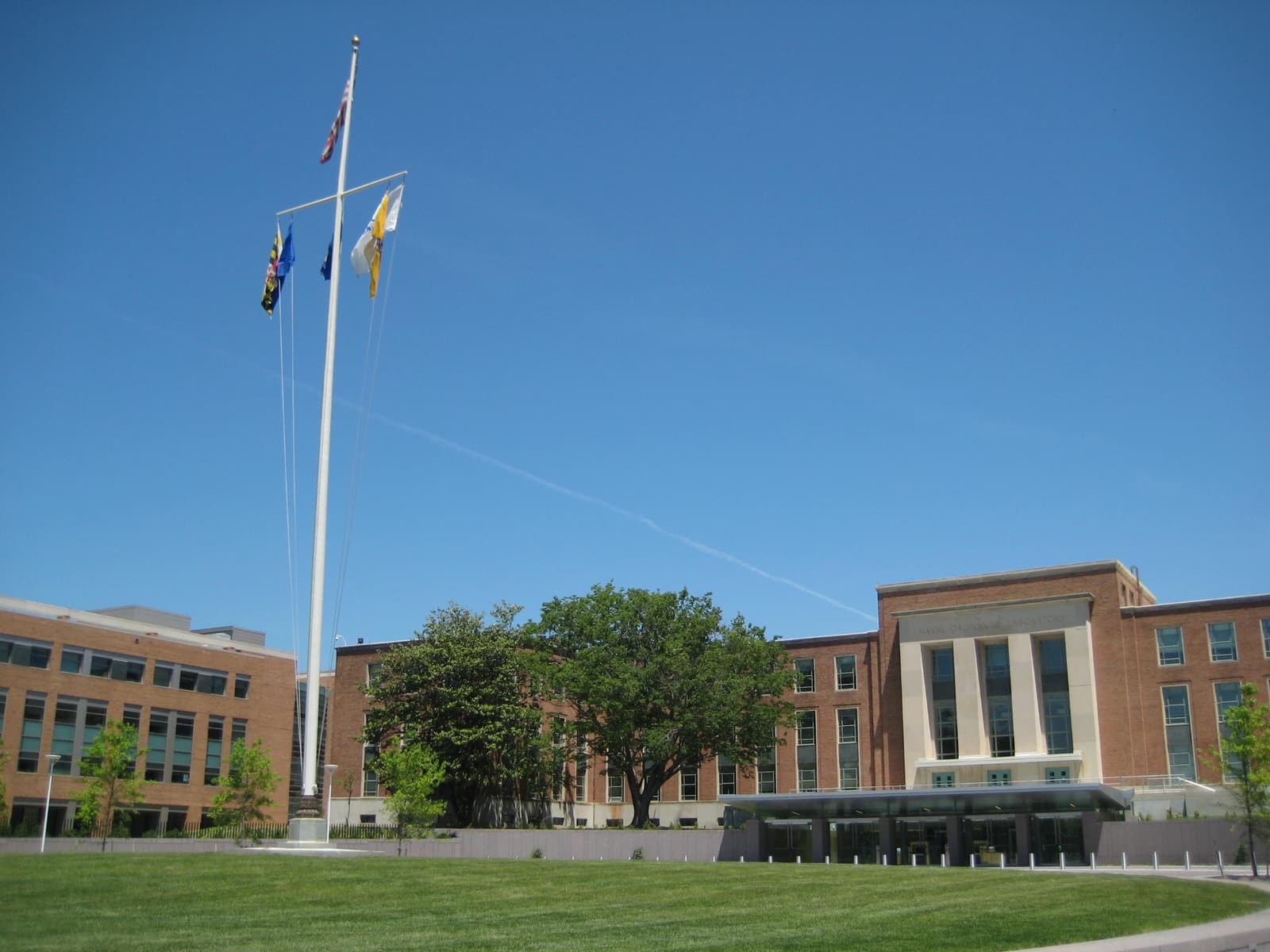
Image context: the cover uses a real photograph of FDA Buildings 1 and 21 at the White Oak campus in Silver Spring, Maryland.[7] That is the right documentary image here because the core change is procedural and institutional. The question is how FDA's headquarters turns an unusually fast review track into something durable enough to survive public comment, implementation friction, and future applications.
Fact file
| Item | What is confirmed now | Confidence note |
|---|---|---|
| Approval date | FDA approved Bizengri for this cholangiocarcinoma indication on May 8, 2026.[1][2] | High; direct FDA releases. |
| Why the approval is unusual | FDA says this is the seventh approval under the CNPV pilot.[1] | High; explicit in FDA's press release. |
| Program timing | FDA's program page says the pilot was announced in June 2025 and is designed to reduce review times toward a 1-2 month target.[3] | High; direct FDA program page. |
| Hearing clock | FDA has scheduled a June 4, 2026 public hearing and is taking written comments through June 29, 2026.[1][4] | High; direct FDA materials. |
| Clinical basis | In the eNRGy trial, 22 cholangiocarcinoma patients were enrolled and 19 were evaluable for efficacy; ORR was 36.8% and response duration ranged from 2.8 to 12.9 months.[2] | High; direct FDA approval note. |
| Disease niche | Partner Therapeutics said on April 14 that there were no approved therapies specifically targeting cholangiocarcinoma with NRG1 gene fusions at filing time.[6] | High for the company's statement; consistent with FDA's first-approval framing. |
| Earlier program baseline | On March 20, FDA said the pilot had awarded vouchers for 18 products and had produced 4 approvals at that point.[4] | High for that date-specific baseline; the count has since moved higher. |
Why this reads as a pilot-program story
If this were only a cancer-drug note, the main takeaway would stop at first approval in a tiny biomarker-defined population. That is part of the story, but not the whole one. The CNPV pilot was introduced as an attempt to compress review time dramatically for products that serve one of five stated national-health priorities, using enhanced communication, rolling review, and a senior-leadership "tumor board-style" process.[3] Those design choices were always more aggressive than FDA's normal priority-review lane. What makes the May 8 approval more than another program press release is that the agency is now accumulating enough decisions to make the pilot a real operating model rather than a one-off experiment.
The timing sharpens that point. FDA's March 20 notice set a public hearing for June 4 precisely because the agency wants feedback on eligibility criteria, voucher selection, sponsor responsibilities, pre-submission requirements, review procedures, and the role of the CNPV Review Council.[4] In other words, the agency is opening the rulebook for comment at the same time that it keeps adding live approvals under that rulebook. The seventh approval therefore lands as evidence, not theory.
That matters because the strongest argument for the pilot has never been abstract speed by itself. It is speed paired with early issue-clearing. FDA says the program's goal is 1-2 months from filing to action, with more intensive pre-submission work to prevent later review-cycle delays tied to manufacturing, inspection, or data-package problems.[3][4] A seventh approval gives that promise more institutional weight. It does not prove the model will generalize cleanly across every product class, but it does make the June hearing harder to treat as a speculative exercise.
What the approval actually changes
For patients with this cholangiocarcinoma subtype, the clinical change is straightforward. FDA approved the drug for a group it describes as extremely rare and life-threatening, and it did so on data showing confirmed responses in a setting where targeted options were previously absent.[2][6] Partner Therapeutics had framed the April submission in exactly those terms, calling the disease aggressive and noting that there were no approved therapies specifically targeting NRG1 fusion-positive cholangiocarcinoma.[6] The company then said on May 6 that the voucher award reflected FDA's recognition of a profound unmet need in an ultra-rare disease space.[5]
For the program, the change is procedural. Each new approval gives outside observers a better read on what FDA is actually willing to pull through the lane. The program page says vouchers can go to products tied to public-health crisis response, innovative breakthrough therapies, large unmet medical needs, onshoring and supply-chain resilience, or affordability.[3] Bizengri fits most clearly in the large unmet medical needs bucket, with some overlap into breakthrough-therapy logic. That is useful because it shows the pilot is not limited to mass-market products or supply-chain politics; FDA is also using it for rare, biomarker-driven oncology.
What to watch next
The first checkpoint is the June 4 hearing itself. The big question is whether FDA treats the pilot as a narrowly managed exception lane or as the beginning of a broader review-process redesign.[3][4] Watch especially for how the agency defends its eligibility screen, how it talks about manufacturing and inspection readiness, and whether it suggests the current 1-2 month target is sustainable at higher volume.
The second checkpoint is the pattern of future approvals. One fast approval can always be dismissed as a showcase case; seven are harder to wave away. If the next approvals keep spanning different national-priority buckets while preserving clear safety and evidentiary standards, the pilot will start to look like a durable operating template rather than an exceptional sprint.[1][3][4]
The narrow conclusion is the useful one. Bizengri's new label matters for a very small cancer population, but the bigger news signal sits one layer above the drug itself. FDA is continuing to convert the national-priority-voucher pilot into an approval-producing process just as it asks the public how that process should be defined, constrained, and scaled.[1][2][3][4]
Sources
- FDA, "FDA Grants Seventh Approval under the National Priority Voucher Pilot Program" (May 8, 2026).
- FDA, "FDA approves zenocutuzumab-zbco for advanced, unresectable or metastatic cholangiocarcinoma" (May 8, 2026).
- FDA, "Commissioner's National Priority Voucher (CNPV) Pilot Program" (accessed May 10, 2026).
- FDA, "FDA Schedules Public Meeting on the Commissioner's National Priority Voucher Pilot Program" (March 20, 2026; updated April 1, 2026).
- Partner Therapeutics, "Partner Therapeutics Announces Receipt of FDA Commissioner's National Priority Voucher for BIZENGRI (Zenocutuzumab-zbco) in NRG1 Fusion-Positive Cholangiocarcinoma" (May 6, 2026).
- Partner Therapeutics, "Partner Therapeutics announces submission of supplemental Biologics License Application (sBLA) to FDA for BIZENGRI (zenocutuzumab-zbco) in NRG1 Fusion Positive Cholangiocarcinoma and Inclusion in updated NCCN Clinical Practice Guidelines in Oncology (NCCN Guidelines)" (April 14, 2026).
- Wikimedia Commons, "File:FDA Bldgs 1 and 21 - Exterior with Flag Pole (5160771909).jpg" - source page for the cover photograph.