As of 2026-04-09 10:08 UTC, the March 26 executive order on DEI discrimination by federal contractors is no longer mainly a culture-war headline. Its nearest operational milestone is April 25. Within 30 days of the order, agencies subject to the Federal Property and Administrative Services Act are told to ensure that contracts and contract-like instruments, including subcontracts and lower-tier subcontracts, carry a clause barring "racially discriminatory DEI activities."[1] The White House fact sheet and the Small Business Administration's Office of Advocacy make clear that the next layer after that is implementation guidance: OMB is supposed to identify higher-risk sectors, and the FAR Council has a 60-day clock to issue deviations and interim guidance.[2][3]
That matters because the order is more concrete than a general anti-DEI statement. It defines the targeted conduct as disparate treatment based on race or ethnicity in recruitment, employment, contracting, program participation, or resource allocation.[1] It also says contractors must give the government access to books, records, and accounts; report when subcontractors are not complying; and accept that noncompliance can lead to cancellation, suspension, debarment, and False Claims Act exposure through the order's "material to payment" language.[1][3]
So the useful reading, nine business days later, is narrower and more practical. The live question is not whether Washington has expressed hostility to DEI in federal procurement. It has. The live question is how quickly that hostility gets turned into clause text, flow-down mechanics, and enforcement posture inside actual contract administration.[1][2][4][5]
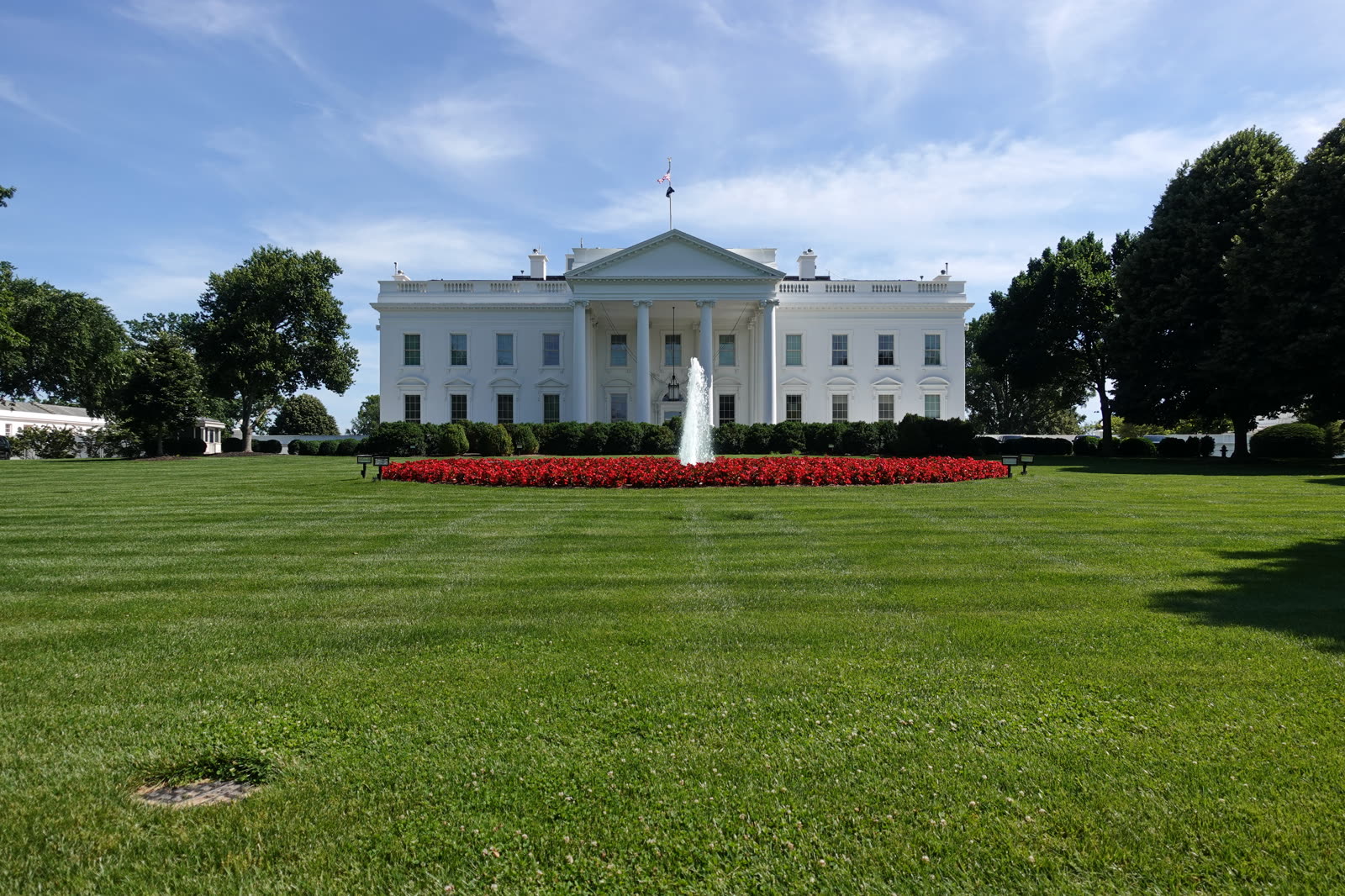
Image context: the cover image shows the White House because this is a presidential procurement-policy file first. The story sits in federal contract architecture, not in one company's HR memo or one court filing.[6]
Fast facts
- Order date: President Donald Trump signed the order on March 26, 2026.[1][2]
- Nearest deadline: the 30-day clause window points to April 25, 2026.[1][4]
- What the clause does: it bars racially discriminatory DEI activity, requires books-and-records access, and creates reporting duties that reach subcontractors.[1][3]
- What can happen if a contractor fails: contracts can be canceled, terminated, or suspended, and suspension or debarment can follow.[1]
- What comes next: OMB is directed to identify higher-risk sectors, while the FAR Council has 60 days to issue deviations and interim guidance, pushing the next major implementation checkpoint into late May.[1][2][3]
Why April 25 matters more than the headline
The March 26 order is not arriving in a vacuum. The administration's January 21 executive order, Ending Illegal Discrimination and Restoring Merit-Based Opportunity, already revoked the old Executive Order 11246 framework, told agencies to strip DEI references out of acquisition and grant procedures, and required contract or grant terms stating that compliance with federal anti-discrimination law is material to payment decisions. It also required counterparties to certify that they do not operate DEI programs that violate applicable law.[7] In other words, the January order established the broader anti-DEI enforcement direction. The March 26 order is what turns that direction into a more explicit procurement clause.[1][7]
That is why April 25 is the live clock. Once agencies begin inserting or flowing down the new language, the file stops being mainly rhetorical. It becomes a contract-management problem for primes, a subcontract-management problem for supply chains, and a documentation problem for anyone who has to prove what internal policies, training, vendor selection, and program criteria actually look like in practice.[1][3][4]
The procurement bar has read the order the same way. Foley's March 31 alert did not frame the development as a general workplace-culture debate; it framed it as a coming contract clause. Crowell & Moring likewise treated the order as a new restrictions file for contractors and subcontractors rather than as a symbolic press-cycle event.[4][5] That secondary-source emphasis is useful because it shows where experienced readers think the legal and commercial risk will surface first.
What is still unsettled
The order is concrete about the clause itself, but less concrete about how implementation will vary across agencies and sectors. OMB is supposed to identify economic sectors that pose particular risk and issue additional guidance to contracting agencies, while the FAR Council is supposed to produce deviations and interim guidance before formal FAR amendments are complete.[1][2][3] That means the present record tells contractors what direction Washington wants, but not yet every operational detail of how each agency will carry it out.
There is also a sequencing issue. The order's strongest enforcement tools are already visible: books-and-records access, payment materiality, and the possibility of cancellation, suspension, debarment, and False Claims Act theories.[1][3] What is less visible, as of April 9, is how aggressively agencies will define risk in specific sectors and how much variation there will be between one contracting shop and another. The fact sheet promises sector-focused compliance work, but the heavy administrative lifting still sits in the guidance layer that follows the order.[2]
That leaves the current decision impact fairly specific.
What changes in the next 24h / 7d / 30d
- Next 24 hours: federal contractors have reason to map which prime contracts, subcontracts, and proposal pipelines are most likely to pick up new clause language first.[1][4]
- Next 7 days: the main signal to watch is not another political statement. It is any agency memo, class deviation, or implementation notice that shows how the clause will be inserted and audited.[1][3]
- Next 30 days: if agencies meet the 30-day clock, the story shifts from presidential intent to enforceable contract administration. If guidance lags, the lag itself becomes the news because the order has already defined the compliance architecture it wants.[1][2][3]
The narrow takeaway is stronger than the broad slogan. This is now a procurement-clock story. The March 26 order matters because it is trying to move anti-DEI policy from abstract enforcement posture into the text of federal contracts and subcontracts. As of April 9, the most important date is not some distant litigation endgame. It is April 25.
Sources
- The White House, "Addressing DEI Discrimination by Federal Contractors" executive order (March 26, 2026).
- The White House, "Fact Sheet: President Donald J. Trump Addresses DEI Discrimination by Federal Contractors" (March 26, 2026).
- U.S. Small Business Administration, Office of Advocacy, "Addressing DEI Discrimination by Federal Contractors" (March 27, 2026).
- Foley & Lardner LLP, "Coming Soon to Procurement Contracts – A Contract Clause Prohibiting Certain DEI Activities" (March 31, 2026).
- Crowell & Moring LLP, "Déjà Vu? New Executive Order Outlines Restrictions on Contractor and Subcontractor DEI Activity" (March 30, 2026).
- Wikimedia Commons, "File: America White House North side 20240601.jpg" (cover image source).
- The White House, "Ending Illegal Discrimination And Restoring Merit-Based Opportunity" executive order (January 21, 2025).