As of 2026-04-16T10:06:24Z (UTC), xAI's April 9 lawsuit against Colorado is easiest to misread as a culture-war complaint about Grok. The more useful reading is institutional. This is the clearest live test of whether a state can put a real high-risk-AI compliance regime into effect before Washington produces a durable federal standard.[1][2][4][5][6]
The calendar is what makes the case urgent. Colorado's 2024 law, SB24-205, created developer and deployer duties around "high-risk artificial intelligence systems" used in consequential decisions such as employment, housing, education, financial services, health care, and legal services.[1][3] A 2025 special-session bill, SB25B-004, delayed the effective date to June 30, 2026, but it did not rewrite the core structure.[2] xAI has now asked a federal court to block enforcement before that date arrives.[4] So the immediate question is not abstract. It is whether Colorado's first-in-the-country AI statute reaches live enforcement at all.
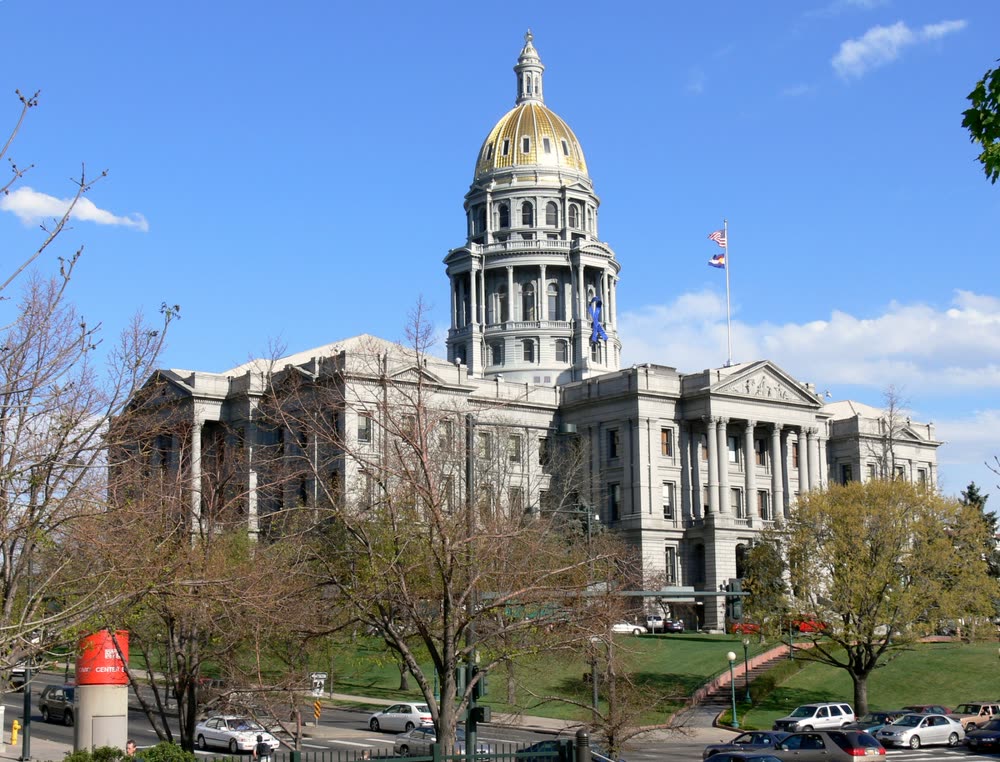
Image context: the cover photo shows the Colorado State Capitol in Denver. It fits this story because the conflict is not about a laboratory demo or a conference keynote. It is about how a state legislature, a state attorney general, and a federal court are now colliding over who gets to write the first usable AI rulebook.[8]
What Colorado actually tried to build
Colorado's law is narrower than the phrase "AI regulation" makes it sound, but it is broader than a disclosure-only regime. The statute does not attempt to regulate every chatbot or every model release. It focuses on high-risk systems used to make or substantially influence consequential decisions and then imposes duties that look like operational governance: reasonable care to protect consumers from algorithmic discrimination, risk-management policies, impact assessments, disclosure duties, and reporting obligations when algorithmic discrimination is discovered.[1][3]
That structure matters because Colorado was not only trying to label a problem. It was trying to operationalize one. The Attorney General's rulemaking page frames the file around developer and deployer obligations, consumer notices, and the agency's role in implementation.[3] In other words, Colorado moved past principles and into a compliance architecture.
That is precisely why the lawsuit matters. If the law had stayed at the level of aspiration, it would have been politically visible but legally less consequential. Once a state starts assigning duties, records, notices, and enforcement authority, the fight becomes about whether those obligations can be made to stick in interstate AI markets.
What xAI is actually asking the court to do
xAI is not asking for a narrow clarification. The complaint seeks declaratory and injunctive relief against Colorado Attorney General Phil Weiser and argues that SB24-205 is unconstitutional on multiple grounds.[4] The filing says the law compels speech in violation of the First Amendment, reaches conduct outside Colorado in violation of the Dormant Commerce Clause, is unconstitutionally vague, and denies equal protection.[4]
The complaint also makes clear why Colorado became the target. xAI says the law applies whenever a Colorado resident is affected, even if the model is developed, deployed, or used elsewhere, and it argues that this gives one state practical leverage over nationwide model design.[4] That is the doctrinal version of the "patchwork" complaint that large AI firms and the White House have been advancing in policy language for months.
The national backdrop sharpens that point. In December 2025, President Trump signed an executive order calling excessive state AI regulation a barrier to U.S. AI leadership, naming Colorado's law as an example and directing the creation of an AI Litigation Task Force to challenge onerous state laws.[5] Then in March 2026, the White House released a proposed national policy framework that would broadly preempt conflicting state AI laws while preserving only a narrower set of state roles.[6] xAI's complaint therefore lands in a federal atmosphere that is already primed for exactly this confrontation.
Inference from those sources: Colorado is not just defending one state statute. It is standing at the front edge of the unresolved boundary between state consumer-protection authority and a federal desire for one lighter-touch national framework.[1][3][5][6]
Why Colorado still has a serious argument
The "patchwork" line is politically strong, but it is not the whole file. Colorado and other states keep returning to a different fact pattern: Congress still has not delivered a comprehensive AI law, while AI systems are already being used in employment, housing, education, and lending decisions. In that vacuum, states argue that waiting for Washington means waiting without meaningful consumer protection.[1][3][7]
Weiser made that case directly in May 2025 when he co-led a bipartisan attorneys general letter opposing a federal moratorium on state AI enforcement. His public statement said Congress had failed to lead on AI and that states were being asked to respond to immediate risks instead.[7] That does not answer xAI's constitutional arguments by itself. But it explains why Colorado wrote a law with actual duties instead of issuing another voluntary framework.
There is also a narrower legal and policy question beneath the larger constitutional rhetoric. Colorado's statute is aimed at consequential-decision systems, not at every generative-model interaction.[1][3] That scope gives the state an argument that it is regulating harmful decision processes in protected domains rather than trying to dictate the worldview of every general-purpose model. xAI's complaint disputes that framing and says the law still burdens model development broadly.[4] But that disagreement is exactly the point of the case: whether Colorado's chosen category lines are narrow enough to survive, or broad enough to look like interstate model governance by another name.
What the next decision points really are
Three near-term gates matter more than the headline noise.
First, watch whether xAI quickly seeks preliminary injunctive relief beyond the complaint itself. The complaint is on file, and the closer the calendar gets to June 30, the more important interim relief becomes.[2][4]
Second, watch whether Colorado tries to defend the law mainly as a classic consumer-protection statute or instead leans more heavily on the absence of federal legislation. The former argument is legally narrower and likely stronger. The latter may be politically compelling, but it also invites the federal-preemption debate that the White House wants.[5][6][7]
Third, watch whether this case changes other states' legislative behavior even before any ruling. A successful early challenge would make future state AI bills narrower, more sector-specific, or more disclosure-heavy. A failed challenge would tell states that at least some real compliance architecture can survive long enough to reach enforcement.
Bottom line
xAI's Colorado lawsuit matters because it is not really about one chatbot's personality. It is about whether a state can move from AI principles to AI obligations before Congress acts. Colorado built a high-risk, consequential-decision regime and pushed it toward enforcement.[1][2][3] xAI is trying to stop that move by framing the law as compelled speech, extraterritorial regulation, and unconstitutional vagueness.[4] The White House has already signaled sympathy for that broader anti-patchwork theory.[5][6]
So the live issue, as of April 16, is not whether someone can win a headline about Grok. It is whether Colorado gets to prove that a state-level AI rulebook can exist in court long enough to become real.[1][2][4][7]
Sources
- Colorado General Assembly, "SB24-205: Consumer Protections for Artificial Intelligence."
- Colorado General Assembly, "SB25B-004: Increase Transparency for Algorithmic Systems."
- Colorado Attorney General, "AI and Algorithmic Discrimination."
- xAI v. Weiser, Complaint for Declaratory and Injunctive Relief, U.S. District Court for the District of Colorado, Case No. 1:26-cv-01515 (filed Apr. 9, 2026).
- The White House, "Ensuring a National Policy Framework for Artificial Intelligence" (Executive Order, Dec. 11, 2025).
- The White House, "President Donald J. Trump Unveils National AI Legislative Framework" (Mar. 20, 2026).
- Colorado Attorney General, "Attorney General Weiser co-leads 40 bipartisan AGs urging Congress not to prohibit states from enforcing artificial intelligence regulations" (May 16, 2025).
- Wikimedia Commons, "File:Capitol Building Denver CO USA 3822.JPG" (cover image source).