As of 2026-04-15 07:06 UTC, the live Public Service Loan Forgiveness story is not that millions of borrowers are losing forgiveness this week. The active clock is July 1, 2026. That is when the Education Department's final rule on employers with a "substantial illegal purpose" is scheduled to take effect, after a March 7, 2025 White House order, an October 30, 2025 final-rule announcement, and a new April 14, 2026 Congressional Review Act push from Senate and House Democrats who want the rule overturned.[1][2][5][6]
What makes the file worth watching now is the gap between political rhetoric and operational timing. The rule gives the department new authority to disqualify employers, but it does not itself zero out a borrower's already-earned PSLF credit overnight. The department's own Federal Student Aid notice says borrowers receive full credit for work performed until the effective date of the Secretary's determination that an employer no longer qualifies, and it lays out a path for employers to regain eligibility later.[4] In other words, the immediate risk is not a same-day cancellation sweep. It is a coming eligibility regime, paired with litigation and congressional efforts that could still slow or block it before July.[4][5][6][7]
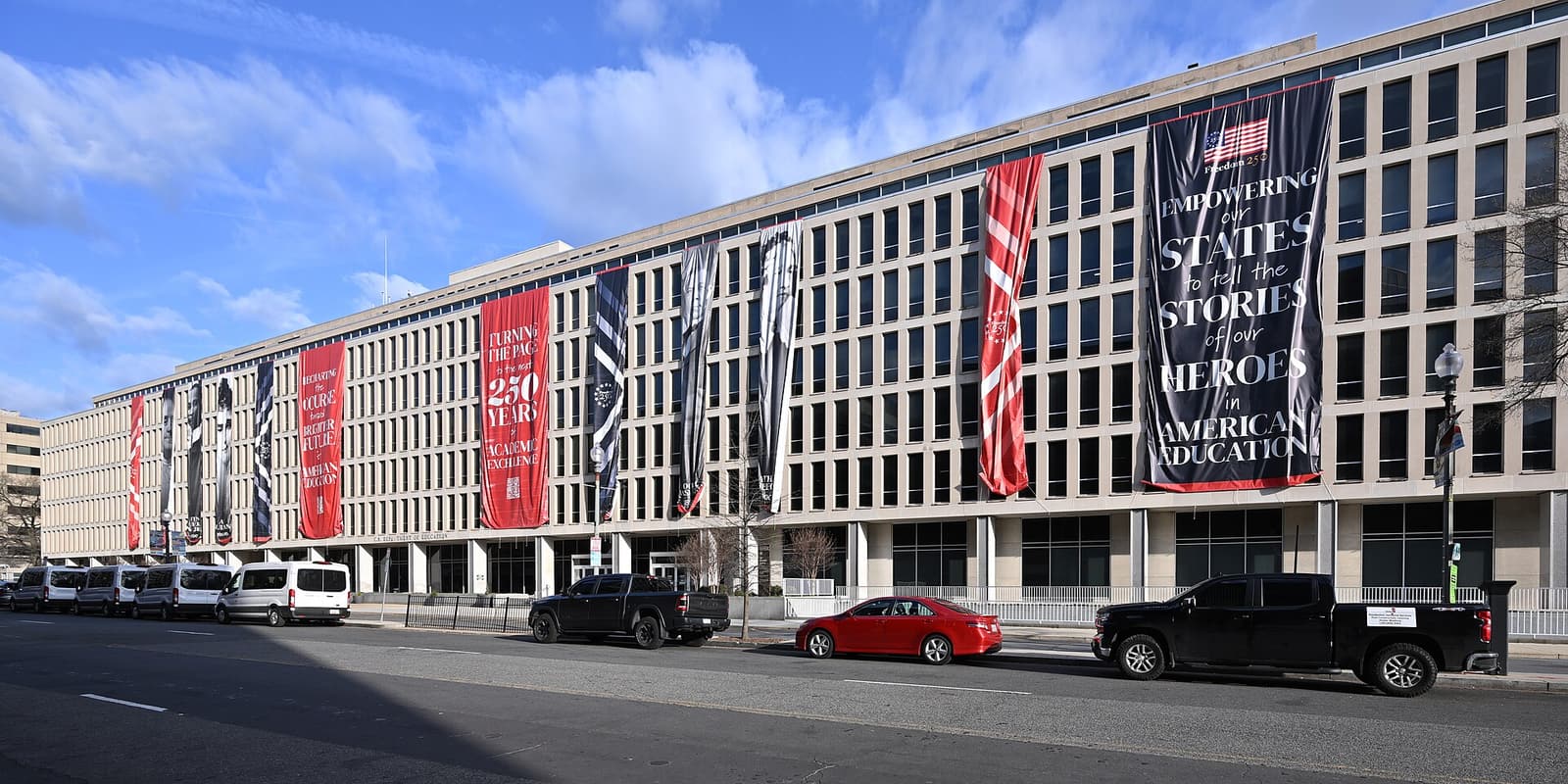
Image context: the cover photo shows the Lyndon Baines Johnson Department of Education Building because this is a rulemaking and enforcement story, not a campus-life or graduation-season story. The live issue sits inside the Department's authority to define, review, and potentially disqualify qualifying employers under PSLF.[2][4][8]
Fast facts
- Origin point: President Donald Trump signed Executive Order 14235 on March 7, 2025, directing Education to revise PSLF so that organizations with a substantial illegal purpose would not count.[1]
- Current legal instrument: Education announced the final rule on October 30, 2025 and said it would take effect on July 1, 2026 under the Higher Education Act master calendar.[2][3]
- Process detail that matters most: Federal Student Aid says borrowers keep full qualifying-employment credit until the effective date of a Secretary's determination against a specific employer, and employers can later regain eligibility.[4]
- Current congressional brake: Senators led by Tim Kaine introduced a CRA resolution on April 14, 2026; his office says that after 30 signatures the resolution can be called up for a Senate vote and would need a simple majority to pass that chamber.[5]
- Current judicial brake: AP reported that multistate, city, nonprofit, and labor challenges were already filed against the rule, arguing that Education exceeded its authority and created an ideologically targeted standard.[7]
What actually changed
The administration's policy case has been consistent since the White House order. The order told Education to revise PSLF so that workers at organizations engaged in conduct the administration considers unlawful would not remain eligible for forgiveness tied to public service.[1] Education's October 2025 announcement then turned that instruction into a final regulation, saying the amended definition of a qualifying employer would exclude organizations whose activities amount to a substantial illegal purpose.[2][3]
That changed two things at once. First, it shifted PSLF from a mostly employer-category question toward an employer-conduct question. Historically, the headline test most borrowers cared about was whether they worked for government or a qualifying nonprofit while making the required 120 qualifying payments. Under the new rule, that threshold remains central, but the department also reserves power to decide that an otherwise public-facing employer falls out of the program because of its activities.[2][3][4][6]
Second, the rule created a more explicit administrative process around employer determinations. The fact sheet and partner guidance say employers are to receive notice and an opportunity to respond, that borrowers get credit until a determination becomes effective, and that there is a route back into eligibility after disqualification.[3][4] That process language matters because it is the line between a rule that changes future accrual and a narrative that implies retroactive mass cancellation.
Why this is a July clock, not an overnight cutoff
The easiest way to misread the story is to treat the April 14 CRA filing as if it were a rescue mission against a same-week borrower purge. The dates do not support that reading. Congress is moving now because the rule is still headed toward July 1, 2026, and because once a rule is in force, workforce behavior can shift even before the first contested employer determination lands.[2][3][5][6]
That timing distinction matters for teachers, nonprofit-hospital staff, legal-aid lawyers, social workers, and public-sector employers. The direct administrative threat lies in future qualifying-payment credit if an employer is later found ineligible. The indirect threat begins sooner: hiring friction, employee churn, more cautious career choices, and legal costs for organizations that think they may end up defending their status.[4][5][7]
This is why the strongest current read is procedural rather than theatrical. Democrats are trying to use the CRA to stop the rule before it governs July employment decisions.[5][6] Lawsuits are trying to keep courts between the department and the first high-profile disqualifications.[7] Borrowers, meanwhile, are stuck in a narrow band of uncertainty: the rule is real, the effective date is fixed on paper, but the most consequential determinations have not yet started.
What each side is fighting over
Supporters of the rule frame it as a taxpayer-integrity measure. The White House order and Education's final-rule materials argue that PSLF should support genuine public service, not organizations that engage in conduct the administration says breaks the law.[1][2][3] AP also reported the department's defense that the rule would be enforced neutrally and should stop federal benefits from subsidizing criminal conduct.[6]
Opponents are attacking the same file from two angles. The congressional attack is that the standard is too subjective and opens the program to ideological screening of public-service work.[5][6] The litigation attack is narrower and more operational: states, cities, nonprofits, and labor groups argue that Education overstepped the statute and created a vague employer test that can destabilize workforces long before a borrower misses the chance to count a payment.[7]
The live policy question, then, is not whether the parties disagree. It is where the decisive bottleneck sits. Right now the bottleneck is timing and process: whether Congress can move fast enough, whether courts grant meaningful relief, and whether the department issues practical guidance that narrows or broadens the first wave of employer reviews.[4][5][7]
Decision impact by horizon
Next 24 hours
Borrowers who rely on PSLF should read the file as a documentation problem first. They need clean records of employer certification, payment history, and job status because the rule's most important operational boundary is the date on which any employer determination becomes effective.[4] Employers that believe they could be targeted need counsel, board attention, and a clear internal owner for PSLF-related employee communication.[4][5][7]
Next 7 days
The most important watchpoints are procedural. Does the CRA resolution gather the signatures it needs to force floor action in the Senate, and does any court signal a willingness to pause enforcement before July?[5][7] A second watch item is interpretive guidance from Education or Federal Student Aid. The narrower and more rule-bound the department's employer-review process becomes, the more limited the immediate workforce shock could be.[2][3][4]
Next 30 days
By mid-May, the story will become less about headlines and more about implementation posture. If the rule remains on track, public employers and nonprofits will start making hiring and retention decisions under a July deadline, even without a final court answer.[2][4][7] That is the real cost center: not just lost forgiveness in an eventual disputed case, but a broader confidence hit to jobs that were supposed to trade lower pay for a credible ten-year debt-relief promise.[5][6][7]
Scenario map
- Base case: the rule is still scheduled for July 1, no same-week borrower purge occurs, and the first real fights shift to specific employer determinations plus court requests for interim relief.[2][3][4][7]
- Upside case: the CRA gains traction or a court issues a meaningful injunction, freezing the rule before July and reducing immediate workforce uncertainty for affected employers and borrowers.[5][6][7]
- Downside case: the rule takes effect on schedule, employer reviews begin quickly, and even before any large disqualifications are finalized the chilling effect spreads across hiring, retention, and borrower career planning in contested sectors.[2][4][7]
Action checklist
- Borrowers: confirm current PSLF paperwork is current and saved locally, especially employment certification tied to the employer on record.[4]
- Employers: prepare a response plan for employee questions, outside counsel review, and any notice process if the department challenges eligibility.[3][4][7]
- Unions and professional groups: track the CRA whip count and court calendar rather than reacting only to broad political statements.[5][6][7]
- Readers watching the policy file: separate two different claims: whether the rule is lawful, and how quickly it can change real borrower behavior before July.[2][4][5][7]
Invalidation conditions
This analysis would weaken quickly if one of three things happens. First, Congress could move faster than expected and actually put a repeal measure through both chambers, which would change the July baseline.[5] Second, a court could block the rule before the effective date, shifting the story from implementation risk to appellate risk.[7] Third, Education could publish guidance that sharply narrows the employer-review lane and lowers the near-term workforce effect implied by the current political fight.[2][3][4]
The practical bottom line is narrower than the rhetoric on either side. As of April 15, the PSLF fight is best read as a July employer-eligibility clock. The live question is when and how the department can cut off future qualifying-credit accrual for workers at employers it disqualifies, and whether Congress or the courts can stop that machinery before it begins to shape career decisions in public service.[2][4][5][6][7]
Sources
- The White House, "Restoring Public Service Loan Forgiveness" (Executive Order 14235, March 7, 2025).
- U.S. Department of Education, "U.S. Department of Education Announces Final Rule on Public Service Loan Forgiveness to Protect American Taxpayers" (October 30, 2025).
- U.S. Department of Education, "Fact Sheet: Restoring Public Service Loan Forgiveness to Its Statutory Purpose" (October 30, 2025 PDF).
- Federal Student Aid Knowledge Center, "William D. Ford Federal Direct Loan (Direct Loan) Program" (February 10, 2026; PSLF employer-determination implementation summary).
- Office of U.S. Senator Tim Kaine, "Kaine & Courtney Lead Bicameral Resolution to Repeal Trump Administration Rule to Politicize Public Service Loan Forgiveness Program" (April 14, 2026).
- Associated Press, "Democrats seek to overturn Trump's new rules for student loan forgiveness" (April 14, 2026).
- Associated Press, "States and cities challenge Trump policy overhauling public service loan forgiveness" (November 3, 2025).
- Wikimedia Commons, "File: Deptment of Education Semiquincentennial banners 2026-03-15 08-00-08.jpg" (cover image source).