As of 2026-05-30T07:32:15Z (UTC), NASA's Johnson Space Center infrastructure award has moved from procurement schedule to execution problem. On May 29, 2026, NASA said it had selected seven companies for the Johnson Space Center Multiple Award Construction Contract, a vehicle supporting up to $300 million in construction, revitalization, and infrastructure improvements across the Houston campus.[1]
The important detail is the clock. NASA says all funds under the award must be obligated by September 30, 2026.[1] That turns the announcement into a short-cycle test of whether Johnson can convert an indefinite-delivery, indefinite-quantity contract into competed task orders quickly enough to matter for mission-support facilities, utilities, and equipment before the fiscal year closes.[1][2]
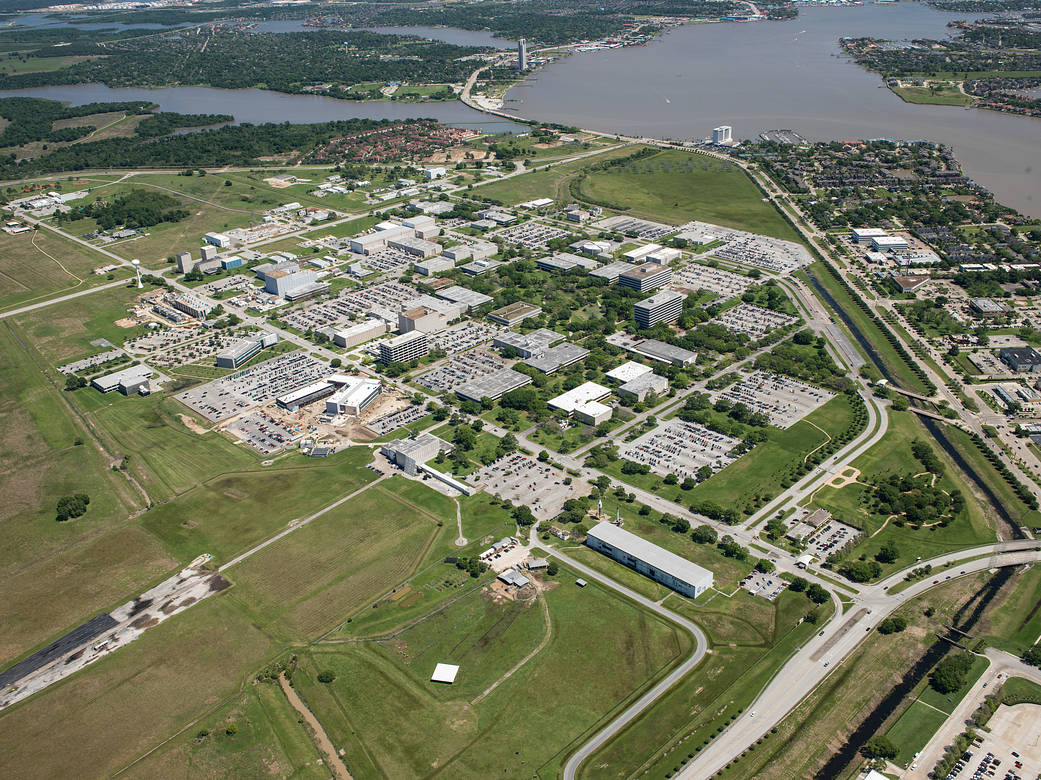
Image context: the cover photograph is a real NASA aerial image of Johnson Space Center facilities, not a render, diagram, or generic construction graphic.[7] The wide view is the point. This story is about the hidden ground layer beneath human spaceflight: buildings, power, water, simulation spaces, mockups, maintenance capacity, and contracting cadence.
Fact file
| Item | What is known | Confidence note |
|---|---|---|
| Immediate event | NASA selected Coho Construction Management, Conti Federal Services, Healtheon, HITT Contracting, Ross Group Construction Corporation, Energy EPC Solutions doing business as S&B Services, and Sauer Construction for the Johnson Space Center construction award.[1] | High; direct NASA contract release. |
| Contract ceiling | The award supports up to $300 million in upgrades to mission-support facilities, utilities, and equipment across Johnson Space Center.[1] | High; direct NASA release. |
| Obligation deadline | NASA says all funds must be obligated by September 30, 2026.[1] | High; this is the core near-term constraint. |
| Procurement track | NASA's JMACC procurement page lists the planned and actual contract award/start date as May 29, 2026, after the final RFP, pre-proposal conference, amendments, and Q&A period earlier in 2026.[2] | High for schedule markers; task-order outcomes remain unknown. |
| Why Johnson matters | Johnson is home to Mission Control and astronaut training, leads ISS operations, Orion development, Gateway work, and other human exploration projects.[3] | High; standing NASA center description. |
| Local footprint | NASA's Texas economic-impact sheet reports 39,154 NASA-supported jobs statewide, $9.8 billion in economic output, and $2.3 billion in FY23 state procurement investment.[6] | High for NASA's own economic-impact framing; not a forecast of this award's local distribution. |
What changed
The award does not mean $300 million of construction has already happened. It means NASA now has a roster of firms and a contracting structure through which specific projects can be competed. The release describes an indefinite-delivery, indefinite-quantity vehicle: task orders will be competed among awardees for fair opportunity and best value.[1] That is useful because Johnson's facilities problem is not one monolithic project. Campus work tends to arrive as a stream of roof, electrical, utility, lab, training, access, safety, and support-space needs.
The procurement page shows why the timing matters. NASA ran reverse industry-day one-on-ones in late August and early September 2025, posted the final request for proposals on February 27, 2026, held a pre-proposal conference and site visit on March 9, issued amendments in April, and carried a planned May 29 award/start date that now matches the release.[2] In other words, this was not a surprise check being handed to a campus. It was a procurement lane built for rapid follow-on ordering.
That ordering lane is the real news. If Johnson can issue and obligate work quickly, the award becomes a practical way to catch up on physical bottlenecks that do not make mission posters: aging utilities, mission-support rooms, shop spaces, building systems, and equipment interfaces. If the task-order pipeline moves slowly, the nominal ceiling matters less than the amount actually obligated before the deadline.
Why this is not just facilities news
Johnson's infrastructure is mission infrastructure. NASA's center profile describes JSC as the home of Mission Control and astronaut training, and says it currently leads International Space Station operations and missions, development of the Orion spacecraft, the Gateway outpost program, and other human exploration projects.[3] That makes campus reliability part of flight readiness. A simulator, mockup bay, control room, or utility backbone is not glamorous, but it can determine whether training and engineering work happen on schedule.
The center reference page makes that connection concrete. The Christopher C. Kraft Mission Control Center is the primary facility where flight controllers command and control human spacecraft missions.[4] The Space Vehicle Mockup Facility provides spatially accurate vehicle mockups for engineering development, crew training, mission support, troubleshooting, fit checks, and procedures verification.[4] Those descriptions are not ceremonial. They show why a construction vehicle aimed at facilities, utilities, and equipment can affect mission tempo without touching a rocket factory.
Artemis training gives the current example. NASA's January 2026 Artemis II training account says the crew rehearsed mission phases inside Johnson's Orion Mission Simulator, used training to handle routine operations and emergency response, and worked through splashdown and recovery operations at the Neutral Buoyancy Laboratory.[5] The article is about astronauts, but the operational dependency is buildings and systems. Training continuity depends on functioning pools, mockups, simulators, crew interfaces, communications rooms, safety systems, and support equipment.
Decision impact
In the next 24 hours, the practical question is not whether the contract exists. It does. The question is whether NASA or the awardees begin signaling the first task-order priorities: safety-critical repairs, utility work, training-facility readiness, office/lab modernization, or deferred maintenance that blocks mission support.[1][2]
Over the next 7 days, the signal to watch is administrative speed. A multiple-award contract only helps if competed work packages are ready. If Johnson already has scoped projects, environmental and safety reviews, facility-access planning, and budget lines prepared, the award can move from announcement to work orders quickly. If those pieces are still being assembled, the September 30 obligation deadline becomes more constraining.
Over the next 30 days, watch whether the story stays at vendor-list level or becomes a project list. A credible rollout would name categories of work, rough sequencing, and which facilities or utility systems matter most for mission readiness. A weaker rollout would repeat the ceiling number without showing how much of the contract is being converted into executable campus improvements.
For Houston, the local economic story is real but should not be overstated. NASA's Texas sheet reports a large statewide footprint, including tens of thousands of NASA-supported jobs and billions in output.[6] This award may feed local construction and engineering activity, but its larger public value is not simply spending in Texas. It is whether Johnson's physical plant becomes less of a hidden constraint on human-spaceflight operations.
Scenarios
Base case: NASA uses the contract as intended: a flexible task-order channel for facilities, utilities, and equipment work. The award does not transform Johnson in one move, but it clears enough procurement friction to get priority upgrades obligated before the fiscal-year close.[1][2]
Upside case: Johnson already has a mature backlog, and the seven-awardee structure produces fast competition. In that case, the award becomes a useful infrastructure accelerator for training and mission-support spaces tied to Artemis, Orion, ISS operations, and future exploration work.[3][4][5]
Downside case: the ceiling number creates a false sense of progress while task-order definition, reviews, sequencing, or capacity constraints slow obligation. The risk is not that the contract is meaningless; it is that the operational bottleneck moves from vendor selection to project execution.
Action checklist
For NASA watchers, separate award ceiling from obligated work. The $300 million figure is a maximum support level, not proof that all work is scoped, awarded, and underway.[1]
For congressional and local stakeholders, ask for project categories rather than ribbon-cutting language. Which facilities, utility systems, and mission-support functions are first in line? Which ones are tied directly to astronaut training, Mission Control, Orion, or safety?
For aerospace suppliers and campus-adjacent contractors, track task-order competition rather than the initial press release. The procurement page indicates responses and acquisition documents ran through SAM.gov, and the post-award phase will matter more than the headline vendor list.[2]
For readers, use one falsifier: if NASA can show named task orders, obligation progress, and mission-support rationale by late summer, the award is behaving like an execution tool. If the public record remains mostly a ceiling number and a deadline, the infrastructure story is still unresolved.
Sources
- NASA, "NASA Awards Contract for Johnson Space Center Infrastructure" (May 29, 2026).
- NASA Johnson Space Center Office of Procurement, "Johnson Space Center Multiple Award Construction Contract (JMACC)" (procurement milestones and JMACC links).
- NASA, "About Johnson Space Center: The Hub of Human Spaceflight" (center role, history, and mission responsibilities).
- NASA, "Johnson Space Center" reference page (Mission Control Center, Space Vehicle Mockup Facility, Orion training and evaluation facilities).
- NASA, "Preparing for Artemis II: Training for a Mission Around the Moon" (Jan. 30, 2026; Johnson training facilities and mission rehearsal context).
- NASA, "State Economic Impact: Texas" PDF (NASA Center: Johnson Space Center - Houston, TX; jobs, output, procurement, and center priorities).
- NASA, "Aerial photograph of Johnson Space Center" (jsc2017e039526; March 31, 2017 photographic image page).