As of 2026-07-06 06:34 UTC, the new Medicare 340B fight is not only a White House savings headline. It is a payment-design and evidence fight with a live deadline: CMS says comments on the CY 2027 Hospital Outpatient Prospective Payment System proposal are due August 31.[2]
The proposed move is blunt. CMS wants to pay most 340B-acquired outpatient drugs at average sales price minus 33.4% instead of the ordinary ASP-plus-6% lane, saying its acquisition-cost survey shows that 340B hospitals buy those drugs far below ASP.[3] AP reported that the administration says the change could save Medicare patients about $1.1 billion next year, while the average affected Part B beneficiary could save about $800 in co-payments.[1]
That is the patient-facing case. The hospital-facing case is the opposite: the American Hospital Association says the proposal would cut resources from hospitals that care for rural, underserved, disabled, and medically complex patients, while also accelerating recovery of earlier 340B remedy payments.[4] The useful way to read the next eight weeks is therefore not "drug savings versus hospital lobbying." It is a narrower question: can CMS prove that lower beneficiary cost sharing and taxpayer savings outweigh the access risk hospitals claim, and can it do so on a legal record that learned from the Supreme Court's 2022 warning?
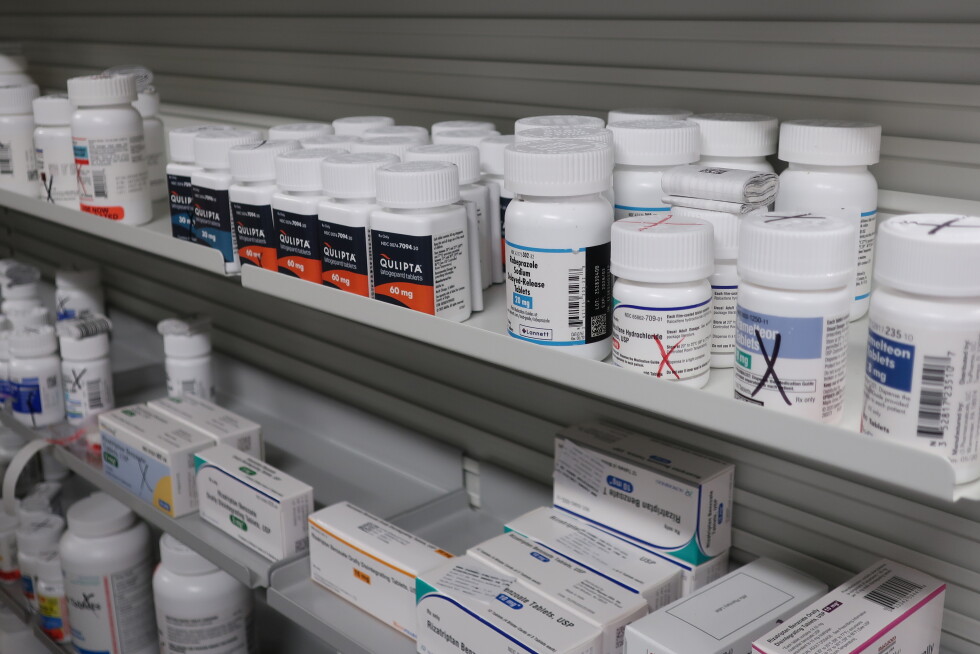
Image context: the cover uses AP's real pharmacy photograph from the same Medicare drug-pricing story. It is not a chart, logo, generated image, or symbolic healthcare graphic.[1]
Fact File
| Timestamp / source | Key signal | Confidence note |
|---|---|---|
| AP, July 2, 2026 | The administration proposed a rule aimed at stopping Medicare markups on discounted 340B drugs, with estimated beneficiary savings of about $1.1 billion next year and possible 10-year savings near $20 billion.[1] | High for the proposal and administration estimates; final savings depend on the final rule and utilization. |
| CMS OPPS page, accessed July 6 | CMS says the CY 2027 OPPS/ASC proposed rule is open for comments through August 31.[2] | High for the comment deadline. |
| CMS fact sheet, July 2 | CMS proposes paying 340B drugs at ASP minus 33.4%, estimating $4.55 billion less in Original Medicare drug payments and $1.15 billion less in beneficiary drug payments in the first year.[3] | High for CMS's stated policy design; survey methodology will be contested. |
| AHA, July 2 | AHA says the cut would reduce 340B drug payments by nearly 40%, shift dollars through budget neutrality, and undermine services in rural and underserved communities.[4] | High for hospital-industry position; access effects are claims to test in comments and litigation. |
| 340B Prime Vendor Program overview | The HRSA-contracted 340B Prime Vendor Program describes 340B as a program that lets eligible covered entities buy outpatient drugs at significantly reduced prices to stretch scarce federal resources.[5] | High for program purpose and eligibility baseline. |
| Supreme Court, June 15, 2022 | The Court held that, absent a survey of hospitals' acquisition costs, HHS could not vary outpatient-drug reimbursement rates only for 340B hospitals.[6] | High for legal baseline; the current proposal is designed around a new survey record. |
What Changed
The old 340B cut failed on process as much as policy. In 2018 and 2019, HHS reduced payment for 340B hospitals without first conducting the acquisition-cost survey the statute made important. The Supreme Court held unanimously in 2022 that HHS could not vary rates by hospital group on that record.[6]
CMS is now trying to close that hole. Its July fact sheet says the new ASP-minus-33.4% proposal takes account of a hospital acquisition-cost survey and is meant to align Medicare payment more closely with what hospitals actually pay for 340B drugs.[3] That is the legal and administrative pivot. The live dispute will not be whether the Supreme Court case existed. It will be whether the new survey, exemptions, modifiers, budget-neutral offsets, and comment record are strong enough to support a similar policy through a different route.
The budget-neutrality point is where the story gets less intuitive. CMS says the lower 340B drug payment would reduce drug spending, but statute requires budget neutrality, so the proposal would increase OPPS payments for non-drug services by an equivalent amount.[3] AHA says CMS would also accelerate recoupment tied to prior 340B remedy payments and lift the annual offset from 0.5% to 3%, aiming to finish by CY 2029 rather than CY 2041.[4]
In plain English, this is not a simple federal spending cut that only removes money from the system. It is a redistribution inside Medicare outpatient payment: lower drug reimbursement for affected 340B drugs, lower beneficiary coinsurance on those drugs, less program drug spending, and higher non-drug OPPS payments spread through the budget-neutral mechanism.[3][4]
Decision Impact
Next 24 hours: 340B hospitals should identify the drugs, service lines, and patient categories that would be most exposed. The article-level debate will sound national, but the comments that matter will be local and operational: oncology infusion, rheumatology, ophthalmology, rural outpatient clinics, uncompensated care support, and whether lower Part B coinsurance changes adherence or appointment completion.
Next 7 days: patient advocates should separate two questions that are too easy to blur. One question is whether a Medicare beneficiary receiving a 340B drug would owe less at the visit. CMS's answer is yes, with $1.15 billion in estimated first-year beneficiary drug-payment reductions.[3] The second question is whether the hospital used the 340B margin to support services that the same patient, or a poorer neighbor, depends on. AHA's answer is also yes, but that claim needs facility-level evidence rather than broad program rhetoric.[4][5]
Through August 31: the comment record becomes the battlefield. Hospitals need to show specific access risks, not just lost revenue. CMS needs to show that the acquisition-cost survey is representative enough and that exemptions or modifiers keep the policy administrable. Drugmakers and taxpayer advocates will likely push the other way, arguing that Medicare and patients should not pay prices untethered from 340B acquisition costs.
For the White House, the political appeal is obvious: a policy that can be described as lower drug costs for seniors without waiting for Congress.[1] For CMS, the implementation problem is harder. ASP-minus-33.4% must translate into claims systems, billing modifiers, provider education, exempt-hospital rules, payment files, and a final rule that can survive the next lawsuit.[3][4][6]
Scenarios
Base case: CMS finalizes a version of the ASP-minus-33.4% policy for January 1, 2027, with some technical adjustments after comments. Beneficiaries using affected drugs see lower cost sharing, hospitals lose 340B drug margin, and the fight shifts quickly to litigation over survey quality, statutory authority, and remedy mechanics.[2][3][6]
Hospital-side upside: comments produce narrower exemptions, a slower phase-in, or a softer recoupment schedule. CMS still claims beneficiary savings, but the final rule reduces the shock for hospitals able to document rural access, specialty-service fragility, or disproportionate uncompensated-care burdens.[4][5]
Administration upside: CMS persuades courts that the acquisition-cost survey solves the 2022 defect, and the final rule becomes a template for using survey data to tie Medicare payment closer to provider acquisition cost. In that branch, the policy is no longer just a 340B dispute; it becomes a broader Medicare pricing precedent.[3][6]
Downside case: the survey record or implementation design fails under legal review, or access evidence becomes strong enough that CMS must retreat. That would reopen the familiar 340B problem: Congress created a discount program to support safety-net providers, but Medicare payment rules can turn those discounts into either patient savings, hospital margin, taxpayer savings, or some contested mix of all three.[5][6]
Action Checklist
- For hospitals: quantify exposure by drug, department, payer mix, and service line. CMS will be harder to move with general 340B language than with examples showing which clinics, hours, or patient-support services depend on the current spread.[3][4]
- For patient groups: ask both cost-sharing and access questions. Lower coinsurance helps at the point of care, but service reductions can hurt access later.[3][4]
- For policymakers: watch whether CMS changes exemptions, phase-in timing, modifier requirements, or the recoupment schedule in the final rule.[2][4]
- For investors and suppliers: treat the rule as a hospital-margin and specialty-drug-channel risk, not only a Medicare affordability headline.
- For legal watchers: focus on the survey. The 2022 Supreme Court decision made acquisition-cost evidence the hinge; the new rule's durability likely turns on whether CMS built that hinge well enough.[6]
The falsifier is specific. If the comment record shows little credible evidence of access harm and CMS's survey record holds up under legal attack, the patient-savings interpretation strengthens. If hospitals produce detailed service-line evidence or courts find the survey insufficient, this becomes another case where a clean federal savings claim collides with the messy financing of safety-net care.
Sources
- Josh Boak, Associated Press, "Trump administration proposes a rule it says could save Medicare patients $1.1 billion on drugs" (July 2, 2026) - current-news report and AP pharmacy photograph used as the article image.
- Centers for Medicare & Medicaid Services, "Hospital Outpatient PPS" - CY 2027 OPPS/ASC proposed-rule page and August 31 comment deadline.
- Centers for Medicare & Medicaid Services, "Calendar Year 2027 Hospital Outpatient Prospective Payment System (OPPS) and Ambulatory Surgical Center (ASC) Proposed Rule (CMS-1850-P)" (July 2, 2026) - proposed ASP-minus-33.4% 340B payment policy and savings estimates.
- American Hospital Association, "CMS proposes increases to Medicare hospital outpatient department payment rates, site-neutral and 340B changes" (July 2, 2026) - hospital-industry response and stated access concerns.
- 340B Prime Vendor Program, "About 340B & PVP" - HRSA-administered 340B program overview, covered-entity purpose, and safety-net provider context.
- Supreme Court of the United States, American Hospital Association v. Becerra, 20-1114 (June 15, 2022) - ruling on acquisition-cost surveys and varying 340B reimbursement rates.