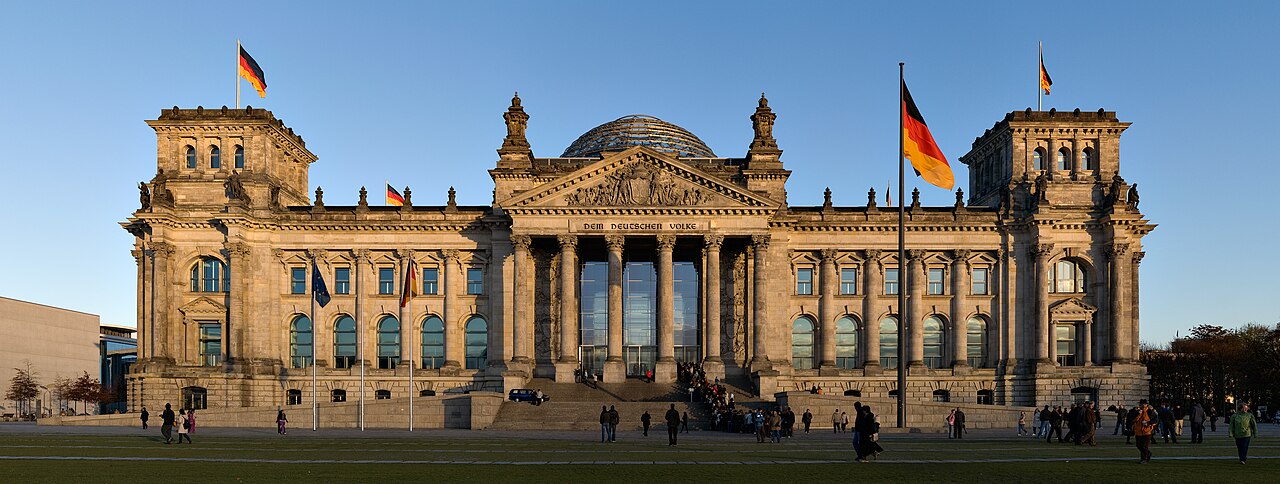
As of 2026-03-27T06:00:00Z (UTC), Germany's fiscal transformation is one year old. In March 2025, the outgoing Bundestag voted — with the supermajority required to amend the Basic Law — to exempt defense spending from the debt brake and to create a €500 billion off-budget infrastructure fund. It was the most significant revision to Germany's postwar fiscal constitution since the Schuldenbremse was enshrined in 2009. The passage moved fast: a coalition deal between an incoming chancellor who had campaigned on fiscal discipline and a Social Democratic Party that read the security environment as having shifted permanently under Europe's feet [1][2].
The year since has been a study in the distance between legislative velocity and procurement reality.
What passed and what it authorized
The March 2025 package had two structurally distinct components.
The first was a constitutional amendment to Article 115 of the Grundgesetz, exempting defense expenditure that exceeds 1 percent of GDP from the debt brake's net-borrowing limits. Germany's GDP runs near €4.4 trillion; 1 percent of that is roughly €44 billion, which sits below the existing defense budget of approximately €52 billion. The practical effect of the exemption is to authorize any incremental spending above that baseline through borrowing rather than through competing budget reallocation. The ceiling it unlocks — NATO's 2 percent target — requires a defense budget of approximately €88 billion, nearly double the 2022 baseline and still roughly €15 to €16 billion above the current authorized level [1][6].
The second component was the Sondervermögen: a €500 billion special off-budget fund for infrastructure, climate transition, and digitalization, structured to disburse over a decade-long horizon. Sondervermögen are not constitutional change — they are bounded borrowing vehicles Germany has used before for purpose-specific investment. This fund's disbursement conditions require climate-neutral eligible investments and link payouts to project milestones rather than open-ended transfers [4].
Together, commentators described the package as a "Zeitenwende-2" — a second structural turning point following Chancellor Scholz's February 2022 announcement that the Russian invasion had permanently changed Germany's defense calculus.
The procurement gap
The political logic in March 2025 was clear: the security environment had shifted, the fiscal tool existed, deploy it. The procurement environment proved less responsive.
Germany's defense industrial base operates on lead times measured in years, not budget quarters. The Bundeswehr's acquisition system — long criticized for fragmentation across procurement offices and multi-agency sign-off requirements — was not redesigned alongside the new fiscal authorization. Offices built to manage a constrained and static defense budget now face pressure to commit capital at scale, without the institutional throughput to match.
The most visible gap sits in armored ground forces. Rheinmetall, the Düsseldorf-based prime contractor and Germany's primary armored vehicle supplier, has expanded production lines, but new platform contracts carry multi-year delivery schedules [6]. A Leopard 2 production run ordered in mid-2025 delivers across 2026 and 2027; a new artillery system begins arriving in late 2026 at the earliest. The political clock and the manufacturing clock are not synchronized.
In the air domain, Germany's parallel commitments to F-35 deliveries and Eurofighter Typhoon upgrades involve a similar mismatch: airframes on order, training infrastructure still ramping, and maintenance pipelines requiring specialist contractors operating at capacity across NATO. Germany has also been absorbing inventory gaps created by Ukraine aid transfers, creating a replacement requirement that sits alongside the rearmament program rather than inside it.
As of early 2026, Germany's announced defense budget sits near €73 billion — a material increase from the pre-Zeitenwende baseline but still short of the 2 percent NATO threshold [1][6]. The debt-brake exemption legally authorizes covering the gap through borrowing. Whether the procurement system can absorb that capital productively is a different question, and the honest answer at the one-year mark is: not yet at the authorized pace.
The Sondervermögen infrastructure mandate
The €500 billion infrastructure fund encounters the same structural friction through a different mechanism.
The fund's conditions require spending on climate-neutral infrastructure: rail, grid, fiber, and flood protection rank among the highest-priority eligible categories. Deutsche Bahn's rail modernization program has submitted a large tranche of qualifying projects; offshore wind transmission grid expansion sits near the top of the queue [3][4]. But infrastructure projects of this scale pass through planning approval, environmental review, federal-state negotiation, and public tendering processes that extend across years even when capital availability is guaranteed.
The disbursement design anticipated this. Milestone-linked payouts were deliberately structured to prevent front-loading an economy that cannot absorb €500 billion in year one without driving inflation and construction bottlenecks. The Bundesbank's analysis has consistently noted that supply-side constraints — skilled labor shortages, materials lead times, and capacity limits in the German engineering sector — would throttle the spending multiplier faster than authorization pace [3].
What the fund has already shifted is the planning horizon. Projects stalled in multi-year funding uncertainty have reopened. Private developers who anchor business cases to adjacent public infrastructure have revised investment timelines. The sovereign signal — that Germany is committed to sustained capital deployment over a decade rather than another cycle of announcement and delay — has appeared in how long-lead contractors and state governments are now structuring their own commitments.
The fiscal arithmetic
Germany's general government debt-to-GDP ratio was near 63 percent when the Sondervermögen passed — within the Maastricht Treaty reference value and manageable relative to the euro area median. Both the Sondervermögen borrowing and the defense exemption will raise that ratio on a multi-year trajectory [5][4].
Bundesbank scenarios model public debt reaching 70 to 75 percent of GDP by the late 2020s under baseline spending assumptions — elevated against the past decade but within ranges that European fiscal surveillance frameworks can accommodate, particularly given Germany's strong domestic savings base and low external debt [3]. The sustainability question is less a solvency concern than a political one: whether the fiscal coalition that passed the debt brake exemption holds against critics who framed the original Schuldenbremse as a constitutional anchor rather than a cyclical tool.
The European dimension matters here. Germany's shift has structurally altered the political economy around the EU's reformed Stability and Growth Pact rules, which entered force in early 2025. Several member states had pointed to German fiscal conservatism as the implicit ceiling on how far the reformed framework could practically relax. Germany's own authorized borrowing removes that constraint from other governments' arguments — with consequences still working through EU-level fiscal governance discussions [5].
What the next year tests
The authorizations are in place. The capital is available. The question through 2026 is institutional: whether the German state's procurement, contracting, and project management capacity can absorb investment at anywhere near the pace the fiscal authorization permits.
For the defense exemption, the critical path runs through acquisition reform — streamlining procurement sign-off, expanding contracting office capacity, and deepening the domestic prime contractor base. Without those operational changes, the exemption authorizes capability growth that the system cannot yet translate into delivered hardware [6].
For the Sondervermögen, the first large disbursements will begin testing whether the milestone-linked structure avoids the bureaucratic friction that delayed previous German infrastructure programs. Deutsche Bahn's rail modernization is large enough to serve as a leading indicator: if it clears the planning and tendering sequence without the years-long delays that have marked prior German rail investment rounds, the fund's design is working.
The coalition signed Germany's fiscal transformation under urgency. Demonstrating output — measurable, visible, delivered — is now the precondition for its political sustainability.
Sources
- NATO, Defence Expenditure of NATO Countries (2014–2024), press release and data, June 2024.
- Deutscher Bundestag, Drucksache-Portal — legislation documents and plenary records.
- Deutsche Bundesbank, Monthly Report — fiscal and economic analysis including public debt trajectory assessments.
- Federal Ministry of Finance (Bundesministerium der Finanzen), fiscal policy and special fund documentation.
- IMF, Germany Country Page — Article IV consultation reports and general government debt data.
- SIPRI Military Expenditure Database — Germany and NATO member defense expenditure series.
- Wikimedia Commons — image source, Reichstag building Berlin view from west before sunset.