As of 2026-10-13 10:34 UTC. Two policy briefs highlighted by UNESCO on October 12 bring a practical question to the debate over women’s school leadership: what happens after a woman gets the job? The publications examine Benin and Madagascar, where access to headships remains uneven and the conditions of work matter for educational outcomes.[1]
The case for opening those posts is strong. The case for treating an appointment as a complete school-improvement policy is much weaker. Earlier research offers promising associations between women’s leadership and student achievement, alongside a warning: who leads a school cannot be separated easily from where it is, whom it serves and what support it receives.[2][3]
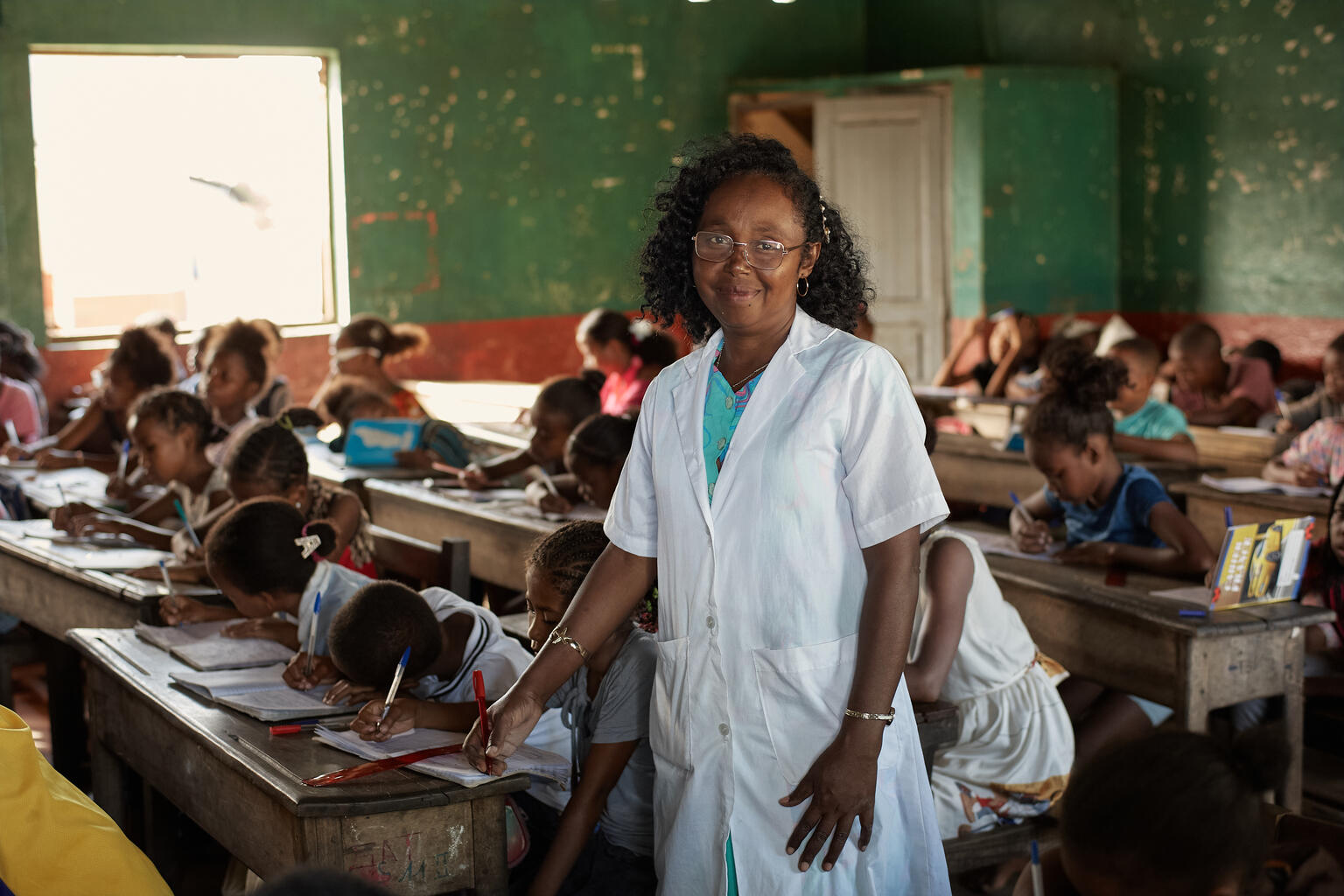
The vacancy is only one barrier
UNESCO’s account gives two different starting points. Women held 17 per cent of primary-school leadership positions in Benin in 2022. In Madagascar, the briefs report 35 per cent of public-primary headships and more than half of private-sector headships held by women. These are reported baselines, not measurements of appointments made this week.[1]
For Benin, the announcement identifies posting constraints, security concerns, social norms and unequal access to qualifications. In Madagascar, it highlights regional differences and the importance of qualifications, especially in rural areas.[1]
A national recruitment target can therefore conceal a local problem. If new appointments concentrate in places already attracting qualified staff, a rising national share may leave remote schools with much the same difficulties. That is a policy risk to investigate, rather than an outcome established by this announcement.
The broader evidence suggests looking along the whole career path. UNESCO’s 2025 Women lead for learning report describes leadership as shaped by context and individual personality, often more than gender. Its emphasis on collaboration, teaching and staff development points towards abilities that education systems can support in all principals.[5]
Better results are a clue to investigate
A 2023 IIEP-UNESCO study used PASEC2019 assessment data from 14 French-speaking African countries. After accounting for observed contextual differences, it found a statistically significant positive association between female leadership and achievement in four: Benin, Madagascar, Senegal and Togo. The same pattern did not hold across the other ten.[3]
That boundary matters. The researchers also found that women principals tended to work in more favourable settings, including schools with better infrastructure and more advantaged pupils. Statistical adjustments improve the comparison, but the authors explicitly say their model cannot establish a causal link. For example, families choosing schools because of their performance can complicate the direction of explanation.[3]
The useful next question is what principals actually do. UNICEF’s earlier evidence brief identifies effective management practices as a possible explanation for stronger outcomes and calls for research into which practices can spread to other schools. It presents a promising research agenda, not a guarantee that changing a principal’s gender will change test scores.[2]
There is a second reason to avoid sweeping claims: studies measure different things. Madagascar’s Data Must Speak brief, drawing on administrative records and primary-school examination results, links female leadership and a higher share of female teachers with better grade-promotion rates for girls. Its analysis also associates stronger staff qualifications with better promotion and examination outcomes, while warning that the available data establish correlations, not necessarily causes.[4]
Grade progression, exam performance and a child’s daily experience of school are related but distinct. An improvement in one should prompt closer investigation of the others, rather than stand in for them.
Turn access into a job that can be done well
The Women in Learning Leadership initiative combines quantitative and qualitative research to investigate barriers to women’s progression and the management practices associated with better outcomes. Its stated goal includes identifying practices that can work in more schools.[6]
That gives ministries and funders two tasks to keep together: widen access to leadership and establish what enables effective work once someone arrives. Madagascar’s earlier research makes the second task tangible. It recommends investigating training, pay, incentives and employment status as possible explanations for differences in school performance, with particular attention to rural staffing.[4]
For readers following the new briefs, the next 24 hours are for distinguishing publication from an announced government commitment. Over seven days, look for ministry responses; over 30 days, look for a funded recruitment or support plan with a named implementing body. These are suggested monitoring windows, not official deadlines.
The base case is that the briefs inform policy discussion. The upside begins when a ministry ties fair recruitment to funded preparation and continuing support, with a way to evaluate results. The downside becomes visible if appointment targets advance while difficult postings, staff support and working conditions receive no corresponding attention. These are conditional judgments, not forecasts from the researchers.
Before calling a response successful:
- Check whether gains reach rural schools and regions with low representation, rather than relying only on a national percentage.
- Track support and working conditions alongside appointments, and keep retention, grade progression and learning measures separate.
- Revisit claims of educational improvement if a credible evaluation finds no benefit after accounting for school context. Equal access to leadership remains an equity objective; any promised learning gain still needs its own evidence.
Sources
- UNESCO, “Strengthening support for women school principals in Benin and Madagascar,” October 12, 2026, updated October 13 — announcement, country baselines, barriers and photograph credit.
- Jessica Bergmann, Maria Carolina Alban Conto and Mathieu Brossard, “Increasing Women’s Representation in School Leadership,” UNICEF Innocenti, May 2022 — evidence summary and research priorities.
- Carolina Alban Conto, Nathalie Guilbert and Fabricia Devignes, “The role of women school principals in improving learning in French-speaking Africa,” IIEP-UNESCO, 2023, pp. 7–9 and 20–23 — PASEC2019 comparisons and limits on causal interpretation (PDF).
- Madagascar Ministry of National Education and UNICEF, “Profile of head teachers and teachers in public primary schools,” Data Must Speak, Policy Brief 2, pp. 2–5 — administrative-data findings, limitations and policy questions (PDF).
- UNESCO Global Education Monitoring Report, “2025 Gender Report: Women lead for learning” — context, leadership approaches and professional support.
- UNICEF Innocenti, “Women in Learning Leadership (WiLL)” — research design, barriers to advancement and aims for wider adoption of effective practices.