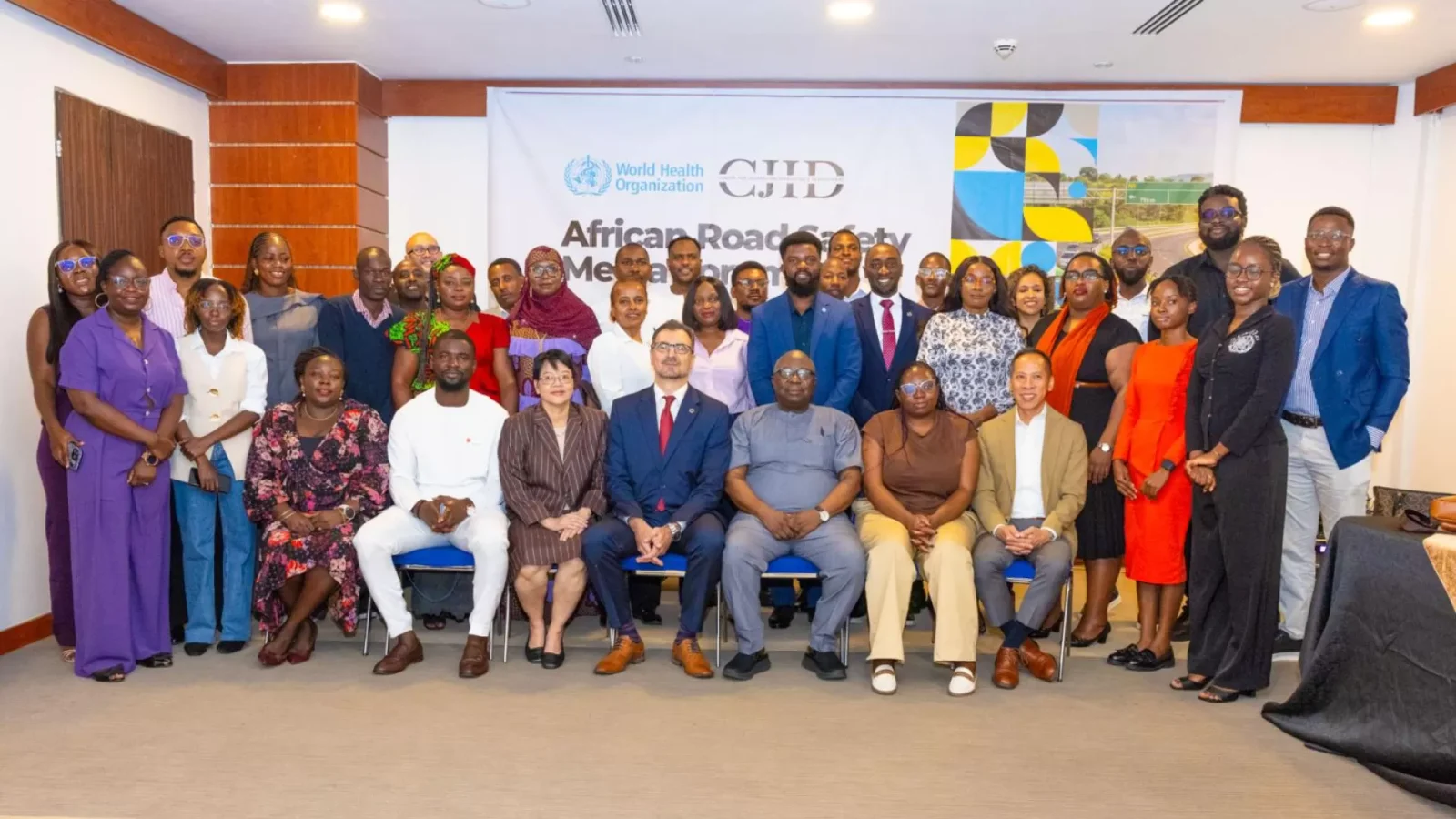
As of 2026-09-23 02:34 UTC, WHO and the Centre for Journalism Innovation and Development had announced a three-day forum in Abuja to develop African road-safety reporting guidelines. The September 22 announcement names 20 participants, including editors and journalists from five countries, and gives mid-2027 as the expected completion date for the guidelines.[1]
The initiative puts an ordinary newsroom decision under scrutiny: where does a crash story end? With the collision, the casualty count and a police statement? Or with questions about the road, the crossing, the speed environment and the officials responsible for them? Those choices determine which possible causes reach the reader. The strongest case for the Abuja project is that it could make preventable conditions visible before the next death.
What the record establishes
| Record and date | What it supports | Confidence and boundary |
|---|---|---|
| WHO announcement, September 22, 2026 | A forum and a timetable for developing guidelines.[1] | High confidence in the announced programme; no completed standard is presented. |
| Solutions Journalism Network application notice, July 2026 | Advance plans for an Abuja forum with a solutions component.[2] | Corroborates the planned format, not its eventual results. |
| WHO regional report, July 2024 | An estimated 225,482 road deaths in the African Region in 2021.[3] | A dated estimate, not a count for 2026. |
| Randomized framing experiment, published December 2019 | Different article versions changed readers' attribution of blame and support for responses.[4] | Evidence about perceptions, not measured reductions in collisions. |
The missing subject in a crash story
A study by Kelcie Ralph and colleagues examined 200 local news articles about crashes involving people walking or cycling. It found that coverage tended to direct blame toward those road users and treat collisions as isolated events. That combination can leave the public with a succession of personal tragedies and little sense of a recurring problem.[5]
The separate experiment, by Tara Goddard and colleagues, tested whether editorial choices could actually alter readers' judgments. It randomly assigned 999 participants to three versions of a crash report. Language focused on the driver reduced blame assigned to the pedestrian; broader contextual framing increased support for infrastructure improvements.[4]
The experiment gives editors a reason to take framing seriously, within a clear boundary. It measured perceptions, not whether a different headline produces a safer junction. It also leaves effects across African languages, audiences and newsrooms to be tested locally.[4]
Consider a hypothetical assignment after a pedestrian is killed. A reporter might establish where the person crossed, then ask where the nearest usable crossing was, whether its signals worked, and who maintained it. Those questions do not decide the cause in advance. They expand the evidence available for deciding it. The resulting story can still describe a road user's actions accurately while examining the choices that shaped the encounter.
WHO says the planned guidelines will draw on the Safe Systems approach: designing transport so that inevitable human mistakes are less likely to result in death or serious injury.[1] For journalism, the useful translation is an expanded reporting assignment. It should never become a formula that assigns responsibility before the facts are known.
A regional death toll needs its year attached
The regional report's 2021 estimate sits alongside a 17% rise in fatalities since 2010. It also records substantial variation: 17 countries in the region reduced deaths. Those findings justify sustained attention, but they resist a single story of uniform deterioration.[3]
A newsroom using that evidence should retain the geography, year and status of the number. The WHO African Region is the report's unit; an estimate for 2021 cannot silently become this year's police total. The difference matters whenever a minister claims progress or a campaign describes an emergency. Before comparing figures, the reporter needs to know what each one counts.
There is already an African policy effort aimed at that problem. WHO's April 2023 account of the Dakar Declaration describes commitments adopted in principle by 21 countries to improve data collection, analysis, sharing and coordination.[7] It establishes a useful reporting trail: ask what changed in the records after the commitment, which agencies now exchange information, and whether gaps remain.
Better prose cannot compensate for incompatible numbers. Equally, imperfect data should lead to an explanation of the uncertainty and further reporting, rather than the disappearance of the story.
Reporting a response means examining its limits
The Abuja application notice explicitly included a solutions component.[2] WHO's earlier training in Natal, Brazil, offers a practical precedent. Its July 2025 account describes sessions on road safety, emergency care and motorcycle safety, alongside a municipal field trip. It also describes solutions journalism as an examination of responses, including what fails and why.[6]
That is a demanding brief. If a city introduces a crossing improvement, a useful follow-up would ask whether people can reach it, whether drivers yield, whether danger moved to the next junction, and how outcomes were measured. A ribbon-cutting supplies a date and a photograph; it does not settle those questions.
The same scrutiny should apply to the journalism programme. Attendance and published guidelines are outputs. Changed reporting practices are another result. Changes in policy or street conditions are further steps, each needing its own evidence. Treating them as interchangeable would reproduce the very reporting weakness the initiative hopes to address.
The next tests are in the newsroom
For editors, the next 24 hours offer a small, practical task: review a recent crash story for unsupported blame and missing context. Over seven days, a desk could build a contact list spanning investigators, road engineers, emergency services and affected communities. Over 30 days, it could compare a sample of new stories with its earlier coverage. These are proposed editorial actions, not deadlines announced by the organizers.
Three conditional paths would change the assessment:
- Base case: drafting continues toward the announced mid-2027 target. A published work plan or draft would make progress assessable; until then, the project remains a development effort.[1]
- Upside: participating outlets publish examples, corrections and an audit of changed coverage. That would provide evidence of newsroom uptake before any claim about public-health outcomes.
- Downside: the initiative produces publicity without observable changes in reporting. An audit showing unchanged sourcing and framing would weaken the case that training is reaching everyday assignments.
Editors can begin with a short checklist:
- Attribute preliminary claims about a collision and revisit them when findings change.
- Keep the year, geography and method attached to every death toll; withdraw comparisons when those foundations differ.
- Test proposed remedies against local evidence, and revise the story if that evidence contradicts the initial explanation.
The next crash report is where the Abuja project's premise can first be tested: whether readers receive enough verified context to ask how another death might be prevented.
Sources
- WHO Regional Office for Africa, Abuja road-safety media forum announcement, September 22, 2026 — programme, timetable and photograph.
- Solutions Journalism Network, “African Road Safety Reporting Forum: Call for Applications,” July 2026 — advance notice of the Abuja forum and its solutions component.
- WHO Regional Office for Africa, “Road safety in the WHO African Region 2023,” published July 2024 — 2021 mortality estimate, regional trend and differences between countries.
- Tara Goddard and colleagues, “Does news coverage of traffic crashes affect perceived blame and preferred solutions? Evidence from an experiment,” 2019 — Rutgers publication record.
- Kelcie Ralph, Evan Iacobucci, Calvin G. Thigpen and Tara Goddard, “Editorial Patterns in Bicyclist and Pedestrian Crash Reporting,” Transportation Research Record 2673(2), 2019 — content analysis of 200 articles; abstract and publication record at Rutgers.
- WHO, “WHO trains journalists to reshape road safety news coverage in Latin America,” July 29, 2025 — Natal workshop, reporting methods and scrutiny of responses.
- WHO, “‘Dakar Declaration’ to strengthen data on road crash deaths in Africa,” April 6, 2023 — commitments to improve collection, analysis, sharing and coordination of road-death data.