Spoilers for the mill workers’ first protest.
On an ordinary evening, the whistle ends the shift. Nobody has to look around to see whether the others intend to go home. Sound it an hour early, though, and a mill hand who has spent all day longing to leave has an excellent reason to stay at his machine. Suppose he is the only one who moves? Mario Monicelli gets a wonderfully painful comedy out of that hesitation in his 1963 film The Organizer. The workers have picked the one sound that everybody in the building understands. They still have to decide what it means. [1][2]
The mill is in Turin in the late nineteenth century. Monicelli takes us to work with Omero, a boy who has to break the ice in the water jug to wash. His mother asks him to leave money for groceries. By the time he gets to the factory, we know something about a day's pay that would take a speech to explain at a meeting. Someone has already spent it. Late in the shift an exhausted worker catches his arm in a machine. His mates take up a collection at the hospital. They know how to do this, which may be the most distressing thing about the scene. [2][3]
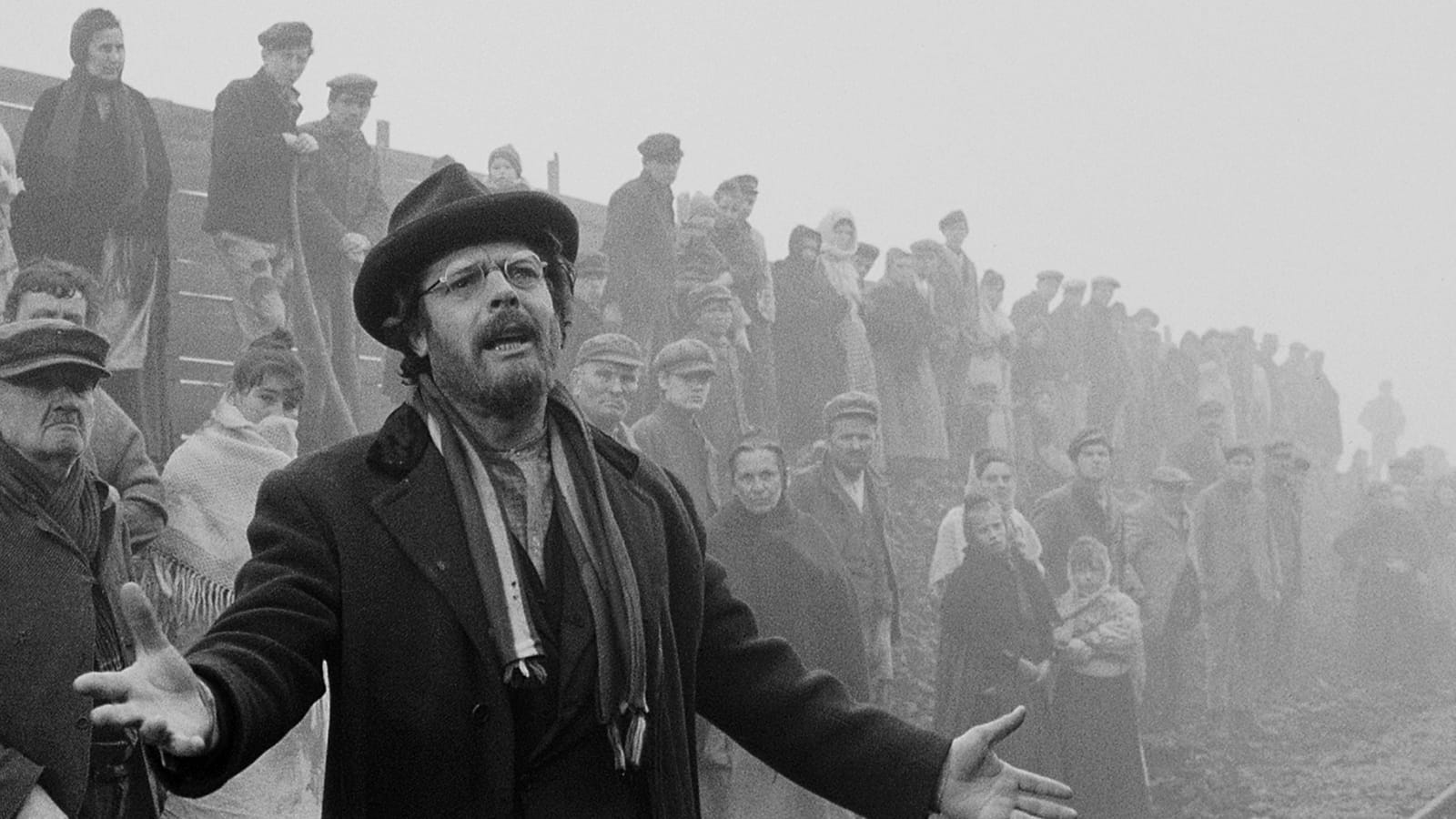
A collection can help the injured man's family through the next few days. It leaves everybody else at the machines for the same long hours tomorrow. Sending a delegation to the manager seems a reasonable way to address that difficulty. He hears the delegates out and slips away through another door. There is a lovely economy to the gag. The only person who has managed to leave work early so far is the boss. [2]
Now the workers propose to end the shift themselves. Someone must give the signal. As Michael Sragow observes, when the names go into a hat, several slips bear the same signature, an X. Think of the trouble the lottery was meant to spare them. Drawing a name would make the choice fair without anyone having to single out a friend. But how do you tell one man's X from his neighbor's? For a few seconds Monicelli gives the audience a perfectly practical problem to solve. A laugh is about how long it takes to discover that you haven't a clue either. [4]
Pautasso, played by Folco Lulli, volunteers. It's a generous offer with one flaw that becomes apparent the moment he acts on it. Everybody can tell who took responsibility for the whistle. Back at the machines, each worker can wait for the next person to go first. From Pautasso's end of the factory it looks like a betrayal. From Omero's end, with the grocery money spoken for, another second's wait seems reasonable. Multiply that second by a roomful of people and the walkout is over. Pautasso says afterward that he had to pretend he was drunk. Imagine the indignity of trying to pass off the bravest thing you've done all day as a blunder. [1][2]
The punishment has a grim precision. Everyone gets fined. Pautasso gets two weeks’ suspension. Management can identify a man to send home more easily than the men could pick a name out of the hat. When Professor Sinigaglia arrives and helps them plan a strike, one of his first concerns is how much food they have put by. Coming after the whistle, that question sounds considerably more stirring than it would in isolation. A worker who knows where supper is coming from can afford to be the first to step away. [2][3]
It's worth remembering what a good idea that whistle was. Even the man at the far end of the mill would know the instant his mates wanted him to act. Pautasso could give him that much. What he couldn't send across the room was the assurance that somebody would be beside him on the way out. [2]
Sources
- The Criterion Collection, The Organizer (1963), film credits and stills gallery.
- The Sticking Place, The Organizer, sequence outline of the film, especially sequences 1–6.
- J. Hoberman, “The Organizer: Description of a Struggle,” Criterion, 2012.
- Michael Sragow, “I’m All Right Jack and The Organizer: Bread and Roses and a Lot of Laughs,” Criterion, 2018.