Italian neorealism is often reduced to a familiar recipe: black and white photography, nonprofessional actors, location shooting, and stories about the poor.[1] All of that is true, but it is still secondary. The movement mattered because it changed where cinematic authority lived. After fascism, occupation, bombardment, shortages, and institutional discredit, the street no longer functioned as backdrop. It became the place where politics, labor, hunger, shame, and ordinary endurance were most legible.[1][2][6]
That is why the best way into neorealism is not to ask whether a film looks rough or documentary enough. The stronger question is whether the movie relocates drama from private destiny to shared conditions. In the neorealist frame, a job, a room, a queue, a ration, a bicycle, a tram ride, a stairwell, a priest, a landlord, or a child in the wrong place at the wrong hour can carry the full moral weather of a country trying to stand back up.[1][2]
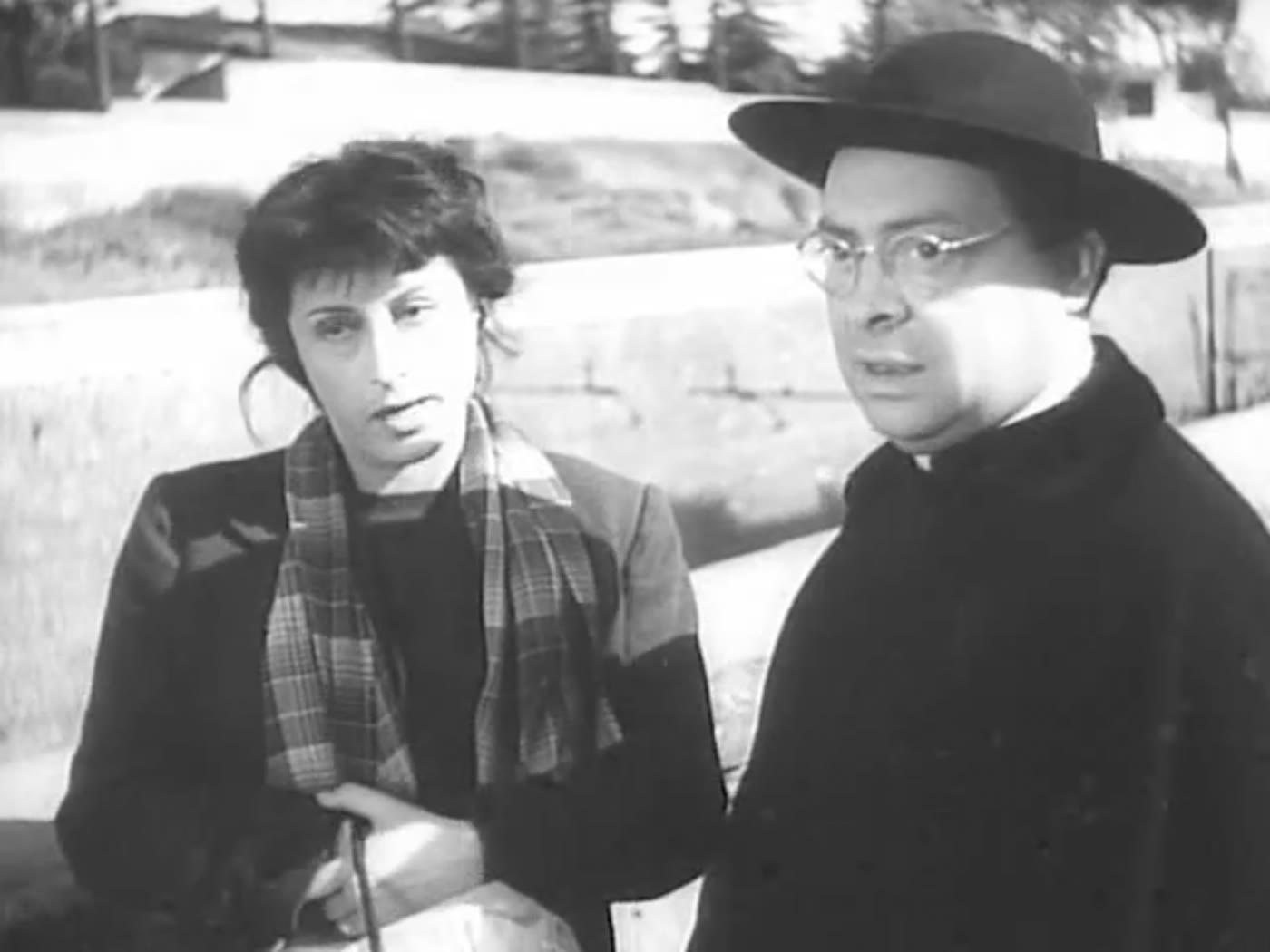
Image context: the hero image is an archival still from Rome Open City (1945), one of the watershed works of the movement. It is used here because the article's central argument is spatial: neorealism turns damaged streets into ethical and political stages rather than scenic setting.[3][7]
1) Ruins were not just scenery; they were narrative pressure
Rome Open City is widely treated as a watershed work of the movement, and the historical record around the film places Rossellini's production directly inside the ruin and urgency of World War II's aftermath.[2][3] That production context matters because neorealism did not merely choose reality as a texture. It inherited reality as a constraint. The postwar Italian city was materially broken, and the films absorb that brokenness as structure.
This is where later imitation often misses the point. A modern film can borrow handheld cameras, natural light, and scuffed apartments without becoming neorealist in any deep sense. What Rossellini, De Sica, Visconti, and their collaborators discovered was a new proportion between person and environment. A character does not simply emote inside a setting; the setting keeps deciding what is possible. Occupation patrols, damaged housing, weak employment, crowded public space, and institutional suspicion are not atmosphere. They are plot engines.[1][2][3]
Put differently, neorealism made external conditions narratively non-negotiable. It refused to let psychology float free of material circumstance. That refusal is one reason the movement still feels bracing: the camera can be compassionate without pretending that compassion cancels rent, hunger, policing, bureaucracy, or war damage.[1][6]
2) The ordinary protagonist is really a test of social visibility
Britannica emphasizes simple story lines, social themes, everyday subjects, and frequent child protagonists.[1] Those traits are often described as humility, and they are, but the deeper function is diagnostic. Neorealism keeps asking which people mainstream cinema had trained audiences not to see at full scale: the unemployed father, the pensioner, the slum child, the widow, the worker who needs one object or one day of wages to hold the week together.[1][4][5]
The most famous case is Bicycle Thieves, which turns one stolen bicycle into a crisis of dignity, family survival, and public humiliation.[4] The bicycle is never just a prop. It is access to work, rhythm, and authority. Once it disappears, Antonio and Bruno move through Rome as if the city has become a machine for exposing how thin the margin of security really is.[4]
This is also why children matter so much in the movement. They are not there to sentimentalize poverty. They function as witnesses with no insulation. When adults lose work, status, or privacy, children absorb the fact before they can interpret it. Neorealism repeatedly uses that mismatch between perception and explanation to strip away melodramatic comfort. A child sees the gesture, the delay, the embarrassment, the slap, the compromise. The child may not know the policy history behind it, but the audience now has no excuse not to notice.[1][2][4]
3) Streets, errands, and waiting become the real action
A lot of neorealist plots sound thin in synopsis because the movement is interested in processes rather than twists. Someone searches for work. Someone searches for a room. Someone tries to recover an object. Someone spends a day moving through public institutions that offer little relief. BFI's primer on ten great Italian neorealist films makes clear how often the movement returns to these stripped-down premises across very different directors and emphases.[2]
That narrative thinness is a strength. Once the story is no longer driven by hidden mastermind reveals or courtroom reversals, the weight falls on time, movement, and exposure. We start noticing the walk between neighborhoods, the humiliating wait, the dependency on transit, the look exchanged in a stairwell, the way a crowd can suddenly become protection or accusation. Everyday logistics stop being filler and become drama itself.[2][4][5]
This is one of neorealism's great technical achievements. It teaches the viewer to feel how social systems are distributed through small motions. The cinema of errands is still cinema. In some cases it is more severe cinema, because it denies the viewer the pleasure of pretending that historical damage arrives only in spectacular form.
4) Open endings are not vague endings; they are ethically exact
Another frequent misunderstanding is that neorealist endings feel unresolved because the films are loose or anti-dramatic. In the strongest works, the opposite is true. The endings are precise because the characters have reached the outer boundary of what their conditions permit.
Umberto D. is exemplary here and is still treated as one of the movement's major late works and one of cinema's sharpest portraits of old age and loneliness.[2][5] What matters formally is that the film does not rescue its protagonist with an artificial restoration of status. It follows him to the point where public indifference, private shame, and fragile attachment narrow his options almost to nothing.[5] The film's honesty lies in stopping there.
The end of Bicycle Thieves works the same way. It does not provide catharsis because catharsis would falsify the scale of the injury. Antonio's humiliation does not become noble simply because the audience recognizes it.[4] The closing movement preserves dignity and damage in the same frame, which is exactly what neorealism does at its best. It refuses both cruelty and consolation theater.
5) Why the movement still matters in 2026
The broader historical framing of the movement is useful here because it keeps neorealism from shrinking into a frozen style package.[1][6] That is the right scale. Neorealism is not merely a look that later filmmakers can quote; it is a way of deciding how much explanatory weight belongs to environment, institutions, and collective injury.
That decision remains alive. Contemporary cinema still struggles with how to show labor precarity, migration, war aftermath, urban inequality, and bureaucratic humiliation without collapsing into either prestige misery or issue-movie preaching. Neorealism's answer was formal as much as political: keep the body in public space, keep the pressure material, keep the camera attentive to what shame does to movement, and do not lie at the ending about how much repair history has actually delivered.[1][2][6]
For a first three-film path into the movement, the sequence almost builds itself: Rome Open City for wartime immediacy and civic rupture, Bicycle Thieves for labor and paternal fragility, Umberto D. for the late, nearly unbearable precision of social abandonment.[2][3][4][5] What links them is not roughness for its own sake. It is moral proportion.
Italian neorealism was never just a style of filming poor people outdoors. It was a new agreement between cinema and damaged reality: the promise that ordinary life, observed at street level and without false repair, was already dramatic enough.
Sources
- Encyclopaedia Britannica, "Neorealism" (motion picture style overview; roots, themes, and formal traits).
- BFI, "10 great Italian neorealist films" (movement primer and film-by-film context).
- Wikipedia, Rome, Open City (production context, release history, and movement positioning).
- Wikipedia, Bicycle Thieves (plot, production, and reception context).
- Wikipedia, Umberto D. (film record and reception context).
- Wikipedia, Italian neorealism (movement history, key traits, and legacy).
- Wikimedia Commons, file record for Roma città aperta (1945) still featuring Anna Magnani and Aldo Fabrizi.