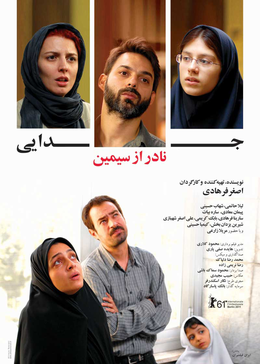
Asghar Farhadi’s A Separation (2011) is often introduced as a family drama, and that is true at plot level.[1] Simin wants to leave Iran, Nader refuses because he must care for his father, and a divorce petition opens the story.[1] Yet the film’s deeper force comes from form: Farhadi builds suspense from testimony, timing, and small shifts in language, so ordinary domestic speech starts behaving like courtroom material.[1][2][3]
That formal choice is why the film still feels urgent. The stakes are never only “who did what.” The stakes are also “who gets to name what happened” and “under which procedure the naming becomes binding.” The movie won Berlin’s Golden Bear in 2011 and later became the first Iranian film to win the Academy Award for Best Foreign Language Film, while also taking an Original Screenplay Oscar nomination.[2][4][5] Those milestones matter because they track how precisely the screenplay turns moral ambiguity into legal sequence.
Spoiler note: this essay discusses major plot developments in A Separation, including the staircase incident, courtroom testimony shifts, and the ending.
The opening divorce hearing sets the film’s legal grammar
The first major scene places Nader and Simin before a judge, facing the camera with little visual insulation.[1] There is no melodramatic score cue to tell us who is right. Instead, we hear two coherent positions that cannot coexist in one household timetable. Simin frames migration as future protection for their daughter; Nader frames staying as present duty to his father with Alzheimer’s.[1]
Formally, this opening does three things.
- It installs procedure as the dominant narrative space.
- It turns speech acts into measurable commitments.
- It teaches the audience that truth in this world is inseparable from who is speaking, to whom, and under which institutional pressure.
From that point forward, the film’s thriller engine is linguistic and procedural, not forensic in a conventional detective sense.
The middle-class home and the lower-class commute create an evidence asymmetry
Razieh enters as a caregiver from a poorer district, commuting with her daughter and managing work under severe material pressure.[1][3] Farhadi never flattens this into a slogan about class; he stages it through logistics: transport time, unstable employment, debt stress around Hodjat, and the immediate burden of elder care in a household not designed for shared trust.[1]
Once the father wanders out and later appears tied to the bed, accusation enters the home in legal form.[1] Nader accuses Razieh of neglect and theft. Razieh resists leaving without payment. A push at the door becomes a staircase event with later medical consequences.[1]
What makes this section so powerful is not spectacle. It is the chain of uncertainty:
- Was Nader aware Razieh was pregnant at the critical moment?
- Did the push cause the miscarriage, or did an earlier traffic incident matter more?
- Which statement is recollection, which is strategy, and which is fear?
Farhadi keeps each claim plausible enough that the audience cannot settle inside one moral comfort zone.[1][3][6]
Translation, wording, and selective disclosure become plot machinery
The film is in Persian, but the deeper issue is not cross-language exoticism. It is interpretive drift inside one legal-social language field: who softens, omits, or recalibrates a sentence depending on audience and risk.
Nader modulates what he admits to Termeh and what he says in court. Termeh learns he has lied and then carries that knowledge into later testimony decisions.[1] Razieh withholds part of her own timeline under pressure from religion, shame, and fear of her husband’s rage.[1] Hodjat, trapped by debt and humiliation, converts injury into explosive rhetoric that is emotionally true to him yet procedurally unstable.[1][3]
In close-reading terms, A Separation is a film where dialogue is never only dialogue. It is pre-evidence, counter-evidence, or future evidence. The screenplay’s Oscar win validates exactly this architecture: every line serves two planes at once, immediate emotion and later adjudication.[4][5]
Camera distance and editing rhythm prevent easy verdict language
Mahmoud Kalari’s cinematography and Hayedeh Safiyari’s editing maintain a pressured realism: close interior framing, corridor congestion, courtroom waiting, and repeated returns to procedural spaces.[1][3] The runtime is 123 minutes, long enough for legal and domestic pressure to accumulate without releasing into a single didactic reveal.[1]
Crucially, Farhadi avoids omniscient visual proof. We do not receive a definitive “god shot” that resolves all causality. The absence is deliberate. The audience experiences the same structural problem as the characters and the judge: decisions must be made under incomplete, contested accounts.
That is why the film’s suspense feels different from a twist-driven courtroom thriller. It does not hide one secret and then reveal it. It continuously re-prices credibility.
Religion is treated as lived constraint, not symbolic decoration
Razieh’s ethical crisis over whether to swear on the Qur’an is one of the film’s sharpest pivots.[1] The moment is not staged as piety-versus-modernity theater. It is staged as a collision between religious accountability, marital coercion, legal pressure, and material vulnerability.
When she cannot complete the oath in the demanded way, the film does not present a neat resolution. Instead it reveals the cost of every available choice.[1][6] In narrative terms, Farhadi refuses to let any institution—family, court, or religion—fully absorb the moral burden. Each institution redistributes burden to another person.
The ending preserves uncertainty and relocates judgment to the child
In the final court sequence, Nader and Simin are granted divorce, and Termeh is left to choose which parent to live with.[1] Farhadi cuts before the answer is given. That ending is not evasive; it is structurally precise. After two hours showing adults weaponize procedure and language, the film refuses to turn a child’s decision into audience closure.
This is also where A Separation separates itself from many prestige dramas. It does not ask us to admire ambiguity as sophistication. It asks us to sit with ambiguity as social cost.
Why this film remains a high-signal watch in 2026
The film’s global recognition can be summarized with three anchors:
- 2011: Golden Bear (Berlin) plus ensemble Silver Bears for acting.[2]
- 2012: Academy Award win for Best Foreign Language Film.[4]
- 2012: Oscar nomination for Best Original Screenplay, rare for a non-English-language film in that period.[4][5]
Awards alone do not make a film durable. What keeps A Separation alive is that its central mechanism has only become more legible over time: legal procedure and social media alike reward compressed narratives, while real moral life remains messy, classed, and temporally uneven. Farhadi’s film understands this without sermonizing.
If you revisit it now, track three things in order:
- Who controls framing in each high-stakes conversation.
- When statements change between private and procedural settings.
- Which costs are transferred downward, especially toward women and children, when adults protect dignity under pressure.
That viewing pattern turns A Separation from “excellent drama” into a practical model for reading how speech becomes power in constrained institutions.
Sources
- Wikipedia — A Separation (plot, cast, production context, runtime, release timeline, awards)
- Berlinale Archive — Prizes & Honours 2011 (Golden Bear and acting awards context)
- The Hollywood Reporter review from Berlinale coverage
- The Academy — 84th Oscars (2012) nominees and winners
- The Academy newsroom — 2012 nominees list including A Separation screenplay nomination
- Roger Ebert review — A Separation
- Metacritic — critical consensus snapshot for A Separation
- Wikipedia file page — poster source used in this article