Native Son still carries an unusual charge because it never became comfortable at the center of the canon. Richard Wright's 1940 novel entered American life as a breakthrough and as an alarm: one of the first widely successful novels by an African American writer, a best-seller, a Book-of-the-Month Club selection, and at the same time a book many readers experienced as accusation, pressure, and public scandal.[1][4][6] Its afterlife has never fully softened that first impact. The novel is too often summarized as a grim protest narrative about Bigger Thomas, but that summary makes the book smaller than Wright made it. Native Son survives because it does not let Bigger stand for one clean thing. He is a frightened young man, a racial type manufactured by a segregated city, a media object, a legal problem, and a consciousness trapped inside scripts written by other people.[1][2][6]
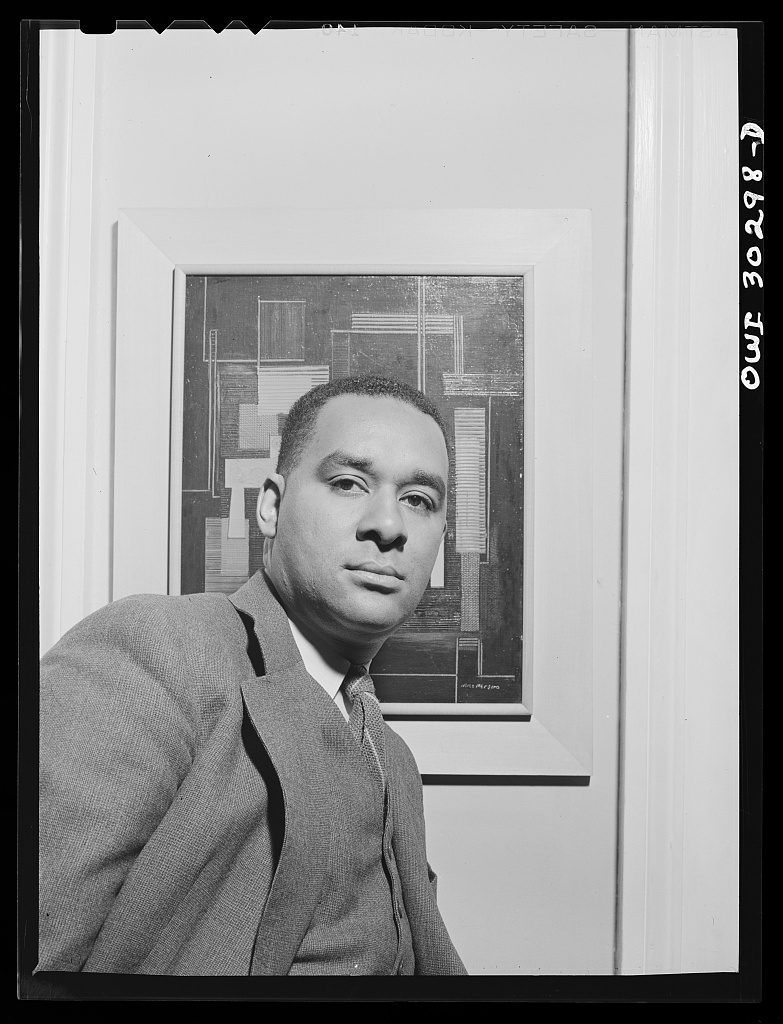
The image matters for that reason. Gordon Parks's 1943 portrait gives us Wright near the heat of the book's first reception, not as a museum figure but as a living writer whose most famous novel was still reorganizing how American readers talked about race, fear, and literary force.[7]
The 1940 publication moment felt like a social emergency
The cleanest way into the novel's reception is to remember how large its arrival was. Encyclopedia.com's overview notes the book's 1940 publication context, Chicago setting, and immediate critical and commercial impact.[1] The Library of Congress places it among the books that shaped America and frames its importance not as a matter of prestige alone but as a rupture in what American culture could keep pretending not to know.[4] That language is useful because Native Son did not simply add another title to the shelf of social novels. It changed the temperature of the room.
Wright's own trajectory helps explain why. Encyclopedia.com's biographical entry traces the path from Mississippi into the northern literary world and the public controversy that followed Native Son's success, a route that helps clarify why Wright could write urban racial pressure without treating it as abstraction.[6] Native Son turns that knowledge into fiction with punishing efficiency. The opening South Side apartment, the rat, the cramped domestic atmosphere, the chauffeur job in the Dalton household, the snowbound flight, the furnace, the press frenzy, and the trial all belong to one narrative design: Bigger is never allowed a private interior that the city does not already crowd, map, and misread.[1][2]
That is why the book still feels harsher than the phrase "social protest novel" suggests. Protest can imply a stable moral distance between the suffering person and the society being condemned. Wright refuses that comfort. He writes panic from the inside. Bigger does terrible things, but the novel is arranged so that readers cannot treat those actions as the whole explanation. Fear arrives first as atmosphere, then as habit, then as reflex, then as public narrative. The city has already given Bigger a script of confinement before the plot's crimes begin to widen around him.[1][2][6]
Wright made panic structural, not merely personal
This is the novel's deepest formal achievement, and it is the main reason the book's reception has remained unstable. Bigger is not built to be an exemplary victim in the sentimental sense, nor is he written as a monster who can be cleanly expelled from the civic body. He is written as a person whose field of possible action has already been narrowed by housing segregation, labor hierarchy, white surveillance, and the humiliating demand to perform harmlessness.[1][6] The result is a novel in which psychology and structure keep crossing wires.
That crossing is visible in the book's movement between spaces. The South Side apartment compresses family life into irritation and vigilance. The Daltons' house changes fear into another register by demanding caution, self-erasure, and constant awareness of white power masquerading as benevolence. The later newspaper and courtroom machinery then converts Bigger from person into headline, symbol, and public lesson.[1][4] Wright's method is not subtle in the genteel sense, but it is exact. He keeps showing how institutions seize a human being before interpretation has even begun.
That exactness helps explain why readers keep returning even when they resist the book. Native Son is not memorable because Bigger is easy to love, and not even because the argument is easy to paraphrase. It lasts because Wright found a narrative form for socially manufactured panic. He makes constricted space, racial anticipation, and public narrative feel like parts of the same machine.[1][2]
The reception story includes censorship inside success
One reason the novel never became a tame classic is that its own publication history carries evidence of institutional anxiety. The Library of America edition of Wright's Early Works is essential here. Its editors restored cuts and alterations that had entered Native Son when book-club gatekeepers feared the political, sexual, and racial candor of Wright's original text.[2] That fact matters beyond textual scholarship. It means the novel's first success was negotiated through trimming. Even triumph arrived with an attempt to reduce the force of what readers were being asked to face.[2]
The afterlife of the film adaptation deepens the same pattern. The Library of Congress account of the 1951 Native Son film notes that Wright co-wrote the screenplay and unusually played Bigger himself, but the U.S. release was heavily censored; only much later was the original version restored.[3] This is exactly the kind of afterlife detail that belongs inside literary interpretation rather than in a footnote. It shows that Native Son kept generating pressure whenever it crossed into mass circulation. The problem was not merely that the novel had been controversial in 1940 and then safely absorbed. The problem kept recurring: how much of Wright's violence, sexuality, racial terror, and social accusation would American institutions allow to remain visible?[2][3]
The New York Public Library's Richard Wright collection gives that story archival texture. The collection includes corrected manuscripts of Native Son and materials tied to Wright's larger career, preserving the sense that the novel was never just a sealed classroom object. It remained a working document in a broader political and artistic life.[5]
Canonization did not make the book safe
The Library of Congress's decision to place Native Son among books that shaped America is one sign of canonization.[4] But canonization, in this case, did not neutralize the book. It only changed the setting of the argument. Native Son can now be taught as a landmark of twentieth-century American fiction, a Great Migration novel, a study in urban segregation, a precursor to later prison and police literature, or a major intervention in Black literary modernity.[1][4][6] None of those frames is wrong. The problem is that the book keeps straining against whichever single frame tries to contain it.
That strain is the reason the novel still feels present-tense. A merely historical scandal eventually becomes décor. Wright wrote something harder to archive away. He wrote a novel in which fear is social before it becomes individual and public before it becomes legible. The reception history, from breakthrough to censorship to restoration, simply repeats that lesson in another register.[2][3][4]
So the strongest way to read Native Son now is not as an honored relic of protest fiction. It is as a book that keeps refusing simplification. Bigger Thomas cannot be reduced to innocence, guilt, sociology, pathology, or symbol without the novel starting to push back. That resistance is the real afterlife. It is why the book never became a safe classic, and why Wright still feels less embalmed than waiting.
Sources
- Encyclopedia.com, "Native Son" - publication context, Chicago background, and reception overview.
- Library of America, Richard Wright: Early Works - restored-text context for Native Son and the cuts made to earlier circulating versions.
- Library of Congress, "African-American History Month: 'Native Son,' Uncensored" - on the 1951 film, Wright's screenplay and starring role, and later restoration.
- Library of Congress, "Books That Shaped America: 1900 to 1950" - entry on Richard Wright's Native Son and its canonizing afterlife.
- The New York Public Library Archives, "Richard Wright collection" - archival holdings including corrected Native Son manuscripts.
- Encyclopedia.com, "Richard Wright" - biographical context for Wright's early life, literary career, and the controversy around Native Son.
- Library of Congress Prints & Photographs Online Catalog, "New York, New York. Portrait of Richard Wright, poet" - source page for the Gordon Parks photograph used as the article image.