Robert Browning's My Last Duchess is one of those poems that students remember as a plot reveal: the Duke shows a portrait, complains about his wife, hints that he had her killed, and calmly moves on to his next marriage negotiation.[1][3] That summary is accurate, but it leaves out the poem's real skill. Browning does not merely hide a crime inside a monologue. He makes the Duke convict himself through manners. The poem is built so that taste, courtesy, collecting, and aristocratic self-command slowly become evidence.[1][2]
That is why the poem still feels so modern. Britannica's short overview gets the essential frame in place: a 56-line dramatic monologue from 1842 in which the Duke of Ferrara speaks about the portrait of his dead wife and finally makes it clear that he caused her death.[3] Poetry Foundation's essay sharpens the more interesting point, which is that the Duke believes he is presenting himself as a polished connoisseur even while his own language exposes the violence underneath that polish.[2] The poem does not need a detective. It needs a reader who notices what kind of person turns looking into ownership and ownership into moral permission.
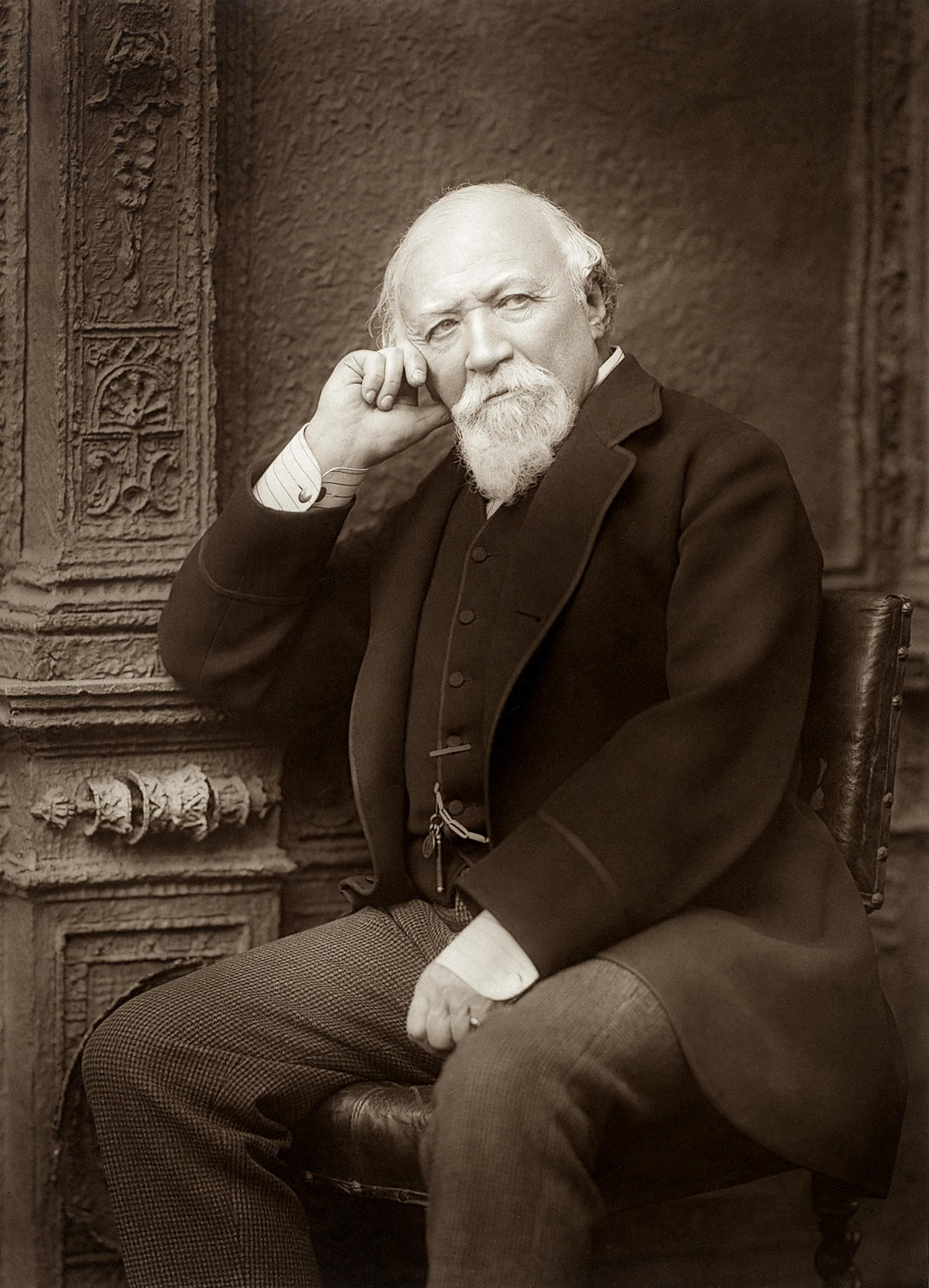
Image context: the cover uses a real photographic portrait of Browning rather than a Renaissance painting detail. That choice keeps the article centered on the poem's real engine, which is not the Duchess's image by itself but Browning's cold control of voice. The poem lives or dies by how precisely one speaker reveals more than he intends.[5]
1) The poem begins with a display of possession, not a confession
The opening line is famous because it sounds so effortless: "That's my last Duchess."[1] The phrase appears casual, almost proud. Yet Browning loads it immediately. "My" makes the woman sound like property before the Duke has said anything about her character; "last" quietly opens the possibility that wives can be replaced; and the portrait on the wall enters the room as an object already curated for effect.[1][2] The Duke is not mourning. He is exhibiting.
The next crucial move is the curtain. He remarks that only he can draw it aside for the visitor: "the curtain I have drawn for you, but I."[1] That detail is tiny and devastating. Before the Duke tells us what sort of husband he was, Browning shows us a man who controls access to his wife's image even after her death. George Monteiro's Victorian Web essay is useful here because it emphasizes how deliberately Browning makes the Duke tell the story at all; the dramatic occasion is never neutral.[4] The envoy is ostensibly being shown art. In reality he is being trained in the house style of power.
That is why the portrait matters as more than scenery. Poetry Foundation's reading notes that the poem is also a form of ekphrasis, a work in which verbal art addresses visual art.[2] Browning twists that tradition. The painting does not simply preserve beauty. It becomes the medium through which the Duke can finally stabilize what he could not control in life. The Duchess is easiest for him to admire once she has been reduced to a surface that cannot answer back.
2) The Duke treats generosity as insubordination
What the Duke cannot forgive is not adultery, treason, or open humiliation. It is scale. He says the Duchess was "too soon made glad," too easily pleased by the world around her.[1] Browning makes that complaint sound absurd and frightening at once. The Duchess seems delighted by ordinary things: a sunset, a branch of cherries, the white mule she rides, the painter's compliment, the Duke's own ancient name.[1][3] The problem, from the Duke's perspective, is that she does not grade experience according to rank.
This is where the poem's psychology becomes exact. The Duke does not merely want affection. He wants hierarchy inside affection. His grievance is that she ranked his aristocratic gift alongside everyone else's smaller offerings.[1] Browning never needs to tell us that such a man is dangerous. The logic of danger is already visible in the complaint. A wife whose gratitude is evenly distributed threatens a husband who believes rank should structure emotion itself.
Camille Guthrie's essay for Poetry Foundation catches this well when it describes the Duke as unable to keep his own language from revealing narcissistic injury and aggression.[2] The more he explains the Duchess, the more he turns himself into the real subject. Her supposed faults all reduce to one offense: she did not reserve the full theater of response for him alone. In that sense the poem is not only about jealousy. It is about a political imagination brought home into marriage. The Duke wants government at the level of blushes.
3) Browning compresses murder into grammar
The poem's most chilling line remains chilling because of how little space it takes up. After telling us he had no skill in "stooping" to discuss his displeasure with the Duchess, the Duke suddenly says, "I gave commands."[1] Then comes the line that completes the thought: "all smiles stopped together."[1] Browning refuses melodrama here. No dagger appears, no courtroom, no body, no servant carrying out an order before our eyes. We get only one clipped clause, then a perfect hush.
That economy is the point. A lesser poem would stage the crime as spectacle. Browning stages it as administrative style. The Duke talks as if issuing instructions were the most natural extension of his authority.[1][3] The murder, if that is what happened, has already been absorbed into a habit of command. Even the phrase "all smiles" is chilling because it reduces the Duchess's living expressiveness to something countable and removable, like an inconvenience in household management.
This is also the moment when the Duke's claim to refinement collapses most completely. He says he lacked the willingness to "stoop" into open conversation with his wife.[1] The word does immense work. He imagines honest speech as humiliation, while lethal command remains fully compatible with dignity. Browning's close reading challenge to us is therefore ethical as well as formal: what kind of culture teaches someone that dialogue is beneath him but annihilation is not? The poem's answer is embedded in the voice itself. Aristocratic self-regard has become a machine that translates wounded vanity into justified action.
4) The Neptune at the end tells you how the Duke sees the whole world
Readers often treat the final turn to the bronze statue as a decorative coda. It is one of the poem's smartest blows. Just after finishing the story of the Duchess, the Duke points out another art object: Neptune taming a sea-horse, cast by Claus of Innsbruck for him.[1] The timing matters. Browning ends not with grief or even with the new marriage negotiation, but with another image of domination that the Duke can admire without embarrassment.
Britannica identifies My Last Duchess as one of Browning's signature dramatic monologues.[3] The ending shows why the form suits him so well. The speaker does not interpret himself. He merely keeps talking. Yet by the time he arrives at Neptune, the analogy becomes impossible to miss. The Duke loves works of art that freeze struggle into a visible order. He prefers a wife when she is a painting behind a curtain. He prefers power when it looks like classical mastery in bronze. He even prefers storytelling when it can convert murder into cultivated conversation.[1][2]
The Neptune detail also changes how we read the marriage negotiation in the final lines. The Count's daughter is entering not simply a wealthy house but a symbolic system. Art, title, dowry, female beauty, and male authority all belong to one collecting instinct. The envoy is receiving a warning disguised as sophistication. Monteiro's essay is helpful again because it reminds us that the dramatic occasion itself is central: the Duke speaks in order to manage an audience.[4] The audience inside the poem is the emissary; the audience outside it is us. Both are supposed to notice that this man's taste is inseparable from his appetite for control.
That is why My Last Duchess survives so well in anthologies and classrooms.[1][2][3] It gives readers a plot, but it also gives them something harder: a complete moral world compressed into tone. Browning lets one man's ceremonial speech reveal how possession enters aesthetics, how rank enters intimacy, and how violence enters grammar. By the time the Duke says "Notice Neptune," the poem has already taught us how he notices anything at all.[1] He notices in order to own, to rank, to display, and finally to silence. Courtesy is simply the velvet covering over that logic.
Sources
- Robert Browning, "My Last Duchess," Poetry Foundation poem text.
- Camille Guthrie, "Robert Browning: 'My Last Duchess'," Poetry Foundation.
- Encyclopaedia Britannica, "My Last Duchess" (publication context, dramatic-monologue framing, and plot overview).
- George Monteiro, "Browning's 'My Last Duchess'," The Victorian Web.
- Wikimedia Commons, "File:Robert Browning by Herbert Rose Barraud, circa 1888.jpg" (source page for the article image).